When you click on links to various merchants on this site and make a purchase, this can result in this site earning a commission. Affiliate programs and affiliations include, but are not limited to, the eBay Partner Network.
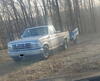
Okay so I picked up a 1993 f150 with the 4.9 and 5 speed manual. It has 250,000 miles on it but got it for 1000$. Transmission blew up on the test ride home so went to a junkyard and got a new one for 250$.
Since I have gotten it up and running it has ran crappy but only when you let off the gas then get back on it (worse when you downshift or come to a stop and take off from an idle). But unknowing the condition of the truck previously and hoping it has just sit for a while I figured it was old gas. Anyway fast forward 500 miles and a can of seafoam, still the same. I have been researching forums and asking friends since I got the truck since this is my first ford.
I have replaced the sparkplugs (which helped my problem slightly), checked the codes with a snapon scanner (I have none), made sure everything looks good (it's got new plug wires, a new egr valve(which I have checked and is working properly), new distributer cap and clean air filter) I have checked for vacuum leaks with a can of brake clean and everything looks good.
After doing all of this, still nothing and it still has the same almost hesitation when getting off then back on the gas, especially under load and always after idling. I also has a slight miss at idle that goes away as the rpms go up that someone can hopefully chime in and let me know what that is, I'm going to pull distributer cap this weekend and see what the rotor looks like and the condition of the cap.
So with the slight miss at idle and the hesitation I was almost certain what I had was a small vacuum leak that just wouldn't show itself so i went to harbor freight and picked up a vacuum gauge. This is where it gets interesting and has me confused, pulled a vacuum on off the manifold tree at semi cold start idle I had 24inhg!!!! So blipped the throttle drops down jumps back up 28 then 24inhg.
So here i am baffled how does a truck with 250,000 miles on it have 26inhg of vacuum at idle? I still don't know?!?! If someone could help me understand this that would be great.
Anyway after thinking about it for a while I realized that the fuel regulator is controlled by vacuum, the higher the vacuum the lower the fuel pressure. So putting 2 and 2 together I took the vacuum line off of my fuel regulator, plugged it and low and behold I have no stumble off idle or when engine breaking and getting back on the throttle. HIGH VACUUM WAS KILLING MY FUEL PRESSURE!!!
my question is how the heck does my engine have 24 inches of vaccum and if i replace my fuel regulator (which i am going to do because i have a valve cover gasket leak and it will be right there anyway) how am I going to get my vaccum down to be able to use my fuel regulator, or can I just run it without it without killing my gas mileage which I need because I drive 90 miles a day to work.
Thank you everyone that took the time to read that I usually try to diag and fix my own stuff but this one has me thrown for a loop. Also if this fixed anyones problem that they have been having let me know I always like to give information on anything I can help with
Last edited by Dillon.pines16; Feb 22, 2024 at 08:58 PM.
My 351 pulls 22 at idle, it’s saying it’s a good air pump. Going down hill decel, it’s at 26.
i think you diagnosed it correctly, did you replace your fuel regulator yet?
I run a dash mounted vacuum gauge, helps not press the pedal. .
what’s your vacuum read while you accelerate?
another vacuum gauge is still cheap and probably the best choice here. I get 21 with that same gauge from HF on my F150 (4.9l I6) so i know they can be accurate, but there is the possibility it wasnt made right, has damage etc.
I haven't had a chance to check anything else out it was a busy day yesterday. I am going to pull the intake today and side cover to replace the valve cover gasket and side cover gasket. So I am going to slap a new regulator on there today while I'm at it. I will update with the results.
I am going to borrow a vaccum gauge from the part store and compare results. Also i will borrow a fuel pressure gauge with the correct fitting so i can see what my fuel pressure is with vacuum applied and released from the fuel regulator. Thanks everyone for your help.
I pulled the intake, valve cover and side cover to replace the gaskets this weekend. Should have taken pictures but the top end of the engine was surprisingly clean and looked good and healthy no serious buildup or anything concerning. Same thing when I pulled the spark plugs and replaced them. Anyway I haven't checked the forum this weekend being I was busy and with family but I did remove the pcv valve and clean it with brake clean. It looked fairly new but cleaned it anyway. I haven't had a chance to check vaccum with a different gauge or check fuel pressure because I'm going to have to buy a fuel pressure gauge, but I will keep everyone updated when I do.
This is with a different gauge, still havnt gotten a fuel pressure gauge and i need to also get compression tester. I will keep everyone updated
looks to be where mine was at when I checked mine, guess we solved your mystery on vacuum. The gauge you had before was faulty.
now, back to your other thing, can you catch us up on your fuel pressure question/situation? And you can get compression if youd like, at this point its pretty healthy but it never hurts to know what youre at so you know what its normally at so if you have issues in the future you have a frame of reference.
This Hennessey Takes the Expedition Tremor's Off-Roading Capability to the Next Level
Slideshow: The VelociRaptor Expedition gains a lift, upgraded suspension, Brembo brakes, and trail-ready equipment while retaining the stock 440-horsepower EcoBoost V6.
Rezvani's Latest Post-Apocalyptic Monster Is a Ford F-150 Raptor Underneath
Slideshow: Called the Fortress, the 850-horsepower pickup combines Raptor underpinnings with military-inspired features, survival equipment, and a starting price of $285,000.