





Dwell Issues/ Rough Idle

Thread Starter
|
5th Wheeling
Joined: Apr 2022
Posts: 49
Likes: 4
Dwell Issues/ Rough Idle
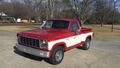
My engine has started running rough at idle after it has warmed up completely. It runs fine until it reaches top operating temperatures. I have a 1972 f100 bumpside with a 360-fe engine. I hooked up a dwell meter to it and it runs at the correct dwell until the engine gets hot. After it is hot, the dwell starts to drop slowly and then fluctuate at a range (I don't remember exact numbers because it was like 2 weeks ago). I am still running points and condenser setup. I have tried 2 different sets of points, 2 condensers, and 2 different coils to see if those were the issue. I also double-checked that nothing was arcing or touching in the distributor. The only thought or idea I have is the external resistor for the coil. Both the coils I tried to use say to use with an external resistor but I do not have an obvious one on the firewall so I am wondering if I have something like a fusible link somewhere in the wiring harness.

Logistics Pro


Joined: May 2015
Posts: 4,474
Likes: 974
From: Tri Cities, TN

Ford used a resistor wire it runs from the ignition switch to the cowl plug. It is a pink wire and sometimes it has a heat shield covering. They are available at most parts stores. If your distributor has the old Autolite type breaker plate when the vacuum can moves that plate it will change the dwell angle a little. The newer Motorcraft plate is a little better at keeping the dwell constant. If you are buying parts store condensers, they are Chineseium garbage and famous for causing ignition problems. Get on E-bay and buy an NOS made in the USA condenser.
Thread Starter
|
5th Wheeling
Joined: Apr 2022
Posts: 49
Likes: 4
I noticed about 2 weeks ago that the pink wire you are referring to did get warm to the touch but it didn't happen every time I ran the truck. Are you suggesting to just replace that wire? Do you know what number I should get if I test the pink wire with a multimeter? I had the original distributor in it until about a month ago and now I have a remaned one but it worked fine before the rough idle issue. The condensers and points I have tried have all been new old stock. Stuff from the 1970s that had not been out of their box until I got to them and installed them. They are all Echlin/napa/brand name parts.
Logistics Pro
Joined: May 2015
Posts: 4,474
Likes: 974
From: Tri Cities, TN
It is normal for the pink wire to get warm. Thats why the originals had a heat shield sleeve over them. If you have a shop manual it details how to check the resistor wire. The coil has to be in the circuit, or you won't get an accurate reading. This is from memory, but I believe it is correct. Disconnect the wire going to from the coil to the distributor, use a jumper wire and connect that terminal to a good ground, you need to read the voltage on the bat terminal with the ignition on. It should be between 4.5 and 6.9 volts. If you are under 4.5 volts the resistor wire is bad if you are over 6.9 you may have some bad wiring somewhere allowing stray voltage into the circuit.
Thread Starter
|
5th Wheeling
Joined: Apr 2022
Posts: 49
Likes: 4
Trending Topics
Thread Starter
|
5th Wheeling
Joined: Apr 2022
Posts: 49
Likes: 4
Ok, I tried that and it gave me the same voltage as the battery (12.45). Poking around some more I learned that the voltage on the wire going to the positive terminal of the coil is at 12.45 as well. This is me thinking out loud here but if the voltage is not being restricted to the coil I would think it would start to kill the coil or condenser which could cause it to run rough. When I originally tried a new condenser it seemed to work but that only lasted a short while. The only thing that kind of doesn't make sense to me is that it only runs rough at idle. If you give it any gas or drive it, it runs as it should.
I also tried to chase the pink wire but it goes into the wiring harness and comes out by the starter solenoid as brown (I think) but I couldn't find the part where it changes color or goes into some kind of connector.
Another thing that may or may not be related is that my ignition switch has the tiniest bit of a dead spot if you turn it all the way to the right when turning it over. It has been like that ever since I had the truck (2+ years) and it's never been an issue to start it or anything like that. It usually fires up before you turn the key that far anyway. I am only throwing it out there as more info plus I already have a brand new one so I was wondering if it would be worth putting the new one on just to see if it's in any way related.
I also tried to chase the pink wire but it goes into the wiring harness and comes out by the starter solenoid as brown (I think) but I couldn't find the part where it changes color or goes into some kind of connector.
Another thing that may or may not be related is that my ignition switch has the tiniest bit of a dead spot if you turn it all the way to the right when turning it over. It has been like that ever since I had the truck (2+ years) and it's never been an issue to start it or anything like that. It usually fires up before you turn the key that far anyway. I am only throwing it out there as more info plus I already have a brand new one so I was wondering if it would be worth putting the new one on just to see if it's in any way related.
FTE Stories
Ford Trucks for Ford Truck Enthusiasts

Top 10 Fords at 2026 Carlisle Ford Nationals
Joe Kucinski
3 Best / 3 Worst Parts of Modern Ford Ownership
Brett Foote
10 Amazing Upgrades That Solve Common Ford Truck Owner Headaches
Pouria Savadkouei
Every 2026 Ford Engine Explained
Brett Foote
10 Ugly Ford Trucks That We Still Kinda Love
Joe Kucinski
10 Things Every Truck Owner NEEDS (2026 Edition)
Michael S. Palmer
Rezvani's Latest Post-Apocalyptic Monster Is a Ford F-150 Raptor Underneath
Verdad Gallardo
Top 10 Most Expensive Ford Trucks Ever Sold on Bring a Trailer
Joe Kucinski
2027 Ford Super Duty Buyer's Guide (Every Model, Engine, & Package)
Brett Foote
Lead Driver


Joined: Jul 2017
Posts: 9,606
Likes: 1,175
From: San Jose, CA
Are you checking the dwell with the vacuum advance removed?
Have you checked the actual timing to see if it’s jumping around?
And the next time you have it idling, check for vacuum leaks. You may be dealing with that, or multiple issues.
No, the dwell shouldn’t vary like that normally, but there may be other things at work.
It’s always good to rule out vacuum leaks when you’re trying to find a rough idle.
Have you checked the actual timing to see if it’s jumping around?
And the next time you have it idling, check for vacuum leaks. You may be dealing with that, or multiple issues.
No, the dwell shouldn’t vary like that normally, but there may be other things at work.
It’s always good to rule out vacuum leaks when you’re trying to find a rough idle.
Thread Starter
|
5th Wheeling
Joined: Apr 2022
Posts: 49
Likes: 4
Yes, I checked it with vacuum advance plugged. The timing is at 12 btdc which is where I always run it. I checked for vacuum leaks with some starter fluid and found none. The only vacuum line I have in use anyway is from the carb to the vacuum advance.
Thread Starter
|
5th Wheeling
Joined: Apr 2022
Posts: 49
Likes: 4
Ok did a bunch more poking around.
I switched my ignition switch just to rule it out and nothing changed, same issue.
That pink wire is getting way hotter than before, not sure exactly how hot warm is but it's hot now. The wire seems to warm up when the key is in the on position but cools down pretty quickly. I also hooked the multimeter to the distributor side of the coil to get a reading. It starts at about 8 volts when first idling the truck and then in about 30-60 seconds it slowly increases to 10 volts where it dies every time without fail every time. With the multimeter hooked to the same place I checked the voltage with the key in the on position and it reads 0 volts which in my mind kind of confirms its the resistor wire. Unless anyone else has ideas to try
I switched my ignition switch just to rule it out and nothing changed, same issue.
That pink wire is getting way hotter than before, not sure exactly how hot warm is but it's hot now. The wire seems to warm up when the key is in the on position but cools down pretty quickly. I also hooked the multimeter to the distributor side of the coil to get a reading. It starts at about 8 volts when first idling the truck and then in about 30-60 seconds it slowly increases to 10 volts where it dies every time without fail every time. With the multimeter hooked to the same place I checked the voltage with the key in the on position and it reads 0 volts which in my mind kind of confirms its the resistor wire. Unless anyone else has ideas to try
Logistics Pro
Joined: May 2015
Posts: 4,474
Likes: 974
From: Tri Cities, TN
These coils that you are using are they for a points system? The correct coil for any 56-73 Ford points distributor is a B6A-12029-B or Motorcraft DG-5. If you use a coil with the wrong resistance, it will cause problems. I don't believe you are checking the voltage the correct way. If you don't own a shop manual now is the time to buy one.
Lead Driver
Joined: Jul 2017
Posts: 9,606
Likes: 1,175
From: San Jose, CA
Did you test for voltage at the normal, expected places? You can test the coil at the positive side, or the Brown wire on the "I" terminal of the starter relay/solenoid for output power from the key.
However, your rising voltage is interesting, and maybe indicative of the coil failing or overheating. When you are doing this, is the coil getting hot?
You might be able to tell other things from measuring from the negative side, but if so, I don't know what that might be.
And speaking of the coil getting hot, how long are you leaving the key in the ON position? Not long I hope!
Coils, points and condensers absolutely hate to have power run to them with the engine not running. So hopefully you're either running the engine all the time (until it dies of course) or just turning the key on for a couple of minutes at a time or less.
If this is a points style distributor, then the negative is triggered by the points in the distributor. If it's a Pertronix conversion, then it might have been connected via the Red wire to the positive side of the coil.
This is not correct on Fords, but is done that way probably more often than not.
Sometimes it works, sometimes it does not. When it works though, it doesn't always stay that way.
For the positive side, you should read about 12v initially (like you were before at that 12.45v reading), but it should go down when the engine is running to anywhere from 6v to 9v or so. When the key is ON but the engine not running, it might act differently depending on what position the points are in. As mentioned by Crop Duster, too low a voltage reading would indicate a failed (too much resistance) resistor wire. But I think 4.5v is too low for efficiency anyway. And way too low to run any kind of electronic ignition.
But getting hot is part of it's job. It's just the life it leads. Resistance is heat, and heat is resistance. The wire gets hot enough that originally they were wrapped in a heat sleeve to protect the wires around it. In some cases, the wrapped resistor wire was even run separately, outside of the rest of the harness. To let it breathe/cool, and to keep other wires from being compromised due to the heat.
I've never made much time to test it, but I imagine they get too hot to touch comfortably at some point. Shouldn't burn you I would not think, but it might!
This could be important, but either way, finding zero volts does not indicate a resistor wire.
Was the 0v with the key ON? If so, explain exactly where you were seeing that please.
Paul
FTE Legend

Joined: Nov 2015
Posts: 30,940
Likes: 4,125
From: Angier, NC

Ok I think your looking in the wrong place of the wire & coil being the issue.
Power to the coil will only change how hot the spark is not the dwell.
In your first post you said the dwell changed when the idle speed and temp changed THIS IS THE CLUE!
Dwell will not change with RPM and motor speed unless there is something worn in the dist.
Now you may set dwell and after 1000's of miles it may change a little from the rub block wearing but it should hold steady at all RPM's unless you are spinning the motor at 6k+ RPM then you can get point bounce.
I know you said the dist was new to you but as a guess it is a remanf. (cardon? sp?)
The plate or the shaft is moving around and changing the gap of the points as that is what changes the dwell.
Why was the old dist. changed out? Still have it and can give it a try?
Being you had this issue with the vacuum line off the dist. I would guess the shaft is moving changing the dwell.
BTW one of the ways to check timing chain play is the dwell has to hold steady, with a timing light check timing and if it is moving all over you got play in the chain as the cam & crank are not in sync. and moving different from each other.
Dave ----
Power to the coil will only change how hot the spark is not the dwell.
In your first post you said the dwell changed when the idle speed and temp changed THIS IS THE CLUE!
Dwell will not change with RPM and motor speed unless there is something worn in the dist.
Now you may set dwell and after 1000's of miles it may change a little from the rub block wearing but it should hold steady at all RPM's unless you are spinning the motor at 6k+ RPM then you can get point bounce.
I know you said the dist was new to you but as a guess it is a remanf. (cardon? sp?)
The plate or the shaft is moving around and changing the gap of the points as that is what changes the dwell.
Why was the old dist. changed out? Still have it and can give it a try?
Being you had this issue with the vacuum line off the dist. I would guess the shaft is moving changing the dwell.
BTW one of the ways to check timing chain play is the dwell has to hold steady, with a timing light check timing and if it is moving all over you got play in the chain as the cam & crank are not in sync. and moving different from each other.
Dave ----
Lead Driver
Joined: Jul 2017
Posts: 9,606
Likes: 1,175
From: San Jose, CA
Thanks for stating that Dave. It’s what I remember as well, with the dwell always being steady.
But other than the loose distributor components, I was trying to think of by what other means, electrical or mechanical, the dwell could change like the OP is experiencing.
So was probably grasping at straws that I shouldn’t have been.
And speaking of which, could the dwell meter you’re using be suspect? Seems like that’s a possibility as well.
But other than the loose distributor components, I was trying to think of by what other means, electrical or mechanical, the dwell could change like the OP is experiencing.
So was probably grasping at straws that I shouldn’t have been.
And speaking of which, could the dwell meter you’re using be suspect? Seems like that’s a possibility as well.