








Tips on new engine breaking in?

Lead Driver


Joined: Feb 2022
Posts: 7,995
Likes: 4,061
Engines today do not need a break in period. The oil that is in them from the factory is the same oil that the dealers(those using OEM oils that is) use. The rings are seated at the factory, and that is what break in is, seating the rings. Engines today are like fine watches, they are manufactured to tight tolerances unlike the old cast iron blocks of yesteryear. Oil today is also unlike years ago so the combination of both no longer require extensive break in periods. Rebuild an engine though, and you will need to do the break in.
The break in period in the manual is for the drive train itself. The PCM needs to learn the operators needs, which is mainly shift patterns and load requirements, and also to wear in the ring gears. The ring gears are the one component that does require gentle use for the first few hundred miles to prevent damage. They need to wear in properly or they chatter and whine. So between the clutch packs in the trans, the PCM learning and the ring gear wear, those are the items referred to in break in, not the engine.
Other than heavy towing, just drive it like you would normally drive it. If you were to tow heavy right off the lot, you could put abnormal wear on the ring gears, and it would upset the learning curve, unless the truck did nothing but tow.
The break in period in the manual is for the drive train itself. The PCM needs to learn the operators needs, which is mainly shift patterns and load requirements, and also to wear in the ring gears. The ring gears are the one component that does require gentle use for the first few hundred miles to prevent damage. They need to wear in properly or they chatter and whine. So between the clutch packs in the trans, the PCM learning and the ring gear wear, those are the items referred to in break in, not the engine.
Other than heavy towing, just drive it like you would normally drive it. If you were to tow heavy right off the lot, you could put abnormal wear on the ring gears, and it would upset the learning curve, unless the truck did nothing but tow.

Hotshot


Joined: Oct 2006
Posts: 10,188
Likes: 8,071
From: Texas
Old wives need to just die off…….along with their tales!
When trucker Joe buys himslf a new KW, Pete, or Freightshaker he puts it to WORK,,,,,,,,not drive around empty for a thousand miles so tha FoMoCo lawyers can sleep, And the drive trains in those go for a LOOOOOOOOG time if properly cared for and not abused. Most service drive train components (Trans and diffs ) every 250,000 miles.
So, if you need it to work, work it and don’t look back……….Or use it for a city boy truck…..ooooh, it might break if I actually use it for its intended purpose!
When trucker Joe buys himslf a new KW, Pete, or Freightshaker he puts it to WORK,,,,,,,,not drive around empty for a thousand miles so tha FoMoCo lawyers can sleep, And the drive trains in those go for a LOOOOOOOOG time if properly cared for and not abused. Most service drive train components (Trans and diffs ) every 250,000 miles.
So, if you need it to work, work it and don’t look back……….Or use it for a city boy truck…..ooooh, it might break if I actually use it for its intended purpose!

More Turbo
Joined: Dec 2011
Posts: 572
Likes: 29
Nothing has changed over the years, metal needs to wear in for the best possible engine life. If you research tolerances on old quality old engines you will find very close dimensions have been in use before anyone on here has been born. Vehicles don't learn your habits and adjust for your needs, they may learn to adjust things like transmission shifts to suit the needs of the vehicle.

Mountain Pass

Joined: Sep 2005
Posts: 189
Likes: 37
From: Ethel WA.
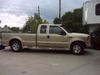
When I bought my 20 f250 I had a 750 mile drive home, from central California to southwestern Washington. Started a 5 am drove straight thru with restroom stops and lunch. 1.5 hours later got home. Drove without cruise control, to help keep me awake and alert, and slightly varied the speed. No engine problems, runs great, averages 20mpg.
Smokeploe
Smokeploe

Laughing Gas

Joined: Oct 2014
Posts: 962
Likes: 114
From: Middle TN
Not a recomendation, just my experience.
I have had several new trucks and cars over my lifetime. With the trucks, i just waited till about 1000 miles or so before towing anything. Otherwise, I drive em like I normally do. I have a heavy foot with these diesels, and have had zero issues. I usually keep these trucks till around 200K.
I have had several new trucks and cars over my lifetime. With the trucks, i just waited till about 1000 miles or so before towing anything. Otherwise, I drive em like I normally do. I have a heavy foot with these diesels, and have had zero issues. I usually keep these trucks till around 200K.
Lead Driver
Joined: Feb 2022
Posts: 7,995
Likes: 4,061
Old wives need to just die off…….along with their tales!
When trucker Joe buys himslf a new KW, Pete, or Freightshaker he puts it to WORK,,,,,,,,not drive around empty for a thousand miles so tha FoMoCo lawyers can sleep, And the drive trains in those go for a LOOOOOOOOG time if properly cared for and not abused. Most service drive train components (Trans and diffs ) every 250,000 miles.
So, if you need it to work, work it and don’t look back……….Or use it for a city boy truck…..ooooh, it might break if I actually use it for its intended purpose!
When trucker Joe buys himslf a new KW, Pete, or Freightshaker he puts it to WORK,,,,,,,,not drive around empty for a thousand miles so tha FoMoCo lawyers can sleep, And the drive trains in those go for a LOOOOOOOOG time if properly cared for and not abused. Most service drive train components (Trans and diffs ) every 250,000 miles.
So, if you need it to work, work it and don’t look back……….Or use it for a city boy truck…..ooooh, it might break if I actually use it for its intended purpose!
EDIT: Found one,
FTE Stories
Ford Trucks for Ford Truck Enthusiasts

Top 6 Best Deals Available on New Fords & Lincolns Right Now
Brett Foote
This Hennessey Takes the Expedition Tremor's Off-Roading Capability to the Next Level
Verdad Gallardo
Top 10 Fords at 2026 Carlisle Ford Nationals
Joe Kucinski
3 Best / 3 Worst Parts of Modern Ford Ownership
Brett Foote
10 Amazing Upgrades That Solve Common Ford Truck Owner Headaches
Pouria Savadkouei
Every 2026 Ford Engine Explained
Brett Foote
10 Ugly Ford Trucks That We Still Kinda Love
Joe Kucinski
10 Things Every Truck Owner NEEDS (2026 Edition)
Michael S. Palmer
Rezvani's Latest Post-Apocalyptic Monster Is a Ford F-150 Raptor Underneath
Verdad Gallardo
Hotshot
Joined: Oct 2006
Posts: 10,188
Likes: 8,071
From: Texas
HUGE difference between a big rig that hauls heavy from day one to a pickup that occasionally tows. The big truck gets break in under the load it will be most used for while the pickup would do the same, which would not be towing a big load. Also the components are quite a bit larger and beefier in the big truck. Thats like watermelons to apples comparison.
The BIG reason Ford wants you to baby it iis to minimize chance it breaks on THEIR dime. If there is a weak point, I want to find it ASAP while the 3/36 is still in effect; but, you go ahead and do you!

Thread Starter
|
Mountain Pass

Joined: Sep 2019
Posts: 176
Likes: 58
Engines today do not need a break in period. The oil that is in them from the factory is the same oil that the dealers(those using OEM oils that is) use. The rings are seated at the factory, and that is what break in is, seating the rings. Engines today are like fine watches, they are manufactured to tight tolerances unlike the old cast iron blocks of yesteryear. Oil today is also unlike years ago so the combination of both no longer require extensive break in periods. Rebuild an engine though, and you will need to do the break in.
The break in period in the manual is for the drive train itself. The PCM needs to learn the operators needs, which is mainly shift patterns and load requirements, and also to wear in the ring gears. The ring gears are the one component that does require gentle use for the first few hundred miles to prevent damage. They need to wear in properly or they chatter and whine. So between the clutch packs in the trans, the PCM learning and the ring gear wear, those are the items referred to in break in, not the engine.
Other than heavy towing, just drive it like you would normally drive it. If you were to tow heavy right off the lot, you could put abnormal wear on the ring gears, and it would upset the learning curve, unless the truck did nothing but tow.
The break in period in the manual is for the drive train itself. The PCM needs to learn the operators needs, which is mainly shift patterns and load requirements, and also to wear in the ring gears. The ring gears are the one component that does require gentle use for the first few hundred miles to prevent damage. They need to wear in properly or they chatter and whine. So between the clutch packs in the trans, the PCM learning and the ring gear wear, those are the items referred to in break in, not the engine.
Other than heavy towing, just drive it like you would normally drive it. If you were to tow heavy right off the lot, you could put abnormal wear on the ring gears, and it would upset the learning curve, unless the truck did nothing but tow.
Thread Starter
|
Mountain Pass
Joined: Sep 2019
Posts: 176
Likes: 58
Not a recomendation, just my experience.
I have had several new trucks and cars over my lifetime. With the trucks, i just waited till about 1000 miles or so before towing anything. Otherwise, I drive em like I normally do. I have a heavy foot with these diesels, and have had zero issues. I usually keep these trucks till around 200K.
I have had several new trucks and cars over my lifetime. With the trucks, i just waited till about 1000 miles or so before towing anything. Otherwise, I drive em like I normally do. I have a heavy foot with these diesels, and have had zero issues. I usually keep these trucks till around 200K.
Thread Starter
|
Mountain Pass
Joined: Sep 2019
Posts: 176
Likes: 58
Thank you for sharing the breaking proceedures. I have to check the hours on mine. I have not been keeping track of that. I am not sure what defines running the engine hard. I had to drive on the interstate to get home so varied between mostly 55 - 75 with one burst over 80.
Thread Starter
|
Mountain Pass
Joined: Sep 2019
Posts: 176
Likes: 58
HUGE difference between a big rig that hauls heavy from day one to a pickup that occasionally tows. The big truck gets break in under the load it will be most used for while the pickup would do the same, which would not be towing a big load. Also the components are quite a bit larger and beefier in the big truck. Thats like watermelons to apples comparison.
Those aren't "new" engines, but remanufactured engines. New Factory assembled engines are broken in at the factory, while reman are broken in while in the vehicle. A reman isn't going to spend the big bucks on a machine to break the engine in while being assembled. The break in of an engine is seating the rings, and for that you need combustion pressure, which the machines supply via high pressure air while spinning the crankshaft at a set RPM for a set amount of time. I watched a couple videos on it. If I find them I will post where they use the machine.
EDIT: Found one,
https://youtu.be/kbtJVXcd86M?t=1307
Those aren't "new" engines, but remanufactured engines. New Factory assembled engines are broken in at the factory, while reman are broken in while in the vehicle. A reman isn't going to spend the big bucks on a machine to break the engine in while being assembled. The break in of an engine is seating the rings, and for that you need combustion pressure, which the machines supply via high pressure air while spinning the crankshaft at a set RPM for a set amount of time. I watched a couple videos on it. If I find them I will post where they use the machine.
EDIT: Found one,
https://youtu.be/kbtJVXcd86M?t=1307
VERY interesting! Thank you for sharing.
Thread Starter
|
Mountain Pass
Joined: Sep 2019
Posts: 176
Likes: 58
When I bought my 20 f250 I had a 750 mile drive home, from central California to southwestern Washington. Started a 5 am drove straight thru with restroom stops and lunch. 1.5 hours later got home. Drove without cruise control, to help keep me awake and alert, and slightly varied the speed. No engine problems, runs great, averages 20mpg.
Smokeploe
Smokeploe
