


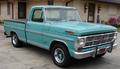

Sudden Overheating

Thread Starter
|
Fleet Mechanic


Joined: Apr 2017
Posts: 1,391
Likes: 106
From: COSMOS
Sudden Overheating
Sudden Overheating after adding a #12 ground wire from battery to radiator support !!!
Now this may just be a quidescence quweninceadence , ( now spell check want to give a word that starts with a s ) my life.............
I drove my truck 3 weeks ago or so 50 miles , 70 miles I don't know but was onn interstate alot @ close to 70 mph at times . It never overheated & temp was 180 -190 !
Now last week it idled i for about 7 min. maybe 10 ? Then I drove it 150 yds & let it idle for another maybe 10 min. and I noticed it was very hot , I jumped in it & drove it back another 150 yds and temp was 205 or so , I shut it off & tem rose to 215 or 217 . IT NEVER OVERFLOWED , NO STREAM THAT i REMEMBER but it was HOT . I slowly poured cold water on radiator and stream would come off easily , but nothing ever came out of overflow.........
Next day I checked radiator & it was full of coolant , level down about 2inches from the top .
Why the sudden overheating...........!!!
Now this may just be a quidescence quweninceadence , ( now spell check want to give a word that starts with a s ) my life.............
I drove my truck 3 weeks ago or so 50 miles , 70 miles I don't know but was onn interstate alot @ close to 70 mph at times . It never overheated & temp was 180 -190 !
Now last week it idled i for about 7 min. maybe 10 ? Then I drove it 150 yds & let it idle for another maybe 10 min. and I noticed it was very hot , I jumped in it & drove it back another 150 yds and temp was 205 or so , I shut it off & tem rose to 215 or 217 . IT NEVER OVERFLOWED , NO STREAM THAT i REMEMBER but it was HOT . I slowly poured cold water on radiator and stream would come off easily , but nothing ever came out of overflow.........
Next day I checked radiator & it was full of coolant , level down about 2inches from the top .
Why the sudden overheating...........!!!

Cargo Master


Joined: Jul 2015
Posts: 2,069
Likes: 138
From: tucson
How old is the radiator? Has it ever been cleaned? The system flushed? How much space is between the fan and the radiator? Shroud?
My '64 had a 390 swapped into it. Even with a new radiator and system flushed, it hates to sit idling. 10 to 15 min of idling and it starts to over heat.
My '64 had a 390 swapped into it. Even with a new radiator and system flushed, it hates to sit idling. 10 to 15 min of idling and it starts to over heat.
Thread Starter
|
Fleet Mechanic
Joined: Apr 2017
Posts: 1,391
Likes: 106
From: COSMOS
Fresh radiator repair & flush , new thermostat , by-pass hose , rad hoses , no shroud , but has not got this hot before just idling..........
I read too much advance will cause overheating , but how much overheating !!! I am puzzled why nothing came out the overflow , unless temp has to be 220 degrees or more
I read too much advance will cause overheating , but how much overheating !!! I am puzzled why nothing came out the overflow , unless temp has to be 220 degrees or more

Moderator
Joined: Apr 2011
Posts: 313
Likes: 93
From: San Antonio, TX

215 is nothing to lose sleep over at all.
When things start overing over 230 I will start to take action.
I would say that what you're experiencing is a coincidence. Overheating while idling is relatively easy to troubleshoot. You're either gonna have some sort of coolant restriction or air flow issue. Make sure a lower hose hasn't collapsed, your thermostat is operating properly, radiator doesn't have blockage; fan and shroud are in good shape, etc. Start will the easy stuff and work your way to the more in depth stuff.
When things start overing over 230 I will start to take action.
I would say that what you're experiencing is a coincidence. Overheating while idling is relatively easy to troubleshoot. You're either gonna have some sort of coolant restriction or air flow issue. Make sure a lower hose hasn't collapsed, your thermostat is operating properly, radiator doesn't have blockage; fan and shroud are in good shape, etc. Start will the easy stuff and work your way to the more in depth stuff.

Lead Driver

Joined: Jul 2017
Posts: 9,606
Likes: 1,175
From: San Jose, CA
What was said above. You can’t compare driving at speed on the road, and just idling around the yard as the same thing regarding engine heat.
They are two completely different scenarios as far as a cooling system is concerned.
Timing being too advanced “might“ cause it, but so can the timing being too retarded cause it.
Best first step is to make sure the timing is at least at specification, or maybe a little bit advanced.
You don’t want it either extreme.
As was said also, you were not overheating in any way.
Your thermostat may be at 180, but many of us run 195. And many modern engines run 210 as their normal operating temperature.
So you were not overheating, and weren’t even at the area where you usually would burp coolant unless you had a week or lower pressure radiator cap.
Do you have a recovery/overflow tank for the radiator? Or just a tube to the ground?
They are two completely different scenarios as far as a cooling system is concerned.
Timing being too advanced “might“ cause it, but so can the timing being too retarded cause it.
Best first step is to make sure the timing is at least at specification, or maybe a little bit advanced.
You don’t want it either extreme.
As was said also, you were not overheating in any way.
Your thermostat may be at 180, but many of us run 195. And many modern engines run 210 as their normal operating temperature.
So you were not overheating, and weren’t even at the area where you usually would burp coolant unless you had a week or lower pressure radiator cap.
Do you have a recovery/overflow tank for the radiator? Or just a tube to the ground?
Thread Starter
|
Fleet Mechanic
Joined: Apr 2017
Posts: 1,391
Likes: 106
From: COSMOS

What was said above. You can’t compare driving at speed on the road, and just idling around the yard as the same thing regarding engine heat.
They are two completely different scenarios as far as a cooling system is concerned.
Timing being too advanced “might“ cause it, but so can the timing being too retarded cause it.
Best first step is to make sure the timing is at least at specification, or maybe a little bit advanced.
You don’t want it either extreme.
As was said also, you were not overheating in any way.
Your thermostat may be at 180, but many of us run 195. And many modern engines run 210 as their normal operating temperature.
So you were not overheating, and weren’t even at the area where you usually would burp coolant unless you had a week or lower pressure radiator cap.
Do you have a recovery/overflow tank for the radiator? Or just a tube to the ground?
They are two completely different scenarios as far as a cooling system is concerned.
Timing being too advanced “might“ cause it, but so can the timing being too retarded cause it.
Best first step is to make sure the timing is at least at specification, or maybe a little bit advanced.
You don’t want it either extreme.
As was said also, you were not overheating in any way.
Your thermostat may be at 180, but many of us run 195. And many modern engines run 210 as their normal operating temperature.
So you were not overheating, and weren’t even at the area where you usually would burp coolant unless you had a week or lower pressure radiator cap.
Do you have a recovery/overflow tank for the radiator? Or just a tube to the ground?
 Your support is so welcomed !!!
I was very scared to drive the truck today because I have had so many things to go wrong I just knew this was gonna be another tow job
if I drove it just a few miles . Before I left I checked the collant strength & @ 3 ***** it rates , -10 to 222 deg. Yes I was happy to see that because I figured that is why water did not boil out , it did not get hot enough so I was relieved alot.........So I decided to go for a test ride 
I recently happen to usually wait until after 5:00 to test drive the truck ,so the tow bill I assume would be higher !!! Dumb me does it anyway , & I get so anxious to get it fixed I go for it

Well I drove it 5 miles or so and temperature never got past 180 degrees
 I only went 40 mph or maybe 50 for a short span and temp MAY have went just a little past 180 . My thermostat is rated @ 180 & I read these engines need to run @ 180 to burn the fuel properly
 Now I must fix my cracked stock fan shroud & maybe truck will not get so hot setting still
I read that to much advance will cause engine to get hot
 Why & how hot will that be ???
My truck seems to run rich , no black smoke at all but I do smell gas out the pipe !
I have a hi-performance 2 barrel Holley with 31 jets , & 61 accel. pump nozzel . I just bought a 28 jet & 58 nozzle . Before I install them I am gonna try to tune it too the max , with engine analyzer & vacuum gauge , & maybe new plug wires I must make
I have no mufflers with long tube headers
and truck back-fires through the tail pipes often like & old dirt track car Will this hurt the engine & running rich make back-fire worse ? I think with no mufflers it will rumble & back-fire a little rich or not is this right thinking...........
Trending Topics

Tuned
Joined: Jul 2019
Posts: 464
Likes: 80
From: Evansville, Indiana
RT, hit the pause button for a second.
1. Start with the initial timing, set at 10-12 degrees. Confirm you have no vacuum leaks at the vacuum advance diaphragm. If you need new plug wires, install them too to cancel out potential issues there. While there, check the plugs, replace if needed.
2. Fix the fan shroud or buy a new one and replace. I went years without a shroud and noticed that in stopped traffic the temp gauge would creep up...the new shroud made a huge difference by directing the air from the mechanical fan versus the air just swirling around under the hood. With I would have done this sooner.
3. Confirm the fuel bowl height is set correctly. Too high of a setting with pass through the seat and flood the engine at idle...an easy one to fix. Too high fuel pressure will also cause flooding. Holley's like 5-7 psi.
4. Using the vacuum gauge, set your idle/air fuel mixture screws on your carburetor to get max vacuum reading. Start with 1.5 turns out on each side....this should get you close.
5. If it is still back firing and running rich, I would confirm the power valve has not blown thus dumping excess fuel at idle. The power valve should be about half the amount of your vacuum at idle. (example: with 20" of vacuum, I used a 10.5 power valve)
A lesson I learned the hard way on carburetors was to always check the simple things first and leave the jets and nozzles until last. With a more stock engine, the chances of needing to replace jets and nozzles is less likely.
1. Start with the initial timing, set at 10-12 degrees. Confirm you have no vacuum leaks at the vacuum advance diaphragm. If you need new plug wires, install them too to cancel out potential issues there. While there, check the plugs, replace if needed.
2. Fix the fan shroud or buy a new one and replace. I went years without a shroud and noticed that in stopped traffic the temp gauge would creep up...the new shroud made a huge difference by directing the air from the mechanical fan versus the air just swirling around under the hood. With I would have done this sooner.
3. Confirm the fuel bowl height is set correctly. Too high of a setting with pass through the seat and flood the engine at idle...an easy one to fix. Too high fuel pressure will also cause flooding. Holley's like 5-7 psi.
4. Using the vacuum gauge, set your idle/air fuel mixture screws on your carburetor to get max vacuum reading. Start with 1.5 turns out on each side....this should get you close.
5. If it is still back firing and running rich, I would confirm the power valve has not blown thus dumping excess fuel at idle. The power valve should be about half the amount of your vacuum at idle. (example: with 20" of vacuum, I used a 10.5 power valve)
A lesson I learned the hard way on carburetors was to always check the simple things first and leave the jets and nozzles until last. With a more stock engine, the chances of needing to replace jets and nozzles is less likely.
FTE Stories
Ford Trucks for Ford Truck Enthusiasts

3 Best / 3 Worst Parts of Modern Ford Ownership
Brett Foote
10 Amazing Upgrades That Solve Common Ford Truck Owner Headaches
Pouria Savadkouei
Every 2026 Ford Engine Explained
Brett Foote
10 Ugly Ford Trucks That We Still Kinda Love
Joe Kucinski
10 Things Every Truck Owner NEEDS (2026 Edition)
Michael S. Palmer
Rezvani's Latest Post-Apocalyptic Monster Is a Ford F-150 Raptor Underneath
Verdad Gallardo
Top 10 Most Expensive Ford Trucks Ever Sold on Bring a Trailer
Joe Kucinski
2027 Ford Super Duty Buyer's Guide (Every Model, Engine, & Package)
Brett Foote
Top 10 Ford Truck Tragedies
Joe Kucinski
Lead Driver
Joined: Jul 2017
Posts: 9,606
Likes: 1,175
From: San Jose, CA
[QUOTE=RTT;20852685]My thermostat is rated @ 180 & I read these engines need to run @ 180 to burn the fuel properly.
Just so you know, pretty much EVERY internal combustion engine burns the fuel more effectively at higher temperatures. That's why they've gone to great lengths over the years to raise engine temperatures while keeping emissions down and not so high that you need to use higher octane fuel.
Hence my comment previously about many of us even with older rigs running 192° and 195° thermostats.
Any initial burping/purging of coolant out of the overflow hose is usually the simple expanding of the liquid and it being slightly over-filled. Normally, without an expansion/overflow tank, a radiator will burp out only what's excess the first few times it reaches full temperature. Once at that point, you don't get the spitting of coolant under normal driving conditions.
But once it really does run much hotter, it expands more and so more liquid spits out. Until it reaches a boiling point for the pressure inside, at which point it actually does "boil over" and you lose a lot of coolant to the outside world.
Which is why a hot radiator that is not boiling over should not be opened until it's a bit cooler.
It's not only to save someone from burns, but it's mainly to keep it from boiling in the first place. The higher the pressure in the system, the higher the boiling point. So when the caps are removed you often see an otherwise not overheated coolant just spew out uncontrollably to the point that you can lose literally half to three quarters of your coolant to the ground.
Or more!
Sorry if you knew all those basics already, but I thought it was fun to type all that and get it out of my system!
[QUOTE=RTT;20852685]Now I must fix my cracked stock fan shroud & maybe truck will not get so hot setting still.
Definitely! It might, or might not be the underlying issue, but it's certainly not helping!
[QUOTE=RTT;20852685]I read that to much advance will cause engine to get hot.
Why & how hot will that be ???
I can't quote the reasons, because I don't know all of them. But any time a particular engine is not running proper timing, it has a chance to (and tends to!) run hot. Whether hot in the combustion chamber, or hot in the exhaust port/manifold.
So hot, cold, advanced, or retarded, check the timing!
[QUOTE=RTT;20852685]My truck seems to run rich , no black smoke at all but I do smell gas out the pipe.
It might be too lean. It might have improper timing, or poor carb tuning, or the choke is stuck partially closed, or weak spark, or lean jetting, OR (see header comments below!)
Any time it combusts the fuel poorly, it will smell "rich" because it's not burning it all in the engine. Some aspects of this are called "lean misfire" which causes more than it's fair share of rich smelling exhaust.
[QUOTE=RTT;20852685]I have a hi-performance 2 barrel Holley with 31 jets , & 61 accel. pump nozzel . I just bought a 28 jet & 58 nozzle . Before I install them I am gonna try to tune it too the max , with engine analyzer & vacuum gauge , & maybe new plug wires I must make
Good to try to tune it. And I don't know much about Holley carbs, but in general that sure sounds like a small jet size. Stock carbs are in the mid to high 40's in jet size I thought. I know this is a different beast, but maybe someone with Holley expertise can chime in.
Is it a manual choke or automatic?
[QUOTE=RTT;20852685]I have no mufflers with long tube headers and truck back-fires through the tail pipes often like & old dirt track car.
Wait, what? What!!!!!!! Why are you trying to fine-tune a street/trail engine without an exhaust system?
Stop all this tuning crap and finish the project first! You can't tune a carb properly with open exhaust. Wide open headers usually means that it's running too lean. And the popping exhaust sounds lean as well.
How does it run when you have the choke closed 1/3 of the way? Does the choke close when it's cold? Does it open when it's warm?
Maybe, yes and yes. No mufflers is not tuned for anything but wide open throttle. Or at least heavily opened throttle. You might like the sound, but you're fighting a battle on a second front with open exhaust.
I should have asked before, but is there any tubing at all, or is it just open headers? Either way it's too far open, but if just headers and no tubing, you're fighting your tuning efforts all the way.
If you like the open header sound, then you will probably have to richen the carb jetting, change the timing to whatever works best, make sure the ignition has the hottest spark you can give it, gap the plugs accordingly, and probably still suffer from the too-thick gas smell.
I'm not right all the time about stuff like this, but I think I'm on the hunt now. So check those boxes, let us know how much exhaust you have, how much other extra stuff (cam, intake, etc.) and we can keep going from there.
Hopefully those with more tuning knowledge than I will pipe up and give their 3cents worth.
Paul
Just so you know, pretty much EVERY internal combustion engine burns the fuel more effectively at higher temperatures. That's why they've gone to great lengths over the years to raise engine temperatures while keeping emissions down and not so high that you need to use higher octane fuel.
Hence my comment previously about many of us even with older rigs running 192° and 195° thermostats.
Any initial burping/purging of coolant out of the overflow hose is usually the simple expanding of the liquid and it being slightly over-filled. Normally, without an expansion/overflow tank, a radiator will burp out only what's excess the first few times it reaches full temperature. Once at that point, you don't get the spitting of coolant under normal driving conditions.
But once it really does run much hotter, it expands more and so more liquid spits out. Until it reaches a boiling point for the pressure inside, at which point it actually does "boil over" and you lose a lot of coolant to the outside world.
Which is why a hot radiator that is not boiling over should not be opened until it's a bit cooler.
It's not only to save someone from burns, but it's mainly to keep it from boiling in the first place. The higher the pressure in the system, the higher the boiling point. So when the caps are removed you often see an otherwise not overheated coolant just spew out uncontrollably to the point that you can lose literally half to three quarters of your coolant to the ground.
Or more!
Sorry if you knew all those basics already, but I thought it was fun to type all that and get it out of my system!
[QUOTE=RTT;20852685]Now I must fix my cracked stock fan shroud & maybe truck will not get so hot setting still.
Definitely! It might, or might not be the underlying issue, but it's certainly not helping!
[QUOTE=RTT;20852685]I read that to much advance will cause engine to get hot.
Why & how hot will that be ???
I can't quote the reasons, because I don't know all of them. But any time a particular engine is not running proper timing, it has a chance to (and tends to!) run hot. Whether hot in the combustion chamber, or hot in the exhaust port/manifold.
So hot, cold, advanced, or retarded, check the timing!
[QUOTE=RTT;20852685]My truck seems to run rich , no black smoke at all but I do smell gas out the pipe.
It might be too lean. It might have improper timing, or poor carb tuning, or the choke is stuck partially closed, or weak spark, or lean jetting, OR (see header comments below!)
Any time it combusts the fuel poorly, it will smell "rich" because it's not burning it all in the engine. Some aspects of this are called "lean misfire" which causes more than it's fair share of rich smelling exhaust.
[QUOTE=RTT;20852685]I have a hi-performance 2 barrel Holley with 31 jets , & 61 accel. pump nozzel . I just bought a 28 jet & 58 nozzle . Before I install them I am gonna try to tune it too the max , with engine analyzer & vacuum gauge , & maybe new plug wires I must make
Good to try to tune it. And I don't know much about Holley carbs, but in general that sure sounds like a small jet size. Stock carbs are in the mid to high 40's in jet size I thought. I know this is a different beast, but maybe someone with Holley expertise can chime in.
Is it a manual choke or automatic?
[QUOTE=RTT;20852685]I have no mufflers with long tube headers and truck back-fires through the tail pipes often like & old dirt track car.
Wait, what? What!!!!!!! Why are you trying to fine-tune a street/trail engine without an exhaust system?
Stop all this tuning crap and finish the project first! You can't tune a carb properly with open exhaust. Wide open headers usually means that it's running too lean. And the popping exhaust sounds lean as well.
How does it run when you have the choke closed 1/3 of the way? Does the choke close when it's cold? Does it open when it's warm?
I should have asked before, but is there any tubing at all, or is it just open headers? Either way it's too far open, but if just headers and no tubing, you're fighting your tuning efforts all the way.
If you like the open header sound, then you will probably have to richen the carb jetting, change the timing to whatever works best, make sure the ignition has the hottest spark you can give it, gap the plugs accordingly, and probably still suffer from the too-thick gas smell.
I'm not right all the time about stuff like this, but I think I'm on the hunt now. So check those boxes, let us know how much exhaust you have, how much other extra stuff (cam, intake, etc.) and we can keep going from there.
Hopefully those with more tuning knowledge than I will pipe up and give their 3cents worth.
Paul
Thread Starter
|
Fleet Mechanic
Joined: Apr 2017
Posts: 1,391
Likes: 106
From: COSMOS
Some very AMAZING & THOROUGH answers
I agree with you all
Not sure about the lean comments but after more research last night I did see where lean is a good possibility , which is strange thinking @ first but you explain why so it probably is so and I will definitely not try to lean it for now with my new jets , & nozzle .
One important detail I did not mention is my plugs are oil & maybe gas fouled I think I found very small bits of oil seals years ago when I first bought the truck !!! This is probably why plugs are maybe oily . I do think there is some carbon on plugs from only too much idling and almost no driving , & timing may be off also !!!
I have some new plugs , which well tell me if engine is still running rich or lean and will check for a vacuum leaks and try to do the best tune up I possibly can to the carb also.
I drove truck 15 miles or so today and ran great except I think it idles too fast . Temp stayed @180 all the time except when I talked to a friend & it got up to 190 or so and left . it cooled right down.........
Finally after much thinking truck does not back-fire it is just rumble which I luv..........I have long tube headers straight until the axle then pipes curl up over and to about an inch past the bumper . So this curl should provide a little back pressure that some folks say all engines need  So I am not running anything close to open exhaust
I have found out half of the experts say you need back pressure & mufflers & other half says no mufflers & no back pressure is fine...........One article mentioned NASCAR , and one or two other examples do not use mufflers , and seemed logical to me Yes they maybe race cars , but these cars run hundreds of miles a race , some run for 24 hours @ 9000 rpm's for many races and their engines do not blow up from lack of back pressure........
I have no back-firing just horsepower kicking up some heels........ha
Thank you for your kind help ...it is much welcomed change to my very complex life , full of negativity with rare genuine happiness

I agree with you all
Not sure about the lean comments but after more research last night I did see where lean is a good possibility , which is strange thinking @ first but you explain why so it probably is so
and I will definitely not try to lean it for now with my new jets , & nozzle .One important detail I did not mention is my plugs are oil & maybe gas fouled
I think I found very small bits of oil seals years ago when I first bought the truck !!! This is probably why plugs are maybe oily . I do think there is some carbon on plugs from only too much idling and almost no driving , & timing may be off also !!!I have some new plugs , which well tell me if engine is still running rich or lean
and will check for a vacuum leaks and try to do the best tune up I possibly can to the carb also.I drove truck 15 miles or so today and ran great except I think it idles too fast . Temp stayed @180 all the time except when I talked to a friend & it got up to 190 or so and left . it cooled right down.........
Finally after much thinking truck does not back-fire
it is just rumble which I luv..........I have long tube headers straight until the axle then pipes curl up over and to about an inch past the bumper . So this curl should provide a little back pressure that some folks say all engines need So I am not running anything close to open exhaust I have found out half of the experts say you need back pressure & mufflers & other half says no mufflers & no back pressure is fine...........One article mentioned NASCAR , and one or two other examples do not use mufflers , and seemed logical to me
Yes they maybe race cars , but these cars run hundreds of miles a race , some run for 24 hours @ 9000 rpm's for many races and their engines do not blow up from lack of back pressure........I have no back-firing just horsepower kicking up some heels........ha
Thank you for your kind help ...it is much welcomed change to my very complex life , full of negativity with rare genuine happiness
Lead Driver
Joined: Jul 2017
Posts: 9,606
Likes: 1,175
From: San Jose, CA
It's a real fine balance inside that combustion chamber to get things going correctly.
One important detail I did not mention is my plugs are oil & maybe gas fouled I think I found very small bits of oil seals years ago when I first bought the truck !!! This is probably why plugs are maybe oily . I do think there is some carbon on plugs from only too much idling and almost no driving , & timing may be off also !!!
I think I found very small bits of oil seals years ago when I first bought the truck !!! This is probably why plugs are maybe oily . I do think there is some carbon on plugs from only too much idling and almost no driving , & timing may be off also !!!Often we get the burbling upon deceleration when the mixture is a bit lean.
Does it rumble when decelerating only? Or does it make a distinct sound when just driving around and accelerating too?
So this curl should provide a little back pressure that some folks say all engines need So I am not running anything close to open exhaust
I have found out half of the experts say you need back pressure & mufflers & other half says no mufflers & no back pressure is fine.....
So I am not running anything close to open exhaust I have found out half of the experts say you need back pressure & mufflers & other half says no mufflers & no back pressure is fine.....
It's not "backpressure" per sé that we need for best results, but it is in fact "fine tuning" the exhaust diameter, length, curving and muffler and even cross-overs to best suit a particular engine and a particular owner's desired performance level.
It's often said that backpressure is desirable because, without a dyno to prove one aspect or another, most street driven engines benefit down lower with a more restrictive exhause.
Essentially leaving "backpressure" as the easiest explanation. Unless you have a dynomometer and full instrumentation to monitor all aspects, backpressure is your best way to get it across to the customer.
After all, "quieter equals more backpressure" right?
So while it's not 100% correct to call it backpressure at work, it's not 100% incorrect either.
One article mentioned NASCAR , and one or two other examples do not use mufflers , and seemed logical to me Yes they maybe race cars , but these cars run hundreds of miles a race , some run for 24 hours @ 9000 rpm's for many races and their engines do not blow up from lack of back pressure....
Yes they maybe race cars , but these cars run hundreds of miles a race , some run for 24 hours @ 9000 rpm's for many races and their engines do not blow up from lack of back pressure....I doubt that any NASCAR, or any other type of race team, ever just put someone's borrowed carburetor, or even a brand new one made just for them, and slapped random headers and some tubing on their 9,000 rpm engine without fine tuning it first and changing the jet sizes to keep the mixture perfect at their desired running state.
I believe it was Nascar that first pioneered the use of cross-over exhaust tubing. Tying the two separate banks together to help "tune" the exhaust even more finely.
It's not the backpressure, or lack thereof, that burns out engines. It's the wrong jetting (and ignition timing) for the conditions...
Paul
Thread Starter
|
Fleet Mechanic
Joined: Apr 2017
Posts: 1,391
Likes: 106
From: COSMOS
" It's not the back-pressure, or lack thereof, that burns out engines. It's the wrong jetting (and ignition timing) for the conditions... "
Well according to my sources no back-pressure COULD maybe burn up the valves . If I remember correctly that is the main concern & what is causing the big debate among the so called experts !!! Just like should you use grease or oil in your steering box ..........Some folks are have their own reasons & beliefs or there is lots of complicating engineering involved to understand & they choose not to try to understand , just do what is easiest !!!
Anyway you feedback & knowledge is always welcome & u have helped my greatly !!!
Oh & I forgot , when I 1st ran this truck after setting for a year or so & various tweaking it was back-firing out the pipes at times but it stopped I noticed recently..........
I am always n a hurry & leave out of details @ times because my life is one big whirl-wind..........A sexy Red-neck muse of mine told me " Your like a fart n whirlwind " beautiful , beautiful WOMAN ...........
Well according to my sources no back-pressure COULD maybe burn up the valves . If I remember correctly that is the main concern & what is causing the big debate among the so called experts !!! Just like should you use grease or oil in your steering box ..........Some folks are have their own reasons & beliefs or there is lots of complicating engineering involved to understand & they choose not to try to understand , just do what is easiest !!!
Anyway you feedback & knowledge is always welcome & u have helped my greatly !!!
Oh & I forgot , when I 1st ran this truck after setting for a year or so & various tweaking it was back-firing out the pipes at times but it stopped I noticed recently..........
I am always n a hurry & leave out of details @ times because my life is one big whirl-wind..........A sexy Red-neck muse of mine told me " Your like a fart n whirlwind " beautiful , beautiful WOMAN ...........

Thread
Thread Starter
Forum
Replies
Last Post
woodsmoke
1948 - 1956 F1, F100 & Larger F-Series Trucks
24
Dec 16, 2018 10:09 PM
nudgey
1980 - 1986 Bullnose F100, F150 & Larger F-Series Trucks
21
May 14, 2004 08:12 PM