When you click on links to various merchants on this site and make a purchase, this can result in this site earning a commission. Affiliate programs and affiliations include, but are not limited to, the eBay Partner Network.
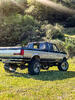
Still failed on 3rd test. This time got best results out of all 3 tests for HC at 25 mph but still failed at 15mph. Strange. Also this time, NO levels at both speeds were above the MAX allowed. Which I saw a progression in that through each test. CO lowest out of all 3 at 25mph and still passed both speeds. Did I make it too lean now? I need to figure out wth to do about this because I can't afford to take it to a shop. Automotive work goes for 150 an hour here. I attached the results below for comparison and reference. Obviously need to get it to how it was at the first test because I passed emissions there they just failed me cuz I made my own timing mark smh.
I can 100% guarantee you has fuel trim, the O2's job is to trim the fuel. Cheap code readers probably won't give you the data. Without looking at that stuff you may as well roll the diagnostic dice because you have no idea of what's really going on.
@craftsmangary So, do I need a new O2 sensor. You're saying im having lack of fuel trim or too much fuel trim. And is the source of the problem likely from the O2 sensor? The only data I will get is from smog checks which I already have 3 of.
In order for you to fix this you need to understand fuel trim and have a SCANNER because you need to see the numbers, a code reader isn't going to get you anywhere. Because you have a P0172 I already know your fuel trim is out. Go to youtube and watch some video's on understanding fuel trim, STFT and LTFT. If you figure why the fuel trim is out and fix it that'll probably clean up the exhaust and you'll pass.
I do not believe the OP stated they have any error codes. A 1988 model year F-Series truck does not a have computer that can output live data via the test port or a J3 port to view real time data with a tuner/laptop. Please correct me if I am wrong.
Correct. The only thing you can pull off of the computer is diagnostics for Check Engine Codes. This is PRE-OBDII. First year with EFI and electronic engine control with the Ford PCM.
Ford started using live data output around 1990. It is possible to view live data on OBD-I vehicles if the system supports it. Unfortunately that is not the case for a 1988 model year.
Plus the live data on a 1990 is probably not that fast updating or many values.
I know on gm vehicles the data you could read live while engine is running was limited to certain ones and certain tests would force the pcm to run a certain way, so it had to be under certain circumstances and the data updated slowly. An air fuel ratio meter may be wise? But there is some thing for sure that can be done, if the O2 isnt new its probably due (face it, even if it ran perfect its been 32 years since it was new) and a heated one may be wise. make sure if it grounds on exhaust the exhaust is grounded well. make sure the exhaust doesnt leak before the o2.
Make sure there are no vacuum leaks. The MAP sensor(should be testable with a volt meter I think?) should have a good source that is not collapsable and no leaks. the ECM ground should be clean and the grounding of the engine, frame, fenders etc should all be in order. The TPS should be checked for adjustment, if its not Recent, they do wear on the wiper I believe, so a new one which is also adjusted to spec is maybe wise. clean the IAC. make sure the EGR is operated in spec. make sure TB is not vacuum leak prone like with a propane torch unlit.
If this all will cost too much money, bribery and corruption is older than cars themselves and it just takes connections. Dark web may have some classifieds for this. (joking but not really)
Still failed on 3rd test. This time got best results out of all 3 tests for HC at 25 mph but still failed at 15mph. Strange. Also this time, NO levels at both speeds were above the MAX allowed. Which I saw a progression in that through each test. CO lowest out of all 3 at 25mph and still passed both speeds. Did I make it too lean now? I need to figure out wth to do about this because I can't afford to take it to a shop. Automotive work goes for 150 an hour here. I attached the results below for comparison and reference. Obviously need to get it to how it was at the first test because I passed emissions there they just failed me cuz I made my own timing mark smh.
3rd test
Also, is your cat converter in good order? I dont know much about an emissions test itself but if your cat was borderline or worn out I could see the NOX part making sense.
also it sounds like snake oil but GM had issues getting TBI 305 and 350 engines in the late 80s and 90s passing smog and they had a few tips
1) Run engine at higher idle while waiting for test
2) use gm top end engine cleaner(Expesnvie but you can use something like seafoams intake thing you let it soak and then continue cleaning carbon out the top end)
3) confirm engine ignition is up to snuff and plugs are in good condition/right gap. any spark lost to a carbon track or crossfire or poor connection is spark that cant complete the combustion event properly. also means verifying your wires with some water spray maybe a good idea. also if you have a distributor mounted module, you may be have one thats having heated related issues ?
4) make sure the AIR system is working as designed (more air to the cat means more temp means more efficient operation)
Gives some overall good engine tips, regardless of this being buick roadmaster its applicable to engines overall
I feel bad youre having to be at the mercy of a california for a pre obd2 era vehicle that also itself is going to be generally harder to keep in compliance over time .(I suspect a 4 cylinder taurus would not deviate as far as a 7.5l v8 over time)
Also you didnt read this here but if you can dodge taxes in this country then you probably can dodge other things with enough digging :O
Ford started using live data output around 1990. It is possible to view live data on OBD-I vehicles if the system supports it. Unfortunately that is not the case for a 1988 model year.
So in that data stream the STFT is -5%, the O2 is .47 and it's in closed loop, this looks like a good running engine. In a good running engine the STFT should be switching + and - and hover around 0, the O2 range is .1 (lean) to ,9 (rich) with .450 in the middle, the O2 should be switching above and below .450, on OBD1 vehicles without a heated O2 they'll switch in and out of closed loop at an idle, when the engine is doing all of that it's usually running good.
If the O2 is stuck at .9 and the fuel trim is off then you know you have a problem.
The ECM is always trying to keep the AF ratio at 14.7-1 and it does that by controlling the fuel trim, it know what the AF ratio is from what the O2 is telling it what to do.
If the STFT is out of wack for a while the ECM take that amount and adds it to the LTFT and reset's the STFT back to 0, so total FT is STFT + LTFT
i have a shelf full with all my old scanners, I have the old Star tester, the old Snap On Brick, a Snap on Modis, an Autel, and a few more. I don't ever remember not being able to see the data for those old OBD1 systems, it's been years since since I've done anything from the 80's, last OBD1 I fixed was a 94 Ford and I was able to see everything I wanted to see.
Mitchell and ALLData do have sensor range charts for some vehicles, typically it's what the values should be at an idle on the data stream you're reading. Google may help you find one is you need it, it can be helpful.
@AuroraGirl Thank you for all the tips. I think I most likely have a vacuum issue and Im going to go through all my sensors and make sure they are all working. Also yes lol I found a guy that would just mark it off but he said it would cost 300 dollars.
Rezvani's Latest Post-Apocalytic Monster Is a Ford F-150 Raptor Underneath
Slideshow: Called the Fortress, the 850-horsepower pickup combines Raptor underpinnings with military-inspired features, survival equipment, and a starting price of $285,000.


 3rd test failed again - but different