


360 2bbl Questions

Thread Starter
|
Mountain Pass
Joined: Jun 2021
Posts: 139
Likes: 3
From: Dallas, Texas
360 2bbl Questions
In another attempt to get my 1971 360ci 2bbl to make a little more power I put a kit in the carb. I really wanted to check the power valve and the jet sizes so the kit was really just in case I tore up any gaskets. The truck was already running much better than when I first got it and seems to run as I would expect up to about 1/4 throttle. Anything after that makes more noise but adds very little power. In the process of researching what I believe is my 2100 2bbl carb I found that it comes in several venturi sizes with different CFM rates. I have a 1.08" version which from my research looks like it is 287cfm and more suited to a 289 or 302ci engine so I'm wondering if this is not the right carb for my 360 and may be too small? I also found that I had one 54 jet and one 56 jet which is definitely not right and I'm thinking those jets are too large for the 1.08" carb. From my research I should have something more along the lines of a 49 main jet in that carb. I'm looking for opinions on what is the right size carb for this engine and what jets should it have in it? If this is the right carb, do I need to change the jets to a smaller size? I'm not ready to swap it all out for a 4bbl just yet although that may come at some point.
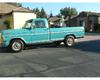
The truck has the C8AE-H heads. I've seen some posts that say these are good heads and some that say they are mild heads. In the Chevy world, a 2.02 head is a performance head and these heads have similar valve sizes so I'm expecting a bit better performance than I am seeing. At about 70mph it's just about done, I might get 80 down hill with a tail wind with my foot on the floor.
The truck has the C8AE-H heads. I've seen some posts that say these are good heads and some that say they are mild heads. In the Chevy world, a 2.02 head is a performance head and these heads have similar valve sizes so I'm expecting a bit better performance than I am seeing. At about 70mph it's just about done, I might get 80 down hill with a tail wind with my foot on the floor.
Fleet Mechanic
Joined: May 2017
Posts: 1,295
Likes: 29
From: Southern CA
First off what is the general elevation in your area? What power valve are you running? What is your idle manifold max vacuum number?
I have a 2100 1.08 that has 57 jets & runs fine at sea level. 54 jets seem more correct for an economy setup or higher elevation. Next carb up in the 2100 series is a 1.14 venturi at 300 cfm.
Ya what ever jets you go with they got to be the same size. Good luck.
I have a 2100 1.08 that has 57 jets & runs fine at sea level. 54 jets seem more correct for an economy setup or higher elevation. Next carb up in the 2100 series is a 1.14 venturi at 300 cfm.
Ya what ever jets you go with they got to be the same size. Good luck.

Super Moderator


Joined: Apr 2004
Posts: 34,518
Likes: 2,826

The 360 suffers from low compression and like most stock FE motors, very restrictive exhaust.
That said, it should run fine up to about 4000 RPM and easily run to 70, with the struggle being in the 80s where all you hit the wall on power vs all the forces involved.
How do your spark plugs look?
That carb is a little small for heavy loads or high speeds, but it will idle around town and run most flat freeways just fine.
The heads are almost the generic FE head. They are plenty big, but can be improved. I'm not sure what the flow numbers are compared to SBC, but you could look it up. The FE didn't have head flow issues, it was always exhaust, especially in cars with the OEM manifolds. Once you start working on the engine, porting the stock heads will come into play after several other things. In other words, don't worry about the heads.
What kind of muffler and what size pipe do you have after your y-pipe?
That said, it should run fine up to about 4000 RPM and easily run to 70, with the struggle being in the 80s where all you hit the wall on power vs all the forces involved.
How do your spark plugs look?
That carb is a little small for heavy loads or high speeds, but it will idle around town and run most flat freeways just fine.
The heads are almost the generic FE head. They are plenty big, but can be improved. I'm not sure what the flow numbers are compared to SBC, but you could look it up. The FE didn't have head flow issues, it was always exhaust, especially in cars with the OEM manifolds. Once you start working on the engine, porting the stock heads will come into play after several other things. In other words, don't worry about the heads.
What kind of muffler and what size pipe do you have after your y-pipe?
Thread Starter
|
Mountain Pass
Joined: Jun 2021
Posts: 139
Likes: 3
From: Dallas, Texas
First off what is the general elevation in your area? What power valve are you running? What is your idle manifold max vacuum number?
I have a 2100 1.08 that has 57 jets & runs fine at sea level. 54 jets seem more correct for an economy setup or higher elevation. Next carb up in the 2100 series is a 1.14 venturi at 300 cfm.
Ya what ever jets you go with they got to be the same size. Good luck.
I have a 2100 1.08 that has 57 jets & runs fine at sea level. 54 jets seem more correct for an economy setup or higher elevation. Next carb up in the 2100 series is a 1.14 venturi at 300 cfm.
Ya what ever jets you go with they got to be the same size. Good luck.

Tuned


Joined: Jul 2019
Posts: 464
Likes: 80
From: Evansville, Indiana
motogotor, my FE360 isn't a power house by any means either. I did get my vacuum to 20-21 at idle which helped the responsiveness and overall performance.
Noticeable power changes were the pertronix ignition, eldebrock performer intake, Holley 600cfm 4 barrel, plugs, wires, and good tuning. Reading books and articles on the FE, I agree with everyone on the exhaust is the killer, which is why I'm saving up for headers and 2.5" exhaust.
If your carburetor is caput, maybe purchase a Holley 500cfm 2-barrel. Probably could find a used one on here or ebay. New ones are pricey,..$475.00
Noticeable power changes were the pertronix ignition, eldebrock performer intake, Holley 600cfm 4 barrel, plugs, wires, and good tuning. Reading books and articles on the FE, I agree with everyone on the exhaust is the killer, which is why I'm saving up for headers and 2.5" exhaust.
If your carburetor is caput, maybe purchase a Holley 500cfm 2-barrel. Probably could find a used one on here or ebay. New ones are pricey,..$475.00
Thread Starter
|
Mountain Pass
Joined: Jun 2021
Posts: 139
Likes: 3
From: Dallas, Texas
I have 18.5" of vacuum at idle and have adjusted the timing using the vacuum gauge method I found on here. It has electronic ignition of some sort and 2" dual exhaust all the way to the back of the truck. The PO put dump valves in front of the mufflers but opening them doesn't seem to do much for the truck other than make it louder. I did a full throttle test this morning and it seems to pull okay right off idle but but as the revs climb the power drops and it starts to do some light surging. At the 1-2 shift it smooths out and pulls again until the revs climb and the surge starts but it is not able to pull up to a 2-3 shift with the pedal on the floor. If I lift and let it shift to 3rd and then floor it again it will downshift but cannot accelerate. At this point I'm running about 70mph and that's all I'm going to get anytime soon. Something is going off kilter at about half throttle. You can almost feel the truck slow down in the 1/2-3/4 throttle range. When I run the truck in the driveway it sprays black water out of the exhaust which further leads me to believe it is running too rich. I think I'm going to play with the jetting a bit before I throw in the towel and buy a different carb :-)
Tuned
Joined: Jul 2019
Posts: 464
Likes: 80
From: Evansville, Indiana
When you say you set the timing using the vacuum gauge method, did you also tune the carburetor using the same method? Screw both air/fuel bleeds in all of the way (gently) and back out a turn and a half. Hook up the vacuum gauge and turn them in or out (you choose where to start) and watch for the vacuum to change. Quarter turn at a time going back and forth on the screws. I agree, sounds rich...black water out of the pipe when you first start it up or continues to spray? I would try that before changing jets....easy and you might just fix it.
Trending Topics
Fleet Mechanic
Joined: May 2017
Posts: 1,295
Likes: 29
From: Southern CA
I have run both a Autolite 2100 1.08 venturi carb & my current Holley 2300 350cfm carb. They are on a 300" 4.9L inline 6 motor. Electronic distributor, 2 1/2" dual exhaust, headers, C4 automatic with 7.73 rear gears.
The 1.08 runs 57 ford F jets and the 2300 runs to rich 62 (factory installed) Holley jets. I will be changing the 2300 jets to 59 in the near future.
I am not a fan of the Holley 2300 500cfm 2bbl for a normal street motor as it was built for for a HP street/race motor. The 350 cfm Holley is a very nice street unit. I run a 6.5 PV with 18" idle vacuum. What PV are you running? I tune my 300 with both the vacuum method & my on board Air Fuel Ratio gauge.
ignition is set at 12 BTDC base with mechanical all in at 2300 rpm at 34 BTDC.
The 1.08 runs 57 ford F jets and the 2300 runs to rich 62 (factory installed) Holley jets. I will be changing the 2300 jets to 59 in the near future.
I am not a fan of the Holley 2300 500cfm 2bbl for a normal street motor as it was built for for a HP street/race motor. The 350 cfm Holley is a very nice street unit. I run a 6.5 PV with 18" idle vacuum. What PV are you running? I tune my 300 with both the vacuum method & my on board Air Fuel Ratio gauge.
ignition is set at 12 BTDC base with mechanical all in at 2300 rpm at 34 BTDC.
FTE Stories
Ford Trucks for Ford Truck Enthusiasts

Top 10 Fords at 2026 Carlisle Ford Nationals
Joe Kucinski
3 Best / 3 Worst Parts of Modern Ford Ownership
Brett Foote
10 Amazing Upgrades That Solve Common Ford Truck Owner Headaches
Pouria Savadkouei
Every 2026 Ford Engine Explained
Brett Foote
10 Ugly Ford Trucks That We Still Kinda Love
Joe Kucinski
10 Things Every Truck Owner NEEDS (2026 Edition)
Michael S. Palmer
Rezvani's Latest Post-Apocalyptic Monster Is a Ford F-150 Raptor Underneath
Verdad Gallardo
Top 10 Most Expensive Ford Trucks Ever Sold on Bring a Trailer
Joe Kucinski
2027 Ford Super Duty Buyer's Guide (Every Model, Engine, & Package)
Brett Foote
Thread Starter
|
Mountain Pass
Joined: Jun 2021
Posts: 139
Likes: 3
From: Dallas, Texas
Carb is tuned to max vacuum as well but I think those screws only impact up to about 1/4 throttle which is where it runs good. 1/4 throttle and up relies more on the main jets and pv which is where it's having issues? That's me trying to apply motorcycle carb tuning to a Ford truck so please be gentle with me. I don't know what size the PV is. I bought a carb kit from LCM which looks like 1 kit for all 2bbl carbs but not sure what PV came in it. I looked but did not see anything stamped on it anywhere. It doesn't run significantly different from before I pulled and rebuilt the carb.
From what I'm hearing, the 1.08" carb should be fine and the jets are in the ball park so I may be chasing a red herring. It feels wrong that the same CFM carb that works on a 289 will work well on a 360 but I'll defer to this forum on that.
From what I'm hearing, the 1.08" carb should be fine and the jets are in the ball park so I may be chasing a red herring. It feels wrong that the same CFM carb that works on a 289 will work well on a 360 but I'll defer to this forum on that.
Tuned
Joined: Jul 2019
Posts: 464
Likes: 80
From: Evansville, Indiana
motorgotor I just looked this up yesterday actually. Cubic Inch X Max RPMs X Volumetric Efficiency / 3456 gives a close CFM needed value.
360ci X 4500 RPMs X .80 = 1,296,000.
1,296,000 / 3456 = 375 cfm
I agree with old28 that the 500cfm is probably too much.
360ci X 4500 RPMs X .80 = 1,296,000.
1,296,000 / 3456 = 375 cfm
I agree with old28 that the 500cfm is probably too much.
Fleet Mechanic
Joined: May 2017
Posts: 1,295
Likes: 29
From: Southern CA
MG, I think you have a good idea on what your doing & were you want to be. Most of the general kits have 7.5 PV. Keep in mind that when you you increase or lower jet sizes that only affects the fuel amount, the CFM stays what ever the venturi size is. Also the only time the PV should be open to add more fuel is when your vacuum drops below 7.5 inches.
I think that some 302 & 360 inch motors used the 1.14 that flows 300 cfm. In general more fuel & more cfm = more power. As the 2100 are easy to make jet changes by just popping the top cover off with the carb in place I would try the jet changes first & see if it makes any differance.
I think that some 302 & 360 inch motors used the 1.14 that flows 300 cfm. In general more fuel & more cfm = more power. As the 2100 are easy to make jet changes by just popping the top cover off with the carb in place I would try the jet changes first & see if it makes any differance.
Thread Starter
|
Mountain Pass
Joined: Jun 2021
Posts: 139
Likes: 3
From: Dallas, Texas
1.08 = 287
1.14 = 300
1.21 = 351
1.23 = 356
1.33 = 424
Based on your calculations I can go as large as 1.23 but 1.08 is probably hurting me on the top end. My understanding is that smaller venturi favors the bottom end and larger venturi favors the top end which seems to hold true in my case. I put a set of #52 main jets in it and it seems to run better but not dramatically better. It will pull a 2-3 shift now and doesn't seem to surge on the top end but it's still not going to set your hair on fire :-) I think I'll run this way for now and see what happens with gas mileage while I keep an eye out for a 1.23 carb.

Tuned

Joined: May 2015
Posts: 413
Likes: 52
Setting timing at idle doesn't mean that the advance is working properly at higher RPM. Disconnect any vacuum lines and roughly map out your mechanical advance curve. Starr at idle and try to increase in about 200 RPM increments and see how the timing changes. Take then engine up to 3500 RPM in neutral and verify you max mechanical timing - somewhere in the 30's. Also, rotate the rotor by hand to make sure the advance springs are snapping the advance mechanism back to zero when you rotate and release. Timing issues can cause problems that feel a lot like a carb so check both. If you lean out the jets to get a better idle you will not get much of an effect at idle but you can really hurt top end because it isn't getting enough fuel. Try turning in the idle mixture screws 1/4 turn and see if it gets better or worse. Your problem seems to be after the transition from the idle to main circuit and it can be hard to tell if you are too rich or lean by feel alone as both will hurt top end performance.
Verify that your fuel pump and your fuel lines and in-tank sock are up to the task. They can limit fuel flow at higher RPM/load and make it feel as though it is a jetting issue.
Also verify your vacuum advance canister. First, ensure that it is functioning properly and second ensure that it is not providing too much advance. Some canisters are adjustable and can allow around 20 degrees or more of advance which can hurt top end power and cruise depending on vacuum values. 10 degrees of advance is fairly normal if it is currently too high. Also related to the distributor rock the shaft back and forth to see if there is excessive play in the bushings/shaft. Even on electronic conversions, shaft position can affect gaps and cause problems as you go higher in RPM. And, also make sure your coil is up to the task. Any weak link in the system will cause problems like you have. Focusing only on jets and mixture means you might be mission some easier and more effective fix.
Verify that your fuel pump and your fuel lines and in-tank sock are up to the task. They can limit fuel flow at higher RPM/load and make it feel as though it is a jetting issue.
Also verify your vacuum advance canister. First, ensure that it is functioning properly and second ensure that it is not providing too much advance. Some canisters are adjustable and can allow around 20 degrees or more of advance which can hurt top end power and cruise depending on vacuum values. 10 degrees of advance is fairly normal if it is currently too high. Also related to the distributor rock the shaft back and forth to see if there is excessive play in the bushings/shaft. Even on electronic conversions, shaft position can affect gaps and cause problems as you go higher in RPM. And, also make sure your coil is up to the task. Any weak link in the system will cause problems like you have. Focusing only on jets and mixture means you might be mission some easier and more effective fix.

Logistics Pro
Joined: Dec 2003
Posts: 3,781
Likes: 876
From: Foothills of NC
I see some variations in the CFM but they are mostly in this ballpark:
1.08 = 287
1.14 = 300
1.21 = 351
1.23 = 356
1.33 = 424
Based on your calculations I can go as large as 1.23 but 1.08 is probably hurting me on the top end. My understanding is that smaller venturi favors the bottom end and larger venturi favors the top end which seems to hold true in my case. I put a set of #52 main jets in it and it seems to run better but not dramatically better. It will pull a 2-3 shift now and doesn't seem to surge on the top end but it's still not going to set your hair on fire :-) I think I'll run this way for now and see what happens with gas mileage while I keep an eye out for a 1.23 carb.
1.08 = 287
1.14 = 300
1.21 = 351
1.23 = 356
1.33 = 424
Based on your calculations I can go as large as 1.23 but 1.08 is probably hurting me on the top end. My understanding is that smaller venturi favors the bottom end and larger venturi favors the top end which seems to hold true in my case. I put a set of #52 main jets in it and it seems to run better but not dramatically better. It will pull a 2-3 shift now and doesn't seem to surge on the top end but it's still not going to set your hair on fire :-) I think I'll run this way for now and see what happens with gas mileage while I keep an eye out for a 1.23 carb.
Thread Starter
|
Mountain Pass
Joined: Jun 2021
Posts: 139
Likes: 3
From: Dallas, Texas
You are too lean for a 360. #52s are what Ford put in 289/302 engines in the late 60's. #57/#58s will wake it up. I ran into the same problem of surging, having to run a lot of choke on cold days, ect. Drilling the jets to 58 fixed the problem in a very good way. Way more power and better fuel mileage.