



Engine Brake While Towing

Hotshot


Joined: Jun 2003
Posts: 12,353
Likes: 4,388
From: SW VA
At times I miss my Ram. EB worked down to idle (or was it 1000rpm?), and the high idle w/ EB engaged warmed it up quick in the winter.

Hotshot


Joined: Oct 2006
Posts: 10,175
Likes: 8,046
From: Texas
yes……1000 RPM is the shut off on my Ram. EB is strong at lower RPM’s also. But Ford’s shift strategy is way ahead of RAM when manually downshifting. A lot less time between shifts when the EB is dis-engaged to make to shift. It is not a huge issue until someone right in front is dancing on their brake pedal.
Hotshot
Joined: Jun 2003
Posts: 12,353
Likes: 4,388
From: SW VA
yes……1000 RPM is the shut off on my Ram. EB is strong at lower RPM’s also. But Ford’s shift strategy is way ahead of RAM when manually downshifting. A lot less time between shifts when the EB is dis-engaged to make to shift. It is not a huge issue until someone right in front is dancing on their brake pedal.
Actually, now that I think about it, mine did work down to idle because it was a manual. Auto's cut off at 1000rpm
Hotshot
Joined: Oct 2006
Posts: 10,175
Likes: 8,046
From: Texas
Mine was a manual, so I had a much better shift strategy than any computer...and better use of the EB as I had no torque converter to go through ("locked up" converter or not, the manual trucks always had a stronger EB vs. the automatics).
Actually, now that I think about it, mine did work down to idle because it was a manual. Auto's cut off at 1000rpm
Actually, now that I think about it, mine did work down to idle because it was a manual. Auto's cut off at 1000rpm

Thread Starter
|
Tuned
Joined: Sep 2020
Posts: 322
Likes: 100

Thanks to all who took the time to respond. I guess there is some differences of opinions on the naming of the Mode. Aside from the debate on what Ford chose to call the mode, everyone knew what the core of the subject was and as a suspected, my truck is working properly.
porthole- I had not thought to use the second 7-way connector port in the bed of my truck as a test point. – Thx
I think the secondary concern I had was lost in the debate; the potentially hazardous condition resulting from the engine brake engaging while towing a heavy load. I have not towed using my gooseneck setup yet, so I cannot speak to that configuration. Having the tongue weight place directly over the rear axle may have a different effect. In a typical “bumper” pull trailer the lateral moment is several feet to the rear of the rear axle. I generally tow with the recommended tongue weight of 10% to 15%. If the way I loaded the trailer and the tongue weight is not more than the 10%, I use sand bags to get the tongue weight I want. Yes, I do use a trailer tongue scale.
Anyone who’s spun out on black ice or just a slick road surface just by coming off the accelerator pedal knows that that sudden change of motion and loading can be an eye opener. So let’s consider this scenario, towing a 10k pound trailer, downhill grade, on a curve. The truck’s pull is forcing the trailer stay on the same track, but trailer is going to want to keep going straight (path of least resistance). Manually applying the truck brakes engages the trailer brakes stopping the trailer from “pushing” the truck. – (I was taught that the trailer should create a slight dragging effect on the towing vehicle). Throw in a slick road surface- you still have good braking force from both the truck and trailer. Now let’s add in the engine brake. No longer do you have the trailer braking systems help. Only the truck is trying to dissipate the forward movement and the trailer is pushing against the truck. This creates the potential of the trailer pushing the truck’s rear to the outside of the curve and a spin out. Yes, all the stars and planets need to be in alignment for this perfect storm and this hazardous condition. Myself, being new to engine braking and I am sure there are others in our FTE community who are also new to it, this is something to be aware of before you are in this situation. Obviously a long straight downhill grade would not be an issue. Curvy mountain downhill grades and the use of the engine brake should be considered very carefully.
porthole- I had not thought to use the second 7-way connector port in the bed of my truck as a test point. – Thx
I think the secondary concern I had was lost in the debate; the potentially hazardous condition resulting from the engine brake engaging while towing a heavy load. I have not towed using my gooseneck setup yet, so I cannot speak to that configuration. Having the tongue weight place directly over the rear axle may have a different effect. In a typical “bumper” pull trailer the lateral moment is several feet to the rear of the rear axle. I generally tow with the recommended tongue weight of 10% to 15%. If the way I loaded the trailer and the tongue weight is not more than the 10%, I use sand bags to get the tongue weight I want. Yes, I do use a trailer tongue scale.
Anyone who’s spun out on black ice or just a slick road surface just by coming off the accelerator pedal knows that that sudden change of motion and loading can be an eye opener. So let’s consider this scenario, towing a 10k pound trailer, downhill grade, on a curve. The truck’s pull is forcing the trailer stay on the same track, but trailer is going to want to keep going straight (path of least resistance). Manually applying the truck brakes engages the trailer brakes stopping the trailer from “pushing” the truck. – (I was taught that the trailer should create a slight dragging effect on the towing vehicle). Throw in a slick road surface- you still have good braking force from both the truck and trailer. Now let’s add in the engine brake. No longer do you have the trailer braking systems help. Only the truck is trying to dissipate the forward movement and the trailer is pushing against the truck. This creates the potential of the trailer pushing the truck’s rear to the outside of the curve and a spin out. Yes, all the stars and planets need to be in alignment for this perfect storm and this hazardous condition. Myself, being new to engine braking and I am sure there are others in our FTE community who are also new to it, this is something to be aware of before you are in this situation. Obviously a long straight downhill grade would not be an issue. Curvy mountain downhill grades and the use of the engine brake should be considered very carefully.

Posting Guru
Joined: Jun 2014
Posts: 959
Likes: 10
From: Medford, OR
I use my exhaust brake all the time. I tow 60-70% of the time, mostly in the 6-10k# range. I replaced my front rotors and brake pads at 342,000 miles, and could have probably gone another 20k with them. I attribute a considerable amount of that life to leaving the exhaust brake on (manual.)
I don’t use engine or exhaust braking if traction is even questionable. I want the ABS and related systems to be able to do their job.
I don’t use engine or exhaust braking if traction is even questionable. I want the ABS and related systems to be able to do their job.
Hotshot
Joined: Jun 2003
Posts: 12,353
Likes: 4,388
From: SW VA
Thanks to all who took the time to respond. I guess there is some differences of opinions on the naming of the Mode. Aside from the debate on what Ford chose to call the mode, everyone knew what the core of the subject was and as a suspected, my truck is working properly.
porthole- I had not thought to use the second 7-way connector port in the bed of my truck as a test point. – Thx
I think the secondary concern I had was lost in the debate; the potentially hazardous condition resulting from the engine brake engaging while towing a heavy load. I have not towed using my gooseneck setup yet, so I cannot speak to that configuration. Having the tongue weight place directly over the rear axle may have a different effect. In a typical “bumper” pull trailer the lateral moment is several feet to the rear of the rear axle. I generally tow with the recommended tongue weight of 10% to 15%. If the way I loaded the trailer and the tongue weight is not more than the 10%, I use sand bags to get the tongue weight I want. Yes, I do use a trailer tongue scale.
Anyone who’s spun out on black ice or just a slick road surface just by coming off the accelerator pedal knows that that sudden change of motion and loading can be an eye opener. So let’s consider this scenario, towing a 10k pound trailer, downhill grade, on a curve. The truck’s pull is forcing the trailer stay on the same track, but trailer is going to want to keep going straight (path of least resistance). Manually applying the truck brakes engages the trailer brakes stopping the trailer from “pushing” the truck. – (I was taught that the trailer should create a slight dragging effect on the towing vehicle). Throw in a slick road surface- you still have good braking force from both the truck and trailer. Now let’s add in the engine brake. No longer do you have the trailer braking systems help. Only the truck is trying to dissipate the forward movement and the trailer is pushing against the truck. This creates the potential of the trailer pushing the truck’s rear to the outside of the curve and a spin out. Yes, all the stars and planets need to be in alignment for this perfect storm and this hazardous condition. Myself, being new to engine braking and I am sure there are others in our FTE community who are also new to it, this is something to be aware of before you are in this situation. Obviously a long straight downhill grade would not be an issue. Curvy mountain downhill grades and the use of the engine brake should be considered very carefully.
porthole- I had not thought to use the second 7-way connector port in the bed of my truck as a test point. – Thx
I think the secondary concern I had was lost in the debate; the potentially hazardous condition resulting from the engine brake engaging while towing a heavy load. I have not towed using my gooseneck setup yet, so I cannot speak to that configuration. Having the tongue weight place directly over the rear axle may have a different effect. In a typical “bumper” pull trailer the lateral moment is several feet to the rear of the rear axle. I generally tow with the recommended tongue weight of 10% to 15%. If the way I loaded the trailer and the tongue weight is not more than the 10%, I use sand bags to get the tongue weight I want. Yes, I do use a trailer tongue scale.
Anyone who’s spun out on black ice or just a slick road surface just by coming off the accelerator pedal knows that that sudden change of motion and loading can be an eye opener. So let’s consider this scenario, towing a 10k pound trailer, downhill grade, on a curve. The truck’s pull is forcing the trailer stay on the same track, but trailer is going to want to keep going straight (path of least resistance). Manually applying the truck brakes engages the trailer brakes stopping the trailer from “pushing” the truck. – (I was taught that the trailer should create a slight dragging effect on the towing vehicle). Throw in a slick road surface- you still have good braking force from both the truck and trailer. Now let’s add in the engine brake. No longer do you have the trailer braking systems help. Only the truck is trying to dissipate the forward movement and the trailer is pushing against the truck. This creates the potential of the trailer pushing the truck’s rear to the outside of the curve and a spin out. Yes, all the stars and planets need to be in alignment for this perfect storm and this hazardous condition. Myself, being new to engine braking and I am sure there are others in our FTE community who are also new to it, this is something to be aware of before you are in this situation. Obviously a long straight downhill grade would not be an issue. Curvy mountain downhill grades and the use of the engine brake should be considered very carefully.
Of course, one could also read the owners manual:


Super Moderator


Joined: Dec 2011
Posts: 13,337
Likes: 6,117
Whoa: You have 342,000 miles on the 2017 in your signature?
FTE Stories
Ford Trucks for Ford Truck Enthusiasts

Top 10 Fords at 2026 Carlisle Ford Nationals
Joe Kucinski
3 Best / 3 Worst Parts of Modern Ford Ownership
Brett Foote
10 Amazing Upgrades That Solve Common Ford Truck Owner Headaches
Pouria Savadkouei
Every 2026 Ford Engine Explained
Brett Foote
10 Ugly Ford Trucks That We Still Kinda Love
Joe Kucinski
10 Things Every Truck Owner NEEDS (2026 Edition)
Michael S. Palmer
Rezvani's Latest Post-Apocalyptic Monster Is a Ford F-150 Raptor Underneath
Verdad Gallardo
Top 10 Most Expensive Ford Trucks Ever Sold on Bring a Trailer
Joe Kucinski
2027 Ford Super Duty Buyer's Guide (Every Model, Engine, & Package)
Brett Foote
Junior User
Joined: May 2016
Posts: 74
Likes: 19
I think there are several posts that addressed the hazardous condition you brought up and they said to use a combination of engine brake and manual braking. There is no requirement to use the engine brake. Personally, I have found it works extremely well and I have been very pleased. I also really like the speed hold ability while going down descents. That being said, I am never reliant on the system completely and will always use the foot pedal as required/desired.
Hotshot
Joined: Oct 2006
Posts: 10,175
Likes: 8,046
From: Texas
Once we throw in the icy roads, mountain grades and curves into the mix it is real easy to get to the “TOO FAST FOR CONDITIONS” mode. Especially when towing.
So then that makes everything a whole different ball game. No one is born knowing exasctly what to do, but as the old cowboy said.
”Experience is what you get right after you need it the most”
But no, you definitely do not want your trailer pushing you around when traction is gone; but you also do not want the trailer brakes locking up and throwing the trailer into a skid either. Slow n easy is always best in those conditions.
Good luck and I truly hope you don’t learn what NOT to do.
So then that makes everything a whole different ball game. No one is born knowing exasctly what to do, but as the old cowboy said.
”Experience is what you get right after you need it the most”
But no, you definitely do not want your trailer pushing you around when traction is gone; but you also do not want the trailer brakes locking up and throwing the trailer into a skid either. Slow n easy is always best in those conditions.
Good luck and I truly hope you don’t learn what NOT to do.


Cargo Master


Joined: Apr 2021
Posts: 2,023
Likes: 756
From: Texas
The factory exhaust brake works by closing the turbo vanes, creating an almost perfect obstruction in the exhaust flow. When the exhaust valve is open and the piston is moving upward the air is pushed against the obstruction, creating a braking force.
Don't expect it to dramatically slow your vehicle. The system doesn't develop a huge braking force.
The exhaust brake system has 2 modes, manual and automatic. The manual mode applies the exhaust brake when pressure is released on the throttle. Throttle off, vanes close.
Automatic mode (press button twice) manipulates the exhaust brake and the transmission in an attempt to keep the truck at the speed where the brakes were last applied and released. In other words, coming down a grade with the exhaust brake in automatic mode, you step on the brakes and slow to 50 MPH. Your truck will try to maintain 50 MPH by closing the turbo vanes and downshifting.
Tow/Haul mode enhances the exhaust brake with more aggressive downshifts. More RPMs equal more braking force.
Don't expect it to dramatically slow your vehicle. The system doesn't develop a huge braking force.
The exhaust brake system has 2 modes, manual and automatic. The manual mode applies the exhaust brake when pressure is released on the throttle. Throttle off, vanes close.
Automatic mode (press button twice) manipulates the exhaust brake and the transmission in an attempt to keep the truck at the speed where the brakes were last applied and released. In other words, coming down a grade with the exhaust brake in automatic mode, you step on the brakes and slow to 50 MPH. Your truck will try to maintain 50 MPH by closing the turbo vanes and downshifting.
Tow/Haul mode enhances the exhaust brake with more aggressive downshifts. More RPMs equal more braking force.
in AUTO it works with cruise to "maintain" selected road speed. if you have adaptive cruise, it will engage the service brakes if computer cannot control speed using engine brake/exhaust brake. Or so i was told by my service tech, and we read here that is most likely the case, but only if adaptive cruise detects your to close to the vehicle in front of you.
with normal cruise i have found that by watching the trailer menu to see if brakes are activated by the auto setting ...not so far in my case, but my load was light.
it would be an interesting test to see if in auto, with normal cruise if it does actuate trailer brakes to assist engine brake in doing its job.
in my motor home, the exhaust brake engages the brake lights on trailer and motor home, but does not engage trailer brakes unless i manually actuate them with the brake controller.
you would think the folks writing the books would be a bit more forthcoming in "operation" of system that could and can save brake wear and or make driving with heavy trailers and loads a bit easier and maybe safer
in my motorhome i use the exhaust brake religiously , it stays on everywhere but on the highway unless i am exiting. i f see a hard braking coming up from traffic i will select it with a simple reach of my left hand.
Posting Guru
Joined: Jun 2014
Posts: 959
Likes: 10
From: Medford, OR

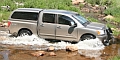
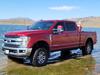
Actually, 388k now.

This is a more recent picture. I took this shot about a month ago. (I looked out my living room window one morning, and there she was - posing! Lol)

Tuned

Joined: Sep 2019
Posts: 352
Likes: 69
Interesting thread to me here.While I wasn't aware of the 'two push' manual/auto on the "exhaust brake",I am happy to report that I finally had my first real world experience with the feature.I had tried it a little,just to see what it does,but now having just returned from a 1400 mi. round trip to Washougal,Wa.,through OR,ID and back to Nevada pulling my new toy hauler-at at roughly 10.5k-I have to say I LOVE it and am impressed.With tow/haul on,EB in (apparently)manual,and using my Raptor paddle shifters on the wheel,she pulled-AND SLOWED- like a champ.Up,down passes,windy,calm,passing you name it.Was a nice test of what these rigs will really do.I know many here are already aware of their potential-which is why I bought mine-but it definitely proved itself this trip.As well,thanks to many here who enlightened me-through posting-on how to really use this truck.....and safely.Props.