When you click on links to various merchants on this site and make a purchase, this can result in this site earning a commission. Affiliate programs and affiliations include, but are not limited to, the eBay Partner Network.
Hello , My task is the replace the old worn rear drums on floating axles with new drums , shoes , and wheel cylinders . From the picture will I need to press out the wheel studs to get the flange changed over to the new drums ? This on my 1974 F 350 .
Yes they get pressed out, I highly suggest if those drums are serviceable you turn them instead of replacing them. The imported drum you bought is full of troubles and just not made like the original. The upside is you don't have to press any studs out if you turn the drums. Make sure you have the proper socket and set pre-load and final torque correctly. Don't use the hammer and chisel method on the spindle nuts.
To add, are you asking if you press the studs out to get the drum off the hub or do you mean after the hub is off the axle. because it has to come off. check your bearings and replace the seal while you're at it.
If you do have to knock the studs out you can hammer them out just use a brass rod or something to protect the stud , if you don't have a press.
its obvious that there is a gap and then the flat / flange that the rim goes against . And the wheel studs are going out through this . That piece is not on the new drum . If I can find a shop to measure the inside wear of the drums .
I have this drum off , knocked out the old oil seal , of which I over looked to get new ones ,,,, and the project continues .
Yep, seals, bearings, races, lock washer set, proper torque and then back off, many write ups on this procedure, get it all done while your in there..... and dont be surprised if you have a seal leak. Take a good look at the surface that the seal lip rides on for pitting and rough surface, once you start replacing that stuff and its riding on the old stuff.... I found the best way to get those studs seated square was to start with the sledge and then take a lug nut and washer, lug nut upside down, washer underneath and impact, will pull those studs flush. Nothing sucks more than to look under your fresh rebuild and see that wet spot on the back of the brake housing.... take your time and get'r right the first time.
Yes there was a oil seal failure passenger side . Still had the Fomoco # EOTA-1175-AA oil seals in . Could it have been from the differential
vent tube blocked from mud or dirt , didn't get to look yet . Both left n right adjuster cables out of their groove guide plate . That explains the poor adjustment control on the shoes .
The one weird thing is the rear left drum , the wheel nuts come loose turning clock wise ? This should be to tighten the lug nuts . Lefty loosey / right -tight .. Its left to tighten for some reason .
My '79 F350 also has LH threads on the LH side. all real trucks are this way. oddly enough for the 1970 model year only almost all Chrysler products did.
Highly impressed with the condition of the brakes, this truck must be low mileage and not see salt. Everything looks good just worn shoes and a slight spindle seal leak.
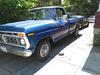
Nope . Never driven in winter hardly . And in the shed when not used since the day it was driven off the new car lot . Been poked a lot if its for sale .
There is a L on those wheel studs and not on the passenger side .
I'm the original owner of a 1976 F350 supercab and I know from experience that only the left rear had LH threaded studs. I converted my left rear wheel studs to RH in order to use Alcoa wheels and their screw on lug nut covers. They did not make a LH threaded lug nut that would accommodate the threaded on lug nut cover.
Yes there was a oil seal failure passenger side . Still had the Fomoco # EOTA-1175-AA oil seals in . Could it have been from the differential vent tube blocked from mud or dirt, didn't get to look yet.
That's what happened to me on my F150 with a 9 inch rear. I spotted a leak into the driver side brake, and started researching and stumbled onto someone citing the vent as a possible cause. Sure enough, mine was plugged so tight with dirt daubers that I couldn't poke a screw driver through it. I had to use a dang drill to clear the hollow bolt!
The leak stopped for a few years, but now it's back.
Rezvani's Latest Post-Apocalyptic Monster Is a Ford F-150 Raptor Underneath
Slideshow: Called the Fortress, the 850-horsepower pickup combines Raptor underpinnings with military-inspired features, survival equipment, and a starting price of $285,000.




 Replacing floating rear drums