When you click on links to various merchants on this site and make a purchase, this can result in this site earning a commission. Affiliate programs and affiliations include, but are not limited to, the eBay Partner Network.
I use a fused relay, and trigger the relay with a toggle switch. It's simple. It works.
When I was a teenager, before I learned how to use relays, we ran a fused wire to a toggle switch, then from the switch directly to the lights.
The toggle switch turns the lights on and off, and the fuse protects the circuit. What is wrong with that? What could go wrong? I used toggle switches labeled as heavy duty, and never had a problem. Obviously I'm not trained in 12v DC electronics, or I wouldn't be asking. Why even use a relay? A relay is just a switch. Why not just use a heavy duty toggle switch?
Using a relay lets you use a cheaper switch and as the other poster said, smaller cheaper wire for the control. Your scenario in your question is a very simple circuit, so it is up for some debate. The relay costs money also. In your scenario you could go either way.
There is no replacement for relays in other situations. For example if you wanted to add brighter back-up lights. Brighter lights usually draw more power, and the factory back-up switch's life would be shortened drastically if it had to handle a higher load. But add a relay to the factory backup circuit, and then add a new heavier circuit through the relay to power the new lights, and you have the perfect situation for a relay.
For me, the best use of a relay, is to use an "ignition on" wire as the source for the switch bringing power to the coil. That way, nothing stays on once I turn the car off. And since it takes practically no load to power and ground the coil, the load I place on the common or normally open can be as high as the relay is rated for, as long as I protect with a fuse or circuit breaker.
relay costs money also
I don't know if cost of the relay is even a factor, once you price in the wiring, whatever small parts needed for connecting wires, and the cost of whatever you are installing. Go back a few years, before low cost, high output LED lights, off road lights could run into the hundreds of dollars. A simple single pole single throw relay can be bought for less than $5. Since i like spending my girlfriend's money, which she earns on her hands and knees; I buy Hella fused relays for around $20. And since I'm using a fused relay, I like to install a circuit breaker inline as close to the battery as possible. In the event that the load surges from the device end of the connection, the fuse built into the relay will blow and protect the car. The circuit breaker will protect the car if somehow the load surges and the fuse doesn't blow. Circuit breakers are typically about $5, depending on pricing and availability.
if the load is a high one then a relay is a better choice
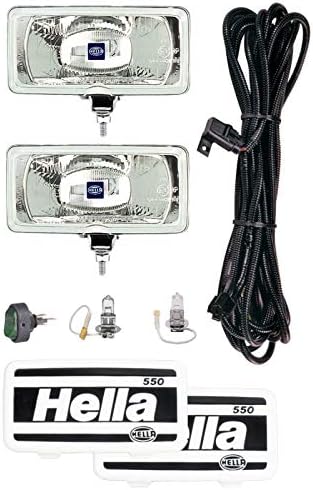
It wasn't that long ago that I was a teenager. And in the garage, I still have a set of these, all set up & ready to go. We used to drill into bumper, and mount these in front of the grill. My friends and I did this exact same thing to all of our cars, no matter what pile of junk we drove. We always used Pro Comp lights, as they were less expensive than KC & Hella, and were better quality than what was sold at Grand Auto & Sherba's (auto parts stores which no longer exist). Then we swapped in the Hella 100 watt light bulb. We were like a gang of dorks, all with yellow spot lamps.
The switches were always heavy duty, 12 gauge wire, fuse & fuse holder; all from the corner hardware store because it was in the neighborhood and we knew Mr. Cunningham. Now that I look back, and I still don't know anything about electrical work, it doesn't seem all that bad. We had simple circuits. The hardware store owner said that we were running a wire from the battery under the hood, into the passenger compartment to a switch on the dashboard, then back under the hood to the bumper; so no more 20' of wire depending on the car and how you ran the wire. He also said that with the 200 watt load, on a 12 volt system, a 20 amp fuse should be fine. His idea to use those waterproof fuse holders and those glass tube fuses. I think it was because he already had those in stock. I also think that he sold us 12 gauge wire because it was a corner hardware store, 12 gauge is very common for residential use, and he had big spools in different colors which he cut and sold by the foot. Ultimately, nobody had a fire and every installation worked for us kids in high school.
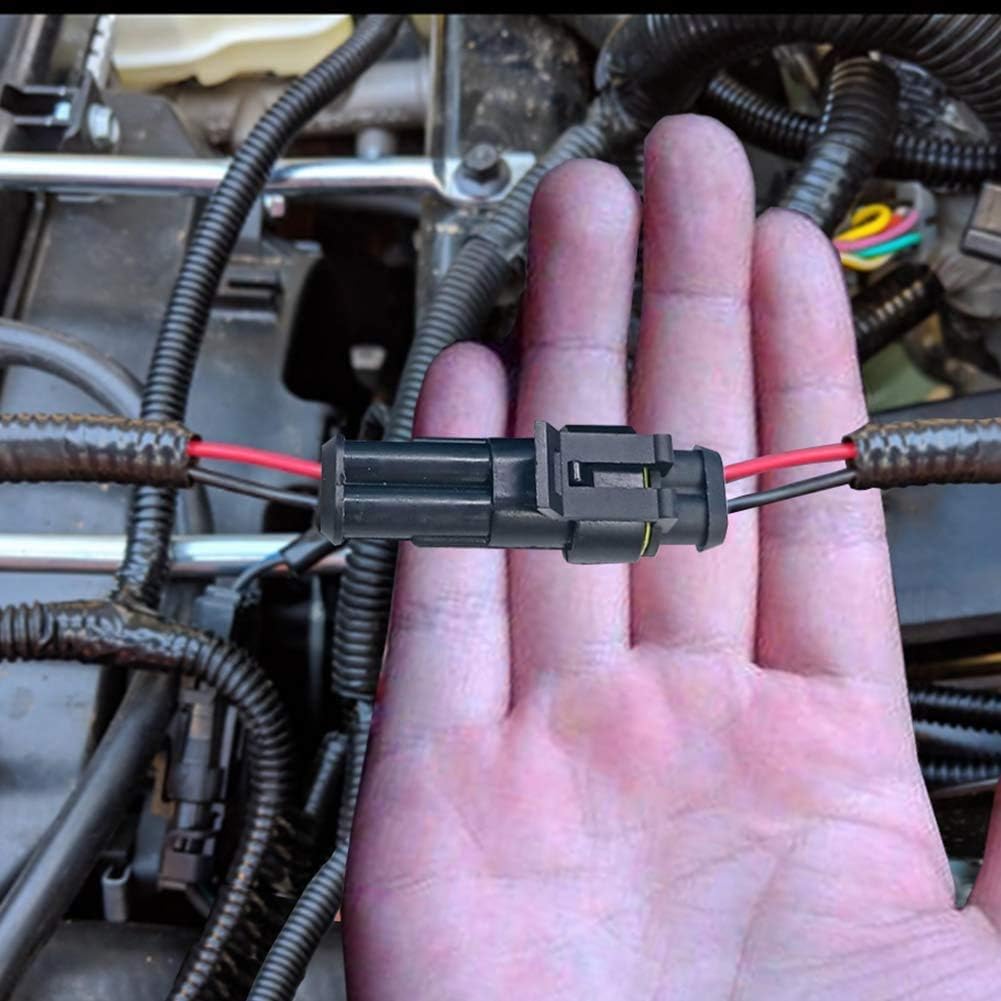
The only thing I would do different from when I was a teenager, is no more connections by twisting wires together and then wrapping with electrical tape. Weird that even something so stupid, no connections came apart, and nobody got killed. I'm still amazed by how well electrical tape holds when you wrap it around about a dozen times.
This has been a nice conversation, but I thought you were on the toggle switch bandwagon and not necessarily a proponent of using relays. But then you list the advantages of relays in your post. All good info, I was just preparing for a good debate on the subject. Nothing to debate here.
I am in the fence. I can go both ways. Just wondering if I can get more opinions, since I don't have the training.
I'll offer an opinion regarding MOST toggle or similar switches available today---they're mostly imported and much much less "heavy duty" than claimed. DC current seems to cause them to fail much sooner than ever expected.
I would use a relay as they're designed to handle the DC loads automotive usage creates. If reliability and not doing a job more than once (typically) are key to your work figure a way to incorporate a relay for any amp draw over 10 amps maximum.
Back in the day a pair of add-on halogen fog lights would draw 18-amps, but with the introduction of modern LED lighting that draw is significantly reduced. It's because of LEDs that smaller wiring is more prevalent, so the need for relays to carry the load is not as necessary as it used to be.
What I remember was most bolt on fog lights and off road lights came with a 55 watt bulb. 110 watt load for both lamps. I would install with a 10 amp fuse.
The simple upgrade was to install a 100 watt bulb. 200 watt load with both lamps. I would use a 20 amp fuse.
In today's market, LED light bars have become extremely bright, fairly well made, and low in cost. I've installed several of these on different cars (my own, friends, family, etc.). Different brands. All about 20" or so long, right on the bumper, in front of the grill, between the headlights, in the air dams, etc. They all test about 5 amp or less. Plenty of light. White light, not pale yellowish halogen light. I haven't had one fail yet. And once, I paid as little as $6 for a light bar with the installation wiring harness. The only problem is that they advertise them as being hundreds of watt, and a crazy high lumen; none of which actually adds up. The light bar below, which is actually installed on my brother in law's Honda, draws just under 3.5 amp on 12 volt supplied. It was installed with a 5 amp fuse. So that makes it 42 watt. To put it into perspective, that is about as bright as 200 watt of halogen lighting.
What I remember was most bolt on fog lights and off road lights came with a 55 watt bulb. 110 watt load for both lamps. I would install with a 10 amp fuse.
The simple upgrade was to install a 100 watt bulb. 200 watt load with both lamps. I would use a 20 amp fuse.
I like bright and since the lenses were amber I used the 220wt kits instead of the 110wt ones. Basically the same but they were made to handle the heat of 110wt bulbs like this one.
I don't know if my naked eyes could have differentiated between a 100 watt bulb and a 110 watt bulb. Sure, 55 watt vs 100 watt, you bet.
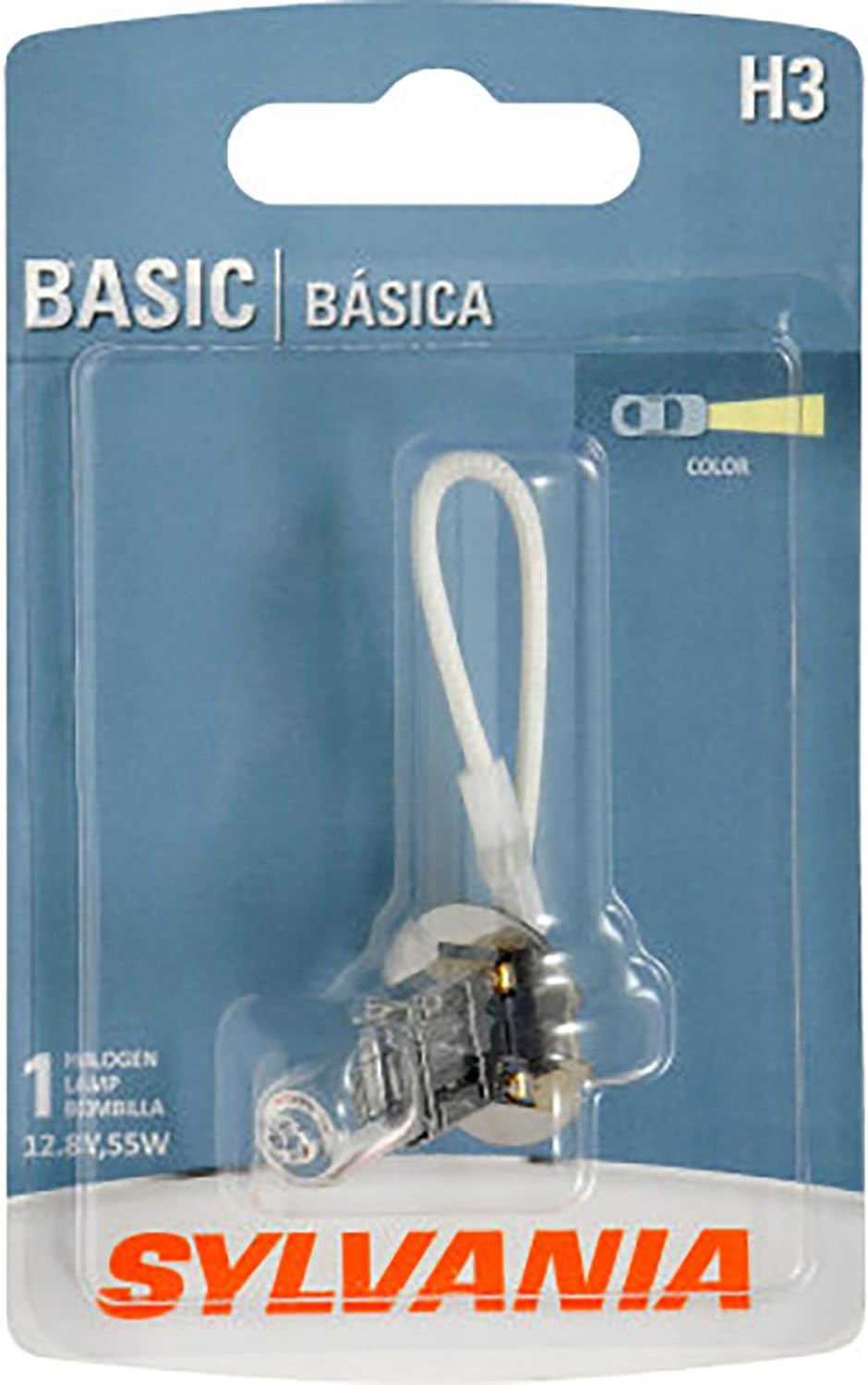
Now that LED light bars are everywhere, and cheap, I don't think I'll use halogen bulbs again. Too bad they never developed a good H3 LED replacement. Most of the H3 LED lamps are larger and longer than the original H3 bulbs. They didn't fit into my lights. And the H3 LED lamps I've seen aren't do not put out or project much light. If you can get it to fit your application, you end up with a nice looking marker light, with no range. It's a shame to waste all of those perfectly good lights.
I can't see those light bars being legal for road use. Are they? If not, I could install it on any of my vehicles, but I would need to have a cover for the lens to pass inspection in my state. I am not sure, but I am thinking they are not legal for normal on road use.
It all depends on where you are. Every jurisdiction is a little different.
There are a lot of regulations with lighting. Some states have a maximum allowable height. So anything mounted above the headlight height is usually not compliant. Some states require that the usable portion of the beam be pointed down, at the road. Some states have a limit on the number of forward facing white lights. Usually 4. So if your car has headlights, and OEM white fog lights , that is 4.
In my area, you see a lot auxiliary lighting. I've seen other people driving with them on. I drive with them on. I use my light bar on unlit roads, in fog, in rain, parking garages, tunnels, and poorly lit streets. I've never been stopped.
There are covers for light bars. Sort of like bags, sized for the light bar, with draw cords. You can always have a seamstress sew one. If you are afraid of being non-compliant, then don't turn it on, and keep it covered. Off road use means you can do whatever you want when you are not on a public road. If you are out in the woods camping, hunting, fishing.....or you are driving around a private property like a plant or construction site, then you can use whatever lighting at your discretion. On a public road, stick with your OEM low beam, high beam, and fog lights.
There are a lot of options. You can always mount the light bar on magnets, and use connector for the wiring. Then you just place the light bar in the trunk, or behind the seat in your truck cab. When you need the light bar, set it on the roof or hood, and plug it in.
This Hennessey Takes the Expedition Tremor's Off-Roading Capability to the Next Level
Slideshow: The VelociRaptor Expedition gains a lift, upgraded suspension, Brembo brakes, and trail-ready equipment while retaining the stock 440-horsepower EcoBoost V6.
Rezvani's Latest Post-Apocalyptic Monster Is a Ford F-150 Raptor Underneath
Slideshow: Called the Fortress, the 850-horsepower pickup combines Raptor underpinnings with military-inspired features, survival equipment, and a starting price of $285,000.