When you click on links to various merchants on this site and make a purchase, this can result in this site earning a commission. Affiliate programs and affiliations include, but are not limited to, the eBay Partner Network.
2017 SuperDuty 6.7L diesel
can someone finally explain to me exactly how the engine/exhaust brake works on my 6.7L?
i read on forums where the turbo fins are variable and change angles to create backpressure. while that fully makes sense
i also read where compressed air is injected into the cylinder during open exhaust valve to create back pressure.
or is it possibly both?
i have to be honest i haven't opened the hood and studied the engine to see if there are obvious air lines going to each cylinder, but i'm hoping for some good knowledge about it on here.
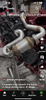
here is a video clip on how the compressed air is explained. hope it attaches.
you also may need to understand how a turbo charger works..to fully understand the 6.7 exhaust brake.
turbo charger is two impellers connected with 1 shaft. one impeller is driven by the engine exhaust. this causes the impeller at the other end of the shaft at the intake to follow rotation.
When you have your transmission in tow mode does the exhaust brake automatically kick in or do you have to push the button on the dash to set it first?
owners manual says when exhaust brake button is pushed then it is automatically in towhaul mode. although the towhaul light on the dash doesn't come on.
not sure about the other way around myself.
i usually push both when i'm towing.
When you have your transmission in tow mode does the exhaust brake automatically kick in or do you have to push the button on the dash to set it first?
Have to push the button on mine to activate the exhaust brake. On my old duramax pushing the tow/haul button on the gear shift also activated the exhaust brake. It didn't have a separate switch. I've used the exhaust brake in my current SD when going down steep grades unloaded without tow haul and it definitely helps with braking.
speakerfritz, yeah saw that video. do you have any knowledge of the compressed air into the cylinder?
The compressed air going into the cylinder is actually generated from the turbo, You can actually watch the boost gauge go up as the rpms increase.
There are no actual air lines going to each cylinder. The engine brake works better with more rpms.
The engine brake does not automatically when in tow haul mode. It will work in both normal and tow mode.
once the exhaust brake is selected on my F450 it stays on until de-selected.
Mine will stay on if I get back in in a short amount of time. However, if I leave the truck for several hours and get back in, it'll reset itself to off.
once the exhaust brake is selected on my F450 it stays on until de-selected.
I tried using the air brake going down a fairly steep hill with no trailer attached. New truck so wanted to play. I selected the Auto Exhaust brake option. RPM's jumped from 1200 to over 2500 and it kept the truck at a slower descending speed but I wasn't really comfortable with the higher RPM's so I turned it off. The Truck wouldn't disengage the exhaust brake.? Rode the rest of the hill at 2500 rpms and once we leveled off at the bottom I applied some pedal and the truck then shifted to a higher gear. Should it have disengage and upshifted once I turned it off or do I need to do something else? Thanks!
I tried using the air brake going down a fairly steep hill with no trailer attached. New truck so wanted to play. I selected the Auto Exhaust brake option. RPM's jumped from 1200 to over 2500 and it kept the truck at a slower descending speed but I wasn't really comfortable with the higher RPM's so I turned it off. The Truck wouldn't disengage the exhaust brake.? Rode the rest of the hill at 2500 rpms and once we leveled off at the bottom I applied some pedal and the truck then shifted to a higher gear. Should it have disengage and upshifted once I turned it off or do I need to do something else? Thanks!
My 2017 exhibits the same behaviour. It takes a LOT of RPM to get it to upshift at the bottom of a hill. Like 1,000 RPM. Disengaging Tow/Haul and the exhaust brake wouldn't allow the transmission to upshift. I now move the gear shifter to M (manual) at the top of the hill instead of leaving it in D (drive) and I change gears with the +/- buttons on the gear shifter.
Rezvani's Latest Post-Apocalyptic Monster Is a Ford F-150 Raptor Underneath
Slideshow: Called the Fortress, the 850-horsepower pickup combines Raptor underpinnings with military-inspired features, survival equipment, and a starting price of $285,000.