


351M questions.

Thread Starter
|
Freshman User
Joined: Sep 2003
Posts: 29
Likes: 0
 351M questions.
Hello I'm a newbie here so I'll try not to ask to many
ridiculously stupid questions.
I've had my truck since I was fourteen (i'm now 24)
long story short. My truck sat for three years while I
went to AZ and got my degrees.
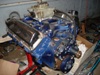
My pops and I put in Weiland intake man., holley 650,
headers, coil, starter, 2.5 lift all around, shocks,
36in tires, I had the body work done, added
roll bar, lighting, new rockers, valve covers and fan
BEFORE I LEFT FOR SCHOOL
Came back started driving truck again realized I had to replace gas line, fuel pump, new ram clutch and plate,
cleaned and re-gasketed the tranny and transcase, new
rear driveshaft, heavy duty U-joints all around and re wired
some stuff.
Right now I'm going through and making sure everything is
is good running condition. The chasis seems tough. But I've
heard alot of bad things about the 351M. But I love the motor
and can't complain yet. She's never let me down. Any
suggestions on what to check/watch out for?
Thank you
sorry for the long post.
ridiculously stupid questions.
I've had my truck since I was fourteen (i'm now 24)
long story short. My truck sat for three years while I
went to AZ and got my degrees.
My pops and I put in Weiland intake man., holley 650,
headers, coil, starter, 2.5 lift all around, shocks,
36in tires, I had the body work done, added
roll bar, lighting, new rockers, valve covers and fan
BEFORE I LEFT FOR SCHOOL
Came back started driving truck again realized I had to replace gas line, fuel pump, new ram clutch and plate,
cleaned and re-gasketed the tranny and transcase, new
rear driveshaft, heavy duty U-joints all around and re wired
some stuff.
Right now I'm going through and making sure everything is
is good running condition. The chasis seems tough. But I've
heard alot of bad things about the 351M. But I love the motor
and can't complain yet. She's never let me down. Any
suggestions on what to check/watch out for?
Thank you
sorry for the long post.
Posting Guru

Joined: Aug 2000
Posts: 2,416
Likes: 4
From: PacNW
Without knowing exactly what "bad" things you've heard about the 351M it's hard to answer your questions. There's really no inherent problems with a 351M used for daily driving and/or even towing as long as it's properly maintained. It's not the most powerful engine in the world and what it lacks in power it makes up for in poor gas mileage but hey...it's installed in a large steel beast with the aerodynamic properties of a brick so what do you expect?
If you have more specific questions/concerns please feel free to post them here and I'm sure you'll get solid answers.
If you have more specific questions/concerns please feel free to post them here and I'm sure you'll get solid answers.

Posting Guru
Joined: Aug 2000
Posts: 1,127
Likes: 3
From: (near) Denver USA
I've heard a lot of bad things about the 351M, too. Mostly from people with either no first-hand experience (just repeating unfounded rumors), or some other-engine-preference axe to grind (big blocks are just "better").
If it's never let you down, go with it.
Keep an eye on the oil pressure, especially at idle with the engine warmed up. Somewhere around 50-100K miles after the hot idle oil pressure drops to near zero, you'll want to think about rebuilding it. Maybe sooner, depending on your taste.
Then, start researching the huge volume of buildup ideas, tips, and info in this FTE forum.
If it's never let you down, go with it.
Keep an eye on the oil pressure, especially at idle with the engine warmed up. Somewhere around 50-100K miles after the hot idle oil pressure drops to near zero, you'll want to think about rebuilding it. Maybe sooner, depending on your taste.
Then, start researching the huge volume of buildup ideas, tips, and info in this FTE forum.
Thread Starter
|
Freshman User
Joined: Sep 2003
Posts: 29
Likes: 0
yeah sorry about that I wasn't very
specific.
I've just always heard that it's a weak
motor that doesn't hold up very well.
Has a tendency to break down.
Thanks for the oil press. tip!
It seems pretty tough though.
I've towed out cars and SUV's stuck in snow mud
and ditches. My creeper gear has proven
very useful. What would the stock HP numbers be
on a 351M?
I ran it at the track a bunch of times just to see.
And I managed a 17.3 at like 82mph I think.
Not bad for such a huge truck.
specific.
I've just always heard that it's a weak
motor that doesn't hold up very well.
Has a tendency to break down.
Thanks for the oil press. tip!
It seems pretty tough though.
I've towed out cars and SUV's stuck in snow mud
and ditches. My creeper gear has proven
very useful. What would the stock HP numbers be
on a 351M?
I ran it at the track a bunch of times just to see.
And I managed a 17.3 at like 82mph I think.
Not bad for such a huge truck.
Posting Guru
Joined: Aug 2000
Posts: 2,416
Likes: 4
From: PacNW
You can find out as much as you ever wanted to know about the 351M/400 motors including factory HP numbers and history here:
Bubba's M Block Page
Bubba's M Block Page
Thread Starter
|
Freshman User
Joined: Sep 2003
Posts: 29
Likes: 0
152 @ 3400 / 156 @ 4000
My 2000 Cougar has more FWHP than that
TO THE WHEELS!
That can't be, say it ain't so
and if it's Factory numbers they are probably referring
to the crank HP right?
Oh that's it I'm on a mission now.
this thing is gonna bleed power when I'm done
(although I don't know much about this motor yet
I will teach myself)
Thanks for the valuable info Bill_Beyer

Senior User
Joined: Dec 2002
Posts: 177
Likes: 0
From: Escondido Ca.
gyger,
thats almost exactly what I said when I saw those numbers! Ive got the 351 in my 79 f150, and I always just assumed it was putting more power out than that. The reason for the little power was because ford de-tuned all their engines in the 70's because of tighter emission laws. But, the good news is that its pretty easy to get some good power out of them without doing a whole lot. Just the mods you listed in the first post probably helped you out a lot. I am also on a mission to get more power, but It has to wait till I get more money ,
,
thats almost exactly what I said when I saw those numbers! Ive got the 351 in my 79 f150, and I always just assumed it was putting more power out than that. The reason for the little power was because ford de-tuned all their engines in the 70's because of tighter emission laws. But, the good news is that its pretty easy to get some good power out of them without doing a whole lot. Just the mods you listed in the first post probably helped you out a lot. I am also on a mission to get more power, but It has to wait till I get more money
,
Trending Topics

Posting Legend
Joined: Sep 2001
Posts: 30,255
Likes: 37
HP after 1971 was measured as net at the wheels after subtracting for all the goodies the engine had to turn.
Truck engines will put out their power levels far longer than car engines for climbing hills and towing etc.
Truck engines will put out their power levels far longer than car engines for climbing hills and towing etc.
FTE Stories
Ford Trucks for Ford Truck Enthusiasts

Top 6 Best Deals Available on New Fords & Lincolns Right Now
Brett Foote
This Hennessey Takes the Expedition Tremor's Off-Roading Capability to the Next Level
Verdad Gallardo
Top 10 Fords at 2026 Carlisle Ford Nationals
Joe Kucinski
3 Best / 3 Worst Parts of Modern Ford Ownership
Brett Foote
10 Amazing Upgrades That Solve Common Ford Truck Owner Headaches
Pouria Savadkouei
Every 2026 Ford Engine Explained
Brett Foote
10 Ugly Ford Trucks That We Still Kinda Love
Joe Kucinski
10 Things Every Truck Owner NEEDS (2026 Edition)
Michael S. Palmer
Rezvani's Latest Post-Apocalyptic Monster Is a Ford F-150 Raptor Underneath
Verdad Gallardo
Posting Legend
Joined: Sep 2001
Posts: 30,255
Likes: 37
-And published as "net" after subtracting for accessories and driveline losses. They may measure at the flywheel and subtract but the final result is supposed to be close to a chassis dyno result (kinda-sorta), you know how all of that math figures out. Maybe I didn't say that quite technically correct in my post above.
There is a big difference in peak HP that they measure cars and light trucks with versus continuous HP that they use to measure industrial engines and motors, HD trucks, and tractors.
Some of the fun stuff is looking at the HP ratings of tools and consumer air compressors when the electrical ratings (and size)just aren't there. Cars and LD trucks are the same, they don't have the radiators and power transmission systems to sustain those HP ratings.
There is a big difference in peak HP that they measure cars and light trucks with versus continuous HP that they use to measure industrial engines and motors, HD trucks, and tractors.
Some of the fun stuff is looking at the HP ratings of tools and consumer air compressors when the electrical ratings (and size)just aren't there. Cars and LD trucks are the same, they don't have the radiators and power transmission systems to sustain those HP ratings.

Senior User
Joined: Apr 2003
Posts: 221
Likes: 0
From: Greater Cleveland Ohio
The 351-M is a good engine. If you maintain it properly, keep up the oil changes and such, They can last well over 100K, some over 200K. And you can also add some low cost mods for performance too.
Don't let the numbers fool you. The M engines were designed with emphasis on torque moreso than HP. I think Bubba said if its being good to you now, just return the favor.
Don't let the numbers fool you. The M engines were designed with emphasis on torque moreso than HP. I think Bubba said if its being good to you now, just return the favor.
Posting Guru
Joined: Aug 2000
Posts: 2,416
Likes: 4
From: PacNW
Gross HP vs. Net HP (SAE)
SAE Net Horspower In 1972, American manufacturers phased in SAE net horsepower. This is the standard on which current American ratings are based. This rating is measured at the flywheel, on an engine dyno, but the engine is tested with all accessories installed, including a full exhaust system, all pumps, the alternator, the starter, and emissions controls. Both SAE net and SAE gross horsepower test procedures are documented in Society of Automotive Engineers standard J1349. Because SAE net is so common, this is the standard we will use to compare all others.
SAE Gross Horsepower This is the old process that American manufacturers used as a guide for rating their cars. It was in place until 1971. SAE gross also measures horsepower at the flywheel, but with no accessories to bog it down. This is the bare engine with nothing but the absolute essentials attached to it; little more than a carb, fuel pump, oil pump, and water pump. Because the test equipment on the engine is not the same as in SAE net, it is impossible to provide a mathematical calculation between SAE net and SAE gross. As a general rule, however, SAE net tends to be approximately 80% of the value of SAE gross. SAE J245 and J1995 define this measurement.
SAE Gross Horsepower This is the old process that American manufacturers used as a guide for rating their cars. It was in place until 1971. SAE gross also measures horsepower at the flywheel, but with no accessories to bog it down. This is the bare engine with nothing but the absolute essentials attached to it; little more than a carb, fuel pump, oil pump, and water pump. Because the test equipment on the engine is not the same as in SAE net, it is impossible to provide a mathematical calculation between SAE net and SAE gross. As a general rule, however, SAE net tends to be approximately 80% of the value of SAE gross. SAE J245 and J1995 define this measurement.

Posting Guru
Joined: Jun 2002
Posts: 1,099
Likes: 0
Horsepower vs Torque
As long as class is in session, here's a quick review.
What is Horsepower?
Contributed By: Bucky EdwardsEverywhere you turn, people and manufacturers are making horsepower claims for their cars or products. Unfortunately, most people do not really understand the theory and history behind the horsepower rating system. In this short article, I would like to explain a little of the history, and use analogies to help the reader to better visualize the concepts. Understanding how the formula for horsepower works may help you sort through the jungle of performance information out there. The math behind calculating horsepower is extremely simple, but let’s start with a brief history.
In the middle 1800’s, America and the rest of the world for that matter, was going through a period called the Industrial Revolution. Because of the growing use of the steam engine, industry no longer needed to be located next to a river for power and horses were no longer the only means for transporting goods and people. However, no one had a "ruler" for measuring the power of a steam engine or any power-producing device. If you needed a power supply to run your sugar cane press, what size steam engine would you need? Experience may tell you that a team of 4 horses would probably drive the press, but what size steam engine would suffice?
Without doubt, you have heard of a unit of electrical power called a Watt. Named after James Watt, he also defined a system for rating power producing devices.
Watt started with the definition of WORK, which is FORCE multiplied by DISTANCE. If you pushed a 100-pound box a distance of 1 foot, you have done 100 pound-feet of work. If you pick up that same box 1 foot off the floor, you have done the same amount of work. What James Watt really wanted to define though, was the POWER that an engine could produce. POWER is defined as WORK / TIME. If it took you one minute to push that 100 pound box one foot then the power you expended was 100 pound feet per minute. If it took you two minutes then you did 50 pound-feet per minute of work. Get it?
In our example of the sugar cane press, you may have come to the conclusion that the obvious answer is a four horsepower engine. This must have been obvious to James Watt also; because what he did was to try and define how much power a horse could produce. We don’t know if the horse he had in mind was a Shetland pony or a mighty Clydesdale, but nevertheless, the number he came up with for one HORSEPOWER is 33000 pound-feet per minute or 550 pound-feet per second. So what James Watt figured was that a typical horse could pull or lift 550 pounds one foot in one second.
We now have a definition for horsepower. Just like we know that 12 inches equals one foot, we know that 33000 pound-feet per minute equals one horsepower. Horsepower would be hard to measure on an engine directly, so we must use a little math to find some quantity that we can measure and convert it to horsepower. That quantity is TORQUE. TORQUE is defined as a twisting about a point caused by a force on a lever arm. For example, a one-pound weight at the end of a 1-foot long wrench applies a torque of 1 foot-pound on a bolt or nut. Note that WORK and TORQUE have the same units and foot-pound equals pound-foot.
Now, let’s imagine that you get an exercise bicycle. You know, one of those with the big wheel in front and a strap running around the outside of that wheel that can be tightened to make it harder to pedal. Now let’s say that you adjust the strap tension so that the wheel is difficult to turn. Now get a wrench and a spring scale. Attach one end of the wrench to the center of the bicycle wheel and attach the scale to the other end of the wrench. Suppose that it takes a 50-pound pull at the end of the wrench to turn the wheel. If the wrench is one foot long, it requires 50 foot-pounds of torque. Now start turning the wheel with the wrench as fast as you can. Suppose you can turn the wheel 55 times in one minute. (I’ll bet you can’t!) How much horsepower are you producing?
This is actually pretty easy. To figure horsepower, we need to know work per unit time. Earlier, we established work as:
Work=Force x Distanceand Distance for our example = 2 x Pi x wrench length
Since we are moving in a circle, 2xPi x radius (wrench length) is the distance around a circle. (Remember that Pi = about 3.1416) We have already pointed out that power is
Power=Work/Time So our equation looks like this:
2 x Pi x wrench length x Force x rpm= power we expended.
Since this will give us foot-pound per minute, we can divide the answer by 33000 foot-pounds per minute and get the horsepower. But before we start plugging in numbers, note that
wrench length x Force = Torque.
Replacing that into the equation has:
2xPi x Torque x rpm/ 33000= horsepower. (Pi= 3.1416)
Simplifying the equation yields:
Torque x rpm/5252= HorsepowerThis equation is the one that most people recognize. Plugging in the numbers from our exercise bicycle example:
Torque = 50 foot-pounds
Rpm = 55 rev/minute
50x55/5252=0.524 hp!!!
To turn that bicycle wheel 55 times in one minute, you produced over 1/2 horsepower. Most trained athletes can only produce a little more than 1/4 horsepower for any extended length of time. So my example might not have been the most realistic, but you get the picture.
A dynamometer can only measure torque and rpm, but can use this formula to calculate horsepower. Also note, that by definition, at 5252 rpm horsepower equals torque. So be very skeptical of someone’s horsepower and torque chart if the curves don’t cross at or very close to 5252 rpm.
What is Horsepower?
Contributed By: Bucky EdwardsEverywhere you turn, people and manufacturers are making horsepower claims for their cars or products. Unfortunately, most people do not really understand the theory and history behind the horsepower rating system. In this short article, I would like to explain a little of the history, and use analogies to help the reader to better visualize the concepts. Understanding how the formula for horsepower works may help you sort through the jungle of performance information out there. The math behind calculating horsepower is extremely simple, but let’s start with a brief history.
In the middle 1800’s, America and the rest of the world for that matter, was going through a period called the Industrial Revolution. Because of the growing use of the steam engine, industry no longer needed to be located next to a river for power and horses were no longer the only means for transporting goods and people. However, no one had a "ruler" for measuring the power of a steam engine or any power-producing device. If you needed a power supply to run your sugar cane press, what size steam engine would you need? Experience may tell you that a team of 4 horses would probably drive the press, but what size steam engine would suffice?
Without doubt, you have heard of a unit of electrical power called a Watt. Named after James Watt, he also defined a system for rating power producing devices.
Watt started with the definition of WORK, which is FORCE multiplied by DISTANCE. If you pushed a 100-pound box a distance of 1 foot, you have done 100 pound-feet of work. If you pick up that same box 1 foot off the floor, you have done the same amount of work. What James Watt really wanted to define though, was the POWER that an engine could produce. POWER is defined as WORK / TIME. If it took you one minute to push that 100 pound box one foot then the power you expended was 100 pound feet per minute. If it took you two minutes then you did 50 pound-feet per minute of work. Get it?
In our example of the sugar cane press, you may have come to the conclusion that the obvious answer is a four horsepower engine. This must have been obvious to James Watt also; because what he did was to try and define how much power a horse could produce. We don’t know if the horse he had in mind was a Shetland pony or a mighty Clydesdale, but nevertheless, the number he came up with for one HORSEPOWER is 33000 pound-feet per minute or 550 pound-feet per second. So what James Watt figured was that a typical horse could pull or lift 550 pounds one foot in one second.
We now have a definition for horsepower. Just like we know that 12 inches equals one foot, we know that 33000 pound-feet per minute equals one horsepower. Horsepower would be hard to measure on an engine directly, so we must use a little math to find some quantity that we can measure and convert it to horsepower. That quantity is TORQUE. TORQUE is defined as a twisting about a point caused by a force on a lever arm. For example, a one-pound weight at the end of a 1-foot long wrench applies a torque of 1 foot-pound on a bolt or nut. Note that WORK and TORQUE have the same units and foot-pound equals pound-foot.
Now, let’s imagine that you get an exercise bicycle. You know, one of those with the big wheel in front and a strap running around the outside of that wheel that can be tightened to make it harder to pedal. Now let’s say that you adjust the strap tension so that the wheel is difficult to turn. Now get a wrench and a spring scale. Attach one end of the wrench to the center of the bicycle wheel and attach the scale to the other end of the wrench. Suppose that it takes a 50-pound pull at the end of the wrench to turn the wheel. If the wrench is one foot long, it requires 50 foot-pounds of torque. Now start turning the wheel with the wrench as fast as you can. Suppose you can turn the wheel 55 times in one minute. (I’ll bet you can’t!) How much horsepower are you producing?
This is actually pretty easy. To figure horsepower, we need to know work per unit time. Earlier, we established work as:
Work=Force x Distanceand Distance for our example = 2 x Pi x wrench length
Since we are moving in a circle, 2xPi x radius (wrench length) is the distance around a circle. (Remember that Pi = about 3.1416) We have already pointed out that power is
Power=Work/Time So our equation looks like this:
2 x Pi x wrench length x Force x rpm= power we expended.
Since this will give us foot-pound per minute, we can divide the answer by 33000 foot-pounds per minute and get the horsepower. But before we start plugging in numbers, note that
wrench length x Force = Torque.
Replacing that into the equation has:
2xPi x Torque x rpm/ 33000= horsepower. (Pi= 3.1416)
Simplifying the equation yields:
Torque x rpm/5252= HorsepowerThis equation is the one that most people recognize. Plugging in the numbers from our exercise bicycle example:
Torque = 50 foot-pounds
Rpm = 55 rev/minute
50x55/5252=0.524 hp!!!
To turn that bicycle wheel 55 times in one minute, you produced over 1/2 horsepower. Most trained athletes can only produce a little more than 1/4 horsepower for any extended length of time. So my example might not have been the most realistic, but you get the picture.
A dynamometer can only measure torque and rpm, but can use this formula to calculate horsepower. Also note, that by definition, at 5252 rpm horsepower equals torque. So be very skeptical of someone’s horsepower and torque chart if the curves don’t cross at or very close to 5252 rpm.


Fleet Mechanic


Joined: Jan 2003
Posts: 1,812
Likes: 15
From: Central Ohio
I know this has been hit on above but I wanted to point this out in my own words.
Back in the late 70's the 351M was rated around the 150hp figure. Yes, your 2002 cougar might have more HP - as does my 99 f150 v6. But what your cougar wont have is a torque peak of 260 ft lbs at only 2000 RPMS. Yes, that means the PEAK is at 2000 rpms. Most modern v6's arent even in their power band at 2k, let alone their peak. It was all about low end grunt back then, not top end horsepower. WIth alot of research and some good aftermarket parts you can get the best of both worlds.
BTW, 17.3 seconds for a brick that only has 150hp? Heck my tbird with the same HP and probably a full ton lighter wont run that fast LOL.
But... better get used to people tellin ya you got a junk motor. Other than on the internet, I havent actually talked to anyone who didnt talk trash about it. Its just one of those facts of life. Its ashame really.
Back in the late 70's the 351M was rated around the 150hp figure. Yes, your 2002 cougar might have more HP - as does my 99 f150 v6. But what your cougar wont have is a torque peak of 260 ft lbs at only 2000 RPMS. Yes, that means the PEAK is at 2000 rpms. Most modern v6's arent even in their power band at 2k, let alone their peak. It was all about low end grunt back then, not top end horsepower. WIth alot of research and some good aftermarket parts you can get the best of both worlds.
BTW, 17.3 seconds for a brick that only has 150hp? Heck my tbird with the same HP and probably a full ton lighter wont run that fast LOL.
But... better get used to people tellin ya you got a junk motor. Other than on the internet, I havent actually talked to anyone who didnt talk trash about it. Its just one of those facts of life. Its ashame really.
