


Rabs valve Brake Bleeding


Thread Starter
|
Freshman User
Joined: May 2020
Posts: 41
Likes: 0
Rabs valve Brake Bleeding
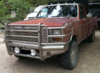
89 7.3 is just a registration and working brakes from being back on the road. 11 years of neglect in the Mohave desert was hard on her. Master cyl was leaking so I replaced it straight away and then learned about the Rabs valve when I was attempting to bleed and I could not get any fluid from my Rabs valve so I found a Napa rebuilt old stock for around $250 and thought that would cure my woes. Rebuilt front calipers and new drums, shoes and hardware in back. New master cyl was bench bled but installed it seemed like it was bypassing. Slowly dropping pedal once booster kicks in. I did quite a bit of bleeding myself with speed bleeders in the back and a nice board jammed into the seat. Both pumping and cracking the bleeders and running some continuous fluid through were tried. I think AZone put brake fluid on sale just to help me out. New Rabs valve seems to bleed fine unlike the old one.. Is it working fine, I dont know. I took the old one apart and it is pretty simple. ABS light comes on at start and goes off as it should. Mechanic neighbor told me for 2 weeks you have a bad master cyl (bypassing) so I replaced it with a Napa rebuilt (bench bled) and the booster as well just due to the age and outside desert storage. 3 weeks into this saga I am still at the same spot. Yeah, you could drive it and it kinda stops but a sinking pedal on a big truck even without a load is stupid. I truly do not believe either one of these master cylinders is bad because they bench test great. No visible external leaks in the system anywhere so where is the internal leak? I am not sure one could even tell much by watching the master cyl with the stupid float in it while someone is pumping the pedal and I surely cannot do it myself. If anyone has any ideas I would appreciate it but I may wave the white flag and limp over to a shop.
Mike D
LA
Mike D
LA

Scope Wizard
Joined: May 2019
Posts: 6,530
Likes: 25
you are right it is simple ... the front brakes are on the front of the MC and the rear are on the Back circuit there is no proportional valve... and the RABS actuator has a bleeder on it
you can Gravity bleed the system or you can do a pressure bleed.
Loosing pedal is generally MC related or the rear brakes are not adjusted properly ... now there is the Accumulator, if you have air in it then you will have rear brake issues.
follow the proper bleeding procedures and this should not be a problem.
EDIT: it's hard to have air in the Accumulator as it has a spring that keeps it empty..... some folks remove the spring and induce this kind of problem
IF no fluid flows from the RABS unit then either the Bleeder is plugged or the MC ain't working .... Period
ALSO make sure the booster is adjusted properly
BTW Booster does not cause Dropping Pedal
you can Gravity bleed the system or you can do a pressure bleed.
Loosing pedal is generally MC related or the rear brakes are not adjusted properly ... now there is the Accumulator, if you have air in it then you will have rear brake issues.
follow the proper bleeding procedures and this should not be a problem.
EDIT: it's hard to have air in the Accumulator as it has a spring that keeps it empty..... some folks remove the spring and induce this kind of problem
IF no fluid flows from the RABS unit then either the Bleeder is plugged or the MC ain't working .... Period
ALSO make sure the booster is adjusted properly
BTW Booster does not cause Dropping Pedal
Posting Guru
Joined: May 2015
Posts: 2,036
Likes: 5
Did you replace the rear wheel cylinders?
My guess is air is entering the system, either through the rear wheel cylinders, or one of the rubber lines..
At least that's always been my experience if it primes good until you start the vehicle and the power brakes kick in.
My guess is air is entering the system, either through the rear wheel cylinders, or one of the rubber lines..
At least that's always been my experience if it primes good until you start the vehicle and the power brakes kick in.
Thread Starter
|
Freshman User
Joined: May 2020
Posts: 41
Likes: 0
Yes both rear wheel cyls were replaced. The old Rabs valve seemed like it was internally plugged because I could move fluid through the system but not get more than a drop from the Rabs valve even if I removed the bleeder. New Rabs valve bleeds normally. Best hint I have to go on is the driver rear wheel is the one where I see quite a bit of very small bubbles spaced out in the fluid. I even put a small amount of teflon tape on the bleed threads trying to removed a source of air entry. I just expected that I would see a decent leak without have to pull a drum apart. Thanks for the help.

Senior User
Joined: Jun 2013
Posts: 170
Likes: 4
You have to close the bleeder valve while the fluid stream is flowing. Waiting to close the valve after the fluid stream stops will allow air into the system. Bleed all 4 wheels, LF RF LR RR. It is possible to isolate the rear brakes and RABS valve from the master cyl and front brakes. Get a small nail or upolstery tack, something with a round flat head on it, small diameter. Smooth the nail surfaces with a flat file and make sure that the head is round. Disconnect the inlet line to the RABS valve, insert the nail in the line with the flat head facing the fitting on the RABS valve. Tighten the line with a wrench, snug but not too tight, you do not want to scar the mating surfaces. This will block fluid from entering the RABS valve. Press the brake pedal. If it sinks you either have air in the system or a bad master cyl. If you have a firm pedal then the problem is downstream of the RABS inlet. Move the nail from the inlet to the outlet of the RABS valve and retest the brake pedal. A firm pedal means the RABS valve is good, a sinking pedal means the valve is bypassing.
Thread Starter
|
Freshman User
Joined: May 2020
Posts: 41
Likes: 0
New rubber lines installed in front. Old lines were pretty dry rotted. I am bleeding into a container with the line submerged so I do not get air pulled back. I think I will inspect my driver rear wheel cylinder and perhaps try to isolate the fronts from the rear as suggested before I give up.

Thread
Thread Starter
Forum
Replies
Last Post
Ford_Six
General Automotive Discussion
10
Jul 14, 2006 09:54 AM





