When you click on links to various merchants on this site and make a purchase, this can result in this site earning a commission. Affiliate programs and affiliations include, but are not limited to, the eBay Partner Network.
I have a newly installed clifford header and manifold set with his weber 38 DGAS carb and a redline fuel regulator set to 3 lbs. I have rebuilt the truck (but not the motor) and just got it running this morning so there were many new systems to test. The truck fired up easy and was sounding great. I unplugged and held my finger over the vacuum advance line while setting the timing to 8 degrees BTDC as recommended by Redline, but as it warmed up I realized the RPMS wouldn't come down. I messed around with the starter fluid, spraying it around the carb for vacuum leaks and can sense small changes in RPM but I just can't tell if it's a leak or if it's just getting sucked normally into the air cleaner, as the fan blows the crap everywhere making it really hard to tell... I adjusted the carb idle mixture screws (two of them together) and could hear it increase up to 1.5 turns out where it seemed to run the best. Problem is the idle speed screw is not even touching the cam yet and the engine is running at about 1100-1300 RPMs.
Vacuum accessories: I don't have a PCV hooked up, just a valve cover breather, I have the carb hooked to a vapor cannister, and a vacuum tree (on the manifold) hooked to the distributor and the brake booster. One note: I couldn't torque the headers properly as they are hard to reach so I used an open wrench in the recommended pattern the best I could. This is the last place I want my issue to be, so I want to explore all possibilities before revisiting it...
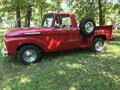
Here's a rough pic of what I'm working with
I really messed around looking for the leak and couldn't come up with anything... I noticed when I covered the air cleaner with paper I could lightly spray the starter fluid almost anywhere on the manifold or carb base without an RPM change. I tried plugging each accessory port to see if it helped and nothing. I messed with the carb linkage and the throttle with my hands and I couldn't find any "lower" idle except for when I forced the choke closed at which point it dropped to a stumble.
New tank, new lines, new stock mech fuel pump, then a stock fuel filter then the red line regulator @ 3lbs, then the carb, in that order.
Anyways I'm hoping I've provided enough info that maybe somebody could see something I missed or offer some next steps. Could it be a jetting issue? What about a tail pipe leak? Or should I just go straight for the intake manifold? Thanks for your time.
A good test is using something that makes smoke like a cigar and run the smoke around the intake runners and around the carb.
If there is a leak you will see the smoke being sucked into the vacuum leak.
You may have to block the air from the radiator fan or temporarily remove the fan blade and reinstall the bolts so the water pump is still runs.
Get Creative.
A good test is using something that makes smoke like a cigar and run the smoke around the intake runners and around the carb.
If there is a leak you will see the smoke being sucked into the vacuum leak.
You may have to block the air from the radiator fan or temporarily remove the fan blade and reinstall the bolts so the water pump is still runs.
Get Creative.
OK. I think the vacuum is good. Absolutely Really definitely no leaks. The carb needed a good return spring. I got it down to 700 RPM yesterday. One thing I found strange though was that when I sprayed a shot of starter fluid down the carb, the engine dies down instead of revving up and I thought that seemed backwards but OK!
I still need to spend some time with the new set up and figure out what sounds are normal. Ticking in the valve train or exhaust leak? Hard to tell with that fan ripping all the time. I've always had super low oil pressure that's just inside the OK zone on the gauge. Although it definitely ticked more before the new manifolds. Thanks pmuller ...its a real ghost town around the 300 forum
Blob, you could have asked this question in the 80 - 86 forum area we would not hold it against you LOL
Only thing you need to do is everything you did before the idle was set because when it was too high some things like the timing not set right as the mech. advance was kicked in.
Because of the timing and high idle RPM the idle mix is not set right.
I still don't like they tell you not to run a PVC with that carb, that is just not right but ............
Dave ----
I'm putting the same system on a "62 223. Clifford told me and the instructions stated not to run a PCV valve or the idle would be high. For the life of me I can't figure out how you can run an internal combustion engine without the crankcase being vented via either a PCV system or a road draft tube. Any thoughts on this? I converted my '49 flathead V8 from road draft to PCV and there was no change in idle speed or manifold vacuum and it got rid of oil seeps.
You got bad advice. Put a PCV on and use a valve from an engine as small or smaller than yours. Different valves flow (leak) more than others so you may have to experiment to get one that your engine likes.
You got bad advice. Put a PCV on and use a valve from an engine as small or smaller than yours. Different valves flow (leak) more than others so you may have to experiment to get one that your engine likes.
Yup Clifford instructions recommends no PCV just a breather, which I did. Where should I hook up the PCV? Can I hook it to a vacuum fitting on the air cleaner? or should it go to my manifold vacuum tree? In my head I'm thinking if I hook it to the air cleaner it won't affect the fuel air ratio going into the intake. Is this correct?
Yup Clifford instructions recommends no PCV just a breather, which I did. Where should I hook up the PCV? Can I hook it to a vacuum fitting on the air cleaner? or should it go to my manifold vacuum tree? In my head I'm thinking if I hook it to the air cleaner it won't affect the fuel air ratio going into the intake. Is this correct?
Best case is plumbing the PCV to the manifold vacuum port. Air cleaner port is first runner up but won't pull much vacuum at idle. If I read your original post correctly you have your vacuum advance hooked to manifold vacuum. If so you are sending max vacuum to the vacuum advance at idle. Check to see what your timing is after you hook it up after setting initial timing. The weber has a metered vacuum port in the front and that is what you should route your vacuum advance to. Also if you are using the stock Load Matic distributor they have no mechanical advance and need a special vacuum source from a stock carb. My experience with Load Matic's on flatheads is to throw them away and install a Mallory YC or ZC series dual point if the stock carb is replaced.
This Hennessey Takes the Expedition Tremor's Off-Roading Capability to the Next Level
Slideshow: The VelociRaptor Expedition gains a lift, upgraded suspension, Brembo brakes, and trail-ready equipment while retaining the stock 440-horsepower EcoBoost V6.
Rezvani's Latest Post-Apocalyptic Monster Is a Ford F-150 Raptor Underneath
Slideshow: Called the Fortress, the 850-horsepower pickup combines Raptor underpinnings with military-inspired features, survival equipment, and a starting price of $285,000.