When you click on links to various merchants on this site and make a purchase, this can result in this site earning a commission. Affiliate programs and affiliations include, but are not limited to, the eBay Partner Network.
Ok so I finally got a chance to look at my front tank and found that Mickey had screwed me pretty good:
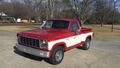
So I re-pinned and replaced the old plug on the front tank. I recently replaced the front tank, fuel sender, sock, and pump, so everything is brand new. It's a 1986 F250 with the 6 port fuel tank selector valve. Everything still pulls fine from the rear tank, and the gauge reads correct with the switch in the rear tank position. Today with key on, engine off, tank switch switched to the front tank, the gauge read 1/4 of a tank, even though it was at least half full. The plug kept falling out before this because I broke one of the tangs off at the top of the plug.
Went to the gas station, topped everything off, it only took about 7 gallons to finish filling up. Now i'll switch it to the front tank, the truck doesn't hesitate or stutter or die, I let it idle for about 10 minutes while switched to the front tank (that should be enough time for the bowls to drain I would think), so it's like the pump is running because the engine stays on, but the gauge drops to E. It doesn't drop below E like when the ignition is off. I had a buddy lie underneath the tank selector valve while I switched it and he didn't hear or feel any clunks or movement on it.
What could be causing my fuel gauge to not read correctly? Could my fuel tank selector valve be bad? Would that cause an inaccurate gauge reading?
Take that plug back off the front tank. Turn the key to run but do not start the engine. Have a helper watch the fuel gauge, make sure the selector is to the front tank. While they are watching the gauge in the dash, take a small jumper wire and jump the black wire and the blue/yellow stripe wire together. The fuel gauge should slowly swing empty or full (I think empty, I can't remember). Once it gets there, have your helper hollar, and then take the jumper off. The gauge should slowly swing full scale the opposite direction.
If it passes this test, you know the gauge, the wiring, the selector valve switch and the wiring to the plug are all good and there is something wrong with the sending unit.
Make sure the fuel tank is grounded. Especially with in tank fuel pumps.
In my case I redid my fuel tank, painted it real nice and used a fancy tape between the hanger straps and the tank. After all that work the gauge would read correct with the key on and motor not running. But as soon as the motor (and fuel pump) was running the fuel gauge would read much lower.
Eventually I added a grounding wire from the tank to the frame and the gauge reads correct now even with the motor running.
Make sure the fuel tank is grounded. Especially with in tank fuel pumps.
In my case I redid my fuel tank, painted it real nice and used a fancy tape between the hanger straps and the tank. After all that work the gauge would read correct with the key on and motor not running. But as soon as the motor (and fuel pump) was running the fuel gauge would read much lower.
Eventually I added a grounding wire from the tank to the frame and the gauge reads correct now even with the motor running.
I like grounds and are not against adding them, the more the better. But theoretically the tank and the pump/sending unit are grounded through the black wire on the plug on the sending unit.
Make sure the fuel tank is grounded. Especially with in tank fuel pumps.
In my case I redid my fuel tank, painted it real nice and used a fancy tape between the hanger straps and the tank. After all that work the gauge would read correct with the key on and motor not running. But as soon as the motor (and fuel pump) was running the fuel gauge would read much lower.
Eventually I added a grounding wire from the tank to the frame and the gauge reads correct now even with the motor running.
I was gonna add that I used a JBG plastic fuel tank in hopes of never having it corrode again. I figured everything would be properly grounded through the wiring, else they wouldn't make plastic tanks unless everyone used a mechanical pump.
Ok, so turns out the LMC fuel pump and sender all went bad in under 4 years.
Replaced those with parts from Advanced this time in hopes that the quality will be there.
But now something weird is happening and i'm curious if anyone else has experienced this before....the tank is full, filled it up right after replacing the plug, didn't lose too much fuel after replacing the sender and pump, so now the gauge reads correctly and the truck runs fine off of the front tank, but now, when I step on the gas (any amount of throttle here, anything from flooring it to feathering it) makes the gauge drop. Then when I let off the throttle and coast, the gauge goes back up.
Weirdest thing i've seen yet. Anyone know what could cause that? The rear tank still works great and doesn't do that at all, this is only being discovered after replacing everything.
Where does the gauge switching take place, at the dash switch or the switching valve on the frame rail?
I would try and remove and replace (R&R) the plug on the tank and if at the valve do the same.
Dave ----
Well to choose which tank I want to pull from, there's the usual switch to right of the HVAC controls, as far as the switching valve goes, I inspected that as well while I was under there and it switches tanks and reads just fine. Reads levels accurately and switches tanks perfectly.
Check your switch. System defaults to rear if anything breaks. All the components switch "off" rear. Which means the rear sender isn't actually going through the switch, just the front. Check your connections.
Well to choose which tank I want to pull from, there's the usual switch to right of the HVAC controls, as far as the switching valve goes, I inspected that as well while I was under there and it switches tanks and reads just fine. Reads levels accurately and switches tanks perfectly.
So the valve also dose the gauge switching and the switch on the dash does the valve?
My 81 the dash switch does the valve & gauge.
Dave ----
Check your switch. System defaults to rear if anything breaks. All the components switch "off" rear. Which means the rear sender isn't actually going through the switch, just the front. Check your connections.
How can I check the switch? Am I looking for something in particular, like corrosion, or what? The gauge wasn't reading anything for the front tank before, then I replaced the plug and sender/pump and now the gauge reads correctly. The gauge has always read the rear tank correctly as well. This has now turned into a why is the gauge doing what its doing situation.
So the valve also dose the gauge switching and the switch on the dash does the valve?
My 81 the dash switch does the valve & gauge.
Dave ----
The actual physical switch is just to the right of the HVAC controls. That then tells the fuel tank switching solenoid (attached to the frame rail) to start pulling from whatever tank is selected with the switch on the dash. Whatever tank is selected will read on the gauge in the cluster. So my front tank could be full, and my rear tank could be empty, so when I switch from the rear tank (the gauge will read E), to the front tank, (which is full in this example), then the gauge in the cluster rises to F.
My issue is that everything reads correctly, but when I give the truck any sort of throttle when its only switched to the front tank, the gauge drops, then when I let off the throttle, the gauge goes back up to whatever level it's at. I have never seen anything do this before, and it wouldn't be fuel slosh because the tank is currently full while i'm experiencing this, and the rear tank has never made the gauge act that way ever.
He has a truck with a 460. If you look at the diagrams, the switch on the dash just switches the fuel pump power (or tells the relay to switch the fuel pump power) and tells the valve on the frame to switch to one tank or the other. The fuel gauge single wire goes right to the valve. Inside the valve, there is a switch hooked to the motor inside, that does the switching for the sending units. So the switching for the gauge is done in the frame mounted valve.
So, none of your other guages go up and down. The rear tank doesn't do it. So it's not the gauge voltage regulator. I don't know what's causing it, but it's strange to me that the gauge reacts so quickly to the throttle. The gauge works on heat. It has a bi-metal piece inside that actually curls and uncurls to move the needle. It takes a little time for this to move. That is why when you go around a curve, you will not see the gauge bouncing around trying to follow the sending unit, which IS bouncing around with the fuel sloshing inside the tank. It sort of averages this out, since it's so slow to react.
I would run a few tankfulls through it and make sure it reads all the way down to near empty, and see if you suddenly have a epiphany about what the problem is.
He has a truck with a 460. If you look at the diagrams, the switch on the dash just switches the fuel pump power (or tells the relay to switch the fuel pump power) and tells the valve on the frame to switch to one tank or the other. The fuel gauge single wire goes right to the valve. Inside the valve, there is a switch hooked to the motor inside, that does the switching for the sending units. So the switching for the gauge is done in the frame mounted valve.
So, none of your other guages go up and down. The rear tank doesn't do it. So it's not the gauge voltage regulator. I don't know what's causing it, but it's strange to me that the gauge reacts so quickly to the throttle. The gauge works on heat. It has a bi-metal piece inside that actually curls and uncurls to move the needle. It takes a little time for this to move. That is why when you go around a curve, you will not see the gauge bouncing around trying to follow the sending unit, which IS bouncing around with the fuel sloshing inside the tank. It sort of averages this out, since it's so slow to react.
I would run a few tankfulls through it and make sure it reads all the way down to near empty, and see if you suddenly have a epiphany about what the problem is.
That is what I was trying to get across to him. The valve does the gauge switching and the dash switch does the valve.
If the front tank had not been working for some time could the gauge contacts in the valve be dirty?
I am with DaveF and run a few tanks thru it, switching back and forth during the tanks full and see if moving the contacts will clean them up.
Dave ----
This Hennessey Takes the Expedition Tremor's Off-Roading Capability to the Next Level
Slideshow: The VelociRaptor Expedition gains a lift, upgraded suspension, Brembo brakes, and trail-ready equipment while retaining the stock 440-horsepower EcoBoost V6.
Rezvani's Latest Post-Apocalyptic Monster Is a Ford F-150 Raptor Underneath
Slideshow: Called the Fortress, the 850-horsepower pickup combines Raptor underpinnings with military-inspired features, survival equipment, and a starting price of $285,000.