


Code 629 E40d Back to Square 1 :( Help Please

Thread Starter
|
Mountain Pass


Joined: Nov 2019
Posts: 136
Likes: 17
EEC IV Connector Pin Diagram
Source: by Ryan M at

EEC IV Connector Pin LEGEND Bronco & Ford Truck & Van: 4.9, 460, 5.0, 5.8;
Source: by Ryan M (Fireguy50) at Ford Fuel Injection
Disconnect electrical connector on the speed control servo, if equipped.
VOM/DVOM on 20 volt scale.
Connect negative test lead to STO circuit at Data Link Connector (DLC) and meter positive test lead to B+.
Jumper STI circuit to SIG RTN at the DLC.
miesk5 Note, here is the DLC PIN DIAGRAM;
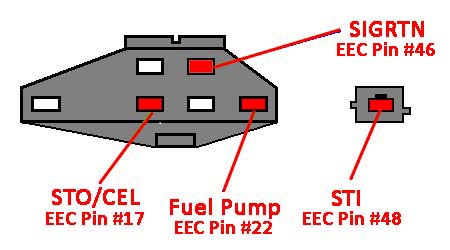
Perform Key On Engine Off Self-Test until Continuous Memory DTC have been displayed.
VOM/DVOM will indicate less than 1.0 volt when test is complete.
Depress and release throttle.
Does voltage increase?
Yes REMAIN in Output State DTM. GO to TC2.
No DEPRESS throttle to WOT and RELEASE. If STO voltage does not go high, PERFORM Pinpoint Test Step QC1. Leave equipment hooked up.
TC2 CHECK SOLENOID ELECTRICAL OPERATION
Key on, engine off.
Disconnect transmission connector.
Using a mirror, inspect both ends of the connector for damaged or pushed out pins, corrosion, loose wires, etc. Service as necessary.
Refer to the schematic and table of this Pinpoint Test.
Connect VOM/DVOM positive test lead to VPWR circuit and negative test lead to solenoid circuit of the transmission vehicle harness connector.
miesk5 Note, here is the 95 E4OD Solenoid Connector pin diagram;
VOM/DVOM on 20 volt scale.
While observing DVOM, depress and release throttle several times to cycle solenoid output ON and OFF.
Does the suspect solenoid output voltage change at least 0.5 volt?
Yes RECONNECT connector. REFER to the Transmission Group in the Service Manual.
No REMOVE jumper wire. GO to TC3.
TC3 CHECK CONTINUITY OF SOLENOID SIGNAL AND VPWR HARNESS CIRCUITS
Key off.
Solenoid transmission connector disconnected.
Disconnect Powertrain Control Module (PCM). Inspect for damaged or pushed out pins, corrosion, loose wires, etc. Service as necessary.
Install breakout box, leave PCM disconnected.
Refer to schematic and table in this Pinpoint Test.
Measure resistance between suspect PCM signal output pin at the breakout box and signal output pin at transmission vehicle harness connector.
Measure resistance between Test Pin 37/57 at the breakout box and VPWR pin at transmission vehicle harness connector.
Is each resistance less than 5.0 ohms?
Yes GO to TC4.
No SERVICE open circuit(s). REMOVE breakout box. RECONNECT all components. RERUN Quick Test
TC4 CHECK SOLENOID HARNESS FOR SHORTS TO POWER OR GROUND
Key off.
Breakout box installed, PCM disconnected.
Transmission connector disconnected.
Refer to schematic and table in this Pinpoint Test.
Measure resistance between PCM signal output pin and Test Pin 37/57 at the breakout box.
Measure resistance between PCM signal output pin and Test Pins 40/60 and 46 at the breakout box and chassis ground.
Is each resistance greater than 10,000 ohms?
Yes REFER to Service Manual, Transmission Diagnosis for internal harness and solenoids. IF OK, REPLACE PCM. REMOVE breakout box. RECONNECT all components. RERUN Quick Test.
NoSERVICE short circuits. REMOVE breakout box. RECONNECT all components. RERUN Quick Test.
Thread Starter
|
Mountain Pass
Joined: Nov 2019
Posts: 136
Likes: 17
In a nutshell you disconnect the speed control plugs prior to starting the test. The first step seems to be the the obd test set to make sure it's working and then leave a jumper in the obd to put the truck in test mode.
key on engine off.
then you disconnect the harness from solenoid pack. Neg multimeter to solenoid pack tcc pin and pos to the harness power (red wire). Have assistant press the gas pedal and this will send voltage to the solenoid. You should see a spike in voltage on your multimeter. If not the tcc solenoid would be burnt.
a voltage spike or not here will rule out the tcc solenoid. If the solenoid is good then you move on to the harness. Disconnect it and pull it through to the engine bay. Then pull the 60 pin pcm plug and check the tcc line (purple yellow wire) for continuity and short to ground.
If all these up to this point have proven solid then it says replace pcm.
which makes sense because you've now ruled out the entire system. It cant be anything else if its throwing only a 629 and you can drive it in 1 or R perfectly fine.
I'm going to do this entire sequence tomorrow after work.
I've already checked the entire TCC circuit from pcm to trans harness and its good. If I can rule out the solenoid now as being serviceable then its obvious the pcm got fried from the wires making contact on the ratty shift pack harness.
then I'll pull the pcm and open it and see if I can spot any obvious signs of damage
key on engine off.
then you disconnect the harness from solenoid pack. Neg multimeter to solenoid pack tcc pin and pos to the harness power (red wire). Have assistant press the gas pedal and this will send voltage to the solenoid. You should see a spike in voltage on your multimeter. If not the tcc solenoid would be burnt.
a voltage spike or not here will rule out the tcc solenoid. If the solenoid is good then you move on to the harness. Disconnect it and pull it through to the engine bay. Then pull the 60 pin pcm plug and check the tcc line (purple yellow wire) for continuity and short to ground.
If all these up to this point have proven solid then it says replace pcm.
which makes sense because you've now ruled out the entire system. It cant be anything else if its throwing only a 629 and you can drive it in 1 or R perfectly fine.
I'm going to do this entire sequence tomorrow after work.
I've already checked the entire TCC circuit from pcm to trans harness and its good. If I can rule out the solenoid now as being serviceable then its obvious the pcm got fried from the wires making contact on the ratty shift pack harness.
then I'll pull the pcm and open it and see if I can spot any obvious signs of damage

Lead Driver

Joined: Jan 2019
Posts: 5,083
Likes: 868
From: N.W. Alabama
this is the ohms test with DVOM, you may have already seen/done this
To check MLPS
1. Hook red lead of DVOM to pin # 199 (MLP sensor signal).
2. Hook black lead of meter to pin 359 (sensor signal return).
3. Set meter to ohms.
4. Move manual lever through the different positions and compare DVOM reading to chart below.
Manuel lever position
Meter should read:
P 3769 to 4608 ohms
R 1304 to 1593 ohms
N 660 to 807 ohms
D .... 361 to 442 ohms
2 190 to 232 ohms
I 80 to 95 ohms
To check MLPS
1. Hook red lead of DVOM to pin # 199 (MLP sensor signal).
2. Hook black lead of meter to pin 359 (sensor signal return).
3. Set meter to ohms.
4. Move manual lever through the different positions and compare DVOM reading to chart below.
Manuel lever position
Meter should read:
P 3769 to 4608 ohms
R 1304 to 1593 ohms
N 660 to 807 ohms
D .... 361 to 442 ohms
2 190 to 232 ohms
I 80 to 95 ohms
Thread Starter
|
Mountain Pass
Joined: Nov 2019
Posts: 136
Likes: 17
this is the ohms test with DVOM, you may have already seen/done this
To check MLPS
1. Hook red lead of DVOM to pin # 199 (MLP sensor signal).
2. Hook black lead of meter to pin 359 (sensor signal return).
3. Set meter to ohms.
4. Move manual lever through the different positions and compare DVOM reading to chart below.
Manuel lever position
Meter should read:
P 3769 to 4608 ohms
R 1304 to 1593 ohms
N 660 to 807 ohms
D .... 361 to 442 ohms
2 190 to 232 ohms
I 80 to 95 ohms
To check MLPS
1. Hook red lead of DVOM to pin # 199 (MLP sensor signal).
2. Hook black lead of meter to pin 359 (sensor signal return).
3. Set meter to ohms.
4. Move manual lever through the different positions and compare DVOM reading to chart below.
Manuel lever position
Meter should read:
P 3769 to 4608 ohms
R 1304 to 1593 ohms
N 660 to 807 ohms
D .... 361 to 442 ohms
2 190 to 232 ohms
I 80 to 95 ohms
My question is if I'm throwing specific 629 code and with the clear symptoms in having is it possible that the MLPS switch being defective could cause this issue?
Lead Driver
Joined: Jan 2019
Posts: 5,083
Likes: 868
From: N.W. Alabama
with all the bad new sensor's people are getting, because its hard to find motorcraft ones, if I can check the new one just to make sure its good, and not assume as I once did, and still chasing same problem, and then think "surely that one isnt bad"? Is it?Crap...yes..yes it is BAD!
Thread Starter
|
Mountain Pass
Joined: Nov 2019
Posts: 136
Likes: 17
Well! Live report. Ran through step 1. Confirmed the test system was sending voltage. Had a good 12v read plugged into the OBD boot.
Pulled the trans harness and removed the mlps off the trans. Pulled the harness into the cab, probed positive lead of VOM to the red power wire on the harness and negative to the OLD solenoid pack I removed. VOM read .10 to .13v on 20v setting as a base. Throttle all the way down and up a couple times. NO CHANGE in voltage at all. Tested other solenoids and same results!
I already tested every circuit on the whole harness after repairing the trans plug harness. So I know theres no shorts and good continuity from PCM all the way to harness from before. I'm a do it again anyways but I'm now 100% certain it's the PCM!
Pulled the trans harness and removed the mlps off the trans. Pulled the harness into the cab, probed positive lead of VOM to the red power wire on the harness and negative to the OLD solenoid pack I removed. VOM read .10 to .13v on 20v setting as a base. Throttle all the way down and up a couple times. NO CHANGE in voltage at all. Tested other solenoids and same results!
I already tested every circuit on the whole harness after repairing the trans plug harness. So I know theres no shorts and good continuity from PCM all the way to harness from before. I'm a do it again anyways but I'm now 100% certain it's the PCM!
Thread Starter
|
Mountain Pass
Joined: Nov 2019
Posts: 136
Likes: 17
629 Code Resolved!
All,
I wanted to follow up on this as I hate following threads and then just die with no info as to what the solution was.
So 629 code throws.
No other codes
Truck will drive in 1st gear and reverse but stalls dead in 2nd snd D
Also power supply drop hard when shifting from park or neutral to 1st gear.
First pull the harness from the e40d trans.
inspect it for corrosion and crossed wires. If they are, pull the whole harness and pin to pin connector test for continuity and short to ground.
if that's good then check the resistance on the shift solenoid pack across the pins.
if that's good, put the the vehicle in test mode and get your reference voltage and apply the test to the solenoid pack pin terminals and throttle the gas pedal to check for faults in the solenoid pack.
IF THAT IS ALL RULED OUT and no issues, then you 100% have a fried pcm!
I bought a new one after running these diagnostics and doubting myself.
Installed the new refurbed pcm today and the truck runs and shifts like new. Also snapped the engine awake a bit too.
Problem resolved. I think my power supply wires crossed at least 2 or 3 other of the solenoid pack wires including the two gear shift solenoids and fried the pcm.
It makes sense in the end as the 629 is an electrical power supply fault to the tc clutch solenoid. The truck rolling in 1st snd R ruled out anything wrong with the trans or the torque convertor.
Thanks for all the help with this guys. To say i learned a lot would be a huge understatement.
Cheers
I wanted to follow up on this as I hate following threads and then just die with no info as to what the solution was.
So 629 code throws.
No other codes
Truck will drive in 1st gear and reverse but stalls dead in 2nd snd D
Also power supply drop hard when shifting from park or neutral to 1st gear.
First pull the harness from the e40d trans.
inspect it for corrosion and crossed wires. If they are, pull the whole harness and pin to pin connector test for continuity and short to ground.
if that's good then check the resistance on the shift solenoid pack across the pins.
if that's good, put the the vehicle in test mode and get your reference voltage and apply the test to the solenoid pack pin terminals and throttle the gas pedal to check for faults in the solenoid pack.
IF THAT IS ALL RULED OUT and no issues, then you 100% have a fried pcm!
I bought a new one after running these diagnostics and doubting myself.
Installed the new refurbed pcm today and the truck runs and shifts like new. Also snapped the engine awake a bit too.
Problem resolved. I think my power supply wires crossed at least 2 or 3 other of the solenoid pack wires including the two gear shift solenoids and fried the pcm.
It makes sense in the end as the 629 is an electrical power supply fault to the tc clutch solenoid. The truck rolling in 1st snd R ruled out anything wrong with the trans or the torque convertor.
Thanks for all the help with this guys. To say i learned a lot would be a huge understatement.
Cheers
Lead Driver
Joined: Jan 2019
Posts: 5,083
Likes: 868
From: N.W. Alabama
glad to hear, and I'm glad I'm not the only one that dont like not finishing a thread off, good, bad or indifferent.
FTE Stories
Ford Trucks for Ford Truck Enthusiasts

Top 10 Fords at 2026 Carlisle Ford Nationals
Joe Kucinski
3 Best / 3 Worst Parts of Modern Ford Ownership
Brett Foote
10 Amazing Upgrades That Solve Common Ford Truck Owner Headaches
Pouria Savadkouei
Every 2026 Ford Engine Explained
Brett Foote
10 Ugly Ford Trucks That We Still Kinda Love
Joe Kucinski
10 Things Every Truck Owner NEEDS (2026 Edition)
Michael S. Palmer
Rezvani's Latest Post-Apocalyptic Monster Is a Ford F-150 Raptor Underneath
Verdad Gallardo
Top 10 Most Expensive Ford Trucks Ever Sold on Bring a Trailer
Joe Kucinski
2027 Ford Super Duty Buyer's Guide (Every Model, Engine, & Package)
Brett Foote
Thread
Thread Starter
Forum
Replies
Last Post
reMARKable6965
1987 - 1996 F150 & Larger F-Series Trucks
4
Aug 11, 2017 02:37 PM
towinchebbies
1997 - 2003 F150
2
Apr 11, 2014 05:01 PM
Tmacular
1983 - 2012 Ranger & B-Series
3
Apr 4, 2010 08:59 AM