When you click on links to various merchants on this site and make a purchase, this can result in this site earning a commission. Affiliate programs and affiliations include, but are not limited to, the eBay Partner Network.
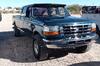
Decided to start a new thread to have opinions, experiences an have insight of how the X can be made into a more "comfortable" riding beast.
As of now my X is the step child of the X world 5.4, 2wd, but with the exception of having 4.30's, 285 75 16's. Stock suspension, stock replacement shocks, no rear sway bar. My trailer 14x8 weighs 1900lbs empty and sometimes has a load of 6-7klbs, tongue weight can sometimes be near 800+lbs depending on car/stuff being towed. I used to tow my old TT that weight 8800lbs loaded and the X at the time had 3.73 and did the wheel hop as well.
Problem is the X always has felt "soft" on the rear, pass a speed bump and you can feel when she bottoms out on the bump stops and this is going at a slow speed, strap a trailer with some tongue weight and you can feel it even worst. In sand/gravel if the truck looses traction in return I get bad wheel hop.
I know this is not a real comparison but my work truck is a 00 f250, 5.4, 2wd, 3.73, 235 85 16, stock suspension with air bags and a punny 1/2" sway bar, stock replacement shocks, utility bed full of tools, truck weights in at a hefty 11k, and has never done this, even before I addded the air bags, truck has always felt "stable" before adding all my tools.
So share your experinces or knowledge on how to make the X ride better/stiffer.
for starters I will say to give you an accurate comparison between the Ex and your f250 would require more info but my guess with with the info provided is;
the f250 secondary spring aka overload, acts as a anti-wrap leaf. ( aka traction bar ) when the main spring is compressed just beyond normal ride height. on the other hand your RWD Ex, unlike the 4x4 Ex rear suspension does not use a anti-wrap leaf.
installing a anti-wrap leaf or traction bar will mitigate the wheel hop.
as for the “soft” feel.
almost certainly it is s shock issue not a spring issue.
for a firmer ride get a shock with more compression valving. Ford used a valving profile with little to no compression valving in the shock to give it a cushy ride to appeal to soccer moms. towing not really being a soccer mom activity means ford was willing to trade away that handling trait when they setup the shock profile, the F250 on the other hand was more equipped to tow so uses a different shock valving setup.
the other reason the ex will always feel more soft in the rear then a f250 that was equipped Identical is just physics, the ex body gives it a considerably higher center of gravity. aka they are top heavy,
ever drive a f250 with a slide in camper ? makes the Ex feel like a porsche.
Tires impact ride exponentially. Often we confused suspension noises, harmonics and oscillations as "poor ride". I perceive that too, so pay attention to body bushings, suspension parts, and spring bushings. That new truck "feel" is real.
to address your topic tittle specifically, changing your shock valving profile does not necessarily mean a “better” ride quality because that is subjective.
but you can certainly CHANGE the ride characteristics to suit your needs or wants.
in other words, soccer mom isnt going to think your ideal towing shock gives her a ride quality she likes but to you it may be perfect. likewise it seems you are not to keen on soccer moms setup.
tires design has as much impact as shocks.
while you cant change the design of the ones you have installed Tire pressure is a huge variable.
there is s very good reason racers make a huge fuss over a fraction of a pound in pressure. because it changes everything. yet it is very common for people to inflate to a tires max psi when towing which destroys both stopping distance, traction and handling. check your air pressures !
( stock size tires should be inflated to the psi on your door pillar sticker)
So what kind/brand shock would you recommend on my 2wd X? I'm all ears suspension stuff isn't my cup of tea. I can rebuild most stuff suspension wise but dont know the cheracteristics of what does what to improve handling/ride quality.
based on Industry wide tire standards, yes all tires sold in the USA meet this ( because it is physics )
https://www.toyotires.com/media/2125...s_20170203.pdf
a 285/75r16 inflated to 50 front will support 2275 pounds of payload each so 5510 pounds on the front axle
55 psi will support 2955 pounds each or 5910 pounds on the rear axle.
at 65 psi you run will support 3305 pounds each or 6610 total on the rear axle, Yet the Ex sterling rear axle has a GAWR of only 5250 pounds.
the front 4x4 axle has a 4700 GAWR ( not certain on the RWD front axle but it is also on your door placard )
bottom line is your slightly over size tires have a higher capacity then a stock size tire and would require slightly less the stock air pressure but you are actually running higher pressure which means any gains in ride quality or performance you had hopped to gain by using a larger volume tire has been negated and actually diminished by over inflating them.
But I've noticed if I have them air at 45 (Ive run them at this PSI as well) and the tires started to cup really bad on front with no more than 5k on that rotation.
So how can this be compensated?
Narrower tire?
Just for comparison sake heres the two leaf springs on my X and f250.
My X leaf pack.
My F250 leaf pack.
Why is the bottom leaf thicker on the F250 than the X?
not ignoring your shock question…. I will get to it.
why thicker ? smartass answer, because you are not comparing apple to apples.
lets start discussing the pack in a more spring guy lingo.
the primary spring pack leaves are numberer from top to bottom. the main leaf in the pack is always the top with the mounting eyes.
so your RWD excursion has a 6 leaf primary pack.
the F250 spring shown uses a 4 leaf main pack plus a secondary located on top and a Triple rate is on the very bottom of the primary pack.
the secondary is called such in the order they are designed to engage and contribute their rate to the effort.
if you compare the 4th spring in the f250 pack which is the bottom spring of the primary pack it is in fact the same thickness as your excursion spring. however to gain additional spring rate the Excursion adds 2 more leafs to get to its 420 lbs in rate. If you were to remove #5 and #6 from the Excursions primary ( and only ) spring pack it would be the same 330 lbs in. rate as the f250 primary pack.
all in all, why the differences, Excursions have less travel, Excursion curb weight is Higher, Excursion payload demands are different,
the truck having a lower curb weight requires a lower primary spring rate, however put a moderate load in the bed and the secondary kicks the rate up ( think adding the ex additional body weight )
so now the f250 would be riding around on a rate similar to the Ex……. load the truck down to GAWR and now the triple rate ( commonly called an overload) spring is there to save the day and guard against completely bottoming out the suspensions travel. Like I said in another thread, the 2.5" of travel of the triple rate or if no top secondary rate is used then that big fat leaf becomes the secondary is effective a long travel bump stop. they serve the same purpose.
edit…. technical note, on some F350 primary packs of which I forget what code, use a .5mm thicker #1 leaf.
So what kind/brand shock would you recommend on my 2wd X?.
consumer shock companies do not make it easy to choose based on actual shock valving data, ( for obvious reasons, its beyond laymen care or understanding )
so the key is to closely scrutinize their marketing and see what they are targeting, soccer mom comfort , tow daddy control, big head billy or racer rick. each of those gives a clue to the shock profile.
I have cut many open and measure the valving for my own benefit so I suppose it makes my opinion a educated guess at best, it still boils down to a subject preference.
( I use a take apart race style shock that allows total customization and requires countless hours of tuning to get dialed in from tuner guys who have years of experience )
that said here are my go to suggestions.
stock height Excursions with stock-ish size tires my favorite shock is the KYB Monomax
increased ride height Excursions with oversized tires I go with the Bilstein 5100
increased suspension travel with oversized tires wanting off road capabilities I like the Fox factory race series. ( these can be custom tuned but come with a reasonable guesstimate)
if you really want to go to town a custom tuned shock STARTS at about $250 but can easily be over a grand.
any of those will improve towing but none of them are expressly tuned for towing.
I used to personally use and would recommend the Rancho 9000 adjustable for my tow rig and they worked great for me but the control **** is known to
fail in areas where they use chemicals on the ground for ice/snow control and they are not off road shocks
I got sick of guys blaming me because I suggested them and they used them inappropriately, so proceed at your own judgment.
But I've noticed if I have them air at 45 (Ive run them at this PSI as well) and the tires started to cup really bad on front with no more than 5k on that rotation.
So how can this be compensated?
Narrower tire?
first off we need to understand the nature of Fords twin I beam front suspension which is a whole separate subject due to the complex geometry at play.
for this conversation I will just say that the design is alignment and ride height sensitive. get it out of wack and they eat tires.
Increassing air PSI in the front can as you figured out compensates.
by increasing the PSI it raises the center section of the tire slightly and compensates for the camber issues,
higher front PSI also decreases understeer which without diving deep on that subject lets just say it changes how the vehicle handling feels
also worn shocks can cause cupping, not sure that increasing PSI is going to cure that however. ( have not tested that as replacing the shocks seemed a better idea)
in the truest of technical terms you give up some traction in front when you increase the front PSI, effects of this are longer braking distances and decrees in understeer.
that is often a compromise people are willing to live with rather then maintain the alignment and ride height of the vehicle.
However the "correct" solution is to make sure the front suspension and steering are in spec.
This Hennessey Takes the Expedition Tremor's Off-Roading Capability to the Next Level
Slideshow: The VelociRaptor Expedition gains a lift, upgraded suspension, Brembo brakes, and trail-ready equipment while retaining the stock 440-horsepower EcoBoost V6.
Rezvani's Latest Post-Apocalyptic Monster Is a Ford F-150 Raptor Underneath
Slideshow: Called the Fortress, the 850-horsepower pickup combines Raptor underpinnings with military-inspired features, survival equipment, and a starting price of $285,000.