


Stumbling on acceleration

Thread Starter
|
New User
Joined: Sep 2018
Posts: 19
Likes: 0
Stumbling on acceleration
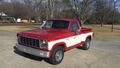
Need some help on my 1984 F150 2WD 351 HO. I picked up this survivor a couple of weeks ago. has 132k miles and is in all original condition. It starts right up, idles great, sounds great, has excellent oil pressure, however, I noticed that on acceleration, it hesitates and stumbles. I have replaced plugs, wires, cap and rotor , but it still stumbles. I've read that it is probably the carburetor. It has the original Holley 4180 and I am considering replacing with an Edelbrock 1406. Would this work, and what issues should I look for when I tackle this swap?
Thanks in advance for the help.
Thanks in advance for the help.

Post Fiend
Joined: Feb 2008
Posts: 5,831
Likes: 121
From: St Albert, Alberta
Need some help on my 1984 F150 2WD 351 HO. I picked up this survivor a couple of weeks ago. has 132k miles and is in all original condition. It starts right up, idles great, sounds great, has excellent oil pressure, however, I noticed that on acceleration, it hesitates and stumbles. I have replaced plugs, wires, cap and rotor , but it still stumbles. I've read that it is probably the carburetor. It has the original Holley 4180 and I am considering replacing with an Edelbrock 1406. Would this work, and what issues should I look for when I tackle this swap?
Thanks in advance for the help.
Thanks in advance for the help.
Also swapping the carb to a non emissions style carb will mean modifying or removing some of the emissions equipment.
The carb is very likely due for a rebuild so you also have the option of rebuilding the original.

Moderator


Joined: Jan 2001
Posts: 56,971
Likes: 2,731
From: Virginia

If you are not up to rebuilding a carb, a new one is probably your best option. But as was mentioned, a aftermarket carb will need a few modifications to make it fit, even a another Holley. Everyone has their opinions on carbs, I gravitate toward the holley's myself since that is what I am more familiar with, but if you want to run a Edlebrock, it would work fine also. Most important thing, make sure you put a good fuel filter on it. Your stock carb probably has the filter screwed into the carb, the aftermarket carbs usually require a external filter in the fuel line, so that is part of the minor modifications you need to make.

Freshman User
Joined: Sep 2018
Posts: 34
Likes: 2
Sounds like power valve issues, timing advance, or as others have said, just an old carb that is in need of rebuild. It’s up to you, but when I got my truck (86 351W HO F150), it was in much of the same shape as you describe yours with all the emission vacuum hoses, smog ports, all that stuff just in disarray in the engine compartment and it was just laying there, not hooked or working at all. I took the time to replace the stock intake with an Edelbrock intake (no egr), got rid of the smog pump and capped the thermoactor holes in the heads, fixed about a half a dozen of vacuum leaks, and replaced the original carb with a 4160 Holley Street Warrior (600cfm). I’m usually an Edelbrock guy, but I didn’t want to worry with rerouting fuel lines and linkage. Just my two cents, but when I did that the engine woke up quite a bit.

Lead Driver


Joined: Nov 2013
Posts: 7,162
Likes: 1,169
What about an EGR issue? The valve is supposed to be closed during acceleration. If it stays open (sticky valve or lack of command to close), that could cause your symptom.
The EGR valve is also supposed to be closed at idle. However, maybe the idle speed and mixture got jacked around to help mask that.
I’m not sure of the best way to troubleshoot an EGR system. Maybe somebody else can chime in. But it’s something to consider before loading a new carburetor on the parts catapult.
The EGR valve is also supposed to be closed at idle. However, maybe the idle speed and mixture got jacked around to help mask that.
I’m not sure of the best way to troubleshoot an EGR system. Maybe somebody else can chime in. But it’s something to consider before loading a new carburetor on the parts catapult.
Thread Starter
|
New User
Joined: Sep 2018
Posts: 19
Likes: 0
Thanks to all for your input. Sounds like I have some work to do. I did pull the vacuum line off the EGR , capped the port and plugged the line. Truck ran exactly the same as when connected. Probably start with a new EGR. I'm pretty sure that the carb is original and could use a rebuild. Thanks again for the help. I'm sure you'll hear from me again soon. I'm mechanically inclined, but I ain't a mechanic.
Lead Driver
Joined: Nov 2013
Posts: 7,162
Likes: 1,169
I'd also suggest checking fuel pressure and volume. A problem there could cause a stumble .
Trending Topics

Cargo Master

Joined: Dec 2004
Posts: 3,362
Likes: 22
From: Florence, SC
Thanks to all for your input. Sounds like I have some work to do. I did pull the vacuum line off the EGR , capped the port and plugged the line. Truck ran exactly the same as when connected. Probably start with a new EGR. I'm pretty sure that the carb is original and could use a rebuild. Thanks again for the help. I'm sure you'll hear from me again soon. I'm mechanically inclined, but I ain't a mechanic.
The Motorcraft (made by Holley) 4180 you already have is a good carburetor, and better than an aftermarket Edelbrock carburetor, in my opinion. It is the same carburetor that the mighty Mustang GT 5.0 used from 1983 - 1985.
FTE Stories
Ford Trucks for Ford Truck Enthusiasts

AEV FXL Super Duty - the Super Duty Raptor Ford Doesn't Make
Brett Foote
Lobo Vs Lobo: Proof the F-150 Lobo Should Be Even Lower!
Michael S. Palmer
Ford's 2001 Explorer Sportsman Concept Looks For a New Home
Verdad Gallardo
10 Best Ford Truck Engines We Miss the Most!
Joe Kucinski
2026 Shelby F-150 Off-Road: Better Than a Raptor R?
Brett Foote
2027 Super Duty Carhartt Package First Look: 12 Things You NEED to Know!
Michael S. Palmer
10 Most Surprising 2026 Ford Truck Features!
Joe Kucinski
Top 10 Ford Trucks Coming to Mecum Indy 2026
Brett Foote
5 Best / 5 Worst Ford Truck Wheels of All Time
Joe Kucinski
Laughing Gas
Joined: Apr 2013
Posts: 1,047
Likes: 63
Could be as simple as a clogged fuel filter. Try replacing the fuel filter(s) before anything else.
The 4180 is a great carb. If it idles good and otherwise runs good it may not be the carb but rather fuel delivery; fuel filter(s) fuel lines, fuel pump.
The 4180 is a great carb. If it idles good and otherwise runs good it may not be the carb but rather fuel delivery; fuel filter(s) fuel lines, fuel pump.
Moderator
Joined: Jan 2001
Posts: 56,971
Likes: 2,731
From: Virginia
Stumble on acceleration is most likely a accelerator pump problem in the carb. If it was a EGR problem, it would idle terribly if at all. It's very diffcult to mask a leaky EGR.
You can check to see if the accelerator pump is working properly and check it off the list of possibilities if it is working ok. All you have to do is pull the aircleaner off, and get a flashlight and crawl up in the engine compartment or get on a ladder and lean over the top of the carb. With the engine off, pull the choke door open if it's in your way, and shine the flashlight down the throat of the carb and push the throttle wide open. You should see two strong streams of gas pour into the throat of the carb with some force behind them. If they are weak and just dribbles, that is your problem. You can let the throttle back closed, and then push on it ever so slightly, and you should get squirting with the slightest movement.
You can mess with this about 3 times, but after that I would quit, since you will flood the engine moving the throttle too much without it running. No harm will be done, but it will make it hard to start afterward.
You can check to see if the accelerator pump is working properly and check it off the list of possibilities if it is working ok. All you have to do is pull the aircleaner off, and get a flashlight and crawl up in the engine compartment or get on a ladder and lean over the top of the carb. With the engine off, pull the choke door open if it's in your way, and shine the flashlight down the throat of the carb and push the throttle wide open. You should see two strong streams of gas pour into the throat of the carb with some force behind them. If they are weak and just dribbles, that is your problem. You can let the throttle back closed, and then push on it ever so slightly, and you should get squirting with the slightest movement.
You can mess with this about 3 times, but after that I would quit, since you will flood the engine moving the throttle too much without it running. No harm will be done, but it will make it hard to start afterward.
Laughing Gas
Joined: Apr 2013
Posts: 1,047
Likes: 63
I should also add that the fuel circuit for the secondaries can get gunked up inside the carburetor if they never get opened up. I make it a point to push into the secondaries from time to time just to make sure the gas stays fresh.
If the secondaries are gunked up it up it would certainly fall down under hard acceleration.
If the secondaries are gunked up it up it would certainly fall down under hard acceleration.
Post Fiend
Joined: Feb 2008
Posts: 5,831
Likes: 121
From: St Albert, Alberta
I should also add that the fuel circuit for the secondaries can get gunked up inside the carburetor if they never get opened up. I make it a point to push into the secondaries from time to time just to make sure the gas stays fresh.
If the secondaries are gunked up it up it would certainly fall down under hard acceleration.
If the secondaries are gunked up it up it would certainly fall down under hard acceleration.
FTE Legend
Joined: Nov 2015
Posts: 30,870
Likes: 4,113
From: Angier, NC
Stumble on acceleration is most likely a accelerator pump problem in the carb. If it was a EGR problem, it would idle terribly if at all. It's very diffcult to mask a leaky EGR.
You can check to see if the accelerator pump is working properly and check it off the list of possibilities if it is working ok. All you have to do is pull the aircleaner off, and get a flashlight and crawl up in the engine compartment or get on a ladder and lean over the top of the carb. With the engine off, pull the choke door open if it's in your way, and shine the flashlight down the throat of the carb and push the throttle wide open. You should see two strong streams of gas pour into the throat of the carb with some force behind them. If they are weak and just dribbles, that is your problem. You can let the throttle back closed, and then push on it ever so slightly, and you should get squirting with the slightest movement.
You can mess with this about 3 times, but after that I would quit, since you will flood the engine moving the throttle too much without it running. No harm will be done, but it will make it hard to start afterward.
You can check to see if the accelerator pump is working properly and check it off the list of possibilities if it is working ok. All you have to do is pull the aircleaner off, and get a flashlight and crawl up in the engine compartment or get on a ladder and lean over the top of the carb. With the engine off, pull the choke door open if it's in your way, and shine the flashlight down the throat of the carb and push the throttle wide open. You should see two strong streams of gas pour into the throat of the carb with some force behind them. If they are weak and just dribbles, that is your problem. You can let the throttle back closed, and then push on it ever so slightly, and you should get squirting with the slightest movement.
You can mess with this about 3 times, but after that I would quit, since you will flood the engine moving the throttle too much without it running. No harm will be done, but it will make it hard to start afterward.
If it is the cause I would rebuild your carb and go from there.
Also rebuilding yours there is no messing with vacuum lines that need to be plugged, other brackets to get the auto trany to shift right, fuel lines re-routed, etc.
Dave ----
Thread Starter
|
New User
Joined: Sep 2018
Posts: 19
Likes: 0
Wow! Thanks everyone. Not only getting some great advice, getting educated. Once past the hesitation, she'll open up and run, pretty quick too I am hoping its just a carb rebuild. I'll give these suggestions a try tomorrow. Off to watch football now. Thanks again. I keep ya'll posted.
Laughing Gas
Joined: Apr 2013
Posts: 1,047
Likes: 63
Back to the original poster: when you say acceleration, do you mean “off the line” acceleration or do you mean “heavy throttle” as in sustained pulling a big load up a hill?
If it’s a stumble off the line then check the accelerator pump function as the others have already described. Also check the free play in the throttle linkage before it engages the accelerator pump lever arm. There should be a little bit of free play but if there is too much it can cause the accelerator shot to come late and cause a hesitation on throttle tip in.