When you click on links to various merchants on this site and make a purchase, this can result in this site earning a commission. Affiliate programs and affiliations include, but are not limited to, the eBay Partner Network.
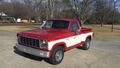
I have an 85 F150 2wd 4.9l i6 my question is this, directly below the cap to my radiator is the valve for the hose leading to the coolant overflow, directly below this is a valve not being used, it was capped by the original owner by a small rubber nipple with a hose clamp and was cracked and leaking coolant I have since replaced it and it is leaking again the same exact way, I don’t think that the small rubber nipple is capable of holding back the coolant especially at high temperature, is there a better solution for this? Also what is the purpose of this extra valve in the first place?
I have an 85 F150 2wd 4.9l i6 my question is this, directly below the cap to my radiator is the valve for the hose leading to the coolant overflow, directly below this is a valve not being used, it was capped by the original owner by a small rubber nipple with a hose clamp and was cracked and leaking coolant I have since replaced it and it is leaking again the same exact way, I don’t think that the small rubber nipple is capable of holding back the coolant especially at high temperature, is there a better solution for this? Also what is the purpose of this extra valve in the first place?
There are no valves in the radiator short of the pet **** to drain it.. Maybe a pic would better describe what you are talking about.
That looks like a heater hose clamped on to a side tank nipple. I took a look at a replacement radiator for your truck and it looks like there is another nipple below that one on the side tank. Perhaps it's the heater hose loop connections?
That connection is for a return line for a degas bottle. The wonders of the aftermarket using parts that fit multiple vehicles. All you can do is find an appropriate cap and cap it off.
The radiator that came with my truck 81 F100, was not the right radiator, also had that nipple and it also had a cap on it.
Now as said it was not the right radiator for my year truck and I had one that was so I traded it off for EFI exh manifolds so I cant even look to see how it was capped.
If it was not a threaded nipple to use a threaded cap I would use rubber heater hose of the right size and a large bolt. This bolt the threads can fit into the hose and a clamp to hold it from leaking or put the thread side in first and have the head of the bolt just inside the hose and use a clamp around the hose& bolt head.
Oh do have to ask, why have the over flow tank on the other side of the engine bay?
How was it hooked up from the factory, rubber hose all the way to the other side?
Dave ----
The radiator that came with my truck 81 F100, was not the right radiator, also had that nipple and it also had a cap on it.
Now as said it was not the right radiator for my year truck and I had one that was so I traded it off for EFI exh manifolds so I cant even look to see how it was capped.
If it was not a threaded nipple to use a threaded cap I would use rubber heater hose of the right size and a large bolt. This bolt the threads can fit into the hose and a clamp to hold it from leaking or put the thread side in first and have the head of the bolt just inside the hose and use a clamp around the hose& bolt head.
Oh do have to ask, why have the over flow tank on the other side of the engine bay?
How was it hooked up from the factory, rubber hose all the way to the other side?
Dave ----
That is just a picture he found in the internet I believe, not his truck. Bottom line, this does have full heat and pressure on this nipple, a simple un-reinforced vacuum type cap with a clamp is not going to hold up. Besides the heater hose with the bolt, can't think of anything else that would look better and do the job.
Yea I knew it was a internet picture.
Mine you can see a blue cap but is the only picture I have of it.
I also knew the one my truck came with was not right as it was held in with wire around the fill neck to the support and nothing on the other side IIRC.
I have seen some new radiators come with caps but they are thin crappy ones that would fail in short order.
I think the "best fix" is what I posted and if done some what right you would not see the bolt other than the head if you sealed around the threads.
DO you know how the plumbed the over flow from radiator to tank?
I still have to pipe this up yet but thinking of using metal tubing and rubber hose to connect them together.
Dave ----
That nipple was used on some later EFI models. A metal pipe attached to this nipple by a rubber hose, ran acrosss the radiator, and then connected to the throttle body to help keep it warm for better driveability:
Other models simply had a rubber hose connected to that nipple that teed into a heater hose:
Looks like a hose in that location would bypass the thermostat some. I wonder what the thinking was behind that? You would think it take longer for the engine to warm up like that. I know it's just partial flow, but I would think any percentage of coolant going past the thermostat would cause it to take longer to warm up.
The radiator that came with my truck 81 F100, was not the right radiator, also had that nipple and it also had a cap on it.
Now as said it was not the right radiator for my year truck and I had one that was so I traded it off for EFI exh manifolds so I cant even look to see how it was capped.
If it was not a threaded nipple to use a threaded cap I would use rubber heater hose of the right size and a large bolt. This bolt the threads can fit into the hose and a clamp to hold it from leaking or put the thread side in first and have the head of the bolt just inside the hose and use a clamp around the hose& bolt head.
Oh do have to ask, why have the over flow tank on the other side of the engine bay?
How was it hooked up from the factory, rubber hose all the way to the other side?
Dave ----
Thanks for the advice Dave I just rigged it all up and it works perfectly
Rezvani's Latest Post-Apocalyptic Monster Is a Ford F-150 Raptor Underneath
Slideshow: Called the Fortress, the 850-horsepower pickup combines Raptor underpinnings with military-inspired features, survival equipment, and a starting price of $285,000.