



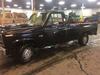


Need help. No spark.

Thread Starter
|
Senior User
Joined: Feb 2013
Posts: 190
Likes: 0
Need help. No spark.
I got a 75 f250 2wd with a 400 motor someone put in it. Bought it as a non running parts truck. Previous owner used to drive it but stopped because the gas tank got rusty a few years ago. The truck had no spark when I bought it. If you put a spark plug in the coil wire it would spark when you turn the key on and when turned off only. I changed the pick up coil assembly with one from a running truck along with trying a different known good coil and ignition module. I have 12v at the + side of coil and coming out of coil wire with key in on position. After monkeying around with it today I can no longer get it to spark with a plug in the coil wire when turned on and off. Where do I start with this thing?

Lead Driver


Joined: Jul 2017
Posts: 9,606
Likes: 1,175
From: San Jose, CA
Sounds likely that at least some of your parts are good, except perhaps for the module, so perhaps something in the wiring itself is not getting the different signals to the correct parts.
But because this is a swapped-in engine, and it's a '75 truck, did you make sure that there is even an Ignition Control Module somewhere? And if so, is it a Dura Spark module? If so, what color is the wire strain relief?
To verify good components and circuits though, there are some tests you can use:
1. Assuming a factory Dura Spark distributor? Sounds like it, so if that's the case measure the resistance between the Orange and Purple wires coming out of the distributor. Should be 400 to 800 ohms between the two. If outside of that range, and even though you know the other vehicle was running, replace the pickup assembly again.
And you can perform this same test on your old one to see if it's still good and can be kept as a spare.
2. Verify the coil is still good. Disconnect the wire from the negative side of the coil (what color is it by the way?) and turn the key to RUN. With a verified voltage signal getting to the positive side of the coil, use a jumper wire of some kind to intermittently ground the negative terminal to a good ground. Every time you ground and release, you should get a spark at the plug in the coil wire. And it should be a zippity-dooh-dah of a spark too! Nice and white/blue and loud. If not, something is amiss with the coil, the coil wire, the plug you're using, or it's not close enough to a good ground.
3. At the ignition module, check for power coming in on the Red w/green wire from the body side. You know the ignition switch is working because your Green w/red wire at the coil has power with the key on. Same should be true of the wire going to the ignition module.
4. Make sure that the third wire (Black w/white ground wire) in the distributor bundle is getting a good ground. When you replaced the module, the new wires where they pass through the grommet at the body of the distributor would have had two metal rings. One (usually the one on the left) will line up with a hole in the base of the "points plate" and is the ground. The wire then runs somewhere into the harness and grounds to the body/engine.
Let us know what color the ICM "grommet" (the wire strain relief I mentioned) is and how many, and what color, the wires to it are.
Better still would be to see some pictures of your under hood area. An overall shot is fine, but especially important would be near the starter relay/solenoid area, and over on the driver's fender where the ignition module should be.
Good luck.
Paul
But because this is a swapped-in engine, and it's a '75 truck, did you make sure that there is even an Ignition Control Module somewhere? And if so, is it a Dura Spark module? If so, what color is the wire strain relief?
To verify good components and circuits though, there are some tests you can use:
1. Assuming a factory Dura Spark distributor? Sounds like it, so if that's the case measure the resistance between the Orange and Purple wires coming out of the distributor. Should be 400 to 800 ohms between the two. If outside of that range, and even though you know the other vehicle was running, replace the pickup assembly again.
And you can perform this same test on your old one to see if it's still good and can be kept as a spare.
2. Verify the coil is still good. Disconnect the wire from the negative side of the coil (what color is it by the way?) and turn the key to RUN. With a verified voltage signal getting to the positive side of the coil, use a jumper wire of some kind to intermittently ground the negative terminal to a good ground. Every time you ground and release, you should get a spark at the plug in the coil wire. And it should be a zippity-dooh-dah of a spark too! Nice and white/blue and loud. If not, something is amiss with the coil, the coil wire, the plug you're using, or it's not close enough to a good ground.
3. At the ignition module, check for power coming in on the Red w/green wire from the body side. You know the ignition switch is working because your Green w/red wire at the coil has power with the key on. Same should be true of the wire going to the ignition module.
4. Make sure that the third wire (Black w/white ground wire) in the distributor bundle is getting a good ground. When you replaced the module, the new wires where they pass through the grommet at the body of the distributor would have had two metal rings. One (usually the one on the left) will line up with a hole in the base of the "points plate" and is the ground. The wire then runs somewhere into the harness and grounds to the body/engine.
Let us know what color the ICM "grommet" (the wire strain relief I mentioned) is and how many, and what color, the wires to it are.
Better still would be to see some pictures of your under hood area. An overall shot is fine, but especially important would be near the starter relay/solenoid area, and over on the driver's fender where the ignition module should be.
Good luck.
Paul
Lead Driver
Joined: Jul 2017
Posts: 9,606
Likes: 1,175
From: San Jose, CA
Oh, almost forgot. Because it's an earlier truck, and especially since it's been modified and the PO's all probably thought they were wiring gurus and that Ford couldn't possibly have known what they were doing, check to make sure you have good ground wires from the battery to all the usual suspects.
Even if they're not there, or are and may not be in good shape, it never hurts to add even more than Ford did.
At a minimum then, you should have the following:
1. Main ground cable from the battery to the engine block.
The larger the gauge the better (up to a point) so I like to use at least 2ga for this.
And the closer it's mounted to the starter motor, the better. But as long as it's got a good clean and tight mount, it's at least going to get you there. And if your starter spins really well, you know you're at least starting from a reasonably good place.
2. From the battery negative, you should also run an independent ground to the body. A 10ga wire is usually sufficient, and mounting it to the fender near the battery, usually under one of the starter relay bolts is a good spot.
Battery cables that already have an additional wire sticking out of the lug, often with a yellow crimp terminal already installed are a good place to start. But if you already have new, or good battery cables, adding your own is fine too.
3. Another ground that often gets removed is the one between the engine and the body. Usually the factory had it bolted to the back of the intake manifold and running over to a self-tapping screw on the firewall.
A wire of at least10ga, or one of those nice pre-made braided grounding straps you can buy at almost any auto parts store is perfect for this.
This is not always the reason the ignitions don't work. But it's never a good thing when grounds are deteriorating, or worse yet, have been removed. Everything just works better when you have a good ground path to the battery and the rest of the truck. The newer the vehicle, the more and better grounds you find from the factory. Sometimes we just have to add our own.
And as I like to say, you can't have too many grounds. And when it comes to grounds and battery cables, overkill is just enough!
Let us know what you find during the tests. Quite a few ignition gremlins come from not getting 12v to the ignition module.
Paul
Even if they're not there, or are and may not be in good shape, it never hurts to add even more than Ford did.
At a minimum then, you should have the following:
1. Main ground cable from the battery to the engine block.
The larger the gauge the better (up to a point) so I like to use at least 2ga for this.
And the closer it's mounted to the starter motor, the better. But as long as it's got a good clean and tight mount, it's at least going to get you there. And if your starter spins really well, you know you're at least starting from a reasonably good place.
2. From the battery negative, you should also run an independent ground to the body. A 10ga wire is usually sufficient, and mounting it to the fender near the battery, usually under one of the starter relay bolts is a good spot.
Battery cables that already have an additional wire sticking out of the lug, often with a yellow crimp terminal already installed are a good place to start. But if you already have new, or good battery cables, adding your own is fine too.
3. Another ground that often gets removed is the one between the engine and the body. Usually the factory had it bolted to the back of the intake manifold and running over to a self-tapping screw on the firewall.
A wire of at least10ga, or one of those nice pre-made braided grounding straps you can buy at almost any auto parts store is perfect for this.
This is not always the reason the ignitions don't work. But it's never a good thing when grounds are deteriorating, or worse yet, have been removed. Everything just works better when you have a good ground path to the battery and the rest of the truck. The newer the vehicle, the more and better grounds you find from the factory. Sometimes we just have to add our own.
And as I like to say, you can't have too many grounds. And when it comes to grounds and battery cables, overkill is just enough!
Let us know what you find during the tests. Quite a few ignition gremlins come from not getting 12v to the ignition module.
Paul
Lead Driver
Joined: Jul 2017
Posts: 9,606
Likes: 1,175
From: San Jose, CA
Oh, and while I'm post-whoring... Another issue that comes to mind is the distributor's penchant for getting stuck in the 351M and 400 blocks. Never seen such a high percentage of stuck distributors on any other engine series.
If yours is able to spin, you're super lucky! If it's not able to spin when you loosen the locking plate, start spraying penetrating lube in there now. And keep spraying it whenever you get the chance. Then take all the chances you get to give the distributor a good smack with something light (in other words, no sledge hammers!) to put some shock loads down the shaft. Hopefully it will eventually loosen. My '79 took more than a month!
But the best reason for continuing to try and continuing to practice patience, is so you don't literally snap the distributor body in half trying to turn it. That's a real bummer when that happens...
The point I'm eventually getting to, is going back to grounds.
The distributor normally grounded through it's aluminum body to the engine block. If your internal ground is not good for some reason, the ONLY way the ignition will work is if the aluminum-to-metal circuit works. And if your distributor is stuck, that would likely mean there's a bunch of things like rust, duelling dual metals leaving their dissimilar metals corrosion, and caked on oil to name just three. These things don't pass electrons very well, so your Black ground wire becomes critical to letting the distributor function as designed.
I'm sure it's more important with the old points ignitions, but they didn't just add an errant wire for no reason when they went electronic. Bean counters would never have allowed it!
So long story even longer, make sure that all of your grounds are good, clean and tight.
Paul
If yours is able to spin, you're super lucky! If it's not able to spin when you loosen the locking plate, start spraying penetrating lube in there now. And keep spraying it whenever you get the chance. Then take all the chances you get to give the distributor a good smack with something light (in other words, no sledge hammers!) to put some shock loads down the shaft. Hopefully it will eventually loosen. My '79 took more than a month!
But the best reason for continuing to try and continuing to practice patience, is so you don't literally snap the distributor body in half trying to turn it. That's a real bummer when that happens...
The point I'm eventually getting to, is going back to grounds.
The distributor normally grounded through it's aluminum body to the engine block. If your internal ground is not good for some reason, the ONLY way the ignition will work is if the aluminum-to-metal circuit works. And if your distributor is stuck, that would likely mean there's a bunch of things like rust, duelling dual metals leaving their dissimilar metals corrosion, and caked on oil to name just three. These things don't pass electrons very well, so your Black ground wire becomes critical to letting the distributor function as designed.
I'm sure it's more important with the old points ignitions, but they didn't just add an errant wire for no reason when they went electronic. Bean counters would never have allowed it!
So long story even longer, make sure that all of your grounds are good, clean and tight.
Paul
Thread Starter
|
Senior User
Joined: Feb 2013
Posts: 190
Likes: 0
Ok I cleaned up the battery cables and solenoid connections. Iv been jumping this off my diesel truck with 2 batterys. Truck spins over good for a few seconds then slows down like it has a low battery. Has good spark out of coil wire when grounded with spark plug when key is turned from on to off. Just a single spark. Truck acts like it fires for a split second when you try it after you shut the key off but if you watch the fan it spins backwards when it does. Stuck a test light on negative side of coil and no lights when spinning over motor. Tried it with the known good coil and if you wiggle the negative wire on coil you can see it arcing. Does this give anyone a idea?
Trending Topics
Thread Starter
|
Senior User
Joined: Feb 2013
Posts: 190
Likes: 0
More info.The truck harness where it connects to the ICM box one plug has 3 wires and the other has 4. The ICM box that was on the truck has 2 wires on one plug and 4 on the other. Looks like a blue chip box. When I unplug the connector that has 3 wires going into 2 on the box my test light with light up on negative side of good coil with key on. I tryed 2 other blue ICM boxes same number of wires and unknown if good or not and the light stays on when plugged together on them.
The harness on truck has power with key on to green and brown wire on 3 wire connector. Power to Yellow wire with key on on 4 wire connector. Could this be as simple as someone has plugged the wrong style ICM box in the truck? It looks like its been in the truck for along time Wishfull thinking im sure.
The harness on truck has power with key on to green and brown wire on 3 wire connector. Power to Yellow wire with key on on 4 wire connector. Could this be as simple as someone has plugged the wrong style ICM box in the truck? It looks like its been in the truck for along time Wishfull thinking im sure.
FTE Stories
Ford Trucks for Ford Truck Enthusiasts

Top 10 Fords at 2026 Carlisle Ford Nationals
Joe Kucinski
3 Best / 3 Worst Parts of Modern Ford Ownership
Brett Foote
10 Amazing Upgrades That Solve Common Ford Truck Owner Headaches
Pouria Savadkouei
Every 2026 Ford Engine Explained
Brett Foote
10 Ugly Ford Trucks That We Still Kinda Love
Joe Kucinski
10 Things Every Truck Owner NEEDS (2026 Edition)
Michael S. Palmer
Rezvani's Latest Post-Apocalyptic Monster Is a Ford F-150 Raptor Underneath
Verdad Gallardo
Top 10 Most Expensive Ford Trucks Ever Sold on Bring a Trailer
Joe Kucinski
2027 Ford Super Duty Buyer's Guide (Every Model, Engine, & Package)
Brett Foote
Lead Driver
Joined: Jul 2017
Posts: 9,606
Likes: 1,175
From: San Jose, CA
Back to the top.
Not really having anything to add, but you need to keep checking wires for power when they're supposed to have power.
The spark when you turn the key off is not uncommon on older vehicles (with electrical problems!) but I don't remember exactly what it might be other than the ignition switch.
But if you have power everywhere it's supposed to be when the key is in RUN, then the switch is doing it's thing.
The part about the ignition module, yes someone could have tried to put the wrong one on. Usually they will not connect however, as the connector orientation is keyed for the different color modules. The 2-wire vs 3-wire thing however, may just be normal. As long as power is getting to the correct terminal in RUN and the other terminal in START, your wiring is fine and the module is correct. But you'll have to check that to verify.
I don't know that a '75 would have had a Blue grommet module. That was not the case on Broncos, but I don't know when the blue modules first started appearing on pickups. This might be a good avenue to explore a bit more. Maybe there is an online list, or maybe someone with a '75 will chime in. I see Number Dummy is active right now. Maybe his books list the color of the strain relief in addition to the part numbers.
Good luck.
Paul
Not really having anything to add, but you need to keep checking wires for power when they're supposed to have power.
The spark when you turn the key off is not uncommon on older vehicles (with electrical problems!) but I don't remember exactly what it might be other than the ignition switch.
But if you have power everywhere it's supposed to be when the key is in RUN, then the switch is doing it's thing.
The part about the ignition module, yes someone could have tried to put the wrong one on. Usually they will not connect however, as the connector orientation is keyed for the different color modules. The 2-wire vs 3-wire thing however, may just be normal. As long as power is getting to the correct terminal in RUN and the other terminal in START, your wiring is fine and the module is correct. But you'll have to check that to verify.
I don't know that a '75 would have had a Blue grommet module. That was not the case on Broncos, but I don't know when the blue modules first started appearing on pickups. This might be a good avenue to explore a bit more. Maybe there is an online list, or maybe someone with a '75 will chime in. I see Number Dummy is active right now. Maybe his books list the color of the strain relief in addition to the part numbers.
Good luck.
Paul

Thread
Thread Starter
Forum
Replies
Last Post
Kwyckoff
FE & FT Big Block V8 (332, 352, 360, 390, 406, 410, 427, 428)
13
Mar 8, 2020 04:51 PM
Travis65&79
1973 - 1979 F-100 & Larger F-Series Trucks
4
Feb 26, 2019 03:58 PM
mudder_lover
1973 - 1979 F-100 & Larger F-Series Trucks
29
May 4, 2011 08:59 PM
tomdorf
1973 - 1979 F-100 & Larger F-Series Trucks
7
Jan 9, 2011 10:31 PM