When you click on links to various merchants on this site and make a purchase, this can result in this site earning a commission. Affiliate programs and affiliations include, but are not limited to, the eBay Partner Network.
My truck has a 4 inch lift with a drop pitman and what I understand to be crossover style steering(drag link to passenger side tie rod) It has an adjustable trackbar but I understand ishould also have an adjustable drag-link to correct steering geometry. My truck does not have an adjustable drag link installed, only an adjustable trac bar. Im curious to know if it would help correct the bump steer. Im also curious to know if i can make my steering setup better somehow, ive read that trac bar and drag link should be parallel. By the looks of it thats pretty much impossible to do on my 77.
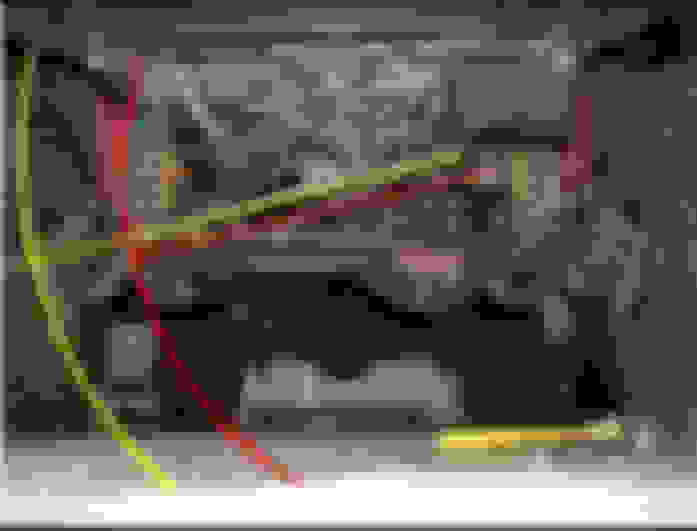
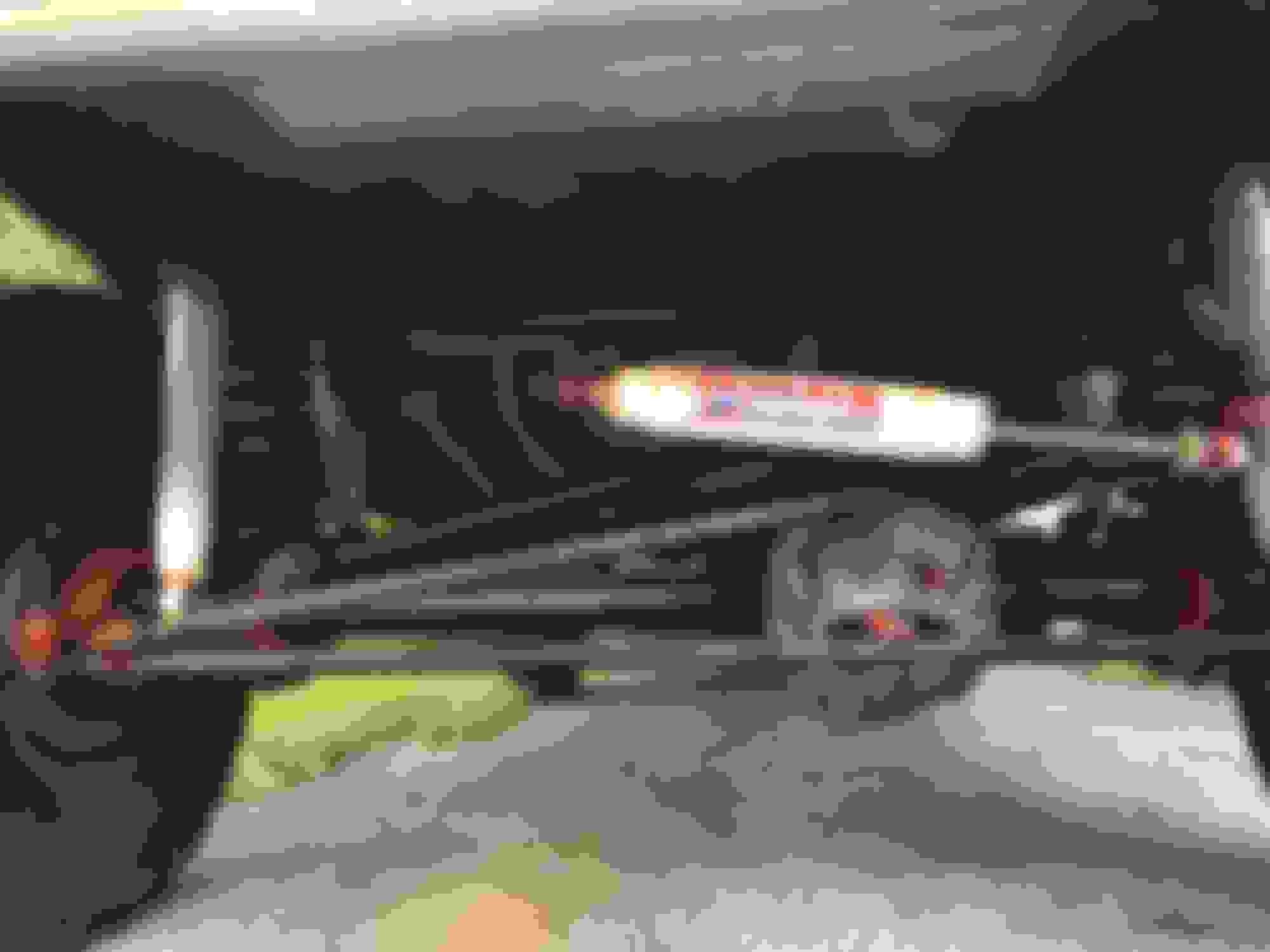
Is it a Y, T or true crossover? Top is T, drag link attached to the tie rods, bottom is Y, drag link end is one tie rod, other tie rod attaches to drag link. 2nd pic is crossover
Y sucks, T is better, crossover is best
Track bar and drag link need to be as close to the same length and parallel as possible so they both travel through the same motions during axle movement. When one is different length, or not parallel, they'll fight each other and induce bump steer.
In this picture, the shorter track bar would "pull" the axle to the left during up travel, essentially "pushing" the drag link right inducing steering input- bump steer.
I didnt realized i was looking at my truck incorrectly until i took a gander at your pic showing what needs to be parallel
Im a newbie to this stuff. I see now its definitely not impossible to make them parallel... I also see now im working with T style steering. Crossover steering is in my near future. I already have an adjustable drag link. Hope i can use that and buy the rest of the parts i need.
Last edited by LiveFrom1977f150; May 26, 2018 at 08:33 AM.
Reason: Ive learned stuff
Looks like going back to a stock height pitman with the adjustable drag link would get it pretty damn close. That would also get the steering stabilizer more horizontal like it should be.
There's not a huge difference between t style and crossover. Unless you want to go high steer to get the tie rods above the axles for off road clearance, I'd say there's no real benefit to changing. You need to have the knuckles machined, if they even can be, and buy a high steer arm which is a couple hundred bucks, and it'll actually have the chance for bump steer because you're drag link will end up significantly longer than the track bar. You could always drill your knuckles, weld in special tapered bushings and flip the tie rod to the top to gain clearance.
Looks like going back to a stock height pitman with the adjustable drag link would get it pretty damn close. That would also get the steering stabilizer more horizontal like it should be.
There's not a huge difference between t style and crossover. Unless you want to go high steer to get the tie rods above the axles for off road clearance, I'd say there's no real benefit to changing. You need to have the knuckles machined, if they even can be, and buy a high steer arm which is a couple hundred bucks, and it'll actually have the chance for bump steer because you're drag link will end up significantly longer than the track bar. You could always drill your knuckles, weld in special tapered bushings and flip the tie rod to the top to gain clearance.
i appreciate your help. Stock pitman made me concerned the drag link angle might be too steep. But i can see a stock pitman would line up with the trac bar nicely..... on the other hand, Im not afraid to buy a reid racing knuckle and hi steer arm. But im still going to have to get a shop to weld in trac bar drop if i go this route. I hadnt even realized my drag link would be much longer than trac bar. If this set up isnt going to improve bump steer all that much i might just go stock pitman. Ive even been considering a red top steering gear. If it would tighten up my steering on the highway.... all advice appreciated
You could also do a dropped track bar mount and keep the drop pitman, they aren't that expensive, just make sure to find a beefy one. I think there's a thread around here about someone bending one of the aftermarket drop brackets. The flatter steering geometry would be a little better also.
You could also do a dropped track bar mount and keep the drop pitman, they aren't that expensive, just make sure to find a beefy one. I think there's a thread around here about someone bending one of the aftermarket drop brackets. The flatter steering geometry would be a little better also.
ive decided im going to do the drop bracket for the track bar and then upgrade what i dont like from there. BTW I subscribed to your Cummins swap thread. Its a long term dream to swap one of my own when the 302 gets tired. Thx again
ive decided im going to do the drop bracket for the track bar and then upgrade what i dont like from there. BTW I subscribed to your Cummins swap thread. Its a long term dream to swap one of my own when the 302 gets tired. Thx again
Don't expect much from that thread, it's been pushed to the side due to lack of money. I'm hoping to sell some of my other junk in the next couple months and get going on at least the spring swap later this summer.
That's the better way in this case with your lift. When you have that style of steering you almost always need to do both the dropped arm and the dropped trackbar bracket. If not you end up like you have, with mismatched angles.
And you're correct, in that it's better to get the overall angles as shallow/lower as you can. Whenever possible, equal length, parallel, and shallow are good goals. The same length might be the least important of the three, but it's still important.
The drops are designed to help with both the centering of the axle in the frame, and correcting the steering wheel after a lift. But both an adjustable trackbar and an adjustable draglink are VERY helpful in fine-tuning each individual truck for any variations.
Especially the draglink, since having the steering box off-center is not very desirable either, and "fixing it" by pulling the steering wheel and putting it back on in a different orientation is not even a band-aid. It's a false fix.
So when you're setting all this up afterwards, before you install your draglink into the pitman arm (or maybe you can remove it if it's still attached) cycle the steering box back and forth from lock to lock, counting the turns exactly. Then turn it back exactly half-way. This is your gear box's "on center" position and should be the basis of all other settings.
From there you can verify your steering wheel was not moved, and if so can correct it. From then on you can use the wheel to verify the box is straight on center and adjust the draglink so that when you're driving straight down the road your wheel is straight too.
I always thought Ford should have made the draglink's adjustable in the first place. If you can justify doing one then, even if you're going to change the stuff later, I would add one for that last bit of fine-tuning ability.
In fact, if it's all set up nicely, the linkage you have is actually pretty decent. You may find you don't need any custom crossover stuff unless you're doing more stuff with your truck, maybe running even larger tires in the future, or whatever. But for now the style you have is pretty good.
Oh, and last but not least, once you think it's all pretty dialed in, weld the trackbar drop on permanently. Bolting is acceptable as a temporary thing, and it's not like they come loose very often, but welding can make a huge difference sometimes in reducing flex. And any little flex in the trackbar mounting (upper OR lower) will lead to wandering and a slightly more vague steering feel.
I didnt realized i was looking at my truck incorrectly until i took a gander at your pic showing what needs to be parallel
Im a newbie to this stuff. I see now its definitely not impossible to make them parallel... I also see now im working with T style steering. Crossover steering is in my near future. I already have an adjustable drag link. Hope i can use that and buy the rest of the parts i need.
You need a drop track bar mount. I'd avoid the junky BDS ones that the aftermarket sells and make your own out of some 2.5" 1/4" wall square tube and drop that track bar mount down about 3 inches to get them parallel. My thread on making one of these is here: https://www.ford-trucks.com/forums/1...bar-mount.html
All you need to make this is a grinder with a cutoff wheel, a small drill bit, and a step bit.
That's the better way in this case with your lift. When you have that style of steering you almost always need to do both the dropped arm and the dropped trackbar bracket. If not you end up like you have, with mismatched angles.
And you're correct, in that it's better to get the overall angles as shallow/lower as you can. Whenever possible, equal length, parallel, and shallow are good goals. The same length might be the least important of the three, but it's still important.
The drops are designed to help with both the centering of the axle in the frame, and correcting the steering wheel after a lift. But both an adjustable trackbar and an adjustable draglink are VERY helpful in fine-tuning each individual truck for any variations.
Especially the draglink, since having the steering box off-center is not very desirable either, and "fixing it" by pulling the steering wheel and putting it back on in a different orientation is not even a band-aid. It's a false fix.
So when you're setting all this up afterwards, before you install your draglink into the pitman arm (or maybe you can remove it if it's still attached) cycle the steering box back and forth from lock to lock, counting the turns exactly. Then turn it back exactly half-way. This is your gear box's "on center" position and should be the basis of all other settings.
From there you can verify your steering wheel was not moved, and if so can correct it. From then on you can use the wheel to verify the box is straight on center and adjust the draglink so that when you're driving straight down the road your wheel is straight too.
I always thought Ford should have made the draglink's adjustable in the first place. If you can justify doing one then, even if you're going to change the stuff later, I would add one for that last bit of fine-tuning ability.
In fact, if it's all set up nicely, the linkage you have is actually pretty decent. You may find you don't need any custom crossover stuff unless you're doing more stuff with your truck, maybe running even larger tires in the future, or whatever. But for now the style you have is pretty good.
Oh, and last but not least, once you think it's all pretty dialed in, weld the trackbar drop on permanently. Bolting is acceptable as a temporary thing, and it's not like they come loose very often, but welding can make a huge difference sometimes in reducing flex. And any little flex in the trackbar mounting (upper OR lower) will lead to wandering and a slightly more vague steering feel.
Have fun! Nice truck for sure.
paul
I appreciate this information. Centering the steering wheel was my original intent for buying the adjustable drag link. Its not off by much at all, but its off a little. I drive this thing on the highway more than off-road. All the steering imperfections are exaggerated on the highway. So ive been looking into upgrading the handling all i can.
You need a drop track bar mount. I'd avoid the junky BDS ones that the aftermarket sells and make your own out of some 2.5" 1/4" wall square tube and drop that track bar mount down about 3 inches to get them parallel. My thread on making one of these is here: https://www.ford-trucks.com/forums/1...bar-mount.html
All you need to make this is a grinder with a cutoff wheel, a small drill bit, and a step bit.
Thats a damn good looking drop bracket you made. Im seriously impressed by how much better that is than aftermarket.
Ours (https://www.wildhorses4x4.com/produc...ion_Parts_78yr) appears to be a little different from the other store-bought model it looks like. But in a pinch if you've got the tools and can roll yer own like D-rat's, definitely go for it. Nice piece!
You can never underestimate the forces that are working every minute under a heavy truck (especially with larger tires!) and a very powerful hydraulic system like our steering setups. In the case of the Early Broncos, just leaving the drop brackets bolted on, instead of fully welded, leads to a lot more flex which results in wandering on the road.
Ours (https://www.wildhorses4x4.com/produc...ion_Parts_78yr) appears to be a little different from the other store-bought model it looks like. But in a pinch if you've got the tools and can roll yer own like D-rat's, definitely go for it. Nice piece!
You can never underestimate the forces that are working every minute under a heavy truck (especially with larger tires!) and a very powerful hydraulic system like our steering setups. In the case of the Early Broncos, just leaving the drop brackets bolted on, instead of fully welded, leads to a lot more flex which results in wandering on the road.
Beefed up is what you want.
Paul
That one is definitely better made than the BDS one from JBG. I destroyed 2 of those with moderate use. Materials used were just too thin.
This Hennessey Takes the Expedition Tremor's Off-Roading Capability to the Next Level
Slideshow: The VelociRaptor Expedition gains a lift, upgraded suspension, Brembo brakes, and trail-ready equipment while retaining the stock 440-horsepower EcoBoost V6.
Rezvani's Latest Post-Apocalyptic Monster Is a Ford F-150 Raptor Underneath
Slideshow: Called the Fortress, the 850-horsepower pickup combines Raptor underpinnings with military-inspired features, survival equipment, and a starting price of $285,000.