


Cam Retarded

Thread Starter
|
New User
Joined: Feb 2018
Posts: 7
Likes: 0
Cam Retarded
Just had my 05 5.4 swapped with another 5.4, and now I am still having similar issues P0012. Shaking and a rattling, got to love it. The mechanic says he can’t get it to reproduce the same problem but I’ve been having it all week, multiple times a day. Little help, the experts can’t figure out?
Posting Guru
Joined: Jan 2015
Posts: 1,083
Likes: 33
From: San Antonio, Texas
Well if the 'EXPERTS' can't figure it out, I won't feel bad if I'm wrong here, so I'll take a stab at it. (I would not be surprised if some Ford dealership suggested it needed a NEW motor).
Your post leaves lots of questions that are important for diagnosis of any integrity. This OTHER 5.4, is it a rebuilt, used from junk yard - mileage, NEW, short block only, or crate motor - pre-run / tested???
SO, lets start with a detailed description of what results in a P0012 that can be applied to whatever the mechanical status is. The PCM calculates (develops) a desired number of crankshaft degrees in camshaft retard it 'desires' or REQUESTS for each cam -independently-. (OBDII signals are RCAM and RCAM2). Square wave duty cycle pulses (to ground) are applied to control circuit of each VCT solenoid seeking to route proper amount of oil into Phaser retard/advance chambers. The CPS sensors provides direct positive feedback to the PCM (in a closed loop fashion) attempting to achieve the 'desired / requested' degree of cam retard.
There is a CAMERRR (difference between requested and actual) developed by the PCM for each camshaft. (OBDII signal CAMERRR and VCT2ERR). If that error is > 5 'Camshaft degrees' (10 crankshaft degrees) for more than 5 seconds ---- an overretard or overadvanced error is set for the appropriate bank. These errors are 'Sticky'. Once set, even if ONLY for 5 seconds, they will presist for two drive cycles without the error occurring for the PCM to remove the code and reset the CEL.
The PCM does NOT request ANY retard below 800 RPM and/or 25% Engine Load. Oil pressure > that point should be ~ 40 psi (plenty sufficient 'hydraulically' to operate phasers - provided oil is being properly routed by VCT solenoids). In YOUR case, I can assume the PCM has requested retard and the phasers successfully complied. As the Engine load drops below 25% (say at decel), and/or the RPM drops below 800 - the PCM will cease to send ANY duty cycle pulses to the VCT solenoids. They should (at that point, while oil pressure is ~ > 40 psi) route 100% available oil flow & pressure into the advance chambers of the Phaser - unwinding any retard established.
Once the Phaser gets to base position (zero retard), there is a spring loaded locking pin inside the phaser that SHOULD lock the phaser at base (zero retard) during idle conditions, and/or shut-off and restart.
//// ONE OR THE OTHER OF THE LATTER EVENTS MUST NOT BE HAPPENING on your bank 1 ////
VCT Solenoid could be sticking or NOT closing (routing 100% flow into advance chambers) when PCM removes all retard pulses -- Or VCT screens clogged up -- or PCM locking pin not capturing Phaser -- or Oil pressure in that new engine low ---- or something else more serious with the replacement engine. ???
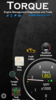
If you have access to an Android Phone with the Torque Pro App running, I have put together a monitor screen that monitors all these operations and whould answer your question right away. It is described in detail here: https://www.f150forum.com/f4/final-r...4/#post5133357
Your post leaves lots of questions that are important for diagnosis of any integrity. This OTHER 5.4, is it a rebuilt, used from junk yard - mileage, NEW, short block only, or crate motor - pre-run / tested???
SO, lets start with a detailed description of what results in a P0012 that can be applied to whatever the mechanical status is. The PCM calculates (develops) a desired number of crankshaft degrees in camshaft retard it 'desires' or REQUESTS for each cam -independently-. (OBDII signals are RCAM and RCAM2). Square wave duty cycle pulses (to ground) are applied to control circuit of each VCT solenoid seeking to route proper amount of oil into Phaser retard/advance chambers. The CPS sensors provides direct positive feedback to the PCM (in a closed loop fashion) attempting to achieve the 'desired / requested' degree of cam retard.
There is a CAMERRR (difference between requested and actual) developed by the PCM for each camshaft. (OBDII signal CAMERRR and VCT2ERR). If that error is > 5 'Camshaft degrees' (10 crankshaft degrees) for more than 5 seconds ---- an overretard or overadvanced error is set for the appropriate bank. These errors are 'Sticky'. Once set, even if ONLY for 5 seconds, they will presist for two drive cycles without the error occurring for the PCM to remove the code and reset the CEL.
The PCM does NOT request ANY retard below 800 RPM and/or 25% Engine Load. Oil pressure > that point should be ~ 40 psi (plenty sufficient 'hydraulically' to operate phasers - provided oil is being properly routed by VCT solenoids). In YOUR case, I can assume the PCM has requested retard and the phasers successfully complied. As the Engine load drops below 25% (say at decel), and/or the RPM drops below 800 - the PCM will cease to send ANY duty cycle pulses to the VCT solenoids. They should (at that point, while oil pressure is ~ > 40 psi) route 100% available oil flow & pressure into the advance chambers of the Phaser - unwinding any retard established.
Once the Phaser gets to base position (zero retard), there is a spring loaded locking pin inside the phaser that SHOULD lock the phaser at base (zero retard) during idle conditions, and/or shut-off and restart.
//// ONE OR THE OTHER OF THE LATTER EVENTS MUST NOT BE HAPPENING on your bank 1 ////
VCT Solenoid could be sticking or NOT closing (routing 100% flow into advance chambers) when PCM removes all retard pulses -- Or VCT screens clogged up -- or PCM locking pin not capturing Phaser -- or Oil pressure in that new engine low ---- or something else more serious with the replacement engine. ???
If you have access to an Android Phone with the Torque Pro App running, I have put together a monitor screen that monitors all these operations and whould answer your question right away. It is described in detail here: https://www.f150forum.com/f4/final-r...4/#post5133357
Posting Guru
Joined: Jan 2015
Posts: 1,083
Likes: 33
From: San Antonio, Texas
...
VCT Solenoid could be sticking or NOT closing (routing 100% flow into advance chambers) when PCM removes all retard pulses -- Or VCT screens clogged up -- or PCM locking pin not capturing Phaser -- or Oil pressure in that new engine low ---- or something else more serious with the replacement engine. ???
...
VCT Solenoid could be sticking or NOT closing (routing 100% flow into advance chambers) when PCM removes all retard pulses -- Or VCT screens clogged up -- or PCM locking pin not capturing Phaser -- or Oil pressure in that new engine low ---- or something else more serious with the replacement engine. ???
...
Or, there could be spurious current flowing in the VCT control circuit.
Posting Guru
Joined: Jan 2015
Posts: 1,083
Likes: 33
From: San Antonio, Texas
Unwanted or unexplained current from ANY source other than RCM LOGIC. The PCM will never request (by sending 'Duty Cycle' pulses) to VCT Solenoids below 800 RPM and below ~ 25% engine load. those cover idle - so at idle the VCTs should have +12 volts on Pin 1 and Pin 2 should be 12 volts too unless a ground source is being introduced from somewhere - either PCM command, or a bad PCM component or short in wiring. A "GENERAL" idea can be determined if this is the problem by using an 'analogue' VOM on PIN 2 (control wire) of the VCT Plug. Should read clean / solid same voltage as Pin 1 when at idle.
The Phaser 'locking pin' is a different (and worse) problem with it being inside the phaser / out of sight, and effected by several variables - like oil pressure and the specific tension of the spring under it. Basically if a locking pin in a phaser is not locking it down at base (zero retard), the engine will idle horribly rough. I suspect (but IDK) if both bank's phasers failed to lock the engine would just die.
You CAN sorta' test VCT solenoids / oil pressure / locking pin --- all together at once. But the results can be ambiguous between the three variables. Put a straight pin through the VCT Solenoid control wire. Connect a jumper wire to it through a 50 ohm 5-watt resistor. Ground a steel file to the block or frame ground and drag the resistor lead up and down the file producing duty cycle ground pulses to the VCT Solenoid. This will actuate the VCT Solenoid - routing oil into the phaser retard chambers --- AND on top of the locking pin. _IF_ idle oil pressure is NOT sufficient to unlock the locking pin, nothing will happen. Raising engine RPM slightly will raise oil pressure and insure the pin will unlock and cam will retard - causing very rough idle. THIS will not damage the PCM. The PCM control signal is passive - simply pulling the signal wire to ground when it desires retard. And it will not cause valve contact. The engine ROUTINELY does exactly the same thing during retard operation.
When you stop introducing ground signal to the VCT Solenoid, if oil pressure is sufficient to advance the cam back to base (this would be a good thing proving idle oil pressure is sufficient to operate phasers). If NOT, you may have to rev the engine a little to build oil pressure sufficient to push the phaser back to base (no retard) position - where the locking pin should again capture the phaser an hold it as the engine idles back down.
The Phaser 'locking pin' is a different (and worse) problem with it being inside the phaser / out of sight, and effected by several variables - like oil pressure and the specific tension of the spring under it. Basically if a locking pin in a phaser is not locking it down at base (zero retard), the engine will idle horribly rough. I suspect (but IDK) if both bank's phasers failed to lock the engine would just die.
You CAN sorta' test VCT solenoids / oil pressure / locking pin --- all together at once. But the results can be ambiguous between the three variables. Put a straight pin through the VCT Solenoid control wire. Connect a jumper wire to it through a 50 ohm 5-watt resistor. Ground a steel file to the block or frame ground and drag the resistor lead up and down the file producing duty cycle ground pulses to the VCT Solenoid. This will actuate the VCT Solenoid - routing oil into the phaser retard chambers --- AND on top of the locking pin. _IF_ idle oil pressure is NOT sufficient to unlock the locking pin, nothing will happen. Raising engine RPM slightly will raise oil pressure and insure the pin will unlock and cam will retard - causing very rough idle. THIS will not damage the PCM. The PCM control signal is passive - simply pulling the signal wire to ground when it desires retard. And it will not cause valve contact. The engine ROUTINELY does exactly the same thing during retard operation.
When you stop introducing ground signal to the VCT Solenoid, if oil pressure is sufficient to advance the cam back to base (this would be a good thing proving idle oil pressure is sufficient to operate phasers). If NOT, you may have to rev the engine a little to build oil pressure sufficient to push the phaser back to base (no retard) position - where the locking pin should again capture the phaser an hold it as the engine idles back down.
Thread Starter
|
New User
Joined: Feb 2018
Posts: 7
Likes: 0
Trending Topics
Posting Guru
Joined: Jan 2015
Posts: 1,083
Likes: 33
From: San Antonio, Texas
FTE Stories
Ford Trucks for Ford Truck Enthusiasts

2027 Ford Super Duty Buyer's Guide (Every Model, Engine, & Package)
Brett Foote
Top 10 Ford Truck Tragedies
Joe Kucinski
AEV FXL Super Duty - the Super Duty Raptor Ford Doesn't Make
Brett Foote
Lobo Vs Lobo: Proof the F-150 Lobo Should Be Even Lower!
Michael S. Palmer
Ford's 2001 Explorer Sportsman Concept Looks For a New Home
Verdad Gallardo
10 Best Ford Truck Engines We Miss the Most!
Joe Kucinski
2026 Shelby F-150 Off-Road: Better Than a Raptor R?
Brett Foote
2027 Super Duty Carhartt Package First Look: 12 Things You NEED to Know!
Michael S. Palmer
10 Most Surprising 2026 Ford Truck Features!
Joe Kucinski
Thread
Thread Starter
Forum
Replies
Last Post
RYanokJr
Modular V8 (4.6L, 5.4L)
2
Dec 18, 2017 02:03 PM
hondamanex400
6.0L Power Stroke Diesel
13
Apr 1, 2016 10:47 PM