When you click on links to various merchants on this site and make a purchase, this can result in this site earning a commission. Affiliate programs and affiliations include, but are not limited to, the eBay Partner Network.
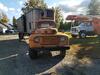
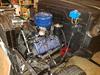
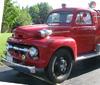
So finally got my Flatty (6V) fired up but still need a little fine tuning before I run it long enough to break the cam. Right away I noticed the stock temp gauge went to Hot after a minute or two of running. In troubleshooting the gauge, I noticed it starts at H with IGN off (as it should) but when I turn IGN on, it starts moving to the left but stops right past center and doesnt move any further towards C. I have two new temp sending units from LMC with all new wiring. I know I tested the gauge with 3 AAA batteries and know it moved the needle but dont recall if it went all the way C. My thought is to put in after market mechanical gauge and sender(s) so I can break in cam and circle back to original gauge later. But I what I noticed that the after market senders are no where near the length of the stock new ones. My concern is the aftermarket senders will not get a correct reading. Can someone recommend some mechanical gauge/senders? Or confirm that the aftermarket short senders will work? Temp needle never moves past center to C with ign on.
I would say its the gauge? I seen spyder webs in there before how in hell they get in
there nobody knows. I see those on ebay all the time.
Yep, thats what Im leaning towards. I do have another original gauge cluster but at this point, I'd prefer to put in after market gauge sender(s) but concerned about the sender length being to short to get accurate reading.
The sender length is irrelevant as long as it gets wet and isn't in an air pocket. The laminar/stratified flow and turbidity will compensate more than adequately.
I will make sure to get all the air out and try gauge/sender from NAPA.
My mistake, I tested with 3 AA not 3 AAA. I just tested another cluster gauge that I have and the 3 AAA moved it all the way to the C. I will retest the one in the truck now but will also purchase some after market gauge/sender(s). I plan to use two, one per side.
I will make sure to get all the air out and try gauge/sender from NAPA.
My mistake, I tested with 3 AA not 3 AAA. AA and AAA are the same voltage, 1.5 volts ea. for SLA and alkaline, and 1.2 volts for NiCd.
................. but will also purchase some after market gauge/sender(s). I plan to use two, one per side. Universal sending units won't work together in this situation unless one is a snap-action high temp. and doesn't read variable .
Making sure I clarify; I plan to run two separate temp gauges to their own dedicated sender in each bank. I was thinking this will also help me determine any variance between each head. I assume this would work?
Making sure I clarify; I plan to run two separate temp gauges to their own dedicated sender in each bank. I was thinking this will also help me determine any variance between each head. I assume this would work?
Ok, yes that will work. Misunderstanding on my part. I thought you were going to use the single gauge in your instrument cluster.
My mistake, I tested with 3 AA not 3 AAA. I just tested another cluster gauge that I have and the 3 AAA moved it all the way to the C. I will retest the one in the truck now but will also purchase some after market gauge/sender(s). I plan to use two, one per side.
That makes it 4.5v not 3v as Ross recommends.
Also those senders are not the same. Each one is different.
Years ago, the aftermarket temp senders available were not made right - don't know if they are any better now. I've used the mechanical gauges for years, and have had a couple of them fail. They were NAPA Balkamp made by SW. Mine went bad again about a year ago and SW still makes them, and are available through Jegs or Summit - in several different capillary lengths. I ended up finding some import mechanical gauges at NAPA in their "tractor parts" that were close enough for me, and even fit in the original Balkamp panel. They don't read exactly the same, but the SW made gauges didn't either. The picture of the (2) new new ones below was taken while testing in 185 degree (F) hot water. PM me if you can't find p/n's for either the SW or the "tractor gauges." I believe O'Reilly had the same imported gauges. Mine were for a Ferguson TO-30 (and others) tractor. - Bob
The stock sending unit uses the The King-Seeley (Ford Stock) principle. These sending units supply a full 6V through the heater wire in the gauge in the form of a square wave with the duration of the "on" being the variable determining the gauge reading. The longer the duration dictates the position of the needle. It is this full 6v of current which heats the bi-metallic strip in the stock gauge that causes the gauge to read via a small gear train (that may adjustable?). Most after market sending units are simply a variable resistor which sends a constant voltage to the gauge, lessening that voltage as to adjust the needle reading. Therefore, the sending units signal doesn't heat the bimetallic strip in the gauge as much. Unfortunately, the calibration of the after-market sending units and the stock gauges don't match up very well due to the differences in the principle of the signal.
This Hennessey Takes the Expedition Tremor's Off-Roading Capability to the Next Level
Slideshow: The VelociRaptor Expedition gains a lift, upgraded suspension, Brembo brakes, and trail-ready equipment while retaining the stock 440-horsepower EcoBoost V6.