When you click on links to various merchants on this site and make a purchase, this can result in this site earning a commission. Affiliate programs and affiliations include, but are not limited to, the eBay Partner Network.
I'm in northern Michigan and yes weight over your rear axle is good..depending on the truck i have seen anything fro 6-12 80lb bags directly between the wheel wells.
Definitely need good antifreeze, good battery is a must for sure.
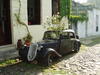
Also budget in lots of under carriage washes or watch your truck rust and quick. You might want to get a rubber undercoating put on if you dont already have it. Rust is currently what ate out the 99 f250 super duty i just bought...here is a picture and yes it did have undercoating from the factory.
Bottom 6 inches is rusted out, it actually looks not as bad in the pic as it actually is. Need new rockers, cab corners, lower door panels inside and outside, new thresholds on both sides, new bed, etc.
You should be able to take it it any shop in Maine and ask for winter tires and be setup fine.
In fact you might just want to buy a "junker" to drive during the winter.
Welcome to FTE! I wanted to let you know there's a Michigan Chapter that you should check out and join.
Before ever driving on the roads in Northern Maine, you'll need to be able to start your truck. Since you're from Florida, have you ever looked for your engine block heater plug? You don't absolutely need to use the block heater, but it will start easier/quicker on really cold days and take strain off of your battery(ies) if you do.
If the truck's going to be parked outdoors, I'd invest in a good heavy duty extension cord & timer, so you can plug in the truck on those sub-zero nights. It'll start a lot easier if the block heater runs for 2 or 3 hours before you need to leave in the morning. (As a bonus, your heater/defroster will also blow warm air a bit sooner that way too.)
Also, you'll need to get a supply of diesel winter anti-gel fuel additives, i.e. Power Service, Stanadyne, etc. Even though they use Winter Blend diesel fuel up there - it's cheap insurance against getting stuck with gelled fuel if it gets cold enough.
And now that you can start the engine, since your truck is lifted, you'll also need a "Long" snow brush/ice scraper. Finally invest about $20 in a pair of Winter Wiper Blades. Regular "summer blades" get jammed with ice and no longer follow the contour of the windshield and stop working. Winter wipers are heavier and designed so they don't ice up. (I hate having to get out of my nice warm truck to clean off frozen wipers in the middle of a snow storm.)
Before ever driving on the roads in Northern Maine, you'll need to be able to start your truck. Since you're from Florida, have you ever looked for your engine block heater plug? You don't absolutely need to use the block heater, but it will start easier/quicker on really cold days and take strain off of your battery(ies) if you do.
If the truck's going to be parked outdoors, I'd invest in a good heavy duty extension cord & timer, so you can plug in the truck on those sub-zero nights. It'll start a lot easier if the block heater runs for 2 or 3 hours before you need to leave in the morning. (As a bonus, your heater/defroster will also blow warm air a bit sooner that way too.)
Also, you'll need to get a supply of diesel winter anti-gel fuel additives, i.e. Power Service, Stanadyne, etc. Even though they use Winter Blend diesel fuel up there - it's cheap insurance against getting stuck with gelled fuel if it gets cold enough.
And now that you can start the engine, since your truck is lifted, you'll also need a "Long" snow brush/ice scraper. Finally invest about $20 in a pair of Winter Wiper Blades. Regular "summer blades" get jammed with ice and no longer follow the contour of the windshield and stop working. Winter wipers are heavier and designed so they don't ice up. (I hate having to get out of my nice warm truck to clean off frozen wipers in the middle of a snow storm.)
Not all trucks come with block heaters, do they ? What are the options if he doesn't have any?
ALL 6L have the block heater - just only trucks from Northern states came with the electrical cord. It's like $20 on fleabay.
I too, am moving from FL but to SW Colorado later this summer.
I grew up in NJ, so I am familiar with winter driving (plus going snow skiing for several decades as well).
Things to do differently where Winter happens:
* GOOD snow tires (on dedicated rims makes it easier to swap from summer/winter)
* emergency supplies in your vehicle (shovel, sand, blanket, etc.)
* extra work gloves in your vehicle (also jump-suit if you have to crawl under your vehicle or change a tire in the snow)
* tire chains (optional, but you MUST know how to install them)
* proper anti-freeze in BOTH your coolant and Windshield Washer bottle !
* drive slower, easy on the stop/go pedals. leave extra following room
* Drink extra liquids! (coffee while waiting for truck to warm up!)
ALL 6L have the block heater - just only trucks from Northern states came with the electrical cord. It's like $20 on fleabay.
I too, am moving from FL but to SW Colorado later this summer.
I grew up in NJ, so I am familiar with winter driving (plus going snow skiing for several decades as well).
Things to do differently where Winter happens:
* GOOD snow tires (on dedicated rims makes it easier to swap from summer/winter)
* emergency supplies in your vehicle (shovel, sand, blanket, etc.)
* extra work gloves in your vehicle (also jump-suit if you have to crawl under your vehicle or change a tire in the snow)
* tire chains (optional, but you MUST know how to install them)
* proper anti-freeze in BOTH your coolant and Windshield Washer bottle !
* drive slower, easy on the stop/go pedals. leave extra following room
* Drink extra liquids! (coffee while waiting for truck to warm up!)
pull the wipers away from the windshield overnight too, sticking up in the air. So they don't freeze to the windshield in a block of ice/snow.
This Florida boy lived in Northern Kentucky winters for 6 years, that was far enough north for me, lol.
better yet, put some type of cover on the windshield and let the wipers hold down the cover. It prevents the wipers form freezing and it keeps your windshield ice free (only to get that fine icelayer as soon as you start driving..).
Some of us have to learn the hard way. Misky6.0 reminded me of an incident I had. IIRC the temperature was ~-5°F, I was driving ~55 MPH, and it was snowing lightly. I went to use the windshield washer and the blue crap froze over the windshield. I was very fortunate to be able to pull over and stop without incident.
Because I didn't know better I used cheap blue fluid. Perhaps someone wanted to up their profit margin and diluted the blue stuff before bottling it. Maybe it was diluted by accident. (I don't really know that it was defective.) Perhaps the humidity was in the single digits. I believe that the combination of blue crap, -5°F, low humidity, and 55 MPH was the perfect storm for evaporative cooling and then the ice that blinded me.
Prestone winter yellow stuff used to be labeled safe to (my words) -37°F. They now say -27°F. I don't have any idea of why the labeling changed but that is all that I'll use and I carry a couple of gallons to spare.
Some of us have to learn the hard way. Misky6.0 reminded me of an incident I had. IIRC the temperature was ~-5°F, I was driving ~55 MPH, and it was snowing lightly. I went to use the windshield washer and the blue crap froze over the windshield. I was very fortunate to be able to pull over and stop without incident.
Because I didn't know better I used cheap blue fluid. Perhaps someone wanted to up their profit margin and diluted the blue stuff before bottling it. Maybe it was diluted by accident. (I don't really know that it was defective.) Perhaps the humidity was in the single digits. I believe that the combination of blue crap, -5°F, low humidity, and 55 MPH was the perfect storm for evaporative cooling and then the ice that blinded me.
Prestone winter yellow stuff used to be labeled safe to (my words) -37°F. They now say -27°F. I don't have any idea of why the labeling changed but that is all that I'll use and I carry a couple of gallons to spare.
The blue stuff says -20F... who knows. At -10F pretty much all of them freeze over unless you keep the windshield nice and toasty.







 Welcome to FTE! I wanted to let you know there's a Michigan Chapter that you should check out and join.


 )
)