


4.9 stalling when warm, difficult to restart.

Thread Starter
|
Senior User
Joined: Aug 2003
Posts: 329
Likes: 1
From: Dallas, TX
4.9 stalling when warm, difficult to restart.
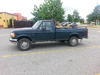
Truck is a 93 short wheel base single cab, engine is a 4.9 300, m50d, bw1356 and is obviously 4-wheel drive. Single fuel tank.
TL;DR version at the top if you hate reading: when cold, the engine starts right up on the first crank, but after 5 or so min of idling, warms up a bit, surges a time or two, and then dies out. I've replaced a bunch of stuff and they all seem to help, but not fully solve the problem. And now I'm sad.
Long version:
I've read a handful of threads with similar issues, and they've been helpful, but I am still unable to solve this latest problem with my 4.9 engine. This engine has always seemed to run great, and gave me no problems until I parked it for a few years. Now, trying to get it back to running is causing me issues.
The current problem is when started when cold, the engine is idling somewhat high, (no tach, so I can't say exactly where, but above 1k RPM). It'll idle high for a few seconds, then drop a bit (like it should do), except where it drops is still higher than where it should be, and after a brief warmup period, idle will begin to surge, and eventually it will die out. Most often, it surges once or twice and stalls. Hitting the gas pedal during this surging generally causes the engine to immediately stall.
Trying to restart the engine, if it does start at all, it's rough, shaking, smokes quite a bit (blue-ish black-ish) and sounds like a cammed-out V8. And then it dies. It doesn't smoke at all when it's running the way it should.
Spark plugs are wet and smell of gas when removed immediately after the stall. When tested with an inline spark tester, all show signs of strong spark. All plugs are new Autolite coppers, all plug wires are new. Another thing worth mentioning is when the engine dies out, if I immediately pull the TB off, inside the manifold is wet with gas. It's also caked in black sooty residue. It's obviously running very rich. I also think there's a decent amount of fuel pooled up in my exhaust pipes (no cat, true duals with glass packs)
All cylinders were in the 130-140 PSI range before. Went to start it one evening, and all of a sudden there was a misfire. Leakdown determined #6 was a problem that was proven to be a bent pushrod on the #6 cylinder.
After the pushrod was replaced, the engine continued to have a misfire, that was diagnosed as a bad fuel injector, again on #6. All injectors were removed, bench tested, and then given an ultrasonic bath. Afterward, #6 was proven to be bad and would not open, so it was replaced with a correct #/hr unit. All others were given new o-rings and pintle caps and reinstalled without issue.
In the process of replacing the injector, I broke the pink vacuum line from the Air B solenoid. That entire vacuum line was replaced. I split open the loom that wraps all of those vacuum lines, and inspected all the others, which appeared to be fine. Re-wrapped them all, and put the manifold back on. Once it was back together, the idle was extremely high, and was surging, ultimately stalling out after a minute or two.
I replaced all gaskets and cleaned the intake manifold and throttle body, as well as replaced the EGR tube (mine was split down the length of the
tube) while everything was apart.
So I replaced the IAC (it needed it anyway), which helped bring the idle back down a bit, and also helped with the light-throttle stumbling that is common, but the engine was still surging, very high to very low RPM.
Next, I replaced the TPS, which eliminated the surging, but the idle was still high. The engine would run for a bit, but once it warmed a bit, would briefly surge, then die, then become nearly impossible to start.
Replaced the brake booster check valve, which brought the idle down a bit, but the engine would still surge when warm, then die, then become difficult to start. With the old check valve in, when running, the idle would drop if I pinched off the brake booster hose. The booster itself seems to be fine, and not leaking that I can detect. It firms up with the engine off, then when started, will soften up the way you'd typically expect. I don't hear any hissing from it when pressing the brake pedal, and I don't hear any change in idle with the brake pedal pressed.
I let the truck sit overnight, and the next morning it will fire right up, run until warm, meaning the needle will be right between the far left line and the N on Normal. Once it hits that point, the engine surges, then dies.
So next I replaced the engine coolant temperature sensor on the thermostat housing, and still have the same problem -- it starts when cold, but gets warm and surges then dies.
I can't see any broken vacuum lines anywhere, and all appear to hold vacuum with a pump. I also cannot detect any vacuum leaks with a propane bottle.
So at this point, I am not sure where to look, and would appreciate any pointers in the right direction. Otherwise, I'm looking at the option of taking it on the hook to the dealer and let them deal with it, which is an expense I'd like to avoid if possible.
Fuel pressure regulator appears to be working. Removing the vacuum line, it's not full of fuel, and does not smell of fuel, but I have not put a gauge to it to determine actual pressure.
It's also worth mentioning that my gas gauge is suddenly pegging to beyond full, when I know there's only 2 gal in the tank. Most of the time, it will point to where it should, but sometimes it will shoot past full, and seems to coincide with an extremely high idle, which makes me think vacuum leak somewhere. Problem is, I can't figure out where. This is entirely new, and did not happen prior to tearing the engine apart for the pushrod and fuel injector service.
Everything that's been replaced or checked and verified to function:
Pushrod - was bent causing valve to stick open. All valves verified to open/close when complete
Valve cover gasket
Intake manifold gasket - intake torqued in sequence to "feels right" since there's no easy way to get a tqwrench on it in the truck.
Throttle body gasket - torqued to 14 ft/lbs
Throttle idle screw is untouched and still shows factory paint.
EGR tube - was split and rusted out behind intake manifold - replaced with new tube, tightened and no discernible exhaust leaks
EGR gasket - new, tight and no leaks.
IAC valve - replaced with new
IAC gasket - replaced with new
PCV valve - checked and proven to be working
PCV valve tube - old and should probably be replaced, but holds vacuum
Pink Air B vacuum line - replaced with black parts store plastic tubing, all others seem to hold vacuum
Brake booster check valve - replaced with new
ECT sensor mounted on thermostat housing - replaced with new
Crank case vent and filter - I replaced this filter over 10 years ago, and it's got a little oil on it, but it's always done that since I've owned the truck.
Fuel filter is new, and verified to be unobstructed
Fuel is fresh
Fuel pump is heard when starting, and I can hear it sloshing fuel around on a mostly empty tank
Manifold vacuum (gauge hooked to brake booster line) is 15 in Hg at idle (and it's idling rough), drops to 13 in Hg with light throttle. Needle is steady.
No stored codes with KOEOff test.
Haven't had it run long enough to do a running test.
Next few things I'm looking at are O2 sensor (probably damaged from running rich) and should probably be replaced anyway, MAP, and EGR valve. Any reason I should do one of these before the others? Any other areas I'm not thinking of to check?
I think I've covered everything...
TL;DR version at the top if you hate reading: when cold, the engine starts right up on the first crank, but after 5 or so min of idling, warms up a bit, surges a time or two, and then dies out. I've replaced a bunch of stuff and they all seem to help, but not fully solve the problem. And now I'm sad.
Long version:
I've read a handful of threads with similar issues, and they've been helpful, but I am still unable to solve this latest problem with my 4.9 engine. This engine has always seemed to run great, and gave me no problems until I parked it for a few years. Now, trying to get it back to running is causing me issues.
The current problem is when started when cold, the engine is idling somewhat high, (no tach, so I can't say exactly where, but above 1k RPM). It'll idle high for a few seconds, then drop a bit (like it should do), except where it drops is still higher than where it should be, and after a brief warmup period, idle will begin to surge, and eventually it will die out. Most often, it surges once or twice and stalls. Hitting the gas pedal during this surging generally causes the engine to immediately stall.
Trying to restart the engine, if it does start at all, it's rough, shaking, smokes quite a bit (blue-ish black-ish) and sounds like a cammed-out V8. And then it dies. It doesn't smoke at all when it's running the way it should.
Spark plugs are wet and smell of gas when removed immediately after the stall. When tested with an inline spark tester, all show signs of strong spark. All plugs are new Autolite coppers, all plug wires are new. Another thing worth mentioning is when the engine dies out, if I immediately pull the TB off, inside the manifold is wet with gas. It's also caked in black sooty residue. It's obviously running very rich. I also think there's a decent amount of fuel pooled up in my exhaust pipes (no cat, true duals with glass packs)
All cylinders were in the 130-140 PSI range before. Went to start it one evening, and all of a sudden there was a misfire. Leakdown determined #6 was a problem that was proven to be a bent pushrod on the #6 cylinder.
After the pushrod was replaced, the engine continued to have a misfire, that was diagnosed as a bad fuel injector, again on #6. All injectors were removed, bench tested, and then given an ultrasonic bath. Afterward, #6 was proven to be bad and would not open, so it was replaced with a correct #/hr unit. All others were given new o-rings and pintle caps and reinstalled without issue.
In the process of replacing the injector, I broke the pink vacuum line from the Air B solenoid. That entire vacuum line was replaced. I split open the loom that wraps all of those vacuum lines, and inspected all the others, which appeared to be fine. Re-wrapped them all, and put the manifold back on. Once it was back together, the idle was extremely high, and was surging, ultimately stalling out after a minute or two.
I replaced all gaskets and cleaned the intake manifold and throttle body, as well as replaced the EGR tube (mine was split down the length of the
tube) while everything was apart.
So I replaced the IAC (it needed it anyway), which helped bring the idle back down a bit, and also helped with the light-throttle stumbling that is common, but the engine was still surging, very high to very low RPM.
Next, I replaced the TPS, which eliminated the surging, but the idle was still high. The engine would run for a bit, but once it warmed a bit, would briefly surge, then die, then become nearly impossible to start.
Replaced the brake booster check valve, which brought the idle down a bit, but the engine would still surge when warm, then die, then become difficult to start. With the old check valve in, when running, the idle would drop if I pinched off the brake booster hose. The booster itself seems to be fine, and not leaking that I can detect. It firms up with the engine off, then when started, will soften up the way you'd typically expect. I don't hear any hissing from it when pressing the brake pedal, and I don't hear any change in idle with the brake pedal pressed.
I let the truck sit overnight, and the next morning it will fire right up, run until warm, meaning the needle will be right between the far left line and the N on Normal. Once it hits that point, the engine surges, then dies.
So next I replaced the engine coolant temperature sensor on the thermostat housing, and still have the same problem -- it starts when cold, but gets warm and surges then dies.
I can't see any broken vacuum lines anywhere, and all appear to hold vacuum with a pump. I also cannot detect any vacuum leaks with a propane bottle.
So at this point, I am not sure where to look, and would appreciate any pointers in the right direction. Otherwise, I'm looking at the option of taking it on the hook to the dealer and let them deal with it, which is an expense I'd like to avoid if possible.
Fuel pressure regulator appears to be working. Removing the vacuum line, it's not full of fuel, and does not smell of fuel, but I have not put a gauge to it to determine actual pressure.
It's also worth mentioning that my gas gauge is suddenly pegging to beyond full, when I know there's only 2 gal in the tank. Most of the time, it will point to where it should, but sometimes it will shoot past full, and seems to coincide with an extremely high idle, which makes me think vacuum leak somewhere. Problem is, I can't figure out where. This is entirely new, and did not happen prior to tearing the engine apart for the pushrod and fuel injector service.
Everything that's been replaced or checked and verified to function:
Pushrod - was bent causing valve to stick open. All valves verified to open/close when complete
Valve cover gasket
Intake manifold gasket - intake torqued in sequence to "feels right" since there's no easy way to get a tqwrench on it in the truck.
Throttle body gasket - torqued to 14 ft/lbs
Throttle idle screw is untouched and still shows factory paint.
EGR tube - was split and rusted out behind intake manifold - replaced with new tube, tightened and no discernible exhaust leaks
EGR gasket - new, tight and no leaks.
IAC valve - replaced with new
IAC gasket - replaced with new
PCV valve - checked and proven to be working
PCV valve tube - old and should probably be replaced, but holds vacuum
Pink Air B vacuum line - replaced with black parts store plastic tubing, all others seem to hold vacuum
Brake booster check valve - replaced with new
ECT sensor mounted on thermostat housing - replaced with new
Crank case vent and filter - I replaced this filter over 10 years ago, and it's got a little oil on it, but it's always done that since I've owned the truck.
Fuel filter is new, and verified to be unobstructed
Fuel is fresh
Fuel pump is heard when starting, and I can hear it sloshing fuel around on a mostly empty tank
Manifold vacuum (gauge hooked to brake booster line) is 15 in Hg at idle (and it's idling rough), drops to 13 in Hg with light throttle. Needle is steady.
No stored codes with KOEOff test.
Haven't had it run long enough to do a running test.
Next few things I'm looking at are O2 sensor (probably damaged from running rich) and should probably be replaced anyway, MAP, and EGR valve. Any reason I should do one of these before the others? Any other areas I'm not thinking of to check?
I think I've covered everything...
Thread Starter
|
Senior User
Joined: Aug 2003
Posts: 329
Likes: 1
From: Dallas, TX
Went and bought a fuel pressure gauge.
With the engine off, the first turn of the key gets the needle to about 15. Second turn of the key gets it to 30, and then pressure drops off.
Should I look into a potential problem at the fuel pressure regulator? Or should I look at the sending unit?
With the engine off, the first turn of the key gets the needle to about 15. Second turn of the key gets it to 30, and then pressure drops off.
Should I look into a potential problem at the fuel pressure regulator? Or should I look at the sending unit?
Thread Starter
|
Senior User
Joined: Aug 2003
Posts: 329
Likes: 1
From: Dallas, TX
Bump.
Ran it long enough (about 5 min) to pull some Key On Engine Running codes. The codes are:
116 = ECT out of range. ECT is new. Engine was cold when running the test, so that may be what is throwing this code. Otherwise, I am not sure what to make of this.
126 = MAP out of range. Not sure where to go with this.
311 = AIR system not working, Single, Right or Rear HO2S – Air Injection. Could this just be an O2 sensor? Mine could probably stand being replaced... I'm still running all factory smog and air pump equipment.
213 IGN Spout or SAW circuit open or shorted. Not sure where to go with this either, but have a few things to at least search..
Codes repeat from there. Any input is appreciated.
Ran it long enough (about 5 min) to pull some Key On Engine Running codes. The codes are:
116 = ECT out of range. ECT is new. Engine was cold when running the test, so that may be what is throwing this code. Otherwise, I am not sure what to make of this.
126 = MAP out of range. Not sure where to go with this.
311 = AIR system not working, Single, Right or Rear HO2S – Air Injection. Could this just be an O2 sensor? Mine could probably stand being replaced... I'm still running all factory smog and air pump equipment.
213 IGN Spout or SAW circuit open or shorted. Not sure where to go with this either, but have a few things to at least search..
Codes repeat from there. Any input is appreciated.

Logistics Pro


Joined: Dec 2003
Posts: 3,777
Likes: 863
From: Foothills of NC
The first three could be caused by bad vacuum lines. The spout is the plug located in front of the distributor in the wire that runs to the distributor. The spout itself could be missing.
What happened to mine one time is that I replaced the spout, but instead of seating into the wires in the receiver plug, one of the wires pushed out the back of the plug. It looked like it was plugged in, but ran really weak. Pull the spout and look inside the plug in and make sure both wire ends are in place.
A MAP sensor that has a vacuum leak or bad will really make the engine run rich like you are describing. Check the line from the MAP to the engine.
What happened to mine one time is that I replaced the spout, but instead of seating into the wires in the receiver plug, one of the wires pushed out the back of the plug. It looked like it was plugged in, but ran really weak. Pull the spout and look inside the plug in and make sure both wire ends are in place.
A MAP sensor that has a vacuum leak or bad will really make the engine run rich like you are describing. Check the line from the MAP to the engine.
Thread Starter
|
Senior User
Joined: Aug 2003
Posts: 329
Likes: 1
From: Dallas, TX
Will check the spout. I've never disconnected it or had a reason to, so I assume it is in working order, but will check it...
For the vacuum lines, I have visually looked at all of them, and replaced the one that I broke, but can't tell if any others are bad. Propane has not helped.
But, when hooking up a hand vacuum pump to the various lines, here is what I see:
Disclaimer: I have no effing clue how to read vac readings with all of these lines, but here's what I get when putting a vac pump to the lines from the tee on the manifold, as well as the lines from the air pump solenoid above the alternator. All done with the engine off:
Vacuum pump hooked to the brake booster line into the booster = 5in Hg that drops to 0 in Hg
Vacuum pump hooked to fuel pressure regulator = 23 Hg and holds pressure. No fuel sucked into the line.
Vacuum hooked into the line that goes into the MAP sensor = 25 in Hg, drops to 0 in a minute or less.
Vacuum pump hooked to the line that runs from manifold tee to the air box blower housing = 4 in Hg
Vacuum pump hooked to EGR line from EGR side = 0 in Hg
Vacuum pump hooked to air pump line from air pump solonoid (above alternator) to AIR D solonoid on side of valve cover = 0 in Hg
Vacuum pump hooked to other air pump line that runs to vac canister = 0 in Hg
For the vacuum lines, I have visually looked at all of them, and replaced the one that I broke, but can't tell if any others are bad. Propane has not helped.
But, when hooking up a hand vacuum pump to the various lines, here is what I see:
Disclaimer: I have no effing clue how to read vac readings with all of these lines, but here's what I get when putting a vac pump to the lines from the tee on the manifold, as well as the lines from the air pump solenoid above the alternator. All done with the engine off:
Vacuum pump hooked to the brake booster line into the booster = 5in Hg that drops to 0 in Hg
Vacuum pump hooked to fuel pressure regulator = 23 Hg and holds pressure. No fuel sucked into the line.
Vacuum hooked into the line that goes into the MAP sensor = 25 in Hg, drops to 0 in a minute or less.
Vacuum pump hooked to the line that runs from manifold tee to the air box blower housing = 4 in Hg
Vacuum pump hooked to EGR line from EGR side = 0 in Hg
Vacuum pump hooked to air pump line from air pump solonoid (above alternator) to AIR D solonoid on side of valve cover = 0 in Hg
Vacuum pump hooked to other air pump line that runs to vac canister = 0 in Hg
Logistics Pro
Joined: Dec 2003
Posts: 3,777
Likes: 863
From: Foothills of NC
Hook the pump directly to the MAP sensor with a good or new hose. If you still loose vacuum, the MAP is bad. It should hold pressure. If it holds vacuum, you have a vacuum leak in the original hose.
It sounds like the brake booster may be leaking air also.
It sounds like the brake booster may be leaking air also.
Thread Starter
|
Senior User
Joined: Aug 2003
Posts: 329
Likes: 1
From: Dallas, TX
Re-tested the MAP and when hooking a good, new line to the vac pump, it gets up to 24 in Hg, and drops to about 15 or so within the span of 5 or 6 minutes. Is that normal, or should I look into getting a new MAP sensor?
Hooking up the line, and plugging the other end, holds a steady vac with no loss. But when I hook up the line, it loses vac rapidly, so I guess the ends of the line aren't sealing against the sensor as tightly as they should, so at the very least, I will get a new line. But if I need to get a new MAP to go along with it, that will save me a trip to the parts store.
I still can't get any vac to hold on the booster, but the reality is my little pump probably is not big enough to pull that air volume out, and I'm not going to pump it for 20 min. Doing the typical brake booster tests with the engine running and stopped tells me it's working within reason...
Hooking up the line, and plugging the other end, holds a steady vac with no loss. But when I hook up the line, it loses vac rapidly, so I guess the ends of the line aren't sealing against the sensor as tightly as they should, so at the very least, I will get a new line. But if I need to get a new MAP to go along with it, that will save me a trip to the parts store.
I still can't get any vac to hold on the booster, but the reality is my little pump probably is not big enough to pull that air volume out, and I'm not going to pump it for 20 min. Doing the typical brake booster tests with the engine running and stopped tells me it's working within reason...
Trending Topics
Fleet Mechanic

Joined: Jan 2013
Posts: 1,305
Likes: 8
your fuel pressure is way below spec.
hopefully a more skilled troubleshooter than me will advise how to prove that it's the pump, but meanwhile, i would check for restrictions (kinks, pinch points) in the fuel lines and ensure that the electrical connection at the tank (do you have only 1 tank ?) is solid.
hopefully a more skilled troubleshooter than me will advise how to prove that it's the pump, but meanwhile, i would check for restrictions (kinks, pinch points) in the fuel lines and ensure that the electrical connection at the tank (do you have only 1 tank ?) is solid.
FTE Stories
Ford Trucks for Ford Truck Enthusiasts

10 Things Every Truck Owner NEEDS (2026 Edition)
Michael S. Palmer
Rezvani's Latest Post-Apocalyptic Monster Is a Ford F-150 Raptor Underneath
Verdad Gallardo
Top 10 Most Expensive Ford Trucks Ever Sold on Bring a Trailer
Joe Kucinski
2027 Ford Super Duty Buyer's Guide (Every Model, Engine, & Package)
Brett Foote
Top 10 Ford Truck Tragedies
Joe Kucinski
AEV FXL Super Duty - the Super Duty Raptor Ford Doesn't Make
Brett Foote
Lobo Vs Lobo: Proof the F-150 Lobo Should Be Even Lower!
Michael S. Palmer
Ford's 2001 Explorer Sportsman Concept Looks For a New Home
Verdad Gallardo
10 Best Ford Truck Engines We Miss the Most!
Joe Kucinski
Thread Starter
|
Senior User
Joined: Aug 2003
Posts: 329
Likes: 1
From: Dallas, TX
Looked over everything again under some better lighting and discovered that my EGR gasket had slipped out of alignment between the EGR and manifold. That probably wasn't helping anything, and is fixed now.
Jumpered the fuel pump relay and it holds a steady 30 psi, which I understand is low.
I don't see any fuel coming from the vac line on the top of the fuel pressure regulator, so I am assuming it is functioning as it should...
So now I guess I need to rule out my sending unit. As I mentioned before, my gas gauge will peg to beyond completely full, and then settle back down after a minute or two to almost where it should be. There's less than 2 gal in the tank, so it should read near empty. Seems to show right at 1/4 tank, which I know is off.
I'll check the fuel filter again to make sure it's not clogged with anything stirred up from the bottom of the tank.
The engine runs with just the faintest vibration. Not like a misfire vibration, but a much higher frequency vibration, and very faint. Definitely not as smooth as it's run in the past. Idle is back to where it should be, and is not surging. I can't hear any hissing or any other indicator of a vac leak.
Also, with it warm and running, if I give it gas, it'll rev up, but when I let off, it'll sputter and die almost immediately. Suppose that is related to the low fuel pressure?
Jumpered the fuel pump relay and it holds a steady 30 psi, which I understand is low.
I don't see any fuel coming from the vac line on the top of the fuel pressure regulator, so I am assuming it is functioning as it should...
So now I guess I need to rule out my sending unit. As I mentioned before, my gas gauge will peg to beyond completely full, and then settle back down after a minute or two to almost where it should be. There's less than 2 gal in the tank, so it should read near empty. Seems to show right at 1/4 tank, which I know is off.
I'll check the fuel filter again to make sure it's not clogged with anything stirred up from the bottom of the tank.
The engine runs with just the faintest vibration. Not like a misfire vibration, but a much higher frequency vibration, and very faint. Definitely not as smooth as it's run in the past. Idle is back to where it should be, and is not surging. I can't hear any hissing or any other indicator of a vac leak.
Also, with it warm and running, if I give it gas, it'll rev up, but when I let off, it'll sputter and die almost immediately. Suppose that is related to the low fuel pressure?

Cargo Master


Joined: Jun 2013
Posts: 3,182
Likes: 15
From: Somewhere n North America
your fuel pressure is way below spec.
hopefully a more skilled troubleshooter than me will advise how to prove that it's the pump, but meanwhile, i would check for restrictions (kinks, pinch points) in the fuel lines and ensure that the electrical connection at the tank (do you have only 1 tank ?) is solid.
hopefully a more skilled troubleshooter than me will advise how to prove that it's the pump, but meanwhile, i would check for restrictions (kinks, pinch points) in the fuel lines and ensure that the electrical connection at the tank (do you have only 1 tank ?) is solid.
Cargo Master
Joined: Jun 2013
Posts: 3,182
Likes: 15
From: Somewhere n North America
Bump.
Ran it long enough (about 5 min) to pull some Key On Engine Running codes. The codes are:
116 = ECT out of range. ECT is new. Engine was cold when running the test, so that may be what is throwing this code. Otherwise, I am not sure what to make of this.
126 = MAP out of range. Not sure where to go with this.
311 = AIR system not working, Single, Right or Rear HO2S – Air Injection. Could this just be an O2 sensor? Mine could probably stand being replaced... I'm still running all factory smog and air pump equipment.
213 IGN Spout or SAW circuit open or shorted. Not sure where to go with this either, but have a few things to at least search..
Codes repeat from there. Any input is appreciated.
Ran it long enough (about 5 min) to pull some Key On Engine Running codes. The codes are:
116 = ECT out of range. ECT is new. Engine was cold when running the test, so that may be what is throwing this code. Otherwise, I am not sure what to make of this.
126 = MAP out of range. Not sure where to go with this.
311 = AIR system not working, Single, Right or Rear HO2S – Air Injection. Could this just be an O2 sensor? Mine could probably stand being replaced... I'm still running all factory smog and air pump equipment.
213 IGN Spout or SAW circuit open or shorted. Not sure where to go with this either, but have a few things to at least search..
Codes repeat from there. Any input is appreciated.
Thread Starter
|
Senior User
Joined: Aug 2003
Posts: 329
Likes: 1
From: Dallas, TX
I will check the sensors soon.
I pulled the fuel filter, and let it drain into a clean pan, and can verify that there is nothing blocking the filter, and it flows freely.
Running the pump for a minute or two, it still only gets up to about 30 psi, bleeds down to around 20 in 5-10 minutes. No fuel in the pressure regulator vac line.
So is it safe to assume the fuel pump needs to be replaced?
I pulled the fuel filter, and let it drain into a clean pan, and can verify that there is nothing blocking the filter, and it flows freely.
Running the pump for a minute or two, it still only gets up to about 30 psi, bleeds down to around 20 in 5-10 minutes. No fuel in the pressure regulator vac line.
So is it safe to assume the fuel pump needs to be replaced?