


1990 4.9 2wd stalling, obd 1 codes

Thread Starter
|
Senior User
Joined: Dec 2011
Posts: 137
Likes: 0
1990 4.9 2wd stalling, obd 1 codes
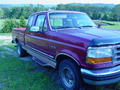
Hey all, my truck is giving problems, so just looking for some input. The truck is stalling and dying out when you release the gas, also bucking and jumping. I have eliminated the TPS, egr, and most other sensors as the culprit. I am getting codes 35 (pressure feedback circuit above max voltage) and 67 (nuetral pressure switch). Its a 90 six cylinder, 2wd five speed. I am leaning towards a fuel pump issue, but if I have to take the bed off ONE MORE TIME, I'm afraid I'll stroke out. I replaced the broken sending fuel line from the tank to the filter with a generic rubber fuel hose. It only has one fuel pump. Outside of a fuel pressure test, what else can I check? The pump seems okay...Anyone had similar issues?
Fleet Owner


Joined: Aug 2005
Posts: 23,667
Likes: 301
From: Easton,Ks
You did not say what code 35 & 67 was (KOEO, CM or KOER), as it means different things when coming from difference test.
Service Code 35 (KOEO or KOER) indicates that the EGR Valve Position (EVP) sensor signal is greater than the Self-Test maximum value of 4.81 volts.
Possible causes:
-- Damaged EVP sensor.
-- Short to power in harness.
-- Open in SIG RTN.
-- Damaged processor.
Continuous Memory Code (CM) 35 indicates that the EVP signal to the processor was above the maximum Self-Test limit sometime during vehicle operation.
Possible causes:
-- Poor continuity in EVP harness or connectors.
-- Intermittent open or short in EVP sensor or harness.
-- Damaged EVP sensor.
The 67 code most of the time means you did not have the clutch to the floor when running the test, driver error.
Service Code 35 (KOEO or KOER) indicates that the EGR Valve Position (EVP) sensor signal is greater than the Self-Test maximum value of 4.81 volts.
Possible causes:
-- Damaged EVP sensor.
-- Short to power in harness.
-- Open in SIG RTN.
-- Damaged processor.
Continuous Memory Code (CM) 35 indicates that the EVP signal to the processor was above the maximum Self-Test limit sometime during vehicle operation.
Possible causes:
-- Poor continuity in EVP harness or connectors.
-- Intermittent open or short in EVP sensor or harness.
-- Damaged EVP sensor.
The 67 code most of the time means you did not have the clutch to the floor when running the test, driver error.
Thread Starter
|
Senior User
Joined: Dec 2011
Posts: 137
Likes: 0
Thanks subford for the great input. I dont know which tests you are referring to, but I jumped the ecc test ports and counted the ck engine blinks with the key ON, NOT running. I matched the numbers with ford codes from a website. I am positive they are accurate. I have the egr blocked with a plate, so I dont think there is a problem there. Does it sound to you that these codes are related to the stalling or not? Also, regarding the 67 code, is it driver error or clutch pedal bushing error? LOL Anyway, I am thinking I will try a new fuel filter before I go in on the pump. Thanks again, I look forward to your response.
Fleet Owner
Joined: Aug 2005
Posts: 23,667
Likes: 301
From: Easton,Ks
As far as the 35 code you do not have a pressure feedback circuit.
But to answer your question NO these two codes will not cause your problem as you have the EGR blocked off.
I would NOT go after the Fuel pump yet as they do not usually cause these problems but you can check the fuel pressure at the test port on the fuel rail to be sure. You can get a gauge from a auto part store to check for a deposit.
But to answer your question NO these two codes will not cause your problem as you have the EGR blocked off.
I would NOT go after the Fuel pump yet as they do not usually cause these problems but you can check the fuel pressure at the test port on the fuel rail to be sure. You can get a gauge from a auto part store to check for a deposit.
Fleet Owner
Joined: Aug 2005
Posts: 23,667
Likes: 301
From: Easton,Ks
The CM part comes after the KOEO reads out its codes twice and then a single blink and then the CM codes will be readout twice.

/
Trending Topics
Thread Starter
|
Senior User
Joined: Dec 2011
Posts: 137
Likes: 0
This is where I got the codes 35 and 67 , from the process you have posted. Are you implying there should be different codes? Also, could you please explain what these abbreviations mean? PIP? Ignition control module?
FTE Stories
Ford Trucks for Ford Truck Enthusiasts

10 Things Every Truck Owner NEEDS (2026 Edition)
Michael S. Palmer
Rezvani's Latest Post-Apocalyptic Monster Is a Ford F-150 Raptor Underneath
Verdad Gallardo
Top 10 Most Expensive Ford Trucks Ever Sold on Bring a Trailer
Joe Kucinski
2027 Ford Super Duty Buyer's Guide (Every Model, Engine, & Package)
Brett Foote
Top 10 Ford Truck Tragedies
Joe Kucinski
AEV FXL Super Duty - the Super Duty Raptor Ford Doesn't Make
Brett Foote
Lobo Vs Lobo: Proof the F-150 Lobo Should Be Even Lower!
Michael S. Palmer
Ford's 2001 Explorer Sportsman Concept Looks For a New Home
Verdad Gallardo
10 Best Ford Truck Engines We Miss the Most!
Joe Kucinski

Fleet Owner
Joined: Aug 2005
Posts: 23,667
Likes: 301
From: Easton,Ks
Yes there different codes depending where you get them from (what part of the self-test).
Self-Test: One of three subsets of the EEC system Quick Test: Key On Engine Off, Engine Running, and Continuous.
DTC: Diagnostic Trouble Code. An alpha/numeric identifier for a fault condition identified by the On-Board Diagnostic System.
KOEO: Key On Engine Off. A test of the EEC system conducted by the PCM with power applied and the engine at rest.
CM: Continuous Memory: The portion of KAM used to store DTCs generated during Continuous Self-Test while driving.
KOER: Key On Engine Running.
ICM: Ignition Control Module. The module that controls the ignition system.
IAC: Idle Air Control.
EVP: EGR Valve Position sensor.
PIP: Profile Ignition Pickup. Provides crankshaft or camshaft position information for ignition synchronization.
SIG RTN: Signal Return. A dedicated sensor ground circuit that is common to two or more sensors.
KAM :Keep Alive Memory: A portion of the memory within the PCM that must maintain power even when the vehicle is not operating.
Self-Test: One of three subsets of the EEC system Quick Test: Key On Engine Off, Engine Running, and Continuous.
DTC: Diagnostic Trouble Code. An alpha/numeric identifier for a fault condition identified by the On-Board Diagnostic System.
KOEO: Key On Engine Off. A test of the EEC system conducted by the PCM with power applied and the engine at rest.
CM: Continuous Memory: The portion of KAM used to store DTCs generated during Continuous Self-Test while driving.
KOER: Key On Engine Running.
ICM: Ignition Control Module. The module that controls the ignition system.
IAC: Idle Air Control.
EVP: EGR Valve Position sensor.
PIP: Profile Ignition Pickup. Provides crankshaft or camshaft position information for ignition synchronization.
SIG RTN: Signal Return. A dedicated sensor ground circuit that is common to two or more sensors.
KAM :Keep Alive Memory: A portion of the memory within the PCM that must maintain power even when the vehicle is not operating.
Fleet Owner
Joined: Aug 2005
Posts: 23,667
Likes: 301
From: Easton,Ks
The KOEO self-test is done by warming the engine to normal operating temp.
Shut off the engine and then ground the STI (Self-Test Input) wire.
Then turn on the key and if it is 4.9L engine hold the clutch on the floor with tha AC/Heater off.
THe MIL (Malfunction Indicator Lamp) in the cluster will then flash out the codes with the KOEO electrical in the ball park voltage test first. These codes will read out twice. The after a short pause the CM codes will read out twice for problems that happened while driving on the road that may or may not have lit the MIL while driving.
Now after you get the 11, 11 for the KOEO and the 11, 11 for the CM you can run the EOER self-test.
Engine Running Self-Test
Special Notes:
On vehicles equipped with the Brake On/Off (BOO) circuit, the brake pedal MUST be depressed and released AFTER the ID code.
On vehicles equipped with the Power Steering Pressure (PSP) switch or sensor, within 1 to 2 seconds after the ID code, the steering wheel must be turned at least one-half turn and released.
On vehicles equipped with electronic overdrive transmission, the Transmission Control Switch (TCS) must be cycled after the ID code.
The Dynamic Response code is a single pulse (or a 10 code on the Super Star II Tester) that occurs 6-20 seconds after the engine running identification code. (See Code Output Format in this section.)
When/if the Dynamic Response code occurs, perform a brief wide open throttle.
How To Run Engine Running Self-Test
DO
Deactivate Self-Test.
Start and run engine until it reaches normal operating temperature.
Turn engine off, wait 10 seconds.
Activate Self-Test.
Start engine.
After the ID code, depress and release the brake pedal if appropriate.
After the ID code, within 1 to 2 seconds, turn the steering wheel at least one-half turn and then release it, if appropriate.
If a Dynamic Response Code occurs, perform a brief wide-open throttle (WOT).
Record all Diagnostic Trouble Codes (DTCs) displayed.
DON'T
Depress the throttle unless a Dynamic Response code is displayed.
Ground the STI wire and start the engine.
At this time, a test of the EEC system is conducted with the engine running. The sensors are checked under actual operating conditions and at normal operating temperatures. The actuators are exercised and checked for expected results.
Engine ID codes are issued at the beginning of the Engine Running Self-Test and are one-digit numbers represented by the number of pulses sent out. For gasoline engines, the engine ID code is equal to one-half the number of engine cylinders (i.e. 2 pulses = 4 cylinders). These codes are used to verify the proper PCM is installed and that the Self-Test has been entered.
Dynamic Response Check
The dynamic response check is used on some applications to verify operation of the TP, MAF, MAP and KS sensors during the brief Wide-Open Throttle (WOT) performed during the Engine Running Self-Test. The signal for the operator to perform the brief WOT is a single pulse or 10 code.
Power Steering Pressure (PSP) Switch/Sensor Test
On vehicles equipped with Power Steering Pressure (PSP) switch or sensor, the steering wheel must be turned one-half turn and released AFTER the ID Code has been displayed. This tests the ability of the EEC system to detect a change of state in the PSP input.
Brake On/Off Test
On vehicles equipped with Brake On/Off (BOO) input, the brake pedal MUST be depressed and released AFTER the ID Code has been displayed. This tests the ability of the EEC system to detect a change of state in the Brakelamp Switch.
Transmission Control Switch (TCS) Test
On vehicles equipped with TCS, the switch must be cycled after the ID code has been displayed. This tests the ability of the EEC system to detect a change of state in the TCS.Engine Running Self-Test
Special Notes:
On vehicles equipped with the Brake On/Off (BOO) circuit, the brake pedal MUST be depressed and released AFTER the ID code.
On vehicles equipped with the Power Steering Pressure (PSP) switch or sensor, within 1 to 2 seconds after the ID code, the steering wheel must be turned at least one-half turn and released.
On vehicles equipped with electronic overdrive transmission, the Transmission Control Switch (TCS) must be cycled after the ID code.
The Dynamic Response code is a single pulse (or a 10 code on the Super Star II Tester) that occurs 6-20 seconds after the engine running identification code. (See Code Output Format in this section.)
When/if the Dynamic Response code occurs, perform a brief wide open throttle.
How To Run Engine Running Self-Test
DO
Deactivate Self-Test.
Start and run engine until it reaches normal operating temperature.
Turn engine off, wait 10 seconds.
Activate Self-Test.
Start engine.
After the ID code, depress and release the brake pedal if appropriate.
After the ID code, within 1 to 2 seconds, turn the steering wheel at least one-half turn and then release it, if appropriate.
If a Dynamic Response Code occurs, perform a brief wide-open throttle (WOT).
Record all Diagnostic Trouble Codes (DTCs) displayed.
DON'T
Depress the throttle unless a Dynamic Response code is displayed.
Ground the STI wire and start the engine.
At this time, a test of the EEC system is conducted with the engine running. The sensors are checked under actual operating conditions and at normal operating temperatures. The actuators are exercised and checked for expected results.
Engine ID codes are issued at the beginning of the Engine Running Self-Test and are one-digit numbers represented by the number of pulses sent out. For gasoline engines, the engine ID code is equal to one-half the number of engine cylinders (i.e. 2 pulses = 4 cylinders). These codes are used to verify the proper PCM is installed and that the Self-Test has been entered.
Dynamic Response Check
The dynamic response check is used on some applications to verify operation of the TP, MAF, MAP and KS sensors during the brief Wide-Open Throttle (WOT) performed during the Engine Running Self-Test. The signal for the operator to perform the brief WOT is a single pulse or 10 code.
Power Steering Pressure (PSP) Switch/Sensor Test
On vehicles equipped with Power Steering Pressure (PSP) switch or sensor, the steering wheel must be turned one-half turn and released AFTER the ID Code has been displayed. This tests the ability of the EEC system to detect a change of state in the PSP input.
Brake On/Off Test
On vehicles equipped with Brake On/Off (BOO) input, the brake pedal MUST be depressed and released AFTER the ID Code has been displayed. This tests the ability of the EEC system to detect a change of state in the Brakelamp Switch.
Transmission Control Switch (TCS) Test
On vehicles equipped with TCS, the switch must be cycled after the ID code has been displayed. This tests the ability of the EEC system to detect a change of state in the TCS.
Shut off the engine and then ground the STI (Self-Test Input) wire.
Then turn on the key and if it is 4.9L engine hold the clutch on the floor with tha AC/Heater off.
THe MIL (Malfunction Indicator Lamp) in the cluster will then flash out the codes with the KOEO electrical in the ball park voltage test first. These codes will read out twice. The after a short pause the CM codes will read out twice for problems that happened while driving on the road that may or may not have lit the MIL while driving.
Now after you get the 11, 11 for the KOEO and the 11, 11 for the CM you can run the EOER self-test.
Engine Running Self-Test
Special Notes:
On vehicles equipped with the Brake On/Off (BOO) circuit, the brake pedal MUST be depressed and released AFTER the ID code.
On vehicles equipped with the Power Steering Pressure (PSP) switch or sensor, within 1 to 2 seconds after the ID code, the steering wheel must be turned at least one-half turn and released.
On vehicles equipped with electronic overdrive transmission, the Transmission Control Switch (TCS) must be cycled after the ID code.
The Dynamic Response code is a single pulse (or a 10 code on the Super Star II Tester) that occurs 6-20 seconds after the engine running identification code. (See Code Output Format in this section.)
When/if the Dynamic Response code occurs, perform a brief wide open throttle.
How To Run Engine Running Self-Test
DO
Deactivate Self-Test.
Start and run engine until it reaches normal operating temperature.
Turn engine off, wait 10 seconds.
Activate Self-Test.
Start engine.
After the ID code, depress and release the brake pedal if appropriate.
After the ID code, within 1 to 2 seconds, turn the steering wheel at least one-half turn and then release it, if appropriate.
If a Dynamic Response Code occurs, perform a brief wide-open throttle (WOT).
Record all Diagnostic Trouble Codes (DTCs) displayed.
DON'T
Depress the throttle unless a Dynamic Response code is displayed.
Ground the STI wire and start the engine.
At this time, a test of the EEC system is conducted with the engine running. The sensors are checked under actual operating conditions and at normal operating temperatures. The actuators are exercised and checked for expected results.
Engine ID codes are issued at the beginning of the Engine Running Self-Test and are one-digit numbers represented by the number of pulses sent out. For gasoline engines, the engine ID code is equal to one-half the number of engine cylinders (i.e. 2 pulses = 4 cylinders). These codes are used to verify the proper PCM is installed and that the Self-Test has been entered.
Dynamic Response Check
The dynamic response check is used on some applications to verify operation of the TP, MAF, MAP and KS sensors during the brief Wide-Open Throttle (WOT) performed during the Engine Running Self-Test. The signal for the operator to perform the brief WOT is a single pulse or 10 code.
Power Steering Pressure (PSP) Switch/Sensor Test
On vehicles equipped with Power Steering Pressure (PSP) switch or sensor, the steering wheel must be turned one-half turn and released AFTER the ID Code has been displayed. This tests the ability of the EEC system to detect a change of state in the PSP input.
Brake On/Off Test
On vehicles equipped with Brake On/Off (BOO) input, the brake pedal MUST be depressed and released AFTER the ID Code has been displayed. This tests the ability of the EEC system to detect a change of state in the Brakelamp Switch.
Transmission Control Switch (TCS) Test
On vehicles equipped with TCS, the switch must be cycled after the ID code has been displayed. This tests the ability of the EEC system to detect a change of state in the TCS.Engine Running Self-Test
Special Notes:
On vehicles equipped with the Brake On/Off (BOO) circuit, the brake pedal MUST be depressed and released AFTER the ID code.
On vehicles equipped with the Power Steering Pressure (PSP) switch or sensor, within 1 to 2 seconds after the ID code, the steering wheel must be turned at least one-half turn and released.
On vehicles equipped with electronic overdrive transmission, the Transmission Control Switch (TCS) must be cycled after the ID code.
The Dynamic Response code is a single pulse (or a 10 code on the Super Star II Tester) that occurs 6-20 seconds after the engine running identification code. (See Code Output Format in this section.)
When/if the Dynamic Response code occurs, perform a brief wide open throttle.
How To Run Engine Running Self-Test
DO
Deactivate Self-Test.
Start and run engine until it reaches normal operating temperature.
Turn engine off, wait 10 seconds.
Activate Self-Test.
Start engine.
After the ID code, depress and release the brake pedal if appropriate.
After the ID code, within 1 to 2 seconds, turn the steering wheel at least one-half turn and then release it, if appropriate.
If a Dynamic Response Code occurs, perform a brief wide-open throttle (WOT).
Record all Diagnostic Trouble Codes (DTCs) displayed.
DON'T
Depress the throttle unless a Dynamic Response code is displayed.
Ground the STI wire and start the engine.
At this time, a test of the EEC system is conducted with the engine running. The sensors are checked under actual operating conditions and at normal operating temperatures. The actuators are exercised and checked for expected results.
Engine ID codes are issued at the beginning of the Engine Running Self-Test and are one-digit numbers represented by the number of pulses sent out. For gasoline engines, the engine ID code is equal to one-half the number of engine cylinders (i.e. 2 pulses = 4 cylinders). These codes are used to verify the proper PCM is installed and that the Self-Test has been entered.
Dynamic Response Check
The dynamic response check is used on some applications to verify operation of the TP, MAF, MAP and KS sensors during the brief Wide-Open Throttle (WOT) performed during the Engine Running Self-Test. The signal for the operator to perform the brief WOT is a single pulse or 10 code.
Power Steering Pressure (PSP) Switch/Sensor Test
On vehicles equipped with Power Steering Pressure (PSP) switch or sensor, the steering wheel must be turned one-half turn and released AFTER the ID Code has been displayed. This tests the ability of the EEC system to detect a change of state in the PSP input.
Brake On/Off Test
On vehicles equipped with Brake On/Off (BOO) input, the brake pedal MUST be depressed and released AFTER the ID Code has been displayed. This tests the ability of the EEC system to detect a change of state in the Brakelamp Switch.
Transmission Control Switch (TCS) Test
On vehicles equipped with TCS, the switch must be cycled after the ID code has been displayed. This tests the ability of the EEC system to detect a change of state in the TCS.
Thread Starter
|
Senior User
Joined: Dec 2011
Posts: 137
Likes: 0
Wouldn't any codes involving the engine running test be stored and show up in the stored codes? And also, when I did the key on, engine off, i had the truck in nuetral. Are you saying thats why the 67 code showed up?