



What could possibly go wrong?????

Thread Starter
|
Laughing Gas

Joined: Jun 2004
Posts: 823
Likes: 4
From: Calais, Vermont
What could possibly go wrong?????
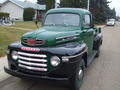
I'm getting a tad nervous... I have invited a few close friends to drop by on Sunday afternoon when I turn the key and see if the motor starts up. I have not run it for since '91 or '93.. I forget which. Anyway, it's been a long time. The motor has about 30,000 miles on top of a complete rebuild. I popped the head and oil pan and inspection showed that everything was fine. I gave the cylinders a quick hone, just to cut any varnish. The bearing surfaces were fine: all clean and shiny. (I used to change the oil every 2000 miles.) A friend who owns a deli let me use his scale (legal for trade..) to weigh the piston and rod assemblies. I ground a little off the bosses of the heavier ones, and now they are all perfectly balanced. (I know that's all completely unnecessary, but it kept me out of trouble for a few hours...). I am unaware of any mechanical reason that the motor won't start. But, I always seem to need something to worry about. For example: my cute little Holley 1904 has been sitting there dry for about 25 years. Should I expect the cork gasket at the float bowl to be so dried out that gas comes streaming out? Similarly, should I be concerned about the cork gaskets at the valve and push-rod covers? Is there a way to get oil to all the bearing surfaces without the rpms that come from actually running it? (I did lube it up real good during reassembly, but after all that time, will that lube have completely fallen away? Am I missing anything here? What could possibly go wrong? I will be making sure that I have a strong spark. I'll double check all the timing and valve adjustments. I'll make sure that I have gas at the carb. I'll adjust the carb: one turn out from closed, right? I'll have a fire extinguisher nearby and a thick blanket to cover any flames in a worse-case scenario. I've scheduled the "start" for late afternoon so the time of day is acceptable for a drink. Whether it starts or not, whether it's a celebratory toast or drowning my sorrows, that drink is an integral part of the whole thing. Maybe next Monday I'll be posting a small video clip.
Maybe next Monday I'll be posting a small video clip.

More Turbo


Joined: Apr 2015
Posts: 525
Likes: 57
From: Kenmore, NY
Honestly, I would cheat, just like they do on TV. I would try to start it, just me and the fire department, with nobody else around, just to make sure it starts.
There are lots of threads here and on other sites about a first start, so a search will bring plenty of advice. Things like having a battery charger handy for when you run the battery down; cranking without the plugs in in order to get the oil circulating; and so on.
Other than that-I hope that you have great luck!
John
There are lots of threads here and on other sites about a first start, so a search will bring plenty of advice. Things like having a battery charger handy for when you run the battery down; cranking without the plugs in in order to get the oil circulating; and so on.
Other than that-I hope that you have great luck!
John

Junior User
Joined: Jun 2016
Posts: 74
Likes: 1
From: NorCal
This is exactly what happened to me the first time i started mine. Fuel started pouring out of the bowl cover and I ended up putting gasket sealant and let it set overnight. As John said, I would start it beforehand just to make sure everything works as it should. Good luck!
Thread Starter
|
Laughing Gas
Joined: Jun 2004
Posts: 823
Likes: 4
From: Calais, Vermont
It looks like two votes for cheating. I have given this some thought. I'm going to get caught if on startup, the exhaust pipe leaves a tell-tale dot of black soot on the garage floor from the bit of oil that I intend to squirt into each cylinder . Note that the truck is still a few weeks from driving; there are still misc things to do like installing the seat and steering column. If I do cheat, I'd better throw a tarp under the tail pipe.
I had been thinking that I'd get gas up to carb by some combination of air pressure in the gas tank and cranking the engine without the ignition lead to the coil hooked up. I was also going to disconnect the plug wires except for one plug that I'd remove, just to verify that I've got a good blue spark. Do you think cranking the engine without actually starting it would be enough to get the oil pump to send oil into all the bearings? If I crank it without the plugs in, it ought to turn at a pretty good clip.
I have given this some thought. I'm going to get caught if on startup, the exhaust pipe leaves a tell-tale dot of black soot on the garage floor from the bit of oil that I intend to squirt into each cylinder . Note that the truck is still a few weeks from driving; there are still misc things to do like installing the seat and steering column. If I do cheat, I'd better throw a tarp under the tail pipe. I had been thinking that I'd get gas up to carb by some combination of air pressure in the gas tank and cranking the engine without the ignition lead to the coil hooked up. I was also going to disconnect the plug wires except for one plug that I'd remove, just to verify that I've got a good blue spark. Do you think cranking the engine without actually starting it would be enough to get the oil pump to send oil into all the bearings? If I crank it without the plugs in, it ought to turn at a pretty good clip.
Believe Nothing
Joined: Jun 2004
Posts: 7,516
Likes: 401
From: W. Central FL.

Generally considered an acceptable way to pre oil an engine.

Laughing Gas
Joined: Dec 2014
Posts: 774
Likes: 11
From: Simsbury, Connecticut
I agree, but I have an addition. I'd remove the valve covers and pour some oil into the valleys so it gets to your top end just to help it along. Or if you're really nervous I'd remove the distributor, tape a socket to a long ratchet extension, connect it to a drill and spin that sucker until it won't spin anymore. You're guaranteed to prime the oil that way. At least then you can completely eliminate any oil issues. Then it's just spark and air!
Trending Topics
Posting Guru
Joined: Sep 2011
Posts: 1,409
Likes: 0
From: Clitherall, MN.
What Cal said. We used to do that back in the day, used an old dizzy shaft though. Plus if you crank it with no plugs in that will prime the fuel system too. You can find out if your bowl gasket is gonna leak. Look forward to hearing it run on your video. Good luck.
FTE Stories
Ford Trucks for Ford Truck Enthusiasts

3 Best / 3 Worst Parts of Modern Ford Ownership
Brett Foote
10 Amazing Upgrades That Solve Common Ford Truck Owner Headaches
Pouria Savadkouei
Every 2026 Ford Engine Explained
Brett Foote
10 Ugly Ford Trucks That We Still Kinda Love
Joe Kucinski
10 Things Every Truck Owner NEEDS (2026 Edition)
Michael S. Palmer
Rezvani's Latest Post-Apocalyptic Monster Is a Ford F-150 Raptor Underneath
Verdad Gallardo
Top 10 Most Expensive Ford Trucks Ever Sold on Bring a Trailer
Joe Kucinski
2027 Ford Super Duty Buyer's Guide (Every Model, Engine, & Package)
Brett Foote
Top 10 Ford Truck Tragedies
Joe Kucinski
Elder User
Joined: Jun 2015
Posts: 791
Likes: 11
From: Louisville
Before start-up pull the plugs and crank for 30 seconds at a time until you build oil pressure. That will also push fuel into the carb, hopefully. If you do it a couple days ahead there's a good chance that the fuel will swell any dry gaskets. Then if you still want to do an honest 'haven't started start' you'll be good to go without the boring stuff.
The biggest worry you should have is running out of beer and bourbon. As long as everyone has a drink in their hand they won't mind as much as waiting for the truck to start before they can have that drink.
The biggest worry you should have is running out of beer and bourbon. As long as everyone has a drink in their hand they won't mind as much as waiting for the truck to start before they can have that drink.

Lead Driver

Joined: Nov 2002
Posts: 9,686
Likes: 1,254
From: Jefferson City, MO
Make sure you have your plug wires in the right order. I had mine 180 degrees off. 
I'm not opposed to cheating, but the suggestions of pre oiling and filling the carb to check for leaks are good ones if you are going to stay honest.
Video is required! Success or failure. We are confident you will be successful though.
I'm not opposed to cheating, but the suggestions of pre oiling and filling the carb to check for leaks are good ones if you are going to stay honest.
Video is required! Success or failure. We are confident you will be successful though.
Thread Starter
|
Laughing Gas
Joined: Jun 2004
Posts: 823
Likes: 4
From: Calais, Vermont
I've been giving the dried out cork gasket thing some thought. It occurred to me that soaking them in water might soften them up. I considered soaking in gas or kerosene, but figured that being cork, it was most likely moisture from water that made them soft and pliable. I poked around online and found a number of posts suggesting just that. One poster says that boiling them in water plumps them right up again like new. So, I'm going boil up the bowl and fuel pump glass dome gaskets. What could possibly go wrong?
Logistics Pro
Joined: May 2010
Posts: 3,793
Likes: 19
From: Austin
Go down to Quechee & start it ... Everybody will be so busy watching balloons they
won't notice a little leak here or there. Have fun, drink some beer, eat some shortcake, & start that truck!
Ben in Austin
1950 F1
(Personally I'd cheat - you deserve a fantastic engine starting party!)
won't notice a little leak here or there. Have fun, drink some beer, eat some shortcake, & start that truck!
Ben in Austin
1950 F1
(Personally I'd cheat - you deserve a fantastic engine starting party!)



Logistics Pro

Joined: Nov 2011
Posts: 4,685
Likes: 81
From: Northville, MI

IHMO I think that you are over-thinking things. All of us have taken old carbs apart that haven't been apart for 60+ years and the cork gaskets are just fine. These trucks are pretty simple and with the low compression they run on most anything. The only issue might be after you run it for some time if you have any rubber seals that don't tolerate the alcohol in the new gasoline you might get a slight leak. But you won't find it until you run it for a while.