




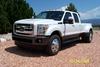



Power update

Senior User
Joined: Jun 2013
Posts: 115
Likes: 0
Yeah...well from what I heard from my sister's brother, It's gonna have Tonz of Power for haulin kayaks, big engine with pipe thingies out back. The ambient lighting on the interior will change color based on what torque the big engine is running at.....Blue for 800...Red for 900....Green for 950....Yellow for 1000. It will cycle through as you drive. Can't wait.
Senior User
Joined: Jun 2013
Posts: 115
Likes: 0
It's a laser show that's based on the music your listening to based on the torque your demanding from the engine and if it's an FX4 there is an allowance for the algorithm that changes with the terrain. This way it can be as dangerous in the daytime as well.

Hotshot


Joined: Apr 2013
Posts: 10,123
Likes: 657
From: NH
As for the Cummins, who knows. It is a beefy engine, and can probably withstand enough additional boost in current guise to hit 1000lb-ft, but they cannot easily get more horsepower out of it. This becomes a marketing problem for RAM, because while the engine will move huge loads, it tests out as the slowest truck by far against the higher-horsepower V8's.

Elder User
Joined: Aug 2004
Posts: 537
Likes: 1
Yep, he's right.
I know my brother's BFF, whose cousin's hairdresser's stepson is dating the niece of a engineer at Ford, who said the power gains were tremendous !!
But she was drunk at the time, and owns a Toyota Camry, so I would probably not put that as a reliable source...
I know my brother's BFF, whose cousin's hairdresser's stepson is dating the niece of a engineer at Ford, who said the power gains were tremendous !!
But she was drunk at the time, and owns a Toyota Camry, so I would probably not put that as a reliable source...
FTE Stories
Ford Trucks for Ford Truck Enthusiasts

Top 10 Fords at 2026 Carlisle Ford Nationals
Joe Kucinski
3 Best / 3 Worst Parts of Modern Ford Ownership
Brett Foote
10 Amazing Upgrades That Solve Common Ford Truck Owner Headaches
Pouria Savadkouei
Every 2026 Ford Engine Explained
Brett Foote
10 Ugly Ford Trucks That We Still Kinda Love
Joe Kucinski
10 Things Every Truck Owner NEEDS (2026 Edition)
Michael S. Palmer
Rezvani's Latest Post-Apocalyptic Monster Is a Ford F-150 Raptor Underneath
Verdad Gallardo
Top 10 Most Expensive Ford Trucks Ever Sold on Bring a Trailer
Joe Kucinski
2027 Ford Super Duty Buyer's Guide (Every Model, Engine, & Package)
Brett Foote

Cargo Master

Joined: Dec 2003
Posts: 2,298
Likes: 2,059
From: Central MO
1) Fuel efficiency
2) The fact that it cannot be used in the F450 & F550 trucks due to cooling requirements
3) It's rather low-tech
4) They want to slap a turbo on it and they want to decrease the displacement for a little safety margin
It may be none, 1, all, or any combination of them, I don't know, just guessing.
Getting a new engine doesn't mean the 6.2L will be put out to pasture. If the 5.8L comes with a turbo, then the 6.2L would be a base, low-cost option.

Fleet Owner


Joined: Mar 2003
Posts: 24,724
Likes: 74
From: Blue Hill Township
The Duramax is currently being heavily revised or will be all new with info or release happening this fall. I think it will be a very impressive engine. I'm surprised the current Duramax has been unchanged since 2011, but as someone else stated, it always tests very well even with "just" 765lb-ft of torque. The GM trucks tend to be lighter.
As for the Cummins, who knows. It is a beefy engine, and can probably withstand enough additional boost in current guise to hit 1000lb-ft, but they cannot easily get more horsepower out of it. This becomes a marketing problem for RAM, because while the engine will move huge loads, it tests out as the slowest truck by far against the higher-horsepower V8's.
As for the Cummins, who knows. It is a beefy engine, and can probably withstand enough additional boost in current guise to hit 1000lb-ft, but they cannot easily get more horsepower out of it. This becomes a marketing problem for RAM, because while the engine will move huge loads, it tests out as the slowest truck by far against the higher-horsepower V8's.

More Turbo

Joined: Apr 2016
Posts: 698
Likes: 24
From: Houston, Tx
Are the 2016 Ram HD's Output Figures Bogus? » AutoGuide.com News
Nice read about the difference in the ratings for the big three.
I can't find the article with about the ram numbers but one of the cummins guys said all they did to go from the 865 to 900 was change the tuning and engine calibrations, and if ram needed more power from the cummins all they would need to do is go back to swap some 1s and 0s to give ram what they wanted.
Nice read about the difference in the ratings for the big three.
I can't find the article with about the ram numbers but one of the cummins guys said all they did to go from the 865 to 900 was change the tuning and engine calibrations, and if ram needed more power from the cummins all they would need to do is go back to swap some 1s and 0s to give ram what they wanted.
Hotshot
Joined: Apr 2013
Posts: 10,123
Likes: 657
From: NH
Some reasons that I can think of:
1) Fuel efficiency
2) The fact that it cannot be used in the F450 & F550 trucks due to cooling requirements
3) It's rather low-tech
4) They want to slap a turbo on it and they want to decrease the displacement for a little safety margin
It may be none, 1, all, or any combination of them, I don't know, just guessing.
Getting a new engine doesn't mean the 6.2L will be put out to pasture. If the 5.8L comes with a turbo, then the 6.2L would be a base, low-cost option.
1) Fuel efficiency
2) The fact that it cannot be used in the F450 & F550 trucks due to cooling requirements
3) It's rather low-tech
4) They want to slap a turbo on it and they want to decrease the displacement for a little safety margin
It may be none, 1, all, or any combination of them, I don't know, just guessing.
Getting a new engine doesn't mean the 6.2L will be put out to pasture. If the 5.8L comes with a turbo, then the 6.2L would be a base, low-cost option.
#2 I have never heard of. Could you expound?
#3 I do not actually agree with this - its all relative. GM and RAM V8s would classify as much lower tech than the 6.2L. You have to remember, the 6.2L still has a few features which cost Ford some money: cam-actuated De-VCT, roller rockers, dual spark plugs per cylinder, and it is OHC. It only has two valves per cylinder, but they are very large valves - equaling or exceeding the valve area of the old Triton 3V arrangement. The EcoBoost engines are higher tech - 4 cams, 4 valves, Ti-VCT, direct injection, and turbos...but they have some drawbacks as well.
4. Not sure your logic is sound on this one - the idea would be a larger displacement engine uses more fuel, and with forced aspiration, the larger displacement would not be needed to achieve the power goals. There is no "safety margin" needed with this engine - the internals are very stout and there is appropriate spacing between cylinders, etc. Roush designed a 700HP version of this engine early on with turbochargers. Another interesting fact is that the 6.2L was designed to be able to grow in size all the way to 7.3L.
I like the 6.2L. In current Super Duty form, it feels a bit lazy and yes, it does get poor fuel economy (but remember the size and weight it is moving!). The laziness is partially due to poorly programmed throttle response which limits max throttle until an RPM level is reached, and partially because this engine develops peak torque at a much higher RPM level the EcoBoost or diesel engines. Right now, it is just a solid engine which will produce many years of reliable operation. It is pretty quiet at idle, and produces a nice startup belch and a deep bellow at high RPM under load. Its otherwise a quiet freeway cruiser.
I'm really hoping Ford sees fit to bump this engine to at least 400HP and 430lb-ft for the '17 Super Duty. Right now, I drive a new 6.7L but I'm going back to gas - I love the diesel, I'll miss the power, but the gas makes more sense for me. Less worries in the long term.
Cargo Master
Joined: Dec 2003
Posts: 2,298
Likes: 2,059
From: Central MO
The issue with cooling is that the 6.2L would not pass Ford tests (internal Ford tests...they have a very high set of standards) for cooling during prolonged stints at max HP and max load in the medium duty trucks. This is why the 6.2L is not available in the F450+ trucks and they stuck with the V10. This is also one reason why the 6.2L has not been enlarged for use in the MD trucks as well.
For being low-tech, agreed, it's relative. I meant relative to the other Ford engines. Mostly, pointing out that it is not really related to the other Ford engines and is a 'one-off'.
#4 is just a guess. Lowering the displacement would allow them to add a turbo and meet fuel economy targets as well. I was thinking smaller for a bit more bore spacing, but that may not be the case.
For being low-tech, agreed, it's relative. I meant relative to the other Ford engines. Mostly, pointing out that it is not really related to the other Ford engines and is a 'one-off'.
#4 is just a guess. Lowering the displacement would allow them to add a turbo and meet fuel economy targets as well. I was thinking smaller for a bit more bore spacing, but that may not be the case.
Hotshot
Joined: Apr 2013
Posts: 10,123
Likes: 657
From: NH
The issue with cooling is that the 6.2L would not pass Ford tests (internal Ford tests...they have a very high set of standards) for cooling during prolonged stints at max HP and max load in the medium duty trucks. This is why the 6.2L is not available in the F450+ trucks and they stuck with the V10. This is also one reason why the 6.2L has not been enlarged for use in the MD trucks as well.
For being low-tech, agreed, it's relative. I meant relative to the other Ford engines. Mostly, pointing out that it is not really related to the other Ford engines and is a 'one-off'.
#4 is just a guess. Lowering the displacement would allow them to add a turbo and meet fuel economy targets as well. I was thinking smaller for a bit more bore spacing, but that may not be the case.
For being low-tech, agreed, it's relative. I meant relative to the other Ford engines. Mostly, pointing out that it is not really related to the other Ford engines and is a 'one-off'.
#4 is just a guess. Lowering the displacement would allow them to add a turbo and meet fuel economy targets as well. I was thinking smaller for a bit more bore spacing, but that may not be the case.
Regarding the cooling, that seems very strange. I'm certain the cooling requirements could be easily met by enlarging the radiator for that application or putting a supplemental fan on, etc. I have never heard that, and I'd love to see the source of that info, but I'd bet in reality it has more to do with the 6.2's lack of low-down torque. The V10 produces its torque at a lower RPM.
I think the 6.2L actually has a pretty robust cooling system - personally I've never had a problem with my two previous 6.2L trucks hauling heavy in 90F humidity, but that's just me.