When you click on links to various merchants on this site and make a purchase, this can result in this site earning a commission. Affiliate programs and affiliations include, but are not limited to, the eBay Partner Network.
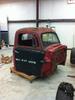
I'm finally to the point of mounting the engine and trans on the frame and will be putting the cab on to setup steering, etc. Because the cab is just in primer and will still need bodywork done, is the proper way to pull the cab back off for finishing? Or should the cab be left on and just cover up as much as possible to block filler dust?
Thanks,
Matt
"Proper" only depends on your desired level of finish, and how much work you want to go through to cover up your finished stuff to keep from making a mess. Personally, I like to do things in pieces to avoid the masking and associated cleanup when you miss something, like you're thinking.
I like to prefit all parts down to electrical, interior panels, sound system, so as all holes are drilled doors and fenders all fit and lined up (especially if not original to the cab). Than take it apart go the body work, if you are painting one color than paint and finish, if two tone I put it back together and put the line on. But as Wayne says it depends on you and the level of finish you want. I don't know if you will get one solid answer or if there even is one.
The frame is a very nice mobile work stand for the cab during body work. I usually just accept the fact I am going to have to revisit the frame for a touch up. That won't work so well if you have a powder coated or fancy painted frame though.
Assuming that you are done with the chassis there are a couple of ways to proceed. Finish all paint work on the underside of the cab and the firewall. Cover the chassis with plastic wrap and then mount your cab. Complete the work on the cab and then remove the plastic wrap from the chassis. The way that I prefer to work is the way that has been expressed by most already...finish the chassis, do your fitment of the cab and steering, remove the cab and complete your paint work. When the cab is painted and the chassis complete, then mate the two. I like to make mounting points/plates inside the cab for all my stereo/HVAC/electrical devices before I paint but I hold off on running the wiring til the last...just prior to upholstery and carpet.
I am not sure that accessing nooks and crannies was the OPs concern but now that the subject of rotisseries has come up I would like to point out some issues with them that I have found. First off I own a nice rotisserie and use whenever I can, that said, mounting the body on the rotisserie is not always a simple matter. When the rotisserie itself creates "nooks and crannies" then it can become as much a problem as the bodywork itself. My current project is a 40 Ford coupe and when I was mounting the body I found that working around the rotisserie was becoming a real PITA. The photo below shows the mounting jig that I fabricated to alleviate some of the obstructions that the rotisserie presented. I have looked at making a similar jig for an F100 cab but it always ended up that the effort to build the jig was better spent doing the bodywork on the cab. Tilting an F100 cab on its back is fairly simple when access to the underside is needed. Maybe by the time that EFranzen is finished with his cab he will have designed a jig that he can share with us.
I cut out some 1/2 thick spacer that fit between the cab's door mount points and the arm on the rotisserie. These will be the only spots not reachable. I figured I would get to them once the cab is sandblasted, underneath finished and mounted back on the frame or a cart.
Hope this is helping and not hijacking the thread.
Note that way will also take up two parking spots in the garage. I had to wait until fall, as the wife wasn't going to let me park her car outside during an Arizona summer.
Ernie, I think that this discussion is relevant to the OPs original query in that it addresses the return on investment when considering how much time and effort to put into moving a cab. I have done many of these cabs and I have learned that for me it is not worth the effort to mount one on a rotisserie. That is not to say that you shouldn't, it's just that if you do and you follow the work from stripping to painting, that you may have some lessons learned at the conclusion. When I look at a cab I look at it through the eyes of a body and paint man. I see obstructions that will prevent me from spraying or block sanding...for me, these are the nooks and crannies that are created and become unreachable. I can make a cab dolly for $10 worth of materials (well $20 if you include the casters I "borrow" off one of the HF furniture dollies I have) and once the cab is sitting on the dolly then I have full access to the entire skin of the cab. Lifting the cab at the firewall I can lay it back on the rear section of the cab and then have access to the complete floor underside and cab mounting points. My rotisserie is a bit larger than the one you have pictured so it now becomes another space consumer in my already too small garage...I think that you may be in the same predicament from what I see in your photos. That chassis looks like it is not something you want to leave out on the driveway for long. Good luck with your project!
What do you lay the cab onto Charlie when you flip it on it's back? Do you lay it on tires or a propped up piece of plywood or something, I still need to get a coat of epoxy and bedliner sprayed on my cab. I used the same method as Ernie when doing the repairs to my cab but not really wanting to hook it up to the rotisserie again.
When the cab is on the dolly it will pivot back on the rear tires/casters, the rear of the cab doesn't contact the floor until it is almost flat. I usually lay a couple of moving quilts down on the floor to protect the back of the cab. For the most part I work on the underside of the cabs first which means that the outer skin of the cab does not have a finished paint job on it yet and doesn't require too much special attention. Once the underside is complete I set the cab back upright where is stays until it is placed back on the chassis. Here's a pic I just found in the archive showing my 56 cab laying on its side...there are a couple pieces of carpet to protect it from the concrete floor. These cabs really don't weigh that much so there isn't too much risk of damaging the sheetmetal when laying them over.
Thanks Charlie, that should work out okay for me, I had copied your idea for the cab dolly already. Your picture threw me at first until I realized the floor was on the left...lol
Just thing of what I can do over these winter months.