When you click on links to various merchants on this site and make a purchase, this can result in this site earning a commission. Affiliate programs and affiliations include, but are not limited to, the eBay Partner Network.
Yep, checked that. It was good. Coincidentally, this fuse blowing problem did begin several weeks after having heater core replaced by the dealer. But I can't see the connection there if there is one.
At this stage the pinpoint tests are only checking if voltage/current is flowing according the the schematic and "function logic", ie: does the blower motor react properly to the speed control?---that sort of thing, your repairs have taken care of the original issue
If fuse #13 is still blowing I strongly suspect the blower motor relay OR the blower motor itself is at fault. Because its works for a time then blows that's possibly due the motor heating up over time increasing its internal resistance to the point its drawing more than the 15 amps of Fuse #13.
I kinda doubt the relay is causing this as those tend to cause direct shorts and immediate fuse blowing.
Have you noticed any diminishing air flow, unusual blower motor noises or smells of the electrical nature? The ONLY possible connection to the heater core replacement is more air flow through the new one which allows the blower motor to run closer to its design RPM leading the the "overheating" of its windings and voila Fuse #13 throws a tantrum.
I don't want to suggest immediately replacing the blower motor BUT if you were/are able to do an actual amp draw test on the motor from a "cold" condition until Fuse #13 blows that might tell you something. A peak reading DMM or similar would be handy but not 100% necessary.
Mind you most DMM's on the market will NOT handle current over 10 amps max running through them before their internal fuses blow.
Wish I could help further but this is about all that hits me at the moment. (I'll subscribe to this thread to get notices when new replies are made.)
Are you referring to the relay in the underhood power distribution box? Many of those relays are the same, so what I did do previously was swap those around to the position for the blower to see if it made a difference. But it didn't. I have this DMM:
That DMM won't do what we need---it doesn't have in-line amp reading capability nor does the AC current clamp portion work for DC.
Check around to see if a DC "amp clamp" type meter can be borrowed or used for a short time. Such a device would allow direct measurement of DC amps being drawn into the blower motor before #13 blows.
Typically DMM's can measure DC amps but that requires the load device to be connected to the battery through the DMM. For that reason DMM's are internally fused at 10 amps, fast blow type to protect the meter. Since you're blowing 15 amp fuses that's an unworkable solution.
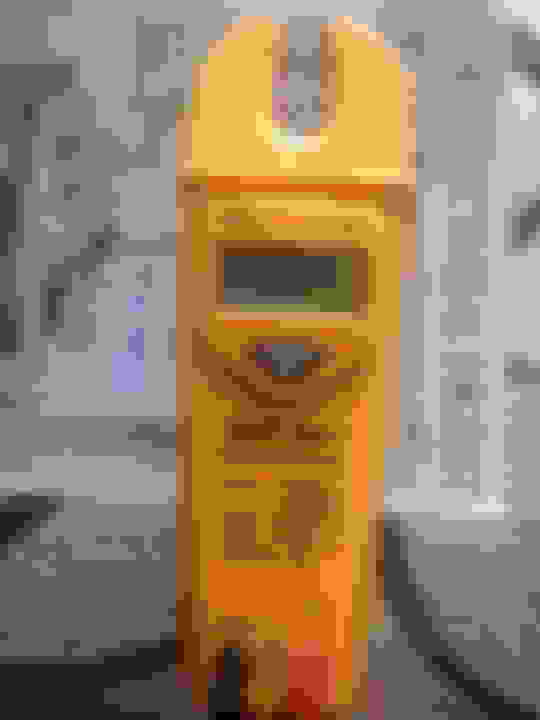
At the moment the best I can suggest without pre-emptively changing the blower motor is to find the DC "amp clamp" type of meter to assess the blower amp draw situation. I don't suggest you buy this sort of thing but I have one, bought it on the cheap from eBay:
This one specifically mentions measurement of DC current.
The only way I can/did justify buying it was cost and it'll be used for more than the occasional vehicle fuse overload situation. Well that and there's no "marital oversight" here in this guy's life!
Would it be possible to wire in a resistor to provide a fixed draw and bypass (disconnect) the blower motor and it's potentially overamp situation as a test?
Would it be possible to wire in a resistor to provide a fixed draw and bypass (disconnect) the blower motor and it's potentially overamp situation as a test?
Not really----you need the blower motor to draw current through the meter directly to see what's what. There's no short way around meauring current, AC or DC.
If you're talking about a shunt for amp readings those are somewhat precisely made to give very accurate readings----most resistors aren't made with close tolerance so in this situation aren't useful.
I know it sucks getting this close and far into something but sometimes there's only one way to go about such things as this.
My neighbor, who has enough tools to rebuild the earth should it ever be destroyed, had one. We measured the blower motor without AC running and it put out 10.43A consistently over a few minutes. I pulled out the wiring diagram:
Could it be something from the motor drive circuit (second photo) since it appears to share the same power from fuse 13; 489 PK/BK as the function selector switch?
I do notice that the blower motor does seem less forceful on all but the highest setting since this problem has been going. Can't even hear it running on low unless engine is off.
How many minutes did you run the amp draw test----as compared to the time while driving required to blow Fuse #13 of the CJB? "A few minutes......" isn't the same interval you described before---unless I'm missing something here? (BTW nice use of your EVTM! )
The blower motor will run strong in the highest speed setting because in that setting its connected to the battery/charging system via Blower Motor Relay located inside the Battery Junction Box, under hood directly in front of brake master cylinder. Coincidently there's a 50 amp fuse numbered 13 also---can't confuse it with CJB #13---huge size difference.
So if I'm reading all this correctly you've replaced the electrical portion of the Function control but merely checked the dash mounted speed selector and the blower motor resistor network and its connector---correct? Do any of those show ANY signs of high heat or corrosion severe enough to induce higher resistance in the circuit?
The Blend Door Actuator or Motor Drive Circuit could be at fault as you mention. A loss of control over the Temperature setting or sudden uncommanded changes of output air temp could/would suggest the blend door hanging up OR the Temp control itself developing intermittent shorts which would blow Fuse #13. I would suspect the Temperature control IF you can change output air temp in any heating/cooling mode. Even the A/C temp is controlled via the dash mounted Temp control.
BTW x 2: Cell 11-1 etc in your year's EVTM show all fuse and relay positions. No more guessing what relay is working or where its located.
Okay hot date tonight so won't be able to reply until tomorrow.
I must admit, I am impatient and ran the blower on the meter for a little over 5 minutes. I can repeat that longer.
Yep. The resistor, speed selector and temp switches looked really good on everything. So, I'll dive back in tomorrow. I'm bonding with my new EVTM.
Enjoy the "hot" date but don't blow a fuse!
No fuses were blown or otherwise damaged during the "hot" date---not for lack of trying though?!?! Have to treat her to breakfast now---its the gentlemanly thing to do after all..............
Let us know how your longer term testing/amp draw measuring goes with the blower motor. If possible secure the meter under the hood and drive around a bit while its monitoring the blower motor, being sure to engage the peak/hold max feature if that feature is available on the meter.
Place the meter as close to the blower motor as you can as that would measure current draw on just that device. If the fuse blows and the meter shows less than 15 amps we'll know the problem is in the control circuit and not the motor itself.
15 amp fuse #13 will blow even if the blower motor is disconnected. BUT, it will only blow making an abrupt left turn. I confirmed this five times. Right turns, doughnuts no problem. Circle to left-blows. I've pulled the A/C panel three times to see if anything could move, retaped wires from the harness leading to the panel. Fuse panel inside the vehicle and battery junction box are all buttoned down tight. Going back to Pinpoint test F14, resistance measures only 86 ohms which should indicate a short in circuit 753. But disconnecting the blower motor takes it out of the circuit. And remember I replaced the function selector switch with a new one. The only other thing coming out of that #13 fuse is circuit 489 leading to the blend door actuator. But what would that have to do with the 753 circuit ohm reading being low?
I'm stumped! Where do I go now? Local pub?
Repeating my compliments on your use of the EVTM---impressive!
Yes the blend door actuator drive circuit could be causing this but if so it would be a chaffed wire that's being thrown to the right side when the hard left turns are made. In your service manual (not EVTM) there should be a Pinpoint test performed at the drive motor connector---this would test the physical wire paths as well as the dash mounted temperature control.
ALSO keep in mind Fuse #13 has A/C switches protected---follow circuit 348 out of the function control Cell 54-1 and through Cell 54-3 too. Its possible those wires and connectors under the engine are causing the blown fuse #13 too.
By now this has to be a relatively simple problem but one I've never seen posted here before. That's not much comfort I know but I'm equally sure the solution is close at hand.
15 amp fuse #13 will blow even if the blower motor is disconnected. BUT, it will only blow making an abrupt left turn. I confirmed this five times. Right turns, doughnuts no problem. Circle to left-blows. I've pulled the A/C panel three times to see if anything could move, retaped wires from the harness leading to the panel. Fuse panel inside the vehicle and battery junction box are all buttoned down tight. Going back to Pinpoint test F14, resistance measures only 86 ohms which should indicate a short in circuit 753. But disconnecting the blower motor takes it out of the circuit. And remember I replaced the function selector switch with a new one. The only other thing coming out of that #13 fuse is circuit 489 leading to the blend door actuator. But what would that have to do with the 753 circuit ohm reading being low?
I'm stumped! Where do I go now? Local pub?
A visit to the pub is always a good idea
Is it possible that a source of a liquid is located to the left of this offending switch? My WAG is that a liquid may be sloshing onto the circuitry, shorting it out during a left turn. Either that or a chafed wire that gets swung to the right and shorted out during the same turn.
Spent all day on this. Working backwards and forward. I disconnected the blend door actuator thinking this would take it out if the circuit but to no avail. Followed everything to the aux. motor blower in the back. Nothing. Traced every wire bundle and secured with tape or zip tie to negate the shifting possibility but no go. Circuit 348 goes to the A/C clutch cycling pressure switch but I'm not sure how to bypass that or take it out of the circuit. Not really sure even where it is. Feelin' like a greenhorn over here.
This Hennessey Takes the Expedition Tremor's Off-Roading Capability to the Next Level
Slideshow: The VelociRaptor Expedition gains a lift, upgraded suspension, Brembo brakes, and trail-ready equipment while retaining the stock 440-horsepower EcoBoost V6.
Rezvani's Latest Post-Apocalyptic Monster Is a Ford F-150 Raptor Underneath
Slideshow: Called the Fortress, the 850-horsepower pickup combines Raptor underpinnings with military-inspired features, survival equipment, and a starting price of $285,000.








 )
)

 Where do I go now? Local pub?
