


Proportioning Valve
Thread Starter
|
Cargo Master


Joined: Jul 2003
Posts: 2,732
Likes: 20
From: Four Oaks, NC
Proportioning Valve
Or whatever other name it may be known as. I'm doing an upgrade from 4x drums on my 69 to disc/drum setup from a 78. My current brake line configuration is that my front & rear are completely seperate, the line for the rear leaves the master cylinder and runs down towards the rear axle where it splits to go to both sides. My brake line for the fronts come off the master cylinder, go down towards the frame, seperate into 2 lines each feeding a front drum.
If I skip the proportioning valve on this install and have my new master cylinder set up the same way, will that be a problem? Will it cause my rear brakes to lock up prematurely?
If I skip the proportioning valve on this install and have my new master cylinder set up the same way, will that be a problem? Will it cause my rear brakes to lock up prematurely?
Cargo Master


Joined: Mar 2014
Posts: 2,031
Likes: 72

In both situations - power disc or standard drums - the rear brakes are controlled by one line split at the rear axle. Your rear brakes only do about 35 percent of the stopping hence they don't need as much pressure and can be supplied by essentially one line.
The fronts, particularly in a disc environment require more pressure.
My understanding is the proportioning valve (aftermarket or original) is necessary for the conversion you are doing to provide the necessary power and control to properly activate the brakes.
Just an FYI, you probably could/should have included this question in your brake conversion thread. Keeps it all together. I have made the mistake of having threads scattered all over the place - like my conversion from manual to automatic. I have two or three different threads on essentially the same subject.
The fronts, particularly in a disc environment require more pressure.
My understanding is the proportioning valve (aftermarket or original) is necessary for the conversion you are doing to provide the necessary power and control to properly activate the brakes.
Just an FYI, you probably could/should have included this question in your brake conversion thread. Keeps it all together. I have made the mistake of having threads scattered all over the place - like my conversion from manual to automatic. I have two or three different threads on essentially the same subject.
Lead Driver

Joined: Apr 2011
Posts: 6,399
Likes: 40
From: El Dorado, Arkansas
Either I'm not clearly understanding your description or, someone's done a little brake line 'plumbing' on your truck.
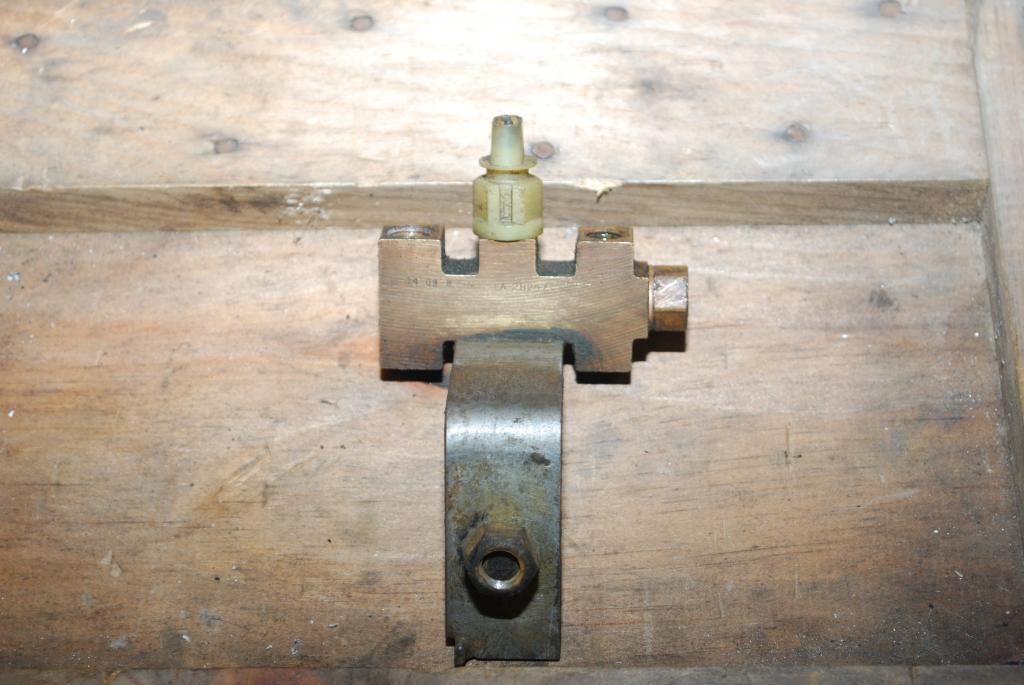
There should be a pressure differential valve inside the left frame rail, directly behind the steering gear box.
This is what it looks like.
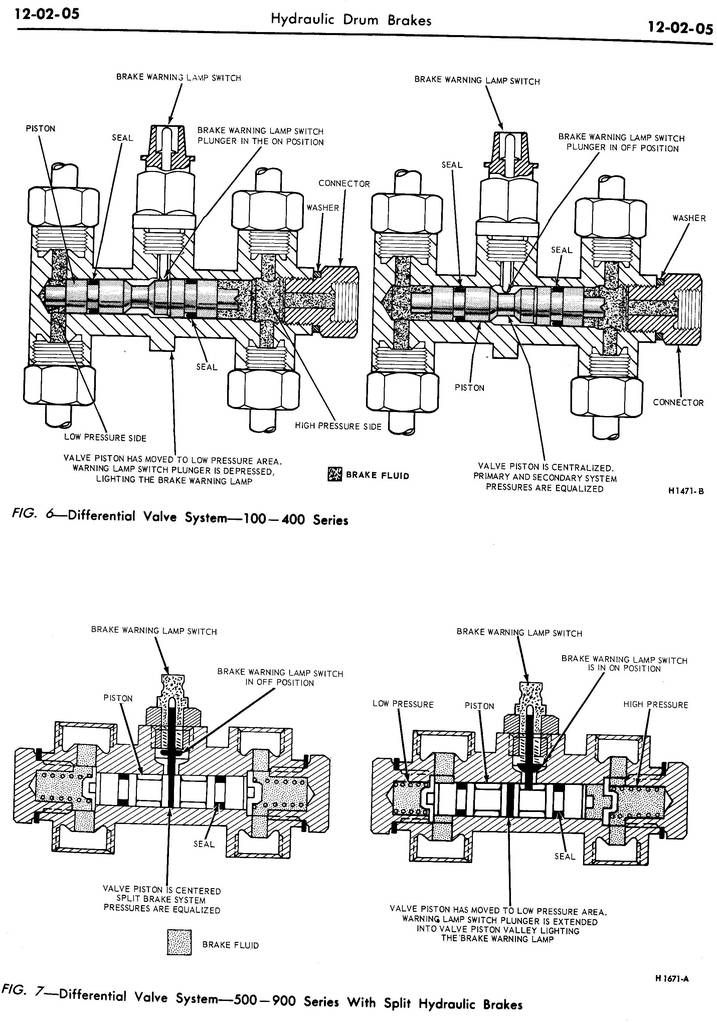
All wheel drum brake systems don't have proportioning.
Disc/drum brake systems use proportioning to the rear because the drum and disc brake systems are completely different brake types.
Discs react faster to the application of the brake pedal than drums.
If you're adding discs on the front, it would be a wise move to install the disc/drum valve from the Dentside (or equivalent) to your truck.
It will contain three internal brake functions to control the braking system:
1. It will have a metering (hold-off) valve to slightly delay pressure to the front discs, to give the rear drum shoes a chance to overcome the tension of the retracting springs and move towards the inner friction surfaces of the drums.
2. It will have a pressure differential valve to sense for an imbalance in brake pressure between the front and rear brakes, and to warn if there is a pressure loss.
3. It will have a proportioning valve to control the rate of pressure rise to the rear brakes, in a panic stop situation.
Two most common disc/drum 'combination' brake valves found on the Dentsides were this brass Weatherhead valve;
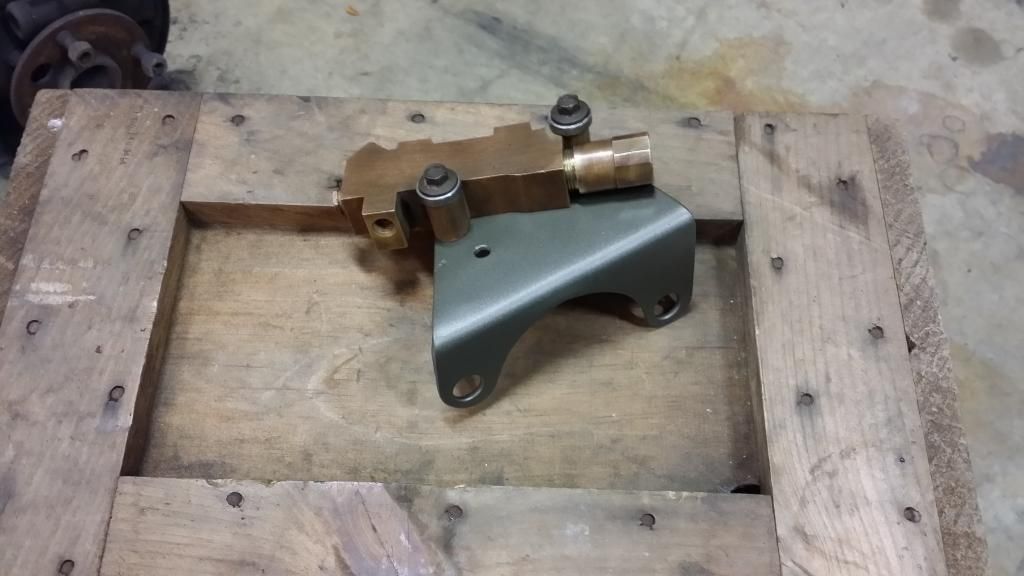

or, this cast iron Kelsey-Hayes valve.
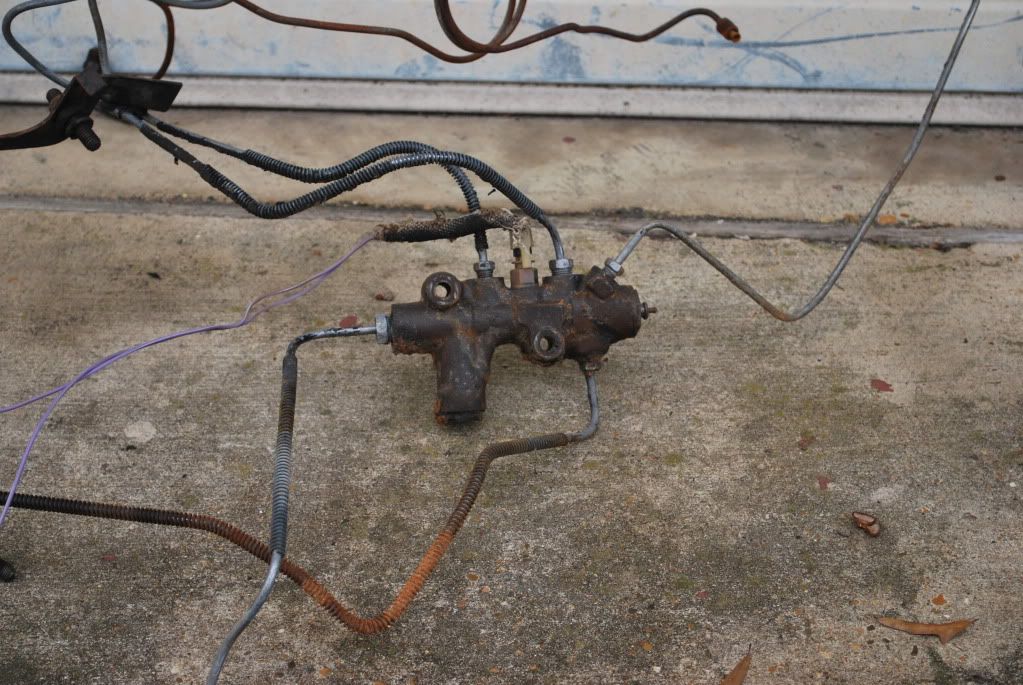

There should be a pressure differential valve inside the left frame rail, directly behind the steering gear box.
This is what it looks like.


All wheel drum brake systems don't have proportioning.
Disc/drum brake systems use proportioning to the rear because the drum and disc brake systems are completely different brake types.
Discs react faster to the application of the brake pedal than drums.
If you're adding discs on the front, it would be a wise move to install the disc/drum valve from the Dentside (or equivalent) to your truck.
It will contain three internal brake functions to control the braking system:
1. It will have a metering (hold-off) valve to slightly delay pressure to the front discs, to give the rear drum shoes a chance to overcome the tension of the retracting springs and move towards the inner friction surfaces of the drums.
2. It will have a pressure differential valve to sense for an imbalance in brake pressure between the front and rear brakes, and to warn if there is a pressure loss.
3. It will have a proportioning valve to control the rate of pressure rise to the rear brakes, in a panic stop situation.
Two most common disc/drum 'combination' brake valves found on the Dentsides were this brass Weatherhead valve;


or, this cast iron Kelsey-Hayes valve.


Thread Starter
|
Cargo Master
Joined: Jul 2003
Posts: 2,732
Likes: 20
From: Four Oaks, NC
In both situations - power disc or standard drums - the rear brakes are controlled by one line split at the rear axle. Your rear brakes only do about 35 percent of the stopping hence they don't need as much pressure and can be supplied by essentially one line.
The fronts, particularly in a disc environment require more pressure.
My understanding is the proportioning valve (aftermarket or original) is necessary for the conversion you are doing to provide the necessary power and control to properly activate the brakes.
Just an FYI, you probably could/should have included this question in your brake conversion thread. Keeps it all together. I have made the mistake of having threads scattered all over the place - like my conversion from manual to automatic. I have two or three different threads on essentially the same subject.
The fronts, particularly in a disc environment require more pressure.
My understanding is the proportioning valve (aftermarket or original) is necessary for the conversion you are doing to provide the necessary power and control to properly activate the brakes.
Just an FYI, you probably could/should have included this question in your brake conversion thread. Keeps it all together. I have made the mistake of having threads scattered all over the place - like my conversion from manual to automatic. I have two or three different threads on essentially the same subject.
Thread Starter
|
Cargo Master
Joined: Jul 2003
Posts: 2,732
Likes: 20
From: Four Oaks, NC
Either I'm not clearly understanding your description or, someone's done a little brake line 'plumbing' on your truck.
There should be a pressure differential valve inside the left frame rail, directly behind the steering gear box.
This is what it looks like.
All wheel drum brake systems don't have proportioning.
Disc/drum brake systems use proportioning to the rear because the drum and disc brake systems are completely different brake types.
Discs react faster to the application of the brake pedal than drums.
If you're adding discs on the front, it would be a wise move to install the disc/drum valve from the Dentside (or equivalent) to your truck.
It will contain three internal brake functions to control the braking system:
1. It will have a metering (hold-off) valve to slightly delay pressure to the front discs, to give the rear drum shoes a chance to overcome the tension of the retracting springs and move towards the inner friction surfaces of the drums.
2. It will have a pressure differential valve to sense for an imbalance in brake pressure between the front and rear brakes, and to warn if there is a pressure loss.
3. It will have a proportioning valve to control the rate of pressure rise to the rear brakes, in a panic stop situation.
Two most common disc/drum 'combination' brake valves found on the Dentsides were this brass Weatherhead valve;
or, this cast iron Kelsey-Hayes valve.
There should be a pressure differential valve inside the left frame rail, directly behind the steering gear box.
This is what it looks like.
All wheel drum brake systems don't have proportioning.
Disc/drum brake systems use proportioning to the rear because the drum and disc brake systems are completely different brake types.
Discs react faster to the application of the brake pedal than drums.
If you're adding discs on the front, it would be a wise move to install the disc/drum valve from the Dentside (or equivalent) to your truck.
It will contain three internal brake functions to control the braking system:
1. It will have a metering (hold-off) valve to slightly delay pressure to the front discs, to give the rear drum shoes a chance to overcome the tension of the retracting springs and move towards the inner friction surfaces of the drums.
2. It will have a pressure differential valve to sense for an imbalance in brake pressure between the front and rear brakes, and to warn if there is a pressure loss.
3. It will have a proportioning valve to control the rate of pressure rise to the rear brakes, in a panic stop situation.
Two most common disc/drum 'combination' brake valves found on the Dentsides were this brass Weatherhead valve;
or, this cast iron Kelsey-Hayes valve.
I have one of these on the shelf in my garage I was thinking of using it for this brake conversion, just plumb it into the line that feeds the rear and then I can adjust it whatever way works best:
http://www.summitracing.com/parts/wil-260-8419
Ford Parts Specialist
Joined: Nov 2006
Posts: 88,826
Likes: 785
From: Simi Valley, CA
What the OP's truck has now: C8TZ-2B257-C .. Brake Pressure Differential Valve-Use with Drum Brakes / Obsolete
Applications: 1968/75 F250 4WD
-------------------------------------
D5TZ-2B257-B .. Brake Pressure Differential Valve / Marked: D5TA-2B524-FA or FB / Obsolete
1975/79 F100/150 2WD/4WD & E100/150 / 1975/79 F250 2WD with single piston caliper disc brakes / 1976/79 Bronco / 1978/79 F250 4WD / 1979 F350 4WD
Applications: 1968/75 F250 4WD
-------------------------------------
D5TZ-2B257-B .. Brake Pressure Differential Valve / Marked: D5TA-2B524-FA or FB / Obsolete
1975/79 F100/150 2WD/4WD & E100/150 / 1975/79 F250 2WD with single piston caliper disc brakes / 1976/79 Bronco / 1978/79 F250 4WD / 1979 F350 4WD
Laughing Gas
Joined: Mar 2013
Posts: 1,027
Likes: 5
From: Garner NC
OP, that's the usual method for converting Dr/Dr to Dis/Dr. I've seen them plumbed in the engine bay for ease of access (on Mustangs) or even in the cabin for ease of adjustment. Once adjusted though, you won't touch it again. Best to have it after the Pressure Differential block. And here's where I see the most mistakes which is in adjustment. I have read it both ways from different manufacturer's literature about which should lock up first; front or rear. From a pure physics standpoint, you want the rears to lock just before the fronts. This gives a pendulum effect with the rears being the fixed point. The force of the truck moving forward keeps you in a straight line. If the fronts lock first, then that is the 'fixed point' force wise and the rear starts swinging like a pendulum would and puts you on track for exchanging nose for tail. Remember, this thing only comes into play in a panic stop. That's when the line pressure is highest as you stand up out of the seat and that's what overcomes the proportioning valve spring to allow the rears to lock first.
Trending Topics
Lead Driver
Joined: Apr 2011
Posts: 6,399
Likes: 40
From: El Dorado, Arkansas
Ideally, you NEVER want to lock up any of the brakes. Maximum deceleration and coefficient of traction of the tires to the pavement comes at the moment BEFORE wheel lockup. Once the tires start to skid, stopping time and distance becomes longer and the potential of the vehicle sliding out of control dramatically increases.
Ford had an early form of ABS traction control (Sure-Track Braking System, made by Kelsey-Hayes) that was optionally installed on the mid-year 1969 Lincoln Continental Mk IIIs and the '69 Thunderbirds for an additional $195.00 dollars. It only controlled the rear brakes (not the front) to keep the rears from locking up.
Anti-Lock Brake Systems | AUTO BREVITY
Ford installed ABS on the Ford trucks in 1987. The control strategy again was to keep the REAR wheels from locking up.
Ford had an early form of ABS traction control (Sure-Track Braking System, made by Kelsey-Hayes) that was optionally installed on the mid-year 1969 Lincoln Continental Mk IIIs and the '69 Thunderbirds for an additional $195.00 dollars. It only controlled the rear brakes (not the front) to keep the rears from locking up.
Anti-Lock Brake Systems | AUTO BREVITY
Ford installed ABS on the Ford trucks in 1987. The control strategy again was to keep the REAR wheels from locking up.
FTE Stories
Ford Trucks for Ford Truck Enthusiasts

10 Things Every Truck Owner NEEDS (2026 Edition)
Michael S. Palmer
Rezvani's Latest Post-Apocalyptic Monster Is a Ford F-150 Raptor Underneath
Verdad Gallardo
Top 10 Most Expensive Ford Trucks Ever Sold on Bring a Trailer
Joe Kucinski
2027 Ford Super Duty Buyer's Guide (Every Model, Engine, & Package)
Brett Foote
Top 10 Ford Truck Tragedies
Joe Kucinski
AEV FXL Super Duty - the Super Duty Raptor Ford Doesn't Make
Brett Foote
Lobo Vs Lobo: Proof the F-150 Lobo Should Be Even Lower!
Michael S. Palmer
Ford's 2001 Explorer Sportsman Concept Looks For a New Home
Verdad Gallardo
10 Best Ford Truck Engines We Miss the Most!
Joe Kucinski
Hotshot
Joined: Mar 2013
Posts: 14,255
Likes: 199
From: Phoenix, Az.
I always assumed Ford and whatever automakers 1st put anti-locks on the rear brakes because of weight transfer. In a panic stop the chassis is trying to stop. ABOVE it though is the body wanting to keep in it's motion because of inertia. So weight is transferred forward which unloads the rear suspension and rear brakes. In this case the rear brakes need help so as not to skid. Skidding will net in little help stopping the vehicle.
Laughing Gas
Joined: Mar 2013
Posts: 1,027
Likes: 5
From: Garner NC
I agree with all the above, especially that lock up is an undesirable condition. That being said, if we consider the lock up to be the 'fail' condition then you have three states: Good (brakes operating in normal condition), Transition (changing from Good to Fail) and Fail. So in the Transition state, everything is about to 'fail' condition, and this is about what that sequence looks like. All the early systems were just trying to keep the rears from locking too early. But the sequence should still be rear then front for lock up as it allows for some 'righting' of the travel path before the impending disaster. I had a 1st gen RX7 and they had a real bad habit of locking the fronts first. Which ever way the wheels were even slightly biased from straight, the nose would start to sweep. Not fun.

Thread
Thread Starter
Forum
Replies
Last Post
mcintosh77
1967 - 1972 F-100 & Larger F-Series Trucks
14
Feb 26, 2018 12:20 PM
nonrev321
1980 - 1986 Bullnose F100, F150 & Larger F-Series Trucks
1
Apr 12, 2016 07:59 AM
yellodog
1961 - 1966 F-100 & Larger F-Series Trucks
7
Jul 1, 2015 09:20 PM
Dean M
Brakes, Steering, Suspension, Tires, & Wheels
6
Dec 22, 2005 07:25 AM