When you click on links to various merchants on this site and make a purchase, this can result in this site earning a commission. Affiliate programs and affiliations include, but are not limited to, the eBay Partner Network.
About 6 months ago, I purchased a 1986 F-150 standard bed and cab, 4x4, 4 speed manual trans with 300 six. I live in VT and in came with 4 new tires and a working plow... $1000. Not much to look at but money is tight.
Frame, doors and such are in great shape. I screwed on patch panels (bought by the previous owner and given to me) on the rear and used a little cat hair bondo on the cab corners ... and a bit on sheet metal on the floor. Put a split flange to hold the exhaust to the manifold ( old one has rusted off) a new muffler and some lights and we were ready to go.
So far so good.
Two problems still to solve:
1) the guy before me took out the computer ... but left the electronic distributor. Great, so I have no advance!
I took it to two mechanics and both did not care it had no computer or air pump ( also stripped off ). As long as it had a catalytic convert, good tires, good brakes and working lights they gave me a pass on the inspection.
I was about to get a distributor from an 85 ... I am guessing any year will fit ( Rockauto ... $45) and a duraspark II module and drop them in. Then I could run a vacuum advance.
Then I started reading about the GM HEI conversion. I am confused! Wiring is simple (I read the post about not using the start but the run wire for power) but there is so many conflicting posts about if this is a good idea or not.
Can someone give me some clear advice on which way to go?
2) There is a lot of miles on this truck ... odometer reads 37K ... could be 137K or 237K.
Engine runs strong and does not burn oil but a lot ... lot ... of noise from it. I am not a mechanic, but it sounds like a rod is just bouncing around in there.
Money is super tight and since I need a plow, I need to keep this truck on the road for another few years.
I was just going to ask around and see if someone could through a fresh-up kit into the engine but if it is a rod bearing I know I will be throwing away my money.
I have called every wrecking yard around and no one has a 300 six ( and I don't want to get into a lot of work ( and more money ) trying to get another engine to fit.
My question, is it better to have someone rebuild this one or to buy a long block off the web ( or to keep trying to find a good used one) ?????
We are living in an RV while trying to finish building a house so I don't even have a place to work on the truck right now ... this is killing me since I will need to pay someone to flip engines.
I had hoped on finding a used engine at a reasonable price, putting a fresh-up kit in it for a few hundred (I can do that here under a tarp) and then find someone to flip engines for me. Great idea but again I can't find an engine!
Anyway, any advice on the ignition or engine would be greatly appreciated!
Given the impending winter and lack of garage, I would keep the engine together to keep the plow operational. In the meanwhile find a complete donor to swap in spring.
My concern would be spending money on an engine kit, finding more issues than can be fixed before the snow, then having to stare at a non-running truck/plow all winter.
Also, complete junkyard engines are relatively cheap if you have the time to shop around. I know you can't find one right this instant but you'll probably find something by the time the snow melts. I'm always a little surprised at the overall cost of little things like gaskets and sealant (and time) compared to some junkyard or Ebay long block with a 90 day warranty.
Also, if you can install a engine kit (I'm assuming you meant new rings and bearings and gaskets) , then a straight engine swap should be easier for you.
Do you have a concrete pad or footers poured for the house? You just need enough room to scoot a cherry picker a few feet. You can roll the truck under it with a hand winch or shove/pull it with another vehicle.
This is probably a dumb question since non of you can here my engine but will a noisy engine last a few months?
The oil pressure gauge reads low ( say 1/4 when warm ... 1/3 to 1/2 when cold ) so there must be some bearing left or there would be no oil pressure I am guessing.
The local mechanic listened to it when he inspected it ... told me to put thicker oil in it, said six's are all noisy.
I know ( or think I know ) a lot of the noise must be from a rod but there could be some from lifters and maybe even some from "ping" since I had to set the timing way off to get the engine to start and not stall when I gave it gas.
If it will hold together till late spring I will be OK ... I poured the workshop pad but with winter setting it, looks like the shop will have to wait till spring.
They'll run for years with noise...all depends on what's causing it. But if you're planning to replace the engine eventually anyways, I'd just run it until it's done-get your moneys' worth out of it. ~Bill
You can't go by any info the stock gauges tell you. You need a aftermarket oil pressure gauge.
If it has a single loud knock, you can narrow it down by pulling each sparkplug wire off one at a time, and see when the noise get's quieter. When it gets quiet, that's the cylinder that has the problem. How many miles are on this truck? If you don't over-rev it, it will probably last a long time.
If it has a bunch of pecking in it, that that's probably lifters, and few oil changes later on may make that go away. There is also some stuff called Rislone that will help quiet noisy pecking lifters.
You need a new duraspark II distributor, you already know that. I don't think you will find one on a late model 300 six (like the 85 you were talking about) unless it was made for Canada or something like that with no computer system. Most all of these engines will be setup like yours. You will have better luck searching the earlier trucks.
About the HEI, it's up to you. You need a module to take the signals from the new dist and fire the coil. Whether you use the duraspark II module like Ford did, or make your own with a GM HEI module is totally up to you, either one will work. You will need to hook up the ballast resistor if you use the duraspark II module.
Wow ... all these years of being a "back yard" mechanic and on one ever taught me to pull the wires and listen!
Completely makes sense .... with no force driving the piston down, I would assume it would get much quieter.
I will definitely give that a try if for no other reason than to see what is going on!
Soooooo ... I am looking at my Haynes book right now. It looks like ... and if someone could please confirm this ... a three wire distributor ( orn/yel, blk/grn, ppl/blu ) last appears in the wiring diagram in 1983.
Reading the book, they do not say what year the Duraspark II was used till and they do mention a Duraspark III.
Can someone tell me what year distributor I should order (197? to 19??)?
Also, are all Duraspark modules the same? I see different part number listed for 4, 6 and 8 cylinder engines.
Duraspark II modules are the same.
They have a blue grommet where the wires enter.
(there are some variants for high altitude, etc... you won't find these)
HEI are cheap and ubiquitous for the V-8's, but the only one I've found for the I-6 is DUI and WAY too much money.
The GM module and a heat sink are even cheaper than a Autozone Duraspark module, but you have to wire it and it sounds like you'd be better off spending the $34 on plug-n-play.
Yes, you want the orange, black, purple wired distributor with a single vacuum advance.
1974-1987 according to this:
http://www.ebay.com/itm/74-87-Ford-4-9L-300CI-I6-Distributor-E-150-250-350-F-150-250-350-Bronco-BLUE-/321268803194?_trksid=p2054897.l4275
As long as the dist you are getting has a vacuum advance can sticking out of the side(where the vacuum line connects) and of course fits a 300 six, it should work ok. duraspark III will not have the vacuum connection, and your original TFI dist does not have the vacuum connection. You can see in the picture in the previous post, it does have a vacuum advance on it.
There are other color modules, but like was mentioned get the blue one. The colors are the color of the plastic where the wires leave the module. Any Ford/Lincoln/Mercury car or truck module will work, any number of cylinders, just so it's blue.
Don't buy the new Dist on Ebay (or any new one), the Dist gear / shaft is undersized so the gear just slides on very easy. It is just hanging there on a hollow roll pin instead of a press fit. I still have my Dist gear hanging on the wall in the garage in the "lessons learned section". The safest would be to order a 1983 cardone reman and just buy the cap and rotor. Napa took my EEC IV dist as a core.
Most folks go the GM 4 pin module route because they can not find a DS2 engine harness of an 1980-1984 4.9 truck. You will need this harness to make it Plug and Play. You also can use the stock square coil with the GM module which save you from buying a round coil, bracket and new coil wire. It is the cheaper route to go.
My last question .... when do I need a ballast resistor?
If I am correct, my present system does not use a ballast resistor ... is this correct?
I will need to do some rewiring no matter what system I go with ( Duraspark II or GM HEI ).
If I go with the GM, I gather they are self current limiting and do not need a resistor.
If I go with the Duraspark, I am a bit confused.
I thought I always needed a ballast resistor but then I read something about it depends on the coil. If a Duraspark coil is used then I need the resistor. If I use my present coil ( which I was going to do ) then I don't need a resistor. Is this true ??????
If I do need a resistor, then where do I get one from ... I don't see it listed by Rockauto, Advanced or Autozone ????
Also, does the blue strain relieve ( vs yellow or black or ???) hold true for all Duraspark boxes or only for original Ford ones? I see a lot of aftermarket units out there with a number of strain relief colors.
Since I need to do some rewiring anyway, maybe the GM system would be the way to go since I would not need to worry about the resistor?
I truly appreciate all the help you guys have given me !!!!!!!!!
Just bad timing on my part .... this house had just taken way longer than we ever planned. I don't really want to spend a third winter in VT trying to keep an RV from freezing ( not to mention trying to fill water tanks on warm days, trying to "dump" once or twice a week they get everything buttoned back up before it freezes, filling propane tanks once a week, ....). I had planned on having this truck in decent shape by the time winter hits but as always, a day late and a dollar short.
The ballast resistor is used in DS2 systems to limit voltage current in the primary IGN curcuit.
Your current IGN system uses full voltage to the coil.
If you feed the the square coil with full voltage, it will then have twice the voltage of a normal DS2 system and the square coil has half the resistance of a round DS2 coil. The net result is a times 4 increase in current. This is living in an experimental world.
The ballast resistor needs to match the coil primary resistance.
The blue strain relieve is the same for any DS2 box, stock or aftermatket.
Really the best answer is to do nothing and just run it as is.
After all, it just needs to start, run and plow snow.
Jim
Sooo .... should I go with the GM HEI so no resistor ????
So you are saying that the resistor must match the coil?
So for every coil I would need to calculate the correct resistor to limit the amperage ( or voltage or power ... I x E = W ... or ??)?
If this is true then can someone confirm that if I go with the GM HEI module that I don't need a resistor (no matter what coil I use) because it is self limiting?
I am guessing that driving with no advance not good. I am not sure if it is doing any damage ( probably less than if I had too much advance ).
I need a cap, plugs, wires, .... anyway so I just may as well fix this at the same time ( you would laugh to see three types of wires, the distributor has a broken ear so the cap is on with only one screw ... they guy before me really did a job on this truck).
Unfortunately, this truck is my primary (and only) vehicle so I want it to be dependable as it can be.
We need it to plow ( last year a farmer helped me out a few times ... felt sorry watching me ) and to get materials to finish the house.
Just as a side note ... the wife has a 1 year old mini van ... unfortunately she is paralyzed and in an electric wheelchair. She is 34 and I convinced her to get her license last year. Here in VT they have a program ... if you have a job an need a car to get to it, they will pay for the modifications if you buy the vehicle. We bought the van, they paid to have a ramp put in and hand controls. For the first time she can go anywhere, anytime she wants. Problem ... there is no drivers seat, just a lock down system for the wheelchair! I can't use it if I wanted to. I have had to have her chauffeur me around to get parts for this truck.
I feel the GM 4 pin module would be the easiest for you as you can use you current coil and don't need a ballast resistor. I use this on my truck.
The ballast resistor functions as a voltage divider, if the coil primary resistance and the ballast resistance are close to the same, the voltage will split evenly. So about 1.2 ohms each.
With a 1.2 ohm resistor and a .6 coil, 2/3 voltage drop on the resistor, 1/3 on the coil.
So with 12 volts, 8 volt drop across the resistor and only 4 volt left for the coil.
I think the square coil is about .6-.7 ohms.
Aircraft piston engines used a fixed timing, same as you are current running. This is done for simplicity and reliability.
WOW ... I never fail to marvel at the things I learn on this forum!
I had no idea any engine ( except for very small ones like a lawn mower engine or chain saw ) used fixed timing!
Heck even an old gray ( 1920 ) marine engine I once owned had a manually adjustable timing ( traded it for a steam engine and a hit and miss).
In honesty, I was at first thinking of "just leaving it" ... but with a cap held on by duct tape ( I can't believe it is holding ... I drove it for 2 months with one side of the cap literally bouncing before I noticed it ) I need to replace the distributor anyway (one ear is completely missing and the other stripped).
I may as well put one it that will give me an advance rather than the same one. This will be one less problem I need to deal no matter if I find a used engine or end up picking up rebuilt long block.
You guys are awesome !!!!!!!!!!!!!!!!!!!!!!
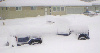
FYI ... figured I should include a picture of the beast. She's not much of a looker but after 28 Vermont winters she is still in one piece!
This Hennessey Takes the Expedition Tremor's Off-Roading Capability to the Next Level
Slideshow: The VelociRaptor Expedition gains a lift, upgraded suspension, Brembo brakes, and trail-ready equipment while retaining the stock 440-horsepower EcoBoost V6.
Rezvani's Latest Post-Apocalyptic Monster Is a Ford F-150 Raptor Underneath
Slideshow: Called the Fortress, the 850-horsepower pickup combines Raptor underpinnings with military-inspired features, survival equipment, and a starting price of $285,000.