Boot's Brick Build
Thread Starter
|
Fleet Mechanic


Joined: Oct 2010
Posts: 1,690
Likes: 32
From: Delhi, Iowa

Boot's Brick Build
hello everyone!
so, my cousin calls me up a few weeks ago, tells me to hook up my trailer, come get this old truck out of his driveway, because he got a new truck. i hooked up, traded him a mossberg shotgun, and brought home a 1989 F150.
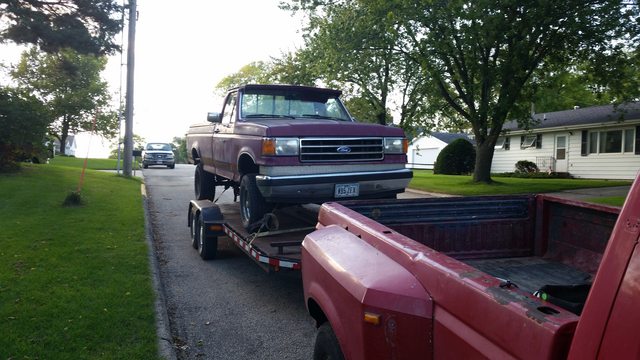
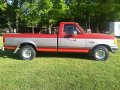
Due to the fact it's a Bricknose, and the faded red paint, it has been named "brick".
Now, this isnt my first bricknose, or F series, by any means. this is an account of me taking a dead truck, reintroducing it to the land of the living, and daily driving it. As you can tell from the first picture, two things are apparent: The body has seen a long, rough life, and there's a body lift in there. i hope to rectify both of those eventually.
The main selling points on taking this truck over the hundreds of other trucks are as follows:
1) has a freshly rebuilt 300 straight six in it, new clutch, starter, alternator, etc etc in the last 9,000 miles. Dual exhaust already present. The 4 speed transmission was out of my old truck (before i swapped to a 5 speed) and is very solid and tight.
2) it has upgraded new front coils in it, and rebuilt 3/4 ton leaves in the back. New brakes on all 4 corners. i know, i helped put it all in. some tie rods and such were replaced as well.
3)it showed up with 3 good 31's on it, and a brand new 31x10.50 goodyear duratrac mounted on the spare. the 4th tire that matched the other three was in the bed.
4) theres a laundry list of other stuff already replaced. u joints, axle seals, lock outs...
so, sounds like a steal, right?? it comes with a catch.
Both fuel tanks leak, and both in tank pumps are dead.
So, here's what i have done this far.
I had a new fuel tank and fuel pump for an 87 F150 that was from a previous project. i bolted it up in the rear ( there were new fuel tank straps in the bed of the truck, Score!) and the truck fired and drove off the trailer. However, i noticed that the key on, not running fuel pressure was low, and the truck decided to snuff out on the initial test drive while going 55 mph. i decided i also was going to replace the inline frame mounted pump, to see if that cures my low initial fuel pressure.
I also raided my spare parts shed, and mounted up a nicer set of wheels. i ponied up and bought a matching duratrac, put the fresh goodyears across the rear of the truck.
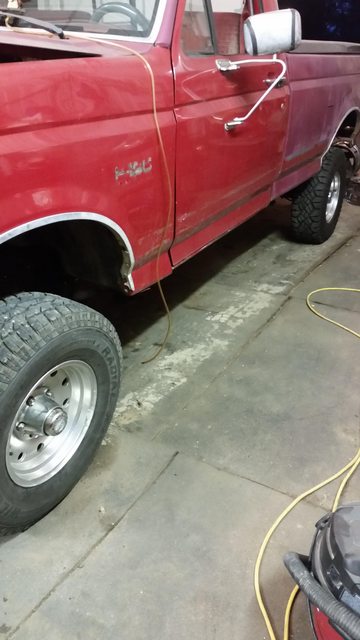
Now, the first of so many questions. the fuel gauge doesnt work at all. where should i start diagnosing that part?
so, my cousin calls me up a few weeks ago, tells me to hook up my trailer, come get this old truck out of his driveway, because he got a new truck. i hooked up, traded him a mossberg shotgun, and brought home a 1989 F150.
Due to the fact it's a Bricknose, and the faded red paint, it has been named "brick".
Now, this isnt my first bricknose, or F series, by any means. this is an account of me taking a dead truck, reintroducing it to the land of the living, and daily driving it. As you can tell from the first picture, two things are apparent: The body has seen a long, rough life, and there's a body lift in there. i hope to rectify both of those eventually.
The main selling points on taking this truck over the hundreds of other trucks are as follows:
1) has a freshly rebuilt 300 straight six in it, new clutch, starter, alternator, etc etc in the last 9,000 miles. Dual exhaust already present. The 4 speed transmission was out of my old truck (before i swapped to a 5 speed) and is very solid and tight.
2) it has upgraded new front coils in it, and rebuilt 3/4 ton leaves in the back. New brakes on all 4 corners. i know, i helped put it all in. some tie rods and such were replaced as well.
3)it showed up with 3 good 31's on it, and a brand new 31x10.50 goodyear duratrac mounted on the spare. the 4th tire that matched the other three was in the bed.
4) theres a laundry list of other stuff already replaced. u joints, axle seals, lock outs...
so, sounds like a steal, right?? it comes with a catch.
Both fuel tanks leak, and both in tank pumps are dead.
So, here's what i have done this far.
I had a new fuel tank and fuel pump for an 87 F150 that was from a previous project. i bolted it up in the rear ( there were new fuel tank straps in the bed of the truck, Score!) and the truck fired and drove off the trailer. However, i noticed that the key on, not running fuel pressure was low, and the truck decided to snuff out on the initial test drive while going 55 mph. i decided i also was going to replace the inline frame mounted pump, to see if that cures my low initial fuel pressure.
I also raided my spare parts shed, and mounted up a nicer set of wheels. i ponied up and bought a matching duratrac, put the fresh goodyears across the rear of the truck.
Now, the first of so many questions. the fuel gauge doesnt work at all. where should i start diagnosing that part?
Fleet Mechanic
Joined: May 2013
Posts: 1,256
Likes: 4
From: NC
The fuel tank gauge is probably a worn out sender. these can replaced seperate from the sending unit.
check out this link, he lists the different motorcraft sender part numbers.
1983 Ford Bronco Fuel Level Sender Repair pictures, videos, and sounds | SuperMotors.net
check out this link, he lists the different motorcraft sender part numbers.
1983 Ford Bronco Fuel Level Sender Repair pictures, videos, and sounds | SuperMotors.net
Thread Starter
|
Fleet Mechanic
Joined: Oct 2010
Posts: 1,690
Likes: 32
From: Delhi, Iowa
interesting reads, i have experience looking at steve83's pics and info before. However, two things.
1) the entire fuel pump and sending unit assembly is a new carter unit.
2) my gauge reads empty, with 9 gallons of fuel in it.
1) the entire fuel pump and sending unit assembly is a new carter unit.
2) my gauge reads empty, with 9 gallons of fuel in it.
Fleet Mechanic
Joined: May 2013
Posts: 1,256
Likes: 4
From: NC
I was thinking the connections that go to the tanks also go through the valve? I know on mine, the wires for the fuel tanks go in and also come out of the fuel tank switching valve connector on the frame. mines diesel, so it may be completely different in how its wired.
Thread Starter
|
Fleet Mechanic
Joined: Oct 2010
Posts: 1,690
Likes: 32
From: Delhi, Iowa
at first i thoiught it may be due to the fact i was using an 87 pump on an 89 truck, but a search shows that the part number is the same across both years.
The truck did come with a spare cluster, i may try swapping it and seeing if the gauge is operational in that one.
The truck did come with a spare cluster, i may try swapping it and seeing if the gauge is operational in that one.
Trending Topics
Thread Starter
|
Fleet Mechanic
Joined: Oct 2010
Posts: 1,690
Likes: 32
From: Delhi, Iowa
I was thinking the connections that go to the tanks also go through the valve? I know on mine, the wires for the fuel tanks go in and also come out of the fuel tank switching valve connector on the frame. mines diesel, so it may be completely different in how its wired.
FTE Stories
Ford Trucks for Ford Truck Enthusiasts

2027 Ford Super Duty Buyer's Guide (Every Model, Engine, & Package)
Brett Foote
Top 10 Ford Truck Tragedies
Joe Kucinski
AEV FXL Super Duty - the Super Duty Raptor Ford Doesn't Make
Brett Foote
Lobo Vs Lobo: Proof the F-150 Lobo Should Be Even Lower!
Michael S. Palmer
Ford's 2001 Explorer Sportsman Concept Looks For a New Home
Verdad Gallardo
10 Best Ford Truck Engines We Miss the Most!
Joe Kucinski
2026 Shelby F-150 Off-Road: Better Than a Raptor R?
Brett Foote
2027 Super Duty Carhartt Package First Look: 12 Things You NEED to Know!
Michael S. Palmer
10 Most Surprising 2026 Ford Truck Features!
Joe Kucinski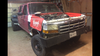
Thread Starter
|
Fleet Mechanic
Joined: Oct 2010
Posts: 1,690
Likes: 32
From: Delhi, Iowa
Tonight was and interesting night, to say the least.
I grabbed my new inline fuel pump, crawled under the truck, and installed it. the truck fired up, which is a lovely thing. however, i found a few new issues.
first off the fuel line that comes from the upright frame mounted canister ( the fuel switch valve, perhaps?) to the inlet side of the inline fuel pump is leaking. not gushing out, but a small drip. while it may work for a short term, i want to get it replaced ASAP to avoid issues. it's about a foot long, anyone have a spare, or a part number to point me in the right direction?
Also, while under there, i noticed the aluminum connector between the transmission and the transfer case has a large 4 inch crack in it. that explains the oily mess in that area. I may pull out the T18 and swap in a ZF and Transfer case that i pulled from a 1990 F250 a year or so back. anyone familiar with that swap?
I grabbed my new inline fuel pump, crawled under the truck, and installed it. the truck fired up, which is a lovely thing. however, i found a few new issues.
first off the fuel line that comes from the upright frame mounted canister ( the fuel switch valve, perhaps?) to the inlet side of the inline fuel pump is leaking. not gushing out, but a small drip. while it may work for a short term, i want to get it replaced ASAP to avoid issues. it's about a foot long, anyone have a spare, or a part number to point me in the right direction?
Also, while under there, i noticed the aluminum connector between the transmission and the transfer case has a large 4 inch crack in it. that explains the oily mess in that area. I may pull out the T18 and swap in a ZF and Transfer case that i pulled from a 1990 F250 a year or so back. anyone familiar with that swap?

Senior User
Joined: Aug 2013
Posts: 262
Likes: 1
From: Cherryville, NC
I went through something similar on my blue & white 87 with dual tanks. These trucks have a frame mounted valve/reservoir that routes the fuel. There are no electrical connections to this valve/reservoir. When you change the dash switch it chooses which tank pump and tank sender is in use, and the frame mounted valve/reservoir routes the fuel.
The reservoir is there because there is a high pressure pump between the reservoir and the fuel rail and this thing separates the high pressure pump from the low pressure pumps in the tank. The reservoir also provides the same affect a carb bowl does, it buffers the fuel supply. So on these trucks there are three fuel pumps, two low pressure pumps in the tanks and one high pressure pump on the frame nearest the engine (fuel rail).
Yes, people eliminate the reservoir and couple the low pressure lines from the tank (not dual) directly to the high pressure pump going to the fuel rail. I chose not to do this.
We all know the frame mounted valve/reservoirs for dual tank trucks are problematic. The ones for single tank trucks are not. I chose to buy an $89 single tank reservoir from LMC and it turned out to be Motorcraft NOS, so goodie for me. The dual tank reservoir/valve is more than twice the money and I didn't want the hassle of two fuel tanks. I eliminated the rear tank. Lots of info on this dual tank valve/reservoir issue on the forums. The best explanation I found was for an E150, you'll find it if you look.
Nobody had any advice on why the reservoir was there on a single tank truck, I made my own decisions on that and am passing along what I came up with. My other '87 has a 5.0 with one fuel tank and it has a low pressure pump in the tank feeding the reservoir which feeds the high pressure pump on the frame going to the fuel rail. So I did the same thing on my '87 with the 4.9 that used to have dual tanks. Hope this helps.
The reservoir is there because there is a high pressure pump between the reservoir and the fuel rail and this thing separates the high pressure pump from the low pressure pumps in the tank. The reservoir also provides the same affect a carb bowl does, it buffers the fuel supply. So on these trucks there are three fuel pumps, two low pressure pumps in the tanks and one high pressure pump on the frame nearest the engine (fuel rail).
Yes, people eliminate the reservoir and couple the low pressure lines from the tank (not dual) directly to the high pressure pump going to the fuel rail. I chose not to do this.
We all know the frame mounted valve/reservoirs for dual tank trucks are problematic. The ones for single tank trucks are not. I chose to buy an $89 single tank reservoir from LMC and it turned out to be Motorcraft NOS, so goodie for me. The dual tank reservoir/valve is more than twice the money and I didn't want the hassle of two fuel tanks. I eliminated the rear tank. Lots of info on this dual tank valve/reservoir issue on the forums. The best explanation I found was for an E150, you'll find it if you look.
Nobody had any advice on why the reservoir was there on a single tank truck, I made my own decisions on that and am passing along what I came up with. My other '87 has a 5.0 with one fuel tank and it has a low pressure pump in the tank feeding the reservoir which feeds the high pressure pump on the frame going to the fuel rail. So I did the same thing on my '87 with the 4.9 that used to have dual tanks. Hope this helps.
Senior User
Joined: Aug 2013
Posts: 262
Likes: 1
From: Cherryville, NC
And as for the fuel gauge what fixed it on the blue & white '87 that I did all that stuff to was a fuel sending unit. And a new fuel tank because the old one was so bad, and a low-pressure fuel pump in the tank and a high pressure pump on the frame going to the fuel rail. I still have the dual tank switch on the dash and now all it does in the rear tank position is the gauges don't work, they work when switch is in the Front position.
After they sit so long you end up with crap but if you change all of that stuff - as long as injectors are good - it's golden.
After they sit so long you end up with crap but if you change all of that stuff - as long as injectors are good - it's golden.