When you click on links to various merchants on this site and make a purchase, this can result in this site earning a commission. Affiliate programs and affiliations include, but are not limited to, the eBay Partner Network.
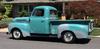
In fairness, and to set the record straight, the person I bought my truck from was a dealer. In reality, I cannot expect him to have known about all the issues which were uncovered after a more thorough inspection with the advantage of my having a knowledgeable "Ford Man" leading me through it. My inspector friend pointed out things that in all probablity are 'passable' but not of the level we would care for. I am a happy camper fixing these thing, so I shall be content as I go forward! It is after all a 'project'. Any past or future comments about the PO refer only to any previous fabrication compared to the level of finish/skill I choose to apply to myself, which I am sure will be less than someone else would have. Se la vie. Hopefully, I will keep these thoughts in mind when writing my future posts.
Why does it need all that frame work? The Ford ladder frame was designed to be flexible/twist Unless there is agreat deal of damage and/or you are planning to change the front suspension to IFS or go drag racing boxing is overkill, will increase the ride harshness, and doublers/fishplates should only be necessary if the frame is cracked.
Yeah, thanks for that heads up. I have been reading more about boxing and it looks like you are correct. I don't think I will be adding any boxing plates since I am looking to maintain ride and do not plan on any racing. Unfortunately, the frame is cracked on both sides at the front of box area and has been welded and it appears the welds have failed. Thanks again.
Yeah, thanks for that heads up. I have been reading more about boxing and it looks like you are correct. I don't think I will be adding any boxing plates since I am looking to maintain ride and do not plan on any racing. Unfortunately, the frame is cracked on both sides at the front of box area and has been welded and it appears the welds have failed. Thanks again.
Could you post some pictures, I'm not sure what you are calling the "box area" where the frame is cracked. Once I see what you are dealing with I can give you advice on successfully repairing it. Just welding up a crack, especially if done by a poorly skilled welder, without solving the reason it cracked in the first place will seldom be successful and is even more likely to recrack. An unmodified frame will seldom crack, that's the beauty of the original design.
Your post on planning has excellent advise for laying out the parameters and realities of a project. One thing I noticed was the "down and forward" comment. Is that related to what I have seen talked about as moving the axle forward to center wheel in opening? What is the procedure for that? I will try to get pictures of frame crack up later today. Many thanks.
Yes, for some reason Ford placed the front axle so the front wheel appears off center to the rear in the fender wheel arch by ~ 1.25-1.5" on the 53-56 F100s. When lowering the front of the truck with lowering springs this can be corrected by using what are referred to as "down and forward" springs, lowering springs that have the centerbolt placed forwards of the OEM position. To maintain the steering geometry a special matching extended drag link must also be used. Mid Fifty lists the springs and drag link in their catalog on p144. If you don't already have one of their catalogs do yourself a big favor, immediately stop what you are doing, pick up the phone and call their toll free # and request one. www.midfifty.com They are FREE! and contain a wealth of very useful information and excellent illustrations in addition to any/all parts you might need. The ladies there (it's an all female owned and run company) are some of the most knowledgeable and helpful in the business as well. They all attend in house workshops and classes where they learn about and do hands-on installs of the products they sell.
Sorry mate. I didn't notice you were talking about '53 up trucks. Mine is a '51. The cracks I was talking about are on the frame just under the front of the cargo box. I just spent 45 mins trying to upload some pictures of the frame without success. Maybe I'll try tomorrow when I cool down. Thanks.
The F1s didn't have the misplaced front axle issue. First the pictures need to be on your computer or on the internet, not on your phone or in your camera. There is a size limit so the easiest way to be sure they will upload put them on a free picture storage site like Photobucket where they will automatically be reduced to uploadable size. Second way is to email them to yourself then copy them to a directory on your computer. To add them to a post in the advanced post window click on the "picture' icon (looks like a postcard with mountain and sun) browse your computer until you find your picture and click open then add.
The F1 frame did have some tendency to crack near the front of the bed.
Classic Haulers www.classichaulers.com is the sister company to Mid Fifty (literally, they are each owned by a sister). CH specializes in the 48-52 models.
Hello and another welcome....I haven't been on line too much this summer....it's good to see another F1 on the forum.
My project truck was an on-again-off-again project for several years. I was going to put in a Torino 351C with C4....a friend of mine gave me the setup. I scrapped the project and gave the drive train to another friend. Later I started into the project again and ended up with a 351W and a C6 trans. 51Panelman was instrumental in giving me the motivation to get things moving.
For posting pics, there is a max size limit...I think it's 1024x768. Most cell phone pics exceed that & need to be resized using some photo software.
Let me try this again for the 4<sup>th</sup> time. Each time I have to retype this I leave out more information than the previous version because I just want to be done with it. I will still try to provide as complete a description as possible for the easiest effective repair method, if anyone has any questions or wants more information on other repair methods feel free to post them, email or PM me for a personal answer.
This is IMHO a very poor amateurish repair done by someone with little welding experience/training, and is likely to fail(crack) again. It needs to be addressed ASAP before any other work proceeds.
First let me assess what is the problem with the current repair: This is technically not a weld. A swath of the original frame has been burned away and an attempt was made to to repair the damage done by the welder by replacing the melted metal with filler (welding) rod. It is not possible to determine if this was done deliberately or accidentally just from a picture, but when I see work like this it could be either or a combination of both, but none the less it is incorrect technique. I suspect it was done by someone who either is used to welding much heavier material, used a stick welder, or used too high a heat setting, does not understand the forces on a chassis, or just doesn't understand the metallurgy involved in making a weld.
I explained in lesson 1 (post #10) of my basic welding tutorial here: https://www.ford-trucks.com/forums/1...-practice.html just what constitutes a weld. No where does it say to melt away the parent material and replace it with filler rod! Doing so creates an area of overheated parent metal along the edges (witnessed by the wide heat affected zone, the discolored area.) Overheating the mild steel to white hot heat burns away the carbon in the alloy leaving weak, brittle crystalline iron at the junction. The alloy used in most filler rods is designed to melt at a slightly lower temperature than the parent metal and to help reduce the formation of oxides so it bonds. It is much harder, less flexible than mild steel, and typically the bead is thicker than the parent metal. Thus you have created an area of thick inflexible material joined to the parent metal by a strip of weak carbon depleted iron. That is the equivalent of gluing two tongue depressor sticks (the frame) to the sides of a pencil (the swath of filler rod) with hot wax (the carbon depleted iron), it may look strong sitting undisturbed, but if you flex it a couple times it will crack along the side of the pencil in short order. (In this case having a bolt hole right in the center of the filler compounds the problem!)
There are a couple repair methods that could be used to remedy this mistake. The best, and the one I'd use would be to cut out a significant section of frame and replace it with new metal using a step joint with a fish plate reinforcement. But that would be very difficult to do without warping or skewing the frame rendering it useless.
An easier and more mistake proof method (assuming you use a different competent welder (operator) with a properly set up gas shielded MIG or TIG welding machine, more in a moment.) would be to use an “L” shaped “scab” reinforcement to strengthen the area and spread the stress forces over a larger distance. This method would be sufficient for this frame if the truck is meant to be a highway cruiser, not a weekend racer or off roader. This is the method I will describe in detail.
For this method you will need the welding machine (assume MIG) with AR CO2 shielding gas, The machine does not need to be heavy duty. The frame is NOT a bridge I beam, it is only 10 -11 ga, (~ 1/8”) thick! A smaller 115V 135 -140 A MIG welder like is sold by Eastwood, Hobart, and now Lincoln is more than enough, you DO NOT want a machine much over 275A, a stick welder, or a flux core wire feed welder. If MIG use .030 solid wire preferably ESAB Easy Grind since it is more malleable than the more commonly used alloy. You will also need a few 3, 4, or 4 1/2” 80 grit red fiber sanding disks and rubber backing disk for whatever size angle grinder you have, and a rattle can of high zinc weld through primer, available at most auto parts, body shop suppliers, welding supply or Eastwood for ~ 20.00 (standard primer will NOT work, bite the bullet)
The scab can be made from a section of donor frame (it should be straight, solid, not rust pocked and/or pitted); or a section of 2x6” 0.125 wall rectangular tubing cut along the opposite diagonal corners to make into 2 “L” shapes; or if you have a heavy metal fabrication shop available with a large press brake have a length of 8” wide 10 ga plate bent into a length of 2x6” L stock. You want to end up with 2 pieces of ~ 2x6” L stock each about 12” long. (You will be doing both frame rails.).
Trim each piece to the shape in the following sketch:
Note1: drawings not to scale, drawn compressed length.
Note 2: legs of scab should be trimmed for width so when placed inside top of frame the narrower leg is 1/4” narrower than upper frame flange, wider one is 3/8” shy of the bottom flange. As shown in detail.
Note 3: length can be adjusted for obstructions if necessary, but should be centered over crack as much as possible. A series of 5/16” plug weld holes drilled and deburred ~ 3” apart. IMPORTANT! that no 2 holes line up with each other across or down the face of the frame.
Grind the inside of the frame clean and smooth with the 80 grit fiber disk, being careful not to leave the weld proud or gouge the frame especially the inside corner, for about 8” or more to either side of the crack. Do not overheat (discolor). Check the scab for fit, it should sit tight and flat to both the top flange and vertical web of the frame without rocking. Adjust frame flange if necessary. Grind the outside of weld smooth. Check carefully for any re-cracking. If any are found, centerpunch at very end of crack and drill carefully with 1/8” drill, deburr. Give the inside of the frame and back side of scab a generous coat of the WT primer and let dry.
Place the scab in position and clamp with at least 4 clamps. Weld 2 of the plug welds to the top flange and 4 to the web. Allow to cool to room temp, do not force cool. Once cool to touch, adjust clamp position if necessary and make 2 more plug welds in the top flange, 4 more on vertical web, and allow to cool completely. Continue until all holes are plug welded and cooled, remove clamps. Now weld scab perimeter per following: DO NOT weld completely around scab!!! Weld 1” long skip welds 1” apart by making one 1” bead then another as far apart as possible, but never closer than 6” without cooling to room temp to avoid warping frame. The skip welds are used so there is no line of heated metal completely across the flange. The weld should make complete penetration: should show light bubbling 1/4” wide that cleans up with light sanding, but no heavily protruding bead on opposite side. You can sand smooth the plug welds on face of scab, but don't grind perimeter skip welds.
AXman: Wow! How do I say 'thank you' for that amazing analysis and solution for my problem. Words fail me. Many thanks. I am honored. I will try to document the process and post the results. I also appreciate your thorough description that includes instructions to deburr machine work. "Rod and Custom" published my comment a few years back about an article in the magazine that also included those instructions. My earliest High School Machine Shop classes covered deburring work and I have always done that. It not only serve a mechanical purpose but also visibly displays a certain pride in ones work as a craftsman. They concurred and you display it. Thank you again.
Thank you. I'm glad the work I put into that (re-typing it 4 times.) was appreciated. I included the instruction to debur the plugweld holes because burs would keep the doubler (scab) from mating tight to the frame which would reduce the strength appreciably. Same with the instructions to be sure no two of the plug weld holes lined up, and to skip weld the edges of the scab. Because of the skip welding moisture could get between the scab and frame hence the instruction to prime between with the zinc rich weld thru primer before welding.
Paintable seam sealer such as made by 3M and SEM could be wiped around the edges of the scab to seal it if painting the frame. The seam sealer would make the repair almost visually disappear.
Rezvani's Latest Post-Apocalyptic Monster Is a Ford F-150 Raptor Underneath
Slideshow: Called the Fortress, the 850-horsepower pickup combines Raptor underpinnings with military-inspired features, survival equipment, and a starting price of $285,000.