


Welding advice

Thread Starter
|
Fleet Mechanic


Joined: Oct 2011
Posts: 1,891
Likes: 103
From: Birdsboro PA
Welding advice
So my next project on my cab is to repair the large amount of rust on the back cab wall. Im planning on cutting this section out of one of my parts cabs and welding it in place of the rusted section. I know every body suggests to do butt welds, and that is what i have done everywhere else on the cab, but would it be a big deal to do a lap joint or whatever its called? Its going to be out of site behind the bed and be inside the cab so i dont think rust would be a problem with to joint. My main reason for this is because it will be easier to do a lap joint than get the gaps perfect on such a big panel. What does everyone think?
here is a picture of the area. You can see the outline of where the po had a large piece of metal riveted on.
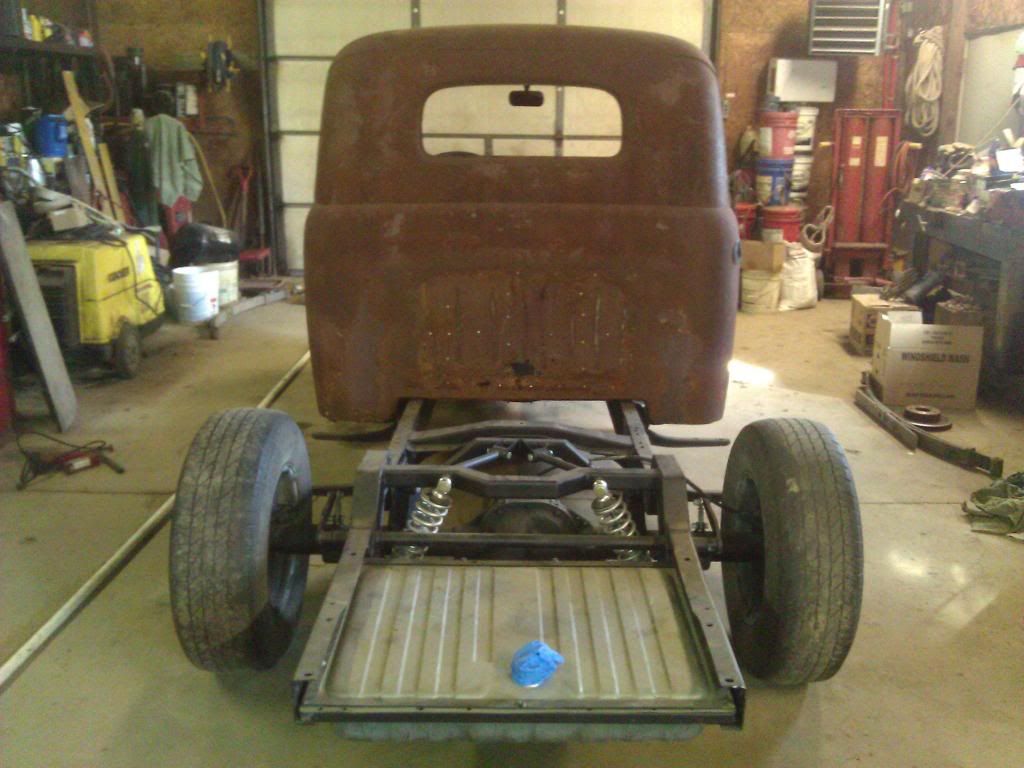
here is a picture of the area. You can see the outline of where the po had a large piece of metal riveted on.


Welder User

Joined: Feb 2009
Posts: 5,269
Likes: 50
From: northwest MT

Welding on a big flat panel like that will be difficult any way you do it. It will shrink and warp. The problem with lap welds is they are tough to work (stretch) as you go. A butt weld is much easier to keep in shape. Still, it will take a lot of time and patience.
How good is your donor cab? Replacing the entire back panel might be easier...
You might also consider using panel bond to attach some new metal on the inside if everything is prepped right. I have done this before on areas you will never see.
How good is your donor cab? Replacing the entire back panel might be easier...
You might also consider using panel bond to attach some new metal on the inside if everything is prepped right. I have done this before on areas you will never see.

Hotshot


Joined: Oct 2004
Posts: 15,882
Likes: 88
From: Durham NC
NO NO NO NO!!!!! You will not be able to correct the heat warpage you are bound to get and it will show FOR EVER. Take the time to do it right. It's not difficult to get a tight fitting joint. Cut an oversized patch out of the donor cab and strip the rust and paint off to clean metal with a Kleen and Strip disk (looks like grey plastic steel wool available at you local big box DIY store pick up a can of dykem layout fluid and an icepick or scratch awl while you are out. also buy a rubber sanding backer disk that fits your angle grinder and a pack of red fiber sanding disks in 50 or 60 grit. The disks are shiny red, stiff but flexible and look like some of the grit fell off. sold singly and in packs of 3 or 5, buy a pack of 3.) Clean off the inside and outside of the cab for at least 4-6" around where you are going to cut. Cut out the cab back first: Spray or brush a thin coat of dykem in a band a couple inches wide where you plan on cutting. Lay out the cut using a yard stick or straight strip of metal held against a couple magnetic welder's triangles, scribing the lines with the icepick or awl. Mark the corners in a curve by marking around a quart paint can. masking tape roll or something about that size. Cut out the rusted panel just inside the scribed line with a thin cutoff disk, portable jig saw with metal cutting blade, electric shear, nibbler or good compound sheet metal hand shears. Use a red fiber disk to very carefully trim the cut sneaking up on the scribed line. use a drum sander or a 1/2 round file to smooth the curved corners.
Now dykem the patch panel and hold it in place with the magnets, visegrip welders clamps, and/or a helper and drill an 18" hole thru both panels in the overlap. cleco or pop rivet the two panels together in a couple places, enough so the panels don't push apart while you carefully scribe the patch panel making sure the point of the scribe is tight against the edge of the cutout. Double check the scribe line, if it isn't perfect go over that area with more dykem and rescribe. When you are completely satisfied, remove the clecos or pop rivets. Cut the patch to just outside the scribed line and finish to the line with the fiber disk being very careful to not dig in past the line. HINT: lay the patch panel flat on a workbench or table so the edge you are trimming is hanging over an inch or two and use the portion of the disk that pushes the panel down against the table rather than lifting it. Hold the disk as flat to the line as possible and use a light touch. check the fit by holding the patch in place with welder's magnets straddling the seam and hold a bright light on the back side. Be sure there are no overlaps. mark and sand as needed.
Set your welder up with 0.023 Easy Grind wire and set the shielding gas flow to 10 cfm (assuming you are welding indoors away from breezes or drafts) with the trigger pressed. Yes, that is about 1/2 the flow rate the machine and the welding books recommend but trust me it is enough and will save you a lot of gas and make better welds. Sset the power and wire speed to the recommended setting for 20 ga steel. Read the following carefully!: to weld the panel in place start at the top center of the panel seam. Clip the wire back with cutters to 1/2" of stick out (NEVER EVER make any tacks on sheet metal without clipping the end of the wire to a clean end!) hold the stinger so it is perfectly perpendicular to the panel in all directions DO NOT TIP IT, you are NOT going to move it from that position! With the machine on but the trigger not pulled, carefully touch the end of the wire to the metal and hold it there by supporting the stinger at the bend with your free hand while it also rests on the panel forming a bridge. Move the end of the wire around slightly until you feel it catch on the seam. DO NOT MOVE ANYTHING, DO NOT PUSH ON OR LIFT THE STINGER. squeeze the trigger for 2 seconds (one thousand one, one thousand two) releasing the trigger and lifting the stinger. The metal should have barely turned red, and you should have a perfectly round disk tack weld 1/4" in diameter centered on the seam. Check the back side for penetration, there should be a shallow blister on the back matching the tack on the front, You should not be able to see the seam between the panels within the dot. The darkened heat discoloration should be a perfect ring no more than 1/2"- 5/8" in diameter on both sides. If you did not get good penetration try clipping the wire to 3/8" stick out, or hold the trigger for an additional 1/2 second. If you blew thru, turn the heat down one increment and/or be sure you are not pushing the tip towards the metal and you have freshly clipped the end of the wire. also be sure there is not a gap wider than the wire diameter in the seam where you are welding. More on that later. If the tack is not round or centered over the seam, you did not feel for the seam, hold the wire perfectly vertical and on the seam when you pulled the trigger (there is a natural tendency to jump or lift when the arc starts that must be overcome!) or moved the stinger. (DON'T try to weld one handed, it's not a quick draw contest, use the free hand as a bridge/brace.) DON'T tack or weld without a helmet no matter what you see the clowns on TV doing. Flash burn is not fun and can cause permanent damage. buy a self darkening helmet for 39.99 and USE IT at all times!
If you got a perfect tack, CONGRATULATIONS!!! you've one step closer to becoming a sheet metal welder.
Now, place a magnet across the seam about 8-9" away from the first tack making sure the edges are aligned and not gapping or overlapping. Make another tack 6" from the first and 2" before the magnet. Do a third tack 6" to the other side of the first one. While you wait for them to cool, check the penetration on both new tacks.
This time we will tack in the center of both vertical sides adjusting the patch and clamping it into a perfect fit first. If by chance you can't get the panel to fit perfectly. Sand down the tack out of the first 3 closest to that side near flush on both sides and wiggle the metal until the tack breaks free. use a fine flat file to smooth the tack remnants along the edge of the panel until the patch can be aligned and retack. The 5th and 6th tacks should go at the end of the horizontal seam at the start of the curved corners. Then tack the very ends of the vertical seams. Now do the top of the vertical seams just before the curved corners.
Continue to adjust the alignment as needed and adding tacks between each of the previous tacks, never tacking closer than 6 inches from a previous tack unless that tack has air cool to the point you can comfortably press your bare palm against it and leave it there. The panel should start looking like someone drove 1/4" diameter nails thru the seam. BE PATIENT! avoid the temptation to force cool the welds or place the tacks closer than 6" apart. Have another place to work on or another project to do in between series of tacks. When you start getting enough tacks that they start to close up on each other, overlap the tacks by placing the wire end against the edge of the previous tack disk to be sure you don't leave pin holes.
I am adding this to my welding tutorial. Check there for information on how to deal with and warpage (which should be minimal if you followed this exactly and didn't rush.)
Now dykem the patch panel and hold it in place with the magnets, visegrip welders clamps, and/or a helper and drill an 18" hole thru both panels in the overlap. cleco or pop rivet the two panels together in a couple places, enough so the panels don't push apart while you carefully scribe the patch panel making sure the point of the scribe is tight against the edge of the cutout. Double check the scribe line, if it isn't perfect go over that area with more dykem and rescribe. When you are completely satisfied, remove the clecos or pop rivets. Cut the patch to just outside the scribed line and finish to the line with the fiber disk being very careful to not dig in past the line. HINT: lay the patch panel flat on a workbench or table so the edge you are trimming is hanging over an inch or two and use the portion of the disk that pushes the panel down against the table rather than lifting it. Hold the disk as flat to the line as possible and use a light touch. check the fit by holding the patch in place with welder's magnets straddling the seam and hold a bright light on the back side. Be sure there are no overlaps. mark and sand as needed.
Set your welder up with 0.023 Easy Grind wire and set the shielding gas flow to 10 cfm (assuming you are welding indoors away from breezes or drafts) with the trigger pressed. Yes, that is about 1/2 the flow rate the machine and the welding books recommend but trust me it is enough and will save you a lot of gas and make better welds. Sset the power and wire speed to the recommended setting for 20 ga steel. Read the following carefully!: to weld the panel in place start at the top center of the panel seam. Clip the wire back with cutters to 1/2" of stick out (NEVER EVER make any tacks on sheet metal without clipping the end of the wire to a clean end!) hold the stinger so it is perfectly perpendicular to the panel in all directions DO NOT TIP IT, you are NOT going to move it from that position! With the machine on but the trigger not pulled, carefully touch the end of the wire to the metal and hold it there by supporting the stinger at the bend with your free hand while it also rests on the panel forming a bridge. Move the end of the wire around slightly until you feel it catch on the seam. DO NOT MOVE ANYTHING, DO NOT PUSH ON OR LIFT THE STINGER. squeeze the trigger for 2 seconds (one thousand one, one thousand two) releasing the trigger and lifting the stinger. The metal should have barely turned red, and you should have a perfectly round disk tack weld 1/4" in diameter centered on the seam. Check the back side for penetration, there should be a shallow blister on the back matching the tack on the front, You should not be able to see the seam between the panels within the dot. The darkened heat discoloration should be a perfect ring no more than 1/2"- 5/8" in diameter on both sides. If you did not get good penetration try clipping the wire to 3/8" stick out, or hold the trigger for an additional 1/2 second. If you blew thru, turn the heat down one increment and/or be sure you are not pushing the tip towards the metal and you have freshly clipped the end of the wire. also be sure there is not a gap wider than the wire diameter in the seam where you are welding. More on that later. If the tack is not round or centered over the seam, you did not feel for the seam, hold the wire perfectly vertical and on the seam when you pulled the trigger (there is a natural tendency to jump or lift when the arc starts that must be overcome!) or moved the stinger. (DON'T try to weld one handed, it's not a quick draw contest, use the free hand as a bridge/brace.) DON'T tack or weld without a helmet no matter what you see the clowns on TV doing. Flash burn is not fun and can cause permanent damage. buy a self darkening helmet for 39.99 and USE IT at all times!
If you got a perfect tack, CONGRATULATIONS!!! you've one step closer to becoming a sheet metal welder.
Now, place a magnet across the seam about 8-9" away from the first tack making sure the edges are aligned and not gapping or overlapping. Make another tack 6" from the first and 2" before the magnet. Do a third tack 6" to the other side of the first one. While you wait for them to cool, check the penetration on both new tacks.
This time we will tack in the center of both vertical sides adjusting the patch and clamping it into a perfect fit first. If by chance you can't get the panel to fit perfectly. Sand down the tack out of the first 3 closest to that side near flush on both sides and wiggle the metal until the tack breaks free. use a fine flat file to smooth the tack remnants along the edge of the panel until the patch can be aligned and retack. The 5th and 6th tacks should go at the end of the horizontal seam at the start of the curved corners. Then tack the very ends of the vertical seams. Now do the top of the vertical seams just before the curved corners.
Continue to adjust the alignment as needed and adding tacks between each of the previous tacks, never tacking closer than 6 inches from a previous tack unless that tack has air cool to the point you can comfortably press your bare palm against it and leave it there. The panel should start looking like someone drove 1/4" diameter nails thru the seam. BE PATIENT! avoid the temptation to force cool the welds or place the tacks closer than 6" apart. Have another place to work on or another project to do in between series of tacks. When you start getting enough tacks that they start to close up on each other, overlap the tacks by placing the wire end against the edge of the previous tack disk to be sure you don't leave pin holes.
I am adding this to my welding tutorial. Check there for information on how to deal with and warpage (which should be minimal if you followed this exactly and didn't rush.)
Thread Starter
|
Fleet Mechanic
Joined: Oct 2011
Posts: 1,891
Likes: 103
From: Birdsboro PA
Thanks for the advice guys. Looks like ill be butt welding this as well. My donor cab isnt really good enough to use the whole back wall. Luckily i have a few other small things i need to do on the cab so i can take a break front the back wall to let it cool down and not rush it. Ill post my progress in my build thread later today.
Lead Driver


Joined: Aug 2006
Posts: 8,094
Likes: 654
From: Brentwood, TN

Best welding advice is NOT to weld at all...this is a perfect application for structural adhesive. Take a look at 3M 08115 or 08116 products. If I were doing this job I would cut out the old panel, trim the replacement panel to size (just as if you were going to butt weld it in place), then glue a "flange" around the perimeter of the inside edge of the opening so that the replacement panel has a place to bond. Once the flange is set then apply the adhesive to the panel and set in place. No heat, no warpage, fast and permanent...what's not to like about that.

Lead Driver
Joined: Jun 2011
Posts: 5,510
Likes: 27
From: Winnipeg, Manitoba
Best welding advice is NOT to weld at all...this is a perfect application for structural adhesive. Take a look at 3M 08115 or 08116 products. If I were doing this job I would cut out the old panel, trim the replacement panel to size (just as if you were going to butt weld it in place), then glue a "flange" around the perimeter of the inside edge of the opening so that the replacement panel has a place to bond. Once the flange is set then apply the adhesive to the panel and set in place. No heat, no warpage, fast and permanent...what's not to like about that.
Trending Topics
Thread Starter
|
Fleet Mechanic
Joined: Oct 2011
Posts: 1,891
Likes: 103
From: Birdsboro PA
Best welding advice is NOT to weld at all...this is a perfect application for structural adhesive. Take a look at 3M 08115 or 08116 products. If I were doing this job I would cut out the old panel, trim the replacement panel to size (just as if you were going to butt weld it in place), then glue a "flange" around the perimeter of the inside edge of the opening so that the replacement panel has a place to bond. Once the flange is set then apply the adhesive to the panel and set in place. No heat, no warpage, fast and permanent...what's not to like about that.
FTE Stories
Ford Trucks for Ford Truck Enthusiasts

Top 10 Fords at 2026 Carlisle Ford Nationals
Joe Kucinski
3 Best / 3 Worst Parts of Modern Ford Ownership
Brett Foote
10 Amazing Upgrades That Solve Common Ford Truck Owner Headaches
Pouria Savadkouei
Every 2026 Ford Engine Explained
Brett Foote
10 Ugly Ford Trucks That We Still Kinda Love
Joe Kucinski
10 Things Every Truck Owner NEEDS (2026 Edition)
Michael S. Palmer
Rezvani's Latest Post-Apocalyptic Monster Is a Ford F-150 Raptor Underneath
Verdad Gallardo
Top 10 Most Expensive Ford Trucks Ever Sold on Bring a Trailer
Joe Kucinski
2027 Ford Super Duty Buyer's Guide (Every Model, Engine, & Package)
Brett Foote
Logistics Pro
Joined: Mar 2012
Posts: 4,393
Likes: 44
From: placer county usa?
Could you do a step by step thread/pic
Elder User
Joined: Mar 2012
Posts: 787
Likes: 1
From: Prescott AZ.
Best welding advice is NOT to weld at all...this is a perfect application for structural adhesive. Take a look at 3M 08115 or 08116 products. If I were doing this job I would cut out the old panel, trim the replacement panel to size (just as if you were going to butt weld it in place), then glue a "flange" around the perimeter of the inside edge of the opening so that the replacement panel has a place to bond. Once the flange is set then apply the adhesive to the panel and set in place. No heat, no warpage, fast and permanent...what's not to like about that.
Structural adhesive is the way to go with large panels. If you don't want to glue a flange in place just get a flangeing tool and build a flange into your patch panel. I still like welding for small patch panels but not large panels welding is getting to be a thing of the past.
Lead Driver
Joined: Aug 2006
Posts: 8,094
Likes: 654
From: Brentwood, TN
Cut out the old panel leaving about an inch of flange so that you have a bonding surface. Scuff the mating surfaces with 36 to 80 grit, clean with solvent. Apply adhesive using special applicator gun. Clamp in place until adhesive has set. Remove clamps and sand off any adhesive that has oozed out. Here are some pics of my 56 that I did some time ago...
Logistics Pro
Joined: Mar 2012
Posts: 4,393
Likes: 44
From: placer county usa?
Cut out the old panel leaving about an inch of flange so that you have a bonding surface. Scuff the mating surfaces with 36 to 80 grit, clean with solvent. Apply adhesive using special applicator gun. Clamp in place until adhesive has set. Remove clamps and sand off any adhesive that has oozed out. Here are some pics of my 56 that I did some time ago...
How do you cleanup excess glue
Hotshot
Joined: Oct 2004
Posts: 15,882
Likes: 88
From: Durham NC
Yes, panel adhesive has come a long ways of late, it is approved by most OEM car companies and insurance companies for use in replacing collision damaged panels. A large portion of my Solstice is assembled with structural adhesives as are most jetliners being built today. The problems are threefold: 1. people using the wrong product and/or not following manufacturers instructions exactly, trying to cut corners for speed or to reduce costs. If it says to wash the panels with part # xyzxx cleaner don't use common bulk acetone instead! There is a special gun that mixes and dispenses the 2 parts as it is applied (looks like a double barreled caulking gun) and uses specially designed disposable mixing tips.
2. there needs to be an overlap of the panels which will be visible on at least one side and the thickness of the adhesive needs to be controlled, if clamped too tightly or too loosely the glue line may fail later.
3. it's expensive and leftovers have a short shelf life. Two of the major brands to the body shop industry is 3M and SEM.
2. there needs to be an overlap of the panels which will be visible on at least one side and the thickness of the adhesive needs to be controlled, if clamped too tightly or too loosely the glue line may fail later.
3. it's expensive and leftovers have a short shelf life. Two of the major brands to the body shop industry is 3M and SEM.