


quick carb rebuild question!

Thread Starter
|
Senior User
Joined: Sep 2013
Posts: 151
Likes: 1
From: Central NJ
quick carb rebuild question!
I'm rebuilding my carter YFA carb.
I went over to the gas station across the street and used the compressed air to clean out the little passages in the carb but came home and decided to soak it some more. I know there might be moisture in those little spaces still. I dont have compressed air or a bike pump. Should i just reassemble it or you think i can bake it in the oven or should i just wait to the morning to go back and blow it out? anybody got some experience with this?
I went over to the gas station across the street and used the compressed air to clean out the little passages in the carb but came home and decided to soak it some more. I know there might be moisture in those little spaces still. I dont have compressed air or a bike pump. Should i just reassemble it or you think i can bake it in the oven or should i just wait to the morning to go back and blow it out? anybody got some experience with this?
Thread Starter
|
Senior User
Joined: Sep 2013
Posts: 151
Likes: 1
From: Central NJ
oh! Two more questions. ONE i also have a list of adjustment specs for different carbs. Now its a carter carb built for motorcraft, and have the carter carb number but theres also a motorcraft number that was on a tag that corroded away. The different specs go by the motorcraft number so i dont know which measurements to use. Anybody know how i can translate the carter number seven four three six into the motorcraft number?
TWO this one worries me, when i took off the carb there was a steel line built into the exhaust manifold that lead straight to the carb and screwed in near the fuel intake. When i unscrewed it the thing just broke and now theres a hole in my exhaust manifold what the hell should i do? can i plug it up or something and forget about it?
TWO this one worries me, when i took off the carb there was a steel line built into the exhaust manifold that lead straight to the carb and screwed in near the fuel intake. When i unscrewed it the thing just broke and now theres a hole in my exhaust manifold what the hell should i do? can i plug it up or something and forget about it?

Senior User
Joined: Nov 2013
Posts: 328
Likes: 0
From: Los Angeles
You can get plenty of moisture out of an air compressor. Whether that is an issue to be worried about,i do not know.
I would not assume compressed air to be dry air. Especially at a gas station. If you are worried about moisture, I would assume displacing it would be a better solution. The compressed air in your situation would only be used for clearing passages and removing debris if it lacks a dryer and oil filter.
I would not assume compressed air to be dry air. Especially at a gas station. If you are worried about moisture, I would assume displacing it would be a better solution. The compressed air in your situation would only be used for clearing passages and removing debris if it lacks a dryer and oil filter.

Moderator


Joined: Jan 2001
Posts: 56,971
Likes: 2,729
From: Virginia

What are you soaking it in? You should not have any moisture in it, and any little bit from the air compressor won't hurt anything. Little specks of dirt and rust and old gummed up gas are what cause the problems in old carbs. A little bit of moisture won't hurt anything, especially if you are getting ready to install it and run it.
Your carb kit should have the applications and years for the specs. What specs are you worried about? The float level spec?
Your carb kit should have the applications and years for the specs. What specs are you worried about? The float level spec?
Thread Starter
|
Senior User
Joined: Sep 2013
Posts: 151
Likes: 1
From: Central NJ
Thanks for the feedback. I am asking the wrong questions though. Now I am a bit worried... Two threads in the casting are stripped- one in the four throttle body assy. hold down screws and one of the six bowl cover assy hold down screws It's also one that holds down solenoid and bracket assembly. These are pretty important spots that need to be air tight. I'm thinking there are three ways to do this.. one drill and tap a bigger hole.. I could do that pretty easy at work but with a metric size. Two... fill it with a weld and redrill and tap the same size... sounds stupid. Or three i believe the least risky get a longer screw of the same size and a nut on the other side of the casting. What do guys you think?
As for the specs there are four models for this kit, specs are all the same for the different models in dry float level and float drop etc. except there are different specs for choke valve pulldown. My choices are:
49S A/T.... .300"
49S M/T.... .300"
Carb. No. E1TE-ARA, UA, M/T.... .230"
Caif. All/T.... .320"
My final concern is the broken line from the exhaust manifold that (used to) warm the choke?... I don't think theres a way to replace it... Theres nothing but a hole in the exhaust manifold and no way to fasten a new line in there. Does this mean my choke will stay closed and not warm up? It's got an electric choke.
here's the hole. you can imagine how rusted the line was.

Thank you for reading my novel
As for the specs there are four models for this kit, specs are all the same for the different models in dry float level and float drop etc. except there are different specs for choke valve pulldown. My choices are:
49S A/T.... .300"
49S M/T.... .300"
Carb. No. E1TE-ARA, UA, M/T.... .230"
Caif. All/T.... .320"
My final concern is the broken line from the exhaust manifold that (used to) warm the choke?... I don't think theres a way to replace it... Theres nothing but a hole in the exhaust manifold and no way to fasten a new line in there. Does this mean my choke will stay closed and not warm up? It's got an electric choke.
here's the hole. you can imagine how rusted the line was.
Thank you for reading my novel
Senior User
Joined: Dec 2010
Posts: 116
Likes: 1
From: Lajord, Sk,Can.
I had a couple strip on me before, I got lucky and was able to use a little longer screw and it held. No problems in over 3 years. If that doesn't work possible thread insert kit. On the choke tube are you able to remove the broken piece ,with a small screw driver or chisel.
Trending Topics

pedant
Joined: Jan 2008
Posts: 23,576
Likes: 38
From: EXTREME southwest CT

I wouldn't drill through, and it is awful hard to weld up a blind hole in pot metal.
What pitch are the screws?
Often -if fine- you can retap coarse and they will hold just fine.
IDK how Carburetor screws strip out.
They don't call for much torque.
The choke will come off (eventually) but it will not respond linerally to the actual engine temperature.
You need a choke stove repair or replacement kit.
There are many to chose from.
https://www.ford-trucks.com/forums/1...tove-tube.html
Dorman 76850 has what you need.
http://www.dormanproducts.com/p-20576-76850.aspx
HELP #55111 is a universal kit that could fix your problem too.
What pitch are the screws?
Often -if fine- you can retap coarse and they will hold just fine.
IDK how Carburetor screws strip out.
They don't call for much torque.
The choke will come off (eventually) but it will not respond linerally to the actual engine temperature.
You need a choke stove repair or replacement kit.
There are many to chose from.
https://www.ford-trucks.com/forums/1...tove-tube.html
Dorman 76850 has what you need.
http://www.dormanproducts.com/p-20576-76850.aspx
HELP #55111 is a universal kit that could fix your problem too.
FTE Stories
Ford Trucks for Ford Truck Enthusiasts

AEV FXL Super Duty - the Super Duty Raptor Ford Doesn't Make
Brett Foote
Lobo Vs Lobo: Proof the F-150 Lobo Should Be Even Lower!
Michael S. Palmer
Ford's 2001 Explorer Sportsman Concept Looks For a New Home
Verdad Gallardo
10 Best Ford Truck Engines We Miss the Most!
Joe Kucinski
2026 Shelby F-150 Off-Road: Better Than a Raptor R?
Brett Foote
2027 Super Duty Carhartt Package First Look: 12 Things You NEED to Know!
Michael S. Palmer
10 Most Surprising 2026 Ford Truck Features!
Joe Kucinski
Top 10 Ford Trucks Coming to Mecum Indy 2026
Brett Foote
5 Best / 5 Worst Ford Truck Wheels of All Time
Joe Kucinski
Moderator
Joined: Jan 2001
Posts: 56,971
Likes: 2,729
From: Virginia
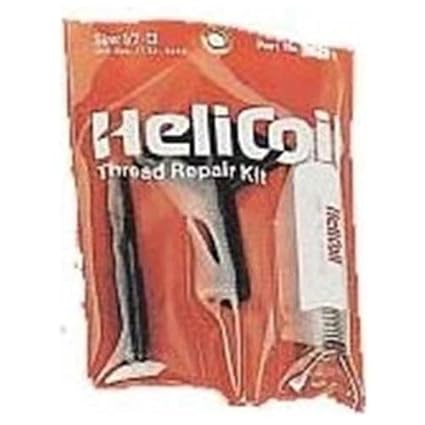
Here's what you need to repair the threads. I took a guess and said the screws were 8-32. That was a guess, you need to find out what thread size they are. Here's a kit on Amazon for about $30.00
About the rusted hole in the exhaust manifold. It doesn't go into the exhaust manifold where the exhaust gases go through. In other words it should not leak exhaust. The hole should go all the way through to the bottom. Any metal line that will fit through the hole will work. You should have another line that hooks to the underneath part and goes back up to the carb. I would replace this line, it's important for the carb and the choke to work correctly.

About the rusted hole in the exhaust manifold. It doesn't go into the exhaust manifold where the exhaust gases go through. In other words it should not leak exhaust. The hole should go all the way through to the bottom. Any metal line that will fit through the hole will work. You should have another line that hooks to the underneath part and goes back up to the carb. I would replace this line, it's important for the carb and the choke to work correctly.
Thread Starter
|
Senior User
Joined: Sep 2013
Posts: 151
Likes: 1
From: Central NJ
ok thank you. I am also unsure if the throttle stop solenoid is functioning properly. if this makes sense in an explanation: the springed solenoid "pusher" doesnt reach the stepped cam when the choke is closed so i believe it isn't pushing the throttle closed further through each of the stages of the choke opening as the engine warms. maybe this explains the excessive amounts of gasoline in my oil?
Anyway it looks like i can adjust it by screwing it in further to make the extra reach. does this make sense and when should i make that adjustment in the sequence of all the other adjustments that must be made?
And where is the fuel filter? it looks like it screws onto the carb but the replacement i got isnt gonna fit there idk. is it typically somewhere before the fuel pump?
Anyway it looks like i can adjust it by screwing it in further to make the extra reach. does this make sense and when should i make that adjustment in the sequence of all the other adjustments that must be made?
And where is the fuel filter? it looks like it screws onto the carb but the replacement i got isnt gonna fit there idk. is it typically somewhere before the fuel pump?
Moderator
Joined: Jan 2001
Posts: 56,971
Likes: 2,729
From: Virginia
The throttle stop solenoid is probably not going to touch the arm when the choke is activated. When the choke is activated, the idle is very very high. They used the solenoid for various different reasons and functions, some for a higher idle for A/C and some just to close the throttle completely with the ignition off so the truck won't run-on or "diesel". We are talking a slight rpm increase from the solenoid, nothing like the choke rpm increase which is much greater.
Thread Starter
|
Senior User
Joined: Sep 2013
Posts: 151
Likes: 1
From: Central NJ
Thank you for answering my million questions, the new carb fired right up and I haven't seen this truck ever run better. Feels very good to drive without a line of cars behind me.

Thread Starter
|
Senior User
Joined: Sep 2013
Posts: 151
Likes: 1
From: Central NJ
I bought the carb kit at the carburetor doctor at this website:Carburetor Rebuild Kits, Manuals, Floats, Chokes, Choke Pull Offs and Parts
It was a good site because they had the carter number that matched up with the number stamped on my carb, whereas all other vendors only had the motorcraft number, which is on a tag that corroded off of my carb.
They also had a replacement electric choke coil assembly and new floats which i couldnt find anywhere else
It was a good site because they had the carter number that matched up with the number stamped on my carb, whereas all other vendors only had the motorcraft number, which is on a tag that corroded off of my carb.
They also had a replacement electric choke coil assembly and new floats which i couldnt find anywhere else

Senior User

Joined: Sep 2013
Posts: 373
Likes: 0
From: Marlborough, CT
I bent a piece of 3/16 brake tubing in the approximate shape of the old choke tube, ran it through the manifold space and hooked it to the choke and carb. All it is, is a simplified heat exchanger. ~Bill