



gauge package

Elder User
Joined: Jul 2009
Posts: 768
Likes: 1
From: Live VT, Work MA
The key for me would be reliability. I have no tolerance for hiccups. My android phone will hiccup just being a phone. I've read enough reports of Torque App hiccups to know that I am not risk tolerant enough, as much as I like the idea of a "liquid" gauge set up.
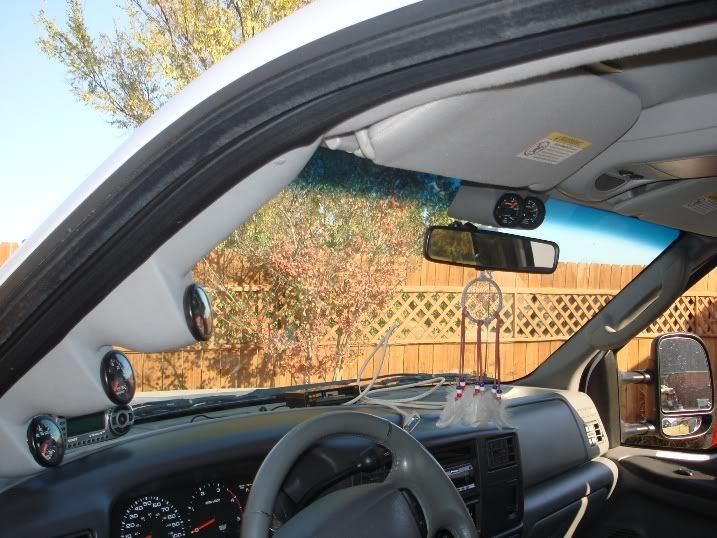
AeroForce Interceptors have been on the market for almost a decade now, so they would appear to be "mature". They also fit within traditional gauge pod holes, which are also standardized and mature. Take any pick... triple pillar, triple under dash, triple top of dash, triple above mirror, or double instrument cluster... these little guys fit right in.
For every 2+" circular facing, you get 2 displays of data. 3 circles, 6 simultaneous displays of data... and unlike analog gauges, the data can be changed at the push of a button to any number of different PIDs or independently wired sensors.
The questions I have are how the displays are illuminated... most pics show them in blue, but they are available in green, which is good. What is not quite yet clear to me is if they are AUTOMATICALLY switched to nighttime reading mode with the headlight switch in the on position, of if they have to be manually switched each time. Because that would get old... switching 3 gauges back and forth.
I think the difference between daytime and nighttime illumination is inverse/reverse video between the digits and the background, but I'm not sure. I've been looking for more users of Aeroforce in the 99-03 PSD community also, to get their real world impressions.
I have the old traditional boost/pyro/trans analog triple pillar set up that has endured for the last 14 years, that I'm now looking to replace with pyro left and pryo right pre turbo, pyro post turbo (since I already have the probe in my 3.5" DP), and fuel pressure. I'm also thinking about fuel vacuum between the pump and a pre pump filter, and rear end temperature. None of this data is available through the data port.
I'm considering the Performax series also, but that would require more gauge pods to display the 5 additional data points of interest. The advantages of the Performax though are the analog look and readability at a glance... where the "normal" operation can be scanned by all needles pointing between 11 and 1 oclock. Also, the Performax has logging functions. In this manner, the rate change of pyro temps and fuel pressure can be indexed with a simultaneously recorded log of my NGS.
However, a triple circle AeroForce Dual Interceptor with a third Analogic would obviate the need to have the NGS in cab, and auto switch on and off without unplugging. No data logging, but then again, gauges are intended to monitor in real time, so that the driver can decrease load or make plans to pull over accordingly. Diagnostics data logging is not always necessary or even helpful when simply monitoring parameters when towing up a steep mountain.
So yes, finding a gauge package is definitely interesting. The Torque App is very slick looking, but being that it is best displayed on a 7" or larger tablet rather than a dinky little phone that might be needed for other tasks like talking (via bluetooth of course), there is the concern that the truck might get broken into for the slick looking tablet. It means that the tablet must be set up and broken down everytime one enters and exits the truck, to avoid leaving the temptation in plain sight.
My NGS is such a singular purposed object as to be incomprehensible to most young thieves who would not even recognize what it is, much less what it is used for. It has no value to them. But the multipurpose use of a tablet is universally recognizable, and thus has more value to a thief as the market for it's immediate disposition is much broader based.
Still, built in gauges in circular pods represent even LESS of an attraction to thieves. I've witnessed a team of smash and grab car burglars swipe the old style GPS monitors suction cupped to windshields in a large city once. It was quite slick how they worked... in teams of 2 to 3 guys. The first guy would walk by the car, see the suction cup (whether the GPS was mounted or not), smash the side window, and KEEP walking. Never even stopped. The second guy would follow, and clear the smashed glass enough to open the door, then HE would keep walking. The third guy would then walk up, get in the car, root it, and get out with the electronic devices found in the center console or wherever. It was amazing to witness this all happen within 60 seconds. Yes I called the cops, but I had to get to phone first, because I didn't have a phone on me at the time.
Gauges built into gauge pods are not as portable or as appealing as CTS Edge monitors and Infinities that look just like GPS units. And they are far less inviting to a smash and grab than a tablet, or even an NGS. So there is some appeal for staying with a traditional type gauge package... with a high tech OBDII enabled twist.
AeroForce Interceptors have been on the market for almost a decade now, so they would appear to be "mature". They also fit within traditional gauge pod holes, which are also standardized and mature. Take any pick... triple pillar, triple under dash, triple top of dash, triple above mirror, or double instrument cluster... these little guys fit right in.
For every 2+" circular facing, you get 2 displays of data. 3 circles, 6 simultaneous displays of data... and unlike analog gauges, the data can be changed at the push of a button to any number of different PIDs or independently wired sensors.
The questions I have are how the displays are illuminated... most pics show them in blue, but they are available in green, which is good. What is not quite yet clear to me is if they are AUTOMATICALLY switched to nighttime reading mode with the headlight switch in the on position, of if they have to be manually switched each time. Because that would get old... switching 3 gauges back and forth.
I think the difference between daytime and nighttime illumination is inverse/reverse video between the digits and the background, but I'm not sure. I've been looking for more users of Aeroforce in the 99-03 PSD community also, to get their real world impressions.
I have the old traditional boost/pyro/trans analog triple pillar set up that has endured for the last 14 years, that I'm now looking to replace with pyro left and pryo right pre turbo, pyro post turbo (since I already have the probe in my 3.5" DP), and fuel pressure. I'm also thinking about fuel vacuum between the pump and a pre pump filter, and rear end temperature. None of this data is available through the data port.
I'm considering the Performax series also, but that would require more gauge pods to display the 5 additional data points of interest. The advantages of the Performax though are the analog look and readability at a glance... where the "normal" operation can be scanned by all needles pointing between 11 and 1 oclock. Also, the Performax has logging functions. In this manner, the rate change of pyro temps and fuel pressure can be indexed with a simultaneously recorded log of my NGS.
However, a triple circle AeroForce Dual Interceptor with a third Analogic would obviate the need to have the NGS in cab, and auto switch on and off without unplugging. No data logging, but then again, gauges are intended to monitor in real time, so that the driver can decrease load or make plans to pull over accordingly. Diagnostics data logging is not always necessary or even helpful when simply monitoring parameters when towing up a steep mountain.
So yes, finding a gauge package is definitely interesting. The Torque App is very slick looking, but being that it is best displayed on a 7" or larger tablet rather than a dinky little phone that might be needed for other tasks like talking (via bluetooth of course), there is the concern that the truck might get broken into for the slick looking tablet. It means that the tablet must be set up and broken down everytime one enters and exits the truck, to avoid leaving the temptation in plain sight.
My NGS is such a singular purposed object as to be incomprehensible to most young thieves who would not even recognize what it is, much less what it is used for. It has no value to them. But the multipurpose use of a tablet is universally recognizable, and thus has more value to a thief as the market for it's immediate disposition is much broader based.
Still, built in gauges in circular pods represent even LESS of an attraction to thieves. I've witnessed a team of smash and grab car burglars swipe the old style GPS monitors suction cupped to windshields in a large city once. It was quite slick how they worked... in teams of 2 to 3 guys. The first guy would walk by the car, see the suction cup (whether the GPS was mounted or not), smash the side window, and KEEP walking. Never even stopped. The second guy would follow, and clear the smashed glass enough to open the door, then HE would keep walking. The third guy would then walk up, get in the car, root it, and get out with the electronic devices found in the center console or wherever. It was amazing to witness this all happen within 60 seconds. Yes I called the cops, but I had to get to phone first, because I didn't have a phone on me at the time.
Gauges built into gauge pods are not as portable or as appealing as CTS Edge monitors and Infinities that look just like GPS units. And they are far less inviting to a smash and grab than a tablet, or even an NGS. So there is some appeal for staying with a traditional type gauge package... with a high tech OBDII enabled twist.
Looks like they have that in pdf on the site (pasted below):
I like the trans temp (assuming that would be the same as using a typical probe?), ICP, Ex. BP, Oil Temp, coolant Temp.......it looks like this could be fantastic for diagnosing issues.
Platform 2 parameters (Powerstroke):
1. INTAKE AIR 2- Intake Air Temperature taken at the throttle body inlet
2. COOLANT TEMP 2- Engine Coolant Temperature
3. RPM 2- engine Revolutions Per Minute
4. MANIFOLD PSI 1- Manifold Air Pressure (psia) for voltage based MAP sensors
(mid 1990’s trucks).
5. Manifold PSI 2 – Manifold Air Pressure (psia) for frequency based MAP sensors
6. BOOST 1 – Boost Pressure in psig for voltage based MAP
7. BOOST 2 – Boost Pressure in psig for frequency based MAP
8. MILES PER HOUR 2- Miles Per Hour
9. TRANS TEMP 1- Transmission Temperature for 1998 and newer trucks
10. TRANS TEMP 2 – Trans temp derived from the trans temp sensor voltage for 1997
and older trucks.
11. TRANS VOLTS – Transmission temperature sensor raw voltage.
11. RUN TIME MINS- engine run time since last engine start. Can be used as a trip
timer.
12. BATTERY VOLTAGE- Alternator/battery output voltage1. INTAKE AIR 2- Intake Air Temperature taken at the throttle body inlet
2. COOLANT TEMP 2- Engine Coolant Temperature
3. RPM 2- engine Revolutions Per Minute
4. MANIFOLD PSI 1- Manifold Air Pressure (psia) for voltage based MAP sensors
(mid 1990’s trucks).
5. Manifold PSI 2 – Manifold Air Pressure (psia) for frequency based MAP sensors
6. BOOST 1 – Boost Pressure in psig for voltage based MAP
7. BOOST 2 – Boost Pressure in psig for frequency based MAP
8. MILES PER HOUR 2- Miles Per Hour
9. TRANS TEMP 1- Transmission Temperature for 1998 and newer trucks
10. TRANS TEMP 2 – Trans temp derived from the trans temp sensor voltage for 1997
and older trucks.
11. TRANS VOLTS – Transmission temperature sensor raw voltage.
11. RUN TIME MINS- engine run time since last engine start. Can be used as a trip
timer.
13. PULSE WIDTH- injector pulse width in msec.
14. ENGINE OIL TEMP
15. EX. BACK PRESS – Exhaust back pressure
16. ICP DC – Injector Control Pressure Duty Cycle
17. ICP – Injector Control Pressure
18. INJ. TIMING – Injector Timing Deg BTDC
19. CURRENT GEAR – Current Transmission Gear
14. ENGINE OIL TEMP
15. EX. BACK PRESS – Exhaust back pressure
16. ICP DC – Injector Control Pressure Duty Cycle
17. ICP – Injector Control Pressure
18. INJ. TIMING – Injector Timing Deg BTDC

Post Fiend
Joined: Sep 2006
Posts: 7,426
Likes: 6
From: Sioux Falls, SD
For me I like the A-Pillar and the overhead gauges. When I was flying we had gauges and buttons all over the cockpit so maybe I'm not affected by the night time gauge lighting..........the only time gauge lighting bothered me is when they all went out 
It's all personal choice - it's very cool that there are so many options....
It's all personal choice - it's very cool that there are so many options....


Posting Guru
Joined: May 2013
Posts: 1,199
Likes: 2
From: Oklahoma
So who sells the Aeroforce gauges aside from Aeroforce and eBay? Anyone have a clue on which Fuel pressure sensor will wire up and work? I already have Autometer pyro installed in the manifold. Setup should be a breeze...
Post Fiend
Joined: Sep 2006
Posts: 7,426
Likes: 6
From: Sioux Falls, SD
scan gauge - Terminator Engineering
IIRC - he carries the additional sensors as well
Elder User
Joined: Jul 2009
Posts: 768
Likes: 1
From: Live VT, Work MA
I think I might fire up one of the Interceptors.......I have traditional Autometer Boost and EGT in a 2 gauge pillar mount;
I was thinking of adding a 3 gauge consol mount up above the mirror with Trans Temp and Fuel pressure, but now I may go with the Interceptor and the Fuel Pressure leaving the last "hole" for a DP eventually.
How's the Interceptor for Trans Temp? Accurate?
I was thinking of adding a 3 gauge consol mount up above the mirror with Trans Temp and Fuel pressure, but now I may go with the Interceptor and the Fuel Pressure leaving the last "hole" for a DP eventually.
How's the Interceptor for Trans Temp? Accurate?

Super Moderator


Joined: Dec 2011
Posts: 13,324
Likes: 6,098

For trans temp, the Interceptor reads the same sensor that the factory PCM reads and makes decisions from. The PCM data read by the Interceptor is not damped, like the factory transmission temp gauge in the dash is, therefore the Interceptor will report more accurate data in real time than the factory gauge in the instrument cluster (if equipped).
Depending on the location of an aftermarket sending unit for an independent transmission temp gauge, it is quite probable that the Interceptor will be even MORE accurate than an aftermarket standalone TFT gauge... typically by about 20 degrees... moreso if the aftermarket sending unit is installed in the pan.
The pan has the coolest temperatures in the transmission. The line pressure test port on the side of the transmission is closer to the pump than any side or surface of any type of transmission pan would be, so the pressure test port affords a more accurate indication of the "working" temperature of the fluid than a sending unit installed in the pan itself.
To find the "hottest" temperature, one might plumb a sending unit into the output line of the fluid cooling circuit (the line on the forward end of the transmission) before it reaches the first transmission cooler. However, this does not necessarily give the "working" temperature of the fluid the transmission is actually working with, because this fluid has not had the opportunity to be cooled. If the transmission fluid cooling system is effective, then the higher temperature output of the torque converter shouldn't be cause for alarm.
However, if the transmission fluid temperature inside the transmission is elevated (above 250 degrees F), then that indicates a problem. Either the transmission is generating too much heat, or the cooling system is plugged and or ineffective at removing the heat. That's what the gauge is most helpful to determine, therefore the location of the factory sensor is darn near optimal for this purpose. Like Goldilocks... the porridge is not too hot (output line) and not too cold (pan sump).
Now, back to the Interceptor... since it is reading factory PCM data through the OBDII link, it should be more accurate. HOWEVER, if there is any wonkiness in the formula that AeroForce uses to index a readable and understandable temperature value from the data it is receiving from the PCM, then all bets are off.
The current forum buzz about the Torque App best illustrates this caveat. Some formulas that were voluntarily formulated by early adopters of the app turned out to be inaccurate. Through crowd sourcing the experience of multiple users, these formulas are being refined every day.
Scan tool makers, such as OTC, Genysis, MAC, Snap On, Hickok Instruments, etc, and scan tool software for PC providers, such as EASE, Auto Tap, Auto Enginuity, and the like, paid Ford Motor Company a license fee to unlock the algorithms to ensure accurate access and interpretation of the data that the PCM reports.
It is my understanding that AeroForce also paid Ford something for this access. If I am mistaken in this regard, then AeroForce may have reverse engineered or hacked their way into reading and interpreting some of the proprietary PIDs that have nothing to do with emissions controls, and therefore are not mandated to be open source.
If AeroForce had to hack the way the transmission temp data is interpreted, then there could be a question as to the accuracy. I'm not sure. I can find out though, by testing the Interceptor against how my Ford factory scan tool reports the same data, since Ford wrote the software for the scan tool.
Elder User
Joined: Jul 2009
Posts: 768
Likes: 1
From: Live VT, Work MA
For trans temp, the Interceptor reads the same sensor that the factory PCM reads and makes decisions from. The PCM data read by the Interceptor is not damped, like the factory transmission temp gauge in the dash is, therefore the Interceptor will report more accurate data in real time than the factory gauge in the instrument cluster (if equipped).
Depending on the location of an aftermarket sending unit for an independent transmission temp gauge, it is quite probable that the Interceptor will be even MORE accurate than an aftermarket standalone TFT gauge... typically by about 20 degrees... moreso if the aftermarket sending unit is installed in the pan.
The pan has the coolest temperatures in the transmission. The line pressure test port on the side of the transmission is closer to the pump than any side or surface of any type of transmission pan would be, so the pressure test port affords a more accurate indication of the "working" temperature of the fluid than a sending unit installed in the pan itself.
To find the "hottest" temperature, one might plumb a sending unit into the output line of the fluid cooling circuit (the line on the forward end of the transmission) before it reaches the first transmission cooler. However, this does not necessarily give the "working" temperature of the fluid the transmission is actually working with, because this fluid has not had the opportunity to be cooled. If the transmission fluid cooling system is effective, then the higher temperature output of the torque converter shouldn't be cause for alarm.
However, if the transmission fluid temperature inside the transmission is elevated (above 250 degrees F), then that indicates a problem. Either the transmission is generating too much heat, or the cooling system is plugged and or ineffective at removing the heat. That's what the gauge is most helpful to determine, therefore the location of the factory sensor is darn near optimal for this purpose. Like Goldilocks... the porridge is not too hot (output line) and not too cold (pan sump).
Now, back to the Interceptor... since it is reading factory PCM data through the OBDII link, it should be more accurate. HOWEVER, if there is any wonkiness in the formula that AeroForce uses to index a readable and understandable temperature value from the data it is receiving from the PCM, then all bets are off.
The current forum buzz about the Torque App best illustrates this caveat. Some formulas that were voluntarily formulated by early adopters of the app turned out to be inaccurate. Through crowd sourcing the experience of multiple users, these formulas are being refined every day.
Scan tool makers, such as OTC, Genysis, MAC, Snap On, Hickok Instruments, etc, and scan tool software for PC providers, such as EASE, Auto Tap, Auto Enginuity, and the like, paid Ford Motor Company a license fee to unlock the algorithms to ensure accurate access and interpretation of the data that the PCM reports.
It is my understanding that AeroForce also paid Ford something for this access. If I am mistaken in this regard, then AeroForce may have reverse engineered or hacked their way into reading and interpreting some of the proprietary PIDs that have nothing to do with emissions controls, and therefore are not mandated to be open source.
If AeroForce had to hack the way the transmission temp data is interpreted, then there could be a question as to the accuracy. I'm not sure. I can find out though, by testing the Interceptor against how my Ford factory scan tool reports the same data, since Ford wrote the software for the scan tool.
Depending on the location of an aftermarket sending unit for an independent transmission temp gauge, it is quite probable that the Interceptor will be even MORE accurate than an aftermarket standalone TFT gauge... typically by about 20 degrees... moreso if the aftermarket sending unit is installed in the pan.
The pan has the coolest temperatures in the transmission. The line pressure test port on the side of the transmission is closer to the pump than any side or surface of any type of transmission pan would be, so the pressure test port affords a more accurate indication of the "working" temperature of the fluid than a sending unit installed in the pan itself.
To find the "hottest" temperature, one might plumb a sending unit into the output line of the fluid cooling circuit (the line on the forward end of the transmission) before it reaches the first transmission cooler. However, this does not necessarily give the "working" temperature of the fluid the transmission is actually working with, because this fluid has not had the opportunity to be cooled. If the transmission fluid cooling system is effective, then the higher temperature output of the torque converter shouldn't be cause for alarm.
However, if the transmission fluid temperature inside the transmission is elevated (above 250 degrees F), then that indicates a problem. Either the transmission is generating too much heat, or the cooling system is plugged and or ineffective at removing the heat. That's what the gauge is most helpful to determine, therefore the location of the factory sensor is darn near optimal for this purpose. Like Goldilocks... the porridge is not too hot (output line) and not too cold (pan sump).
Now, back to the Interceptor... since it is reading factory PCM data through the OBDII link, it should be more accurate. HOWEVER, if there is any wonkiness in the formula that AeroForce uses to index a readable and understandable temperature value from the data it is receiving from the PCM, then all bets are off.
The current forum buzz about the Torque App best illustrates this caveat. Some formulas that were voluntarily formulated by early adopters of the app turned out to be inaccurate. Through crowd sourcing the experience of multiple users, these formulas are being refined every day.
Scan tool makers, such as OTC, Genysis, MAC, Snap On, Hickok Instruments, etc, and scan tool software for PC providers, such as EASE, Auto Tap, Auto Enginuity, and the like, paid Ford Motor Company a license fee to unlock the algorithms to ensure accurate access and interpretation of the data that the PCM reports.
It is my understanding that AeroForce also paid Ford something for this access. If I am mistaken in this regard, then AeroForce may have reverse engineered or hacked their way into reading and interpreting some of the proprietary PIDs that have nothing to do with emissions controls, and therefore are not mandated to be open source.
If AeroForce had to hack the way the transmission temp data is interpreted, then there could be a question as to the accuracy. I'm not sure. I can find out though, by testing the Interceptor against how my Ford factory scan tool reports the same data, since Ford wrote the software for the scan tool.
The reason I was concentrating on the Trans temp was out of the few primary gauges people recommend it is the one I am missing and since I tow 6-7000lbs a couple times per month in the summer I figured it would be a good thing to at least be able to monitor it. I'm not towing 10K+ up mountains but I also don't feel like being stranded somewhere on the highway in the heat with two horses and two pissed off women.....I'm not sure which animal would be worse.......lol
I think a good Isspro fiuel pressure gauge and the Interceptor might be the way to go for me......

More Turbo
Joined: Mar 2007
Posts: 636
Likes: 7
From: La Mesa, Ca.
Has anyone considered or have experience with the UltraGauge?
UltraGauge OBDII Scan tool & Information Center
UltraGauge OBDII Scan tool & Information Center
FTE Stories
Ford Trucks for Ford Truck Enthusiasts

3 Best / 3 Worst Parts of Modern Ford Ownership
Brett Foote
10 Amazing Upgrades That Solve Common Ford Truck Owner Headaches
Pouria Savadkouei
Every 2026 Ford Engine Explained
Brett Foote
10 Ugly Ford Trucks That We Still Kinda Love
Joe Kucinski
10 Things Every Truck Owner NEEDS (2026 Edition)
Michael S. Palmer
Rezvani's Latest Post-Apocalyptic Monster Is a Ford F-150 Raptor Underneath
Verdad Gallardo
Top 10 Most Expensive Ford Trucks Ever Sold on Bring a Trailer
Joe Kucinski
2027 Ford Super Duty Buyer's Guide (Every Model, Engine, & Package)
Brett Foote
Top 10 Ford Truck Tragedies
Joe Kucinski
Posting Guru
Joined: May 2013
Posts: 1,199
Likes: 2
From: Oklahoma
Has anyone considered or have experience with the UltraGauge?
UltraGauge OBDII Scan tool & Information Center
UltraGauge OBDII Scan tool & Information Center
It was mentioned earlier in the post I believe... The question is around what data it can pull from our NON-Compliant OBDII port. Some of the data is unique to ford and the 7.3. As a result if it just pulls standard, the truck won't really show anything.
What do they have on their website about support for the 7.3 Powerstroke?

Lead Driver


Joined: Jun 2004
Posts: 6,357
Likes: 593
From: Amarillo, TEXAS!
Has anyone considered or have experience with the UltraGauge?
UltraGauge OBDII Scan tool & Information Center
UltraGauge OBDII Scan tool & Information Center
I especially don't like the fact they closed part of their forum because of the support questions they were getting and now simply direct users to the FAQs. It implies they don't want to bother supporting the product after it's been sold, or they don't want the problems to be public knowledge. That may or may not be the case, but it gives that impression.
More Turbo
Joined: Mar 2007
Posts: 636
Likes: 7
From: La Mesa, Ca.
If you look at F-xxx Ford Diesel trucks
It should work just fine, providing that you make some adjustments to the settings.
It should work just fine, providing that you make some adjustments to the settings.
Lead Driver
Joined: Jun 2004
Posts: 6,357
Likes: 593
From: Amarillo, TEXAS!
I'm skeptical about using it on our trucks, and here's why. The last paragraph in the Ford diesel truck disclaimer implies that if you buy it and can't make it work, you're stuck with it.
If you are still interested in giving UltraGauge a try in your Ford Diesel vehicle, please do so only if you are willing to retask UltraGauge to another vehicle, or you are willing to work with Support to find a solution.

Thread
Thread Starter
Forum
Replies
Last Post
eric777
6.0L Power Stroke Diesel
11
Aug 22, 2009 07:38 AM