



Bed Wood

Senior User
Joined: Nov 2012
Posts: 335
Likes: 0
getting "work" done is like eatin' tater chips.....u can't eat just one...some of those beauties have had like 6 or more "improvements". you guys know what it looks like when p.o.'s pile on the bondo.
well, there I go, getting in too deep, having too much fun.
you guys won't turn me in? will u?
your friend
ax racer
well, there I go, getting in too deep, having too much fun.
you guys won't turn me in? will u?
your friend
ax racer
Senior User
Joined: Nov 2012
Posts: 335
Likes: 0
hey...
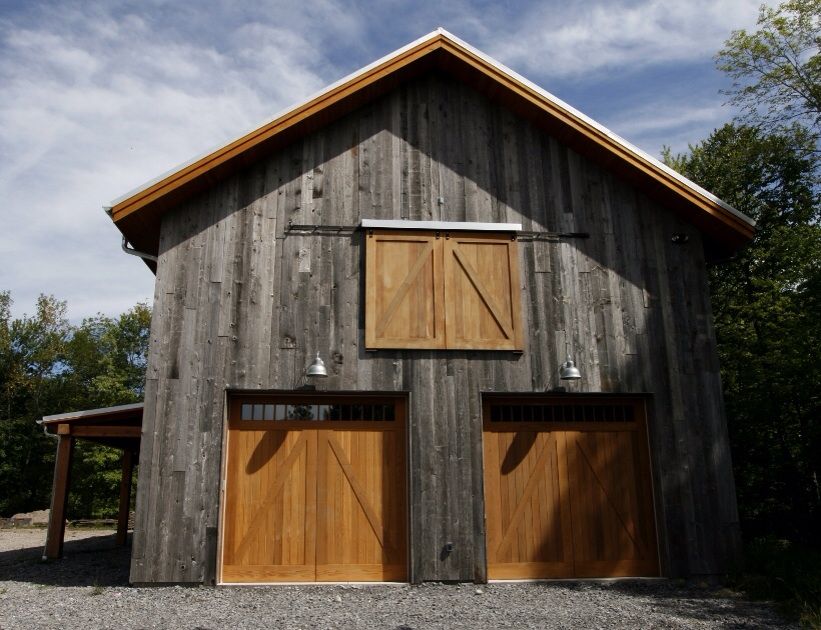
barn no. 2 looks great! as a contractor most of my adult life I can appreciate making new look like very good old. many of my past customers wanted just that. a taste of the old w/ all the benefits of new technologies.
great look
qman

barn no. 2 looks great! as a contractor most of my adult life I can appreciate making new look like very good old. many of my past customers wanted just that. a taste of the old w/ all the benefits of new technologies.
great look
qman
Senior User
Joined: Nov 2012
Posts: 335
Likes: 0
oh dave....yer such a nit picker....he isn't making a repro of a Chippendale French provincial armwar that prince Charles farted in in 1859. its a pick up bed...something to thro a bale of chainlink fence into, or a rear end to the next f-1 or f-100 project. so, lighten up dave....yer migrane will go away....I promise
too much fun
qman
too much fun
qman

Junior User
Joined: May 2011
Posts: 83
Likes: 0
From: West Central IL
wood bed finish
Has anyone ever used a automotive clear coat OVER a spar urethane finish on their wood?? I thought about spaying on a coat or two over all the bed once it was installed even over the steel strips bewteen the boards.
Might take the sun better..
Thoughts??
Might take the sun better..
Thoughts??

Hotshot


Joined: Oct 2004
Posts: 15,882
Likes: 88
From: Durham NC
OK, I've posted similar before, but let me try to explain the issues once again. First where I'm coming from: I have a strong chemistry, biology and physics background, I taught chemical, biological and radiological warfare and defense for Uncle during Viet Nam era, then worked as a nuclear chemist for a while until I decided i didn't like the idea of glowing at night, so I went back to school and got a masters in art/design, primary jewelry design, secondary wood design. My design in wood professor was an expert in wood properties and finishing which was heavily emphasized, we had to justify our choice of wood species and finishing on every project, in addition to the design. My understanding of organic chemistry and biology aided me greatly.
To start you need to understand wood's structure. Wood is composed of long slender hollow tubes (cells) much like a bundle of paper drinking straws. The cells walls are composed primarily of cellulose (a paper like material, soft and flexible when wet, stiff and rigid when dry.). The primary purpose of the cells are the transport of water and nutrients from the roots to the leaves and back, hence the cells are filled with moisture, mostly in the form of sap the sap is thick, so the cell walls don't absorb too much water that would make them weak. The sap keeps the cell walls soft and flexible so the tree can move to resist wind and adjust it's branches and leaves to catch the sun and sometimes rain. The composition of the sap is what gives a tree it's resistance to enemies like insects, and deseases. Oak for example has a lot of tannic acid in it's sap that gives it an unpleasant/toxic taste to many cellulose eating insects and resists disease (rot). As the tree grows the bundle of cells (straws) increases in diameter by adding additional cells around the existing bundle. The number and size of the additional straws is determined by the tree species, and the growing conditions. Our friend the oak tree, living in a temperate climate and being deciduous (drops it's leaves in colder weather) adds much larger diameter cells in summer when it is moving a lot of sap, and much fewer smaller ones in winter when nearly dormant. Once the cells reach full size, they never change size or length again. A branch never gets any further from the ground at the trunk for the life of the tree!
When the tree is cut down and transformed into lumber, many of the straws are slashed open, no more moisture containing sap is being transported, and the entire board is exposed to drier conditions than when it was part of a tree. The cell walls dry out, becoming thinner and stiff.
How the board is cut from the log determines how many straws are sliced open and how the different sized cells become visible. This is what we call the "grain pattern" of the board. With oak, the flat sawn boards (the most common and economical way to cut up a log into boards) cuts thru a lot of the various sized cells in the different growth layers, and the sap composition and quantity stained the cell walls different colors as it dried giving it a very pronounced grain pattern.
The dry cellulose cell walls in wood, just like a dry paper towel is always wanting to absorb moisture, and when it does it swells up. If the cells swell at different rates, due to the cells being slashed open or just getting wet in a localized area. The swelling of some cell walls and others not, produces unequal stress in the board and the board twist and bends, what we call warping. since wood is never 100% dry, temperature changes can also cause the wood to change dimension. Since there are a lot more cell walls across a board than along it's length, any change in the cell wall thickness makes the board change more in width than length.
Now lets apply a finish to our board. We've sanded our board real nice and smooth with fine sandpaper, which in turn has plugged the ends of any open exposed straws with fine sawdust, because of the surface area of sawdust is much greater than solid wood it will act like a sponge, wicking in moisture and holding it. Most finishes are surface film finishes, they contain microscopic plate like solids dispersed in a liquid carrier, solvent or water based. These plates pile up on one another as the carrier evaporates creating the film on the surface. How smooth and evenly they pile up and their reflectivity is what determines the finish gloss.
Let's look at what happens when we apply a surface film finish to our board: The plates in the finish are much smaller than the size of our boards cells, and most finishes contain a lot more carrier than solids. With the first coat the sawdust packing, the slashed open cells and the cell walls nearest the surface suck in the carrier and solids. If the carrier is water based or contains moisture the cell walls will expand, if solvent based the much more fluid solvent will travel far into the wood's cells by capillary action. eventually the carrier exposed at the surface will evaporate first leaving behind a layer of solid plates on the surface of the cell walls, since the open cells are larger than the solids plates they will still be open, (like dipping the slashed ends of a a bundle of wet straws into sugar), still able to absorb moisture. and the finish won't be very shiny. So you add more coats of finish Like repeatedly dampening the ends of our straws and dipping them into the sugar until all the end are plugged and the surface has smoothed out. Problem is all those dippings has also left a very thick coat of sugar (finish) on the outside of and between the straws, and while the filling of the open cells with finish has dried on the outside, there is a lot of absorbed carrier still trapped inside the cells, keeping the underside of the finish from completely hardening and the chemicals in the cell walls are being leached out and reacting with the soft finish. The tannic acid in the oak is literally eating the finish from the inside. We/ve solved one problem (creating a smooth shiny finish) and caused another (dissolving the finish from the inside and trapping moisture inside the wood which wants to get out and/or reacts with environmental changes) and have deposited a thick rigid film on the surface of the wood. Wood expands and contracts quite a lot compared to other materials such as metal. Surface film finishes are hard and rigid by design since we want them to be durable i.e. not scratch easily, be sticky or dull quickly. The thicker the film, the more rigid it becomes. Lets go back to our sugar coated straws. If you flex the straws or blow in the opposite open end to expand them, the thick rigid coating on the outside will quickly crack and fall away. same thing happens to a surface film coating on wood it cannot move as much as the wood so it starts to develop microscopic cracks called checks. These checks grow until moisture can penetrate down to the wood and the expanding cell walls start popping the film off their surface. If the film is made flexible (soft) enough to be flexible as wood it will be like a soft plastic and easily damaged/worn, sorta like wrapping the wood with sticky vinyl graphics. You can't change physics, chemistry or the nature of wood so it's always going to be a losing battle. The guys with the wooden boats, even the fiberglass coated ones store them dry and protected from the sun, plus the fiberglass coating like any fiberglass resin is soft and dulls quickly (ask any fiberglass boat owner how much work that finish requires!).
To start you need to understand wood's structure. Wood is composed of long slender hollow tubes (cells) much like a bundle of paper drinking straws. The cells walls are composed primarily of cellulose (a paper like material, soft and flexible when wet, stiff and rigid when dry.). The primary purpose of the cells are the transport of water and nutrients from the roots to the leaves and back, hence the cells are filled with moisture, mostly in the form of sap the sap is thick, so the cell walls don't absorb too much water that would make them weak. The sap keeps the cell walls soft and flexible so the tree can move to resist wind and adjust it's branches and leaves to catch the sun and sometimes rain. The composition of the sap is what gives a tree it's resistance to enemies like insects, and deseases. Oak for example has a lot of tannic acid in it's sap that gives it an unpleasant/toxic taste to many cellulose eating insects and resists disease (rot). As the tree grows the bundle of cells (straws) increases in diameter by adding additional cells around the existing bundle. The number and size of the additional straws is determined by the tree species, and the growing conditions. Our friend the oak tree, living in a temperate climate and being deciduous (drops it's leaves in colder weather) adds much larger diameter cells in summer when it is moving a lot of sap, and much fewer smaller ones in winter when nearly dormant. Once the cells reach full size, they never change size or length again. A branch never gets any further from the ground at the trunk for the life of the tree!
When the tree is cut down and transformed into lumber, many of the straws are slashed open, no more moisture containing sap is being transported, and the entire board is exposed to drier conditions than when it was part of a tree. The cell walls dry out, becoming thinner and stiff.
How the board is cut from the log determines how many straws are sliced open and how the different sized cells become visible. This is what we call the "grain pattern" of the board. With oak, the flat sawn boards (the most common and economical way to cut up a log into boards) cuts thru a lot of the various sized cells in the different growth layers, and the sap composition and quantity stained the cell walls different colors as it dried giving it a very pronounced grain pattern.
The dry cellulose cell walls in wood, just like a dry paper towel is always wanting to absorb moisture, and when it does it swells up. If the cells swell at different rates, due to the cells being slashed open or just getting wet in a localized area. The swelling of some cell walls and others not, produces unequal stress in the board and the board twist and bends, what we call warping. since wood is never 100% dry, temperature changes can also cause the wood to change dimension. Since there are a lot more cell walls across a board than along it's length, any change in the cell wall thickness makes the board change more in width than length.
Now lets apply a finish to our board. We've sanded our board real nice and smooth with fine sandpaper, which in turn has plugged the ends of any open exposed straws with fine sawdust, because of the surface area of sawdust is much greater than solid wood it will act like a sponge, wicking in moisture and holding it. Most finishes are surface film finishes, they contain microscopic plate like solids dispersed in a liquid carrier, solvent or water based. These plates pile up on one another as the carrier evaporates creating the film on the surface. How smooth and evenly they pile up and their reflectivity is what determines the finish gloss.
Let's look at what happens when we apply a surface film finish to our board: The plates in the finish are much smaller than the size of our boards cells, and most finishes contain a lot more carrier than solids. With the first coat the sawdust packing, the slashed open cells and the cell walls nearest the surface suck in the carrier and solids. If the carrier is water based or contains moisture the cell walls will expand, if solvent based the much more fluid solvent will travel far into the wood's cells by capillary action. eventually the carrier exposed at the surface will evaporate first leaving behind a layer of solid plates on the surface of the cell walls, since the open cells are larger than the solids plates they will still be open, (like dipping the slashed ends of a a bundle of wet straws into sugar), still able to absorb moisture. and the finish won't be very shiny. So you add more coats of finish Like repeatedly dampening the ends of our straws and dipping them into the sugar until all the end are plugged and the surface has smoothed out. Problem is all those dippings has also left a very thick coat of sugar (finish) on the outside of and between the straws, and while the filling of the open cells with finish has dried on the outside, there is a lot of absorbed carrier still trapped inside the cells, keeping the underside of the finish from completely hardening and the chemicals in the cell walls are being leached out and reacting with the soft finish. The tannic acid in the oak is literally eating the finish from the inside. We/ve solved one problem (creating a smooth shiny finish) and caused another (dissolving the finish from the inside and trapping moisture inside the wood which wants to get out and/or reacts with environmental changes) and have deposited a thick rigid film on the surface of the wood. Wood expands and contracts quite a lot compared to other materials such as metal. Surface film finishes are hard and rigid by design since we want them to be durable i.e. not scratch easily, be sticky or dull quickly. The thicker the film, the more rigid it becomes. Lets go back to our sugar coated straws. If you flex the straws or blow in the opposite open end to expand them, the thick rigid coating on the outside will quickly crack and fall away. same thing happens to a surface film coating on wood it cannot move as much as the wood so it starts to develop microscopic cracks called checks. These checks grow until moisture can penetrate down to the wood and the expanding cell walls start popping the film off their surface. If the film is made flexible (soft) enough to be flexible as wood it will be like a soft plastic and easily damaged/worn, sorta like wrapping the wood with sticky vinyl graphics. You can't change physics, chemistry or the nature of wood so it's always going to be a losing battle. The guys with the wooden boats, even the fiberglass coated ones store them dry and protected from the sun, plus the fiberglass coating like any fiberglass resin is soft and dulls quickly (ask any fiberglass boat owner how much work that finish requires!).
Hotshot
Joined: Oct 2004
Posts: 15,882
Likes: 88
From: Durham NC
It's too bad that there is not enough volume demand for a engineered flooring manufacturer like Pergo to make engineered bed flooring kits, that would solve a lot of problems! Anyone here wealthy enough to front say 100,00 bed floor kits?
FTE Stories
Ford Trucks for Ford Truck Enthusiasts

Top 10 Most Expensive Ford Trucks Ever Sold on Bring a Trailer
Joe Kucinski
2027 Ford Super Duty Buyer's Guide (Every Model, Engine, & Package)
Brett Foote
Top 10 Ford Truck Tragedies
Joe Kucinski
AEV FXL Super Duty - the Super Duty Raptor Ford Doesn't Make
Brett Foote
Lobo Vs Lobo: Proof the F-150 Lobo Should Be Even Lower!
Michael S. Palmer
Ford's 2001 Explorer Sportsman Concept Looks For a New Home
Verdad Gallardo
10 Best Ford Truck Engines We Miss the Most!
Joe Kucinski
2026 Shelby F-150 Off-Road: Better Than a Raptor R?
Brett Foote
2027 Super Duty Carhartt Package First Look: 12 Things You NEED to Know!
Michael S. Palmer


Hotshot
Joined: Oct 2004
Posts: 15,882
Likes: 88
From: Durham NC
Thanks Abe! If you are going to paint your wood bed floor body color you will still experience the same type issues since most any paint is still a surface deposited film. If you actually use the bed for anything more damaging than transporting a group of HS cheerleaders in their sock feet, you will still need to recoat. If you want an extremely durable bed floor for actual use you might consider a heated spray on plastic coating like LineX it can be tinted to match the exterior paint color.
Fleet Mechanic


Joined: Mar 2007
Posts: 1,532
Likes: 29
From: northeast Ga
Not knowing what I am talking about I will just pass this along , you decide if it is right or wrong . A old Amish buggy maker once told me never to paint or finish the under side of a wood floor [ as in buggy floor , or wagon bed , ] He said the wood needed to be able to dry out . If you seal all sides then water can' t get out . Now I know buggies are not trucks . But they get used in all kinds of weather , in mud and snow .
Believe Nothing
Joined: Jun 2004
Posts: 7,514
Likes: 398
From: W. Central FL.

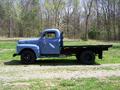
Y'all boys are takin' this bed wood stuff way too seriously. You'll wind up with a truck that is too purdy to use. I replaced the bed wood with southern pine and coated it with several coats of TWP deck finish back a couple years ago when I refurbished Missy Green. Several loads of gravel, stone, mushroom compost, (sterilized horse shxt), tires, wheels, firewood, fence material, two trips to TS and the deck still looks decent and still sheds water. Of course, my trucks ain't gonna win no fancy dust collecting trophies.
It is almost decking time for Blue and she'll get the same treatment.
It is almost decking time for Blue and she'll get the same treatment.
Hotshot
Joined: Oct 2004
Posts: 15,882
Likes: 88
From: Durham NC
if you can find it in a size and cross section (some of the comp decking is hollow) that can be machined to size it will work very well for a utilitarian bed floor. The negatives are it doesn't have the look and character of clear finished natural wood, and it tends to absorb and hold solar heat. Comp decking's dirty little secret is it can get hot enough to be uncomfortable to walk or stand on in bare feet in the summer. Unlike natural wood comp decking expands and cotracts equally in all directions so you need to leave sufficient room in both the width and length.
Senior User
Joined: Nov 2012
Posts: 335
Likes: 0
hey ray...
I agree w/ u and ax. several years ago I decided what was needed info that I had to retain or fluff that can go by the way side. on top of that its neither black or white but shades of grey. I fall somewhere in the middle between u and ax. being a career carpenter I lean towards ax but trying to uncomplicated my life I lean ray's way. on top of that, who gives a crap whats inside of my skull? NOBODY!!
we've beat this horse to submission. lets go out in the sun and sit on the tail gate and enjoy the day and our old trucks
ALL u guys are great and I enjoy u all!
thanks ax and ray and everybody else reading this forum. isn't it great that we are all different?
qman still confused
I agree w/ u and ax. several years ago I decided what was needed info that I had to retain or fluff that can go by the way side. on top of that its neither black or white but shades of grey. I fall somewhere in the middle between u and ax. being a career carpenter I lean towards ax but trying to uncomplicated my life I lean ray's way. on top of that, who gives a crap whats inside of my skull? NOBODY!!
we've beat this horse to submission. lets go out in the sun and sit on the tail gate and enjoy the day and our old trucks
ALL u guys are great and I enjoy u all!
thanks ax and ray and everybody else reading this forum. isn't it great that we are all different?
qman still confused