




Mounting lights to hitch?

Thread Starter
|
Senior User
Joined: Oct 2012
Posts: 333
Likes: 0
From: Co
Mounting lights to hitch?
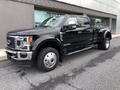
From a structural standpoint is it safe to run screws into the hitch to mount aux backup lights? With the flatbed theres no where to really mount lights that wouldnt stick out so was debating just screwing them into the hitch but wanted to make sure it wouldnt comprimise the hitch first.

Junior User
Joined: Nov 2012
Posts: 58
Likes: 0
From: Northville, NY
From a structural standpoint is it safe to run screws into the hitch to mount aux backup lights? With the flatbed theres no where to really mount lights that wouldnt stick out so was debating just screwing them into the hitch but wanted to make sure it wouldnt comprimise the hitch first.
Instead, use stainless steel worm clamps around the bar to hold your aux backup lights in place.

Laughing Gas
Joined: May 2008
Posts: 939
Likes: 1
From: Central Kansas
I'm not an engineer, so correct me if I'm wrong - but it seems like so long as we're talking about a small hole (1/4" or less) and the correct size and grade of bolt/screw were used then stress wise, wouldn't it still act as one continuous plate? I would think the weight of the light would be negligible wouldn't it?

FTE Legend


Joined: Jul 2005
Posts: 65,938
Likes: 1,432
From: Millersville, MD

I am SURE that screw is not going to be rated as strong as the hitch you are talking drilling into.......Now does it make sense?
Trending Topics

Cargo Master
Joined: Apr 2010
Posts: 2,405
Likes: 4

FTE Stories
Ford Trucks for Ford Truck Enthusiasts

10 Ugly Ford Trucks That We Still Kinda Love
Joe Kucinski
10 Things Every Truck Owner NEEDS (2026 Edition)
Michael S. Palmer
Rezvani's Latest Post-Apocalyptic Monster Is a Ford F-150 Raptor Underneath
Verdad Gallardo
Top 10 Most Expensive Ford Trucks Ever Sold on Bring a Trailer
Joe Kucinski
2027 Ford Super Duty Buyer's Guide (Every Model, Engine, & Package)
Brett Foote
Top 10 Ford Truck Tragedies
Joe Kucinski
AEV FXL Super Duty - the Super Duty Raptor Ford Doesn't Make
Brett Foote
Lobo Vs Lobo: Proof the F-150 Lobo Should Be Even Lower!
Michael S. Palmer
Ford's 2001 Explorer Sportsman Concept Looks For a New Home
Verdad Gallardo
Thread Starter
|
Senior User
Joined: Oct 2012
Posts: 333
Likes: 0
From: Co
Sounds like plenty of good reassons not to in my book, Ill wait untill I get the winch bumper/mount or devise some other method. Need to get my switch panel made/installed first anyways and for the record I can guarntee you the bolts would never match the rating of my class V hitch.
Laughing Gas
Joined: May 2008
Posts: 939
Likes: 1
From: Central Kansas
How about this as an alternative: Make a bracket that would mount using one of the existing frame mounting holes (sitting on the outside of the hitch, not against the frame) and bolt it up - using a longer bolt (of the same strength) if necessary and then mounting the light on that bracket?

Logistics Pro


Joined: Jan 2007
Posts: 3,835
Likes: 106
From: Martinsburg, WV

Or something like this... Just a quick example, there are many out there like this.
White Night Rear Lighting System, Truck SUV Reverse Lights
http://www.etrailer.com/Lights/Pilot...ve/CR-607.html
White Night Rear Lighting System, Truck SUV Reverse Lights
http://www.etrailer.com/Lights/Pilot...ve/CR-607.html

Laughing Gas
Joined: May 2008
Posts: 939
Likes: 1
From: Central Kansas
I'm not trying to be a jerk here, but this stuff intrigues me. Calc II killed my engineering dreams.

Thread Starter
|
Senior User
Joined: Oct 2012
Posts: 333
Likes: 0
From: Co
Or something like this... Just a quick example, there are many out there like this.
White Night Rear Lighting System, Truck SUV Reverse Lights
Ball Mount Hitch Light for 2" Hitches Pilot Automotive Lights CR-607
White Night Rear Lighting System, Truck SUV Reverse Lights
Ball Mount Hitch Light for 2" Hitches Pilot Automotive Lights CR-607
Cargo Master
Joined: Apr 2010
Posts: 2,405
Likes: 4
Filling the hole with a bolt will not alter the effects of the hole in tension. The bolt is not actually joined to the surounding metal. For basically the same reason, the bolt will not help with fatigue due to flex.
Let's use a Twizzler for a demonstration. Take one straight out of the package and stretch it until it breaks. Take another one and drill a small hole through it, then stretch it until it breaks. It will take less force to snap, and will likely fail at the hole. Now take another, drill a small hole, then affix a small bolt through the hole. Stretch it until it breaks. Which one of the three was stronger? Did the third Twizzler break at the bolt?
The structure of the hitch is designed to take more load than it is rated for. The rating takes into account a safety factor. A couple small holes does not automatically mean structural failure, but you are eating into your safety factor.
And Calc II killed a part of me too. That part of my brain is still numb on cold mornings.
Let's use a Twizzler for a demonstration. Take one straight out of the package and stretch it until it breaks. Take another one and drill a small hole through it, then stretch it until it breaks. It will take less force to snap, and will likely fail at the hole. Now take another, drill a small hole, then affix a small bolt through the hole. Stretch it until it breaks. Which one of the three was stronger? Did the third Twizzler break at the bolt?
The structure of the hitch is designed to take more load than it is rated for. The rating takes into account a safety factor. A couple small holes does not automatically mean structural failure, but you are eating into your safety factor.
And Calc II killed a part of me too. That part of my brain is still numb on cold mornings.