




4X4 operation 101 for dummy

Lead Driver


Joined: Aug 2006
Posts: 5,670
Likes: 13
From: Sand Lake, MI
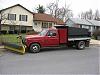
The ability to quickly put the power to the front axle, make the front wheels pull too, that makes all the difference between maintaining speed and not. Especially say if attempting to climb a slight uphill grade, one that was ice covered the day before but then several inches of snow fell on it yet to be removed by the county.
When carrying a full load of salt? I don't need to reach down and pull the lever back, the weight is rear bias so no need. As the salt gets used up, the weight in the rears is reduced, the aid offered by that lever returns.
Allows me to get around slow moving traffic, rather then spin and slide around I accelerate clean and get around them back into the right lane again.
Post Fiend
Joined: Nov 2005
Posts: 7,437
Likes: 4
From: Charles Town, W bygod Va
4wd low is very useful,even with the hubs unlocked when traction isn't required.
it's very useful for crawling around,towing up large steep hills where you then stop at the top and shift back into 2wd or 4wd hi.a whole set of low gears to use.a lot of people don't use this set of gears because they lack the need,or don't know when to use them.that t-case alone to me,is just as a big advantage as 4wd is many times during the day.
you can drive hwy speeds in 4wd hi if you wish.
remember 4wd uses more fuel.even just keeping the hubs locked in with shift lever in 2wd uses more fuel.so if the roads are clear just unlock them,it only takes a few seconds to lock up and go again.no need to needlessly feed the greedy oil pigs.
it's very useful for crawling around,towing up large steep hills where you then stop at the top and shift back into 2wd or 4wd hi.a whole set of low gears to use.a lot of people don't use this set of gears because they lack the need,or don't know when to use them.that t-case alone to me,is just as a big advantage as 4wd is many times during the day.
you can drive hwy speeds in 4wd hi if you wish.
remember 4wd uses more fuel.even just keeping the hubs locked in with shift lever in 2wd uses more fuel.so if the roads are clear just unlock them,it only takes a few seconds to lock up and go again.no need to needlessly feed the greedy oil pigs.
Yes, I like 4 low, hubs locked or not for backing a trailer into a tight spot, or just to slow things down if youve got a MT.

Senior User
Joined: Mar 2007
Posts: 228
Likes: 0
FWIW, that's how I test to see if the 4wd works when truck shopping. I engage it and then make a tight turn on asphalt. If the trucks bucks and doesn't want to turn, it's working.
A few things to remember:
4low is an awesome benefit of having 4wd. It will make life a lot easier on your truck when off roading plus the benefits others have posted
Manual hubs are great. If you get stuck, lock em in and throw the lever. If you have auto hubs, engage 4wd BEFORE you think you will need it. The front wheels need to turn to engage 4wd with auto's. If you're stuck, you will not be able to get into 4wd.
If you snap a rear u joint, pull the drive shaft, engage 4wd and cautiously drive home.
A few things to remember:
4low is an awesome benefit of having 4wd. It will make life a lot easier on your truck when off roading plus the benefits others have posted
Manual hubs are great. If you get stuck, lock em in and throw the lever. If you have auto hubs, engage 4wd BEFORE you think you will need it. The front wheels need to turn to engage 4wd with auto's. If you're stuck, you will not be able to get into 4wd.
If you snap a rear u joint, pull the drive shaft, engage 4wd and cautiously drive home.
Lead Driver
Joined: Aug 2006
Posts: 5,670
Likes: 13
From: Sand Lake, MI
4wd low is very useful,even with the hubs unlocked when traction isn't required.
it's very useful for crawling around,towing up large steep hills where you then stop at the top and shift back into 2wd or 4wd hi.a whole set of low gears to use.a lot of people don't use this set of gears because they lack the need,or don't know when to use them.that t-case alone to me,is just as a big advantage as 4wd is many times during the day.
you can drive hwy speeds in 4wd hi if you wish.
remember 4wd uses more fuel.even just keeping the hubs locked in with shift lever in 2wd uses more fuel.so if the roads are clear just unlock them,it only takes a few seconds to lock up and go again.no need to needlessly feed the greedy oil pigs.
it's very useful for crawling around,towing up large steep hills where you then stop at the top and shift back into 2wd or 4wd hi.a whole set of low gears to use.a lot of people don't use this set of gears because they lack the need,or don't know when to use them.that t-case alone to me,is just as a big advantage as 4wd is many times during the day.
you can drive hwy speeds in 4wd hi if you wish.
remember 4wd uses more fuel.even just keeping the hubs locked in with shift lever in 2wd uses more fuel.so if the roads are clear just unlock them,it only takes a few seconds to lock up and go again.no need to needlessly feed the greedy oil pigs.
If I have to run highway to town pick materials up, know it won't snow and the road has been cleared? traffic will be moving right along? I'll unlock for the trip, not so much for fuel savings no as just not much there, but to give the front driveline break from it.

Posting Guru
Joined: Sep 2008
Posts: 1,123
Likes: 4
From: Baltimore
I use Raven's 4-low, fronts unlocked for towing tractor-trailers if they're empty trailer, and front locked if loaded. Also for the slow control for menouvering. Manual locks are the best. (I have always wished they made a Hi-Lo Split shift on the stick for pick-ups.) I drove a '63 Mack B-61 twin stick and several Kenworth and Freightliners, Peterbilts. Would love to have that ability in a pickup.
Senior User
Joined: Mar 2007
Posts: 228
Likes: 0
DITTO! That would be awesome.
FTE Stories
Ford Trucks for Ford Truck Enthusiasts

10 Things Every Truck Owner NEEDS (2026 Edition)
Michael S. Palmer
Rezvani's Latest Post-Apocalyptic Monster Is a Ford F-150 Raptor Underneath
Verdad Gallardo
Top 10 Most Expensive Ford Trucks Ever Sold on Bring a Trailer
Joe Kucinski
2027 Ford Super Duty Buyer's Guide (Every Model, Engine, & Package)
Brett Foote
Top 10 Ford Truck Tragedies
Joe Kucinski
AEV FXL Super Duty - the Super Duty Raptor Ford Doesn't Make
Brett Foote
Lobo Vs Lobo: Proof the F-150 Lobo Should Be Even Lower!
Michael S. Palmer
Ford's 2001 Explorer Sportsman Concept Looks For a New Home
Verdad Gallardo
10 Best Ford Truck Engines We Miss the Most!
Joe Kucinski
Bleed Ford Blue
Joined: Apr 2009
Posts: 13,578
Likes: 157
From: Anchorage Alaska

they will do 90mph+ in 4x4 without issue...ask me how i know lol
i run mine locked in high all winter, i use low for plowing snow.
you can drive on dry pavement in 4x4 high all you want(not that you want to), just dont try to turn! thats when it becomes a issue.
i run mine locked in high all winter, i use low for plowing snow.
you can drive on dry pavement in 4x4 high all you want(not that you want to), just dont try to turn! thats when it becomes a issue.
Postmaster
Joined: Nov 2011
Posts: 3,533
Likes: 17
From: SW Florida
This guy here has experienced it, read this. Some folks in that thread say it shouldn't be a problem either, but I disagree. Really, it's your truck and you're free to do as you wish. Just because it handled it once doesn't mean it'll take it forever though, and I'm just trying to help you understand why.
Now, an ALL wheel drive truck can be driven in 4x4... ALL the time! There's a torque converter of sorts between the front and rear drivelines, to allow each one to turn at slightly different speeds.

Thread Starter
|
New User
Joined: Oct 2012
Posts: 10
Likes: 0
From: Locust Grove, Ga
All good posts everyone, and the education is appreciated. Since I don't have a need for 4WD in any street situation in Georgia...unless we get a big snow, I would not engage it now knowing now what the effects are. I knew something was not right when I had it engaged and tried a small radius turn in the cull de sac.
If there were a place where the locals were mudding...I might be tempted to have a go at it.
All in all, I don't see any reason to own a 4X4 for a daily driver here. Unless you have the conditions described by the folks living in winter snow or ice areas or you travel the country and need it occasionally, it is just an added expense of fuel and maintenance.
The pulling in lower gears, is something I didn't think about, but was aware of it when I put the truck in 4L and the transmission shifted so quickly. It felt like it could pull a freight train.
My 89 E350 Flatbed dually with the 7.3 International will pull anything I can put behind it. I built it as a toy hauler and it pulled my 10k lb trawler rig with ease. The dually on the boat ramp never had a traction problem as long as it was concrete. A 4X4 would be handy if you launched a boat from dirt or sand though.
Thanks again for the comments! Now I can move on to 4WD 102.
If there were a place where the locals were mudding...I might be tempted to have a go at it.
All in all, I don't see any reason to own a 4X4 for a daily driver here. Unless you have the conditions described by the folks living in winter snow or ice areas or you travel the country and need it occasionally, it is just an added expense of fuel and maintenance.
The pulling in lower gears, is something I didn't think about, but was aware of it when I put the truck in 4L and the transmission shifted so quickly. It felt like it could pull a freight train.
My 89 E350 Flatbed dually with the 7.3 International will pull anything I can put behind it. I built it as a toy hauler and it pulled my 10k lb trawler rig with ease. The dually on the boat ramp never had a traction problem as long as it was concrete. A 4X4 would be handy if you launched a boat from dirt or sand though.
Thanks again for the comments! Now I can move on to 4WD 102.
Bleed Ford Blue
Joined: Apr 2009
Posts: 13,578
Likes: 157
From: Anchorage Alaska
I wouldn't do that. While it ain't as bad as trying to turn in high traction situations (like pavement) with 4x4 engaged, it still ain't good for it. Sure, you probably have the same gear ratio gears in front and rear axles, but they are not perfect. One set of axles will always be trying to rotate just a little bit slower or faster than the other. Do this for a long time (driving on the highway or whatever) and you'll get what's called driveline windup. That's where the front and rear driveshafts are turning at slightly different speeds due to the reason above, which of course puts stress on the transfer case. Eventually, it'll blow up when the chain or other component lets go and exits thru the housing.
This guy here has experienced it, read this. Some folks in that thread say it shouldn't be a problem either, but I disagree. Really, it's your truck and you're free to do as you wish. Just because it handled it once doesn't mean it'll take it forever though, and I'm just trying to help you understand why.
Now, an ALL wheel drive truck can be driven in 4x4... ALL the time! There's a torque converter of sorts between the front and rear drivelines, to allow each one to turn at slightly different speeds.
This guy here has experienced it, read this. Some folks in that thread say it shouldn't be a problem either, but I disagree. Really, it's your truck and you're free to do as you wish. Just because it handled it once doesn't mean it'll take it forever though, and I'm just trying to help you understand why.
Now, an ALL wheel drive truck can be driven in 4x4... ALL the time! There's a torque converter of sorts between the front and rear drivelines, to allow each one to turn at slightly different speeds.
i respectfully disagree. same gears, same size/wear tires the axles will travel exactly the same speed. i drive in 4x4 atleast 6 months out of the year. i do not shift out unless in a parking lot with alot of pavement showing. no issues after 100k + of this type of use on my trucks alone. this includes alot of road trips at 65-75mph 300+ miles.
do what works for you, but there no reason if your tires are the same size/worn the same and you have the same gears front/rear(if you don't it will go boom within a few feet anyway) that you cant travel on dry pavement in 4x4 in a straight line.
Posting Guru
Joined: Apr 2011
Posts: 1,119
Likes: 1
From: Hartland, WI
One thing to also keep in mind that the soccer moms in these parts forget is, 4wd only helps you go, it doesn't help you stop. I've seen many Trailblazers, Explorers, QX56s, etc in the ditch because they assumed 4wd made them invincible. My thought is that if road conditions are good enough to allow you do safely do 50+ mph, then you shouldn't need to be in 4wd.

Elder User
Joined: Jun 2012
Posts: 757
Likes: 0
From: 7th realm of hell, Va.
Here in the Eastern part of Va. the DOT contractor hasn't figured out how to treat the raods or clear the snow. So I use 4Hi on the interstate but I tend to keep the sppeds under 45 mph.
Matt
Matt