


What preventative maint to do?


Thread Starter
|
Junior User
Joined: May 2012
Posts: 74
Likes: 0
From: Philadelphia Area
What preventative maint to do?
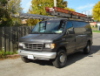
For you long-time owners, or fleet folks, what are common maintenance items to do on Ford vans? My 98 E250 has 73,000 miles, and the previous owner (up to last week) barely used it the past few years (like 300 miles TOTAL in 3 years). He did good routine maintenance and fluid changes (incl. trans), but it hasn't had any major work done on it in its lifetime. As it's a campervan and I plan to use it for longer road trips, I want to go through and replace some common wear items before I get stranded. It just passed the PA state inspection, which is a pretty comprehensive inspection of most major things.
Here's my starting list. What am I missing?
1. Belts and hoses
2. Go through brakes more closely
3. Ball joints?
4. Fuel injector cleaning (occasionally is balky)
Is it worthwhile to proactively replace things like the water pump and other bolt-on items that have bearings? Which ones commonly fail, and at what mileage?
Thanks!
Here's my starting list. What am I missing?
1. Belts and hoses
2. Go through brakes more closely
3. Ball joints?
4. Fuel injector cleaning (occasionally is balky)
Is it worthwhile to proactively replace things like the water pump and other bolt-on items that have bearings? Which ones commonly fail, and at what mileage?
Thanks!

Elder User
Joined: Mar 2012
Posts: 711
Likes: 2
From: Outside of Memphis, TN
Check the tires and their age. Consider replacing them if they are showing signs of dryrot or cracking. Take a look at the spare. Check its air pressure.
Replace the coolant if it hasn't been done in a few years, also bleed the brakes. For some reason, I find lots of people ignore the brake fluid. Check the rear end for leaks and fluid level. Dip a clean stick in the gear lube and make sure it isn't grey/white or foamy.
Replace the coolant if it hasn't been done in a few years, also bleed the brakes. For some reason, I find lots of people ignore the brake fluid. Check the rear end for leaks and fluid level. Dip a clean stick in the gear lube and make sure it isn't grey/white or foamy.
Fleet Mechanic

Joined: May 2011
Posts: 1,414
Likes: 10
From: Thornhill , Ontario
Change the rear end oil .....and grease everything you see....check /grease U- joints..check front end parts like Upper / lower Ball joints and Tie rod ends....And look at Radius Arm and sway bar bushings for cracks and large gaps / wear

Fleet Owner


Joined: Aug 2010
Posts: 21,255
Likes: 1,657
From: Reynoldsburg, Ohio
Excellent suggestions so far!
+1 on Blageurt's suspension bushing inspection----Ford's normal compound is so soft and tends to either disintegrate or wear out way too soon. I replaced my radius arm & axle pivot bushings with urethane parts If you retain the stock front sway bar the I-Beam bushings are notoriously crappy, another great candidate for urethane replacements.
95E150's ideas are other areas typically overlooked and should be inspected or changed as needed.
As far a preemptive changes to water pumps etc I don't think I'd go that route; most OEM components are surprisingly long-lived. My '00 E250 is topping 265K miles with its original starter, water pump, injectors and on and on. Alternator failed a few years ago, battery was weak when I first brought it home so that was necessary to change. (There are battery load tests you can perform to assess its condition and ability to hold a charge---perhaps another good thing for the list?)
The common wear items you mention only need replacing from use----not too often will they suffer from sitting. Hoses, belts, tires & fluids can become problematic due time alone but that will depend if they were new when first installed or the van came to you.
IMHO its best to maybe put a few hundred miles a month on it---gives you a chance to notice things before they fail at unexpected or massively inconvenient distance from home.
+1 on Blageurt's suspension bushing inspection----Ford's normal compound is so soft and tends to either disintegrate or wear out way too soon. I replaced my radius arm & axle pivot bushings with urethane parts If you retain the stock front sway bar the I-Beam bushings are notoriously crappy, another great candidate for urethane replacements.
95E150's ideas are other areas typically overlooked and should be inspected or changed as needed.
As far a preemptive changes to water pumps etc I don't think I'd go that route; most OEM components are surprisingly long-lived. My '00 E250 is topping 265K miles with its original starter, water pump, injectors and on and on. Alternator failed a few years ago, battery was weak when I first brought it home so that was necessary to change. (There are battery load tests you can perform to assess its condition and ability to hold a charge---perhaps another good thing for the list?)
The common wear items you mention only need replacing from use----not too often will they suffer from sitting. Hoses, belts, tires & fluids can become problematic due time alone but that will depend if they were new when first installed or the van came to you.
IMHO its best to maybe put a few hundred miles a month on it---gives you a chance to notice things before they fail at unexpected or massively inconvenient distance from home.
Thread Starter
|
Junior User
Joined: May 2012
Posts: 74
Likes: 0
From: Philadelphia Area
Thanks for the ideas so far. Really helpful! @JWA, good to hear about the OEM parts still plugging along after 265k miles!
I am driving it around locally just to get a feel for what "normal" feels like on the van.
I am driving it around locally just to get a feel for what "normal" feels like on the van.


Posting Guru
Joined: Feb 2007
Posts: 2,351
Likes: 8
IMO "bleed the brakes" isn't neccessarily on my "What preventative maint to do?" list. Usually "bleed the brakes" serves only to check for & remove any air accumulated in wheel cylinders. Normally "bleed the brakes" means a small amount of fluid is dumped at each wheel & MC gets topped off.
Note: bleeder screws are hollow, prone to rust & can be PITA to loosen. If brakes work fine I'd inspect front pads to know if PA passed them w/a D or an A & carefully lube the bleeder screws. In advance, put penetrating oil applicator inside bleeder, short blast can push out debris & ease loosening. Check 'emergency' brake holds well, it's good indication automatic rear brake adjusters work. Brake maintenance is an area where Service Records can be so helpful & state inspections just so-so.
IMO 'Change the Brake Fluid' is a high priority that "lots of people ignore". This is especially true on complex & costly 4 Wheel ABS systems as they age. Brake fluid absorbs water, oxidizes & accumulates contaminants over time. Fluid in the MC reservoir is particularly susceptible b/c its vented. Old fluid darkens w/age.
For me, 1st step to 'Change the Brake Fluid' is to remove all the old brake fluid in MC reservoir using syringe (or suction) w/thin tube extension to reach/extract from rear chamber. Refill w/fresh fluid, no sense sending old contaminated fluid thru system. Then Pressure Bleed each wheel, starting w/farthest, until fresh fluid flows out & refill MC. Repeat at each bleeder in turn, assuring new fluid throughout system.
Wouldn't blindly replace "Belts and hoses" either. First there's just a single serpentine belt for everything. These are extremely durable & easy to inspect. Look for cracks in the little V's. Check the label, belt might've already been replaced.
Same w/hoses. Inspect them b/c 73,000 miles is essentially nothing. This is especially true, IF coolant has been replaced, which is very important b/c of all the aluminum parts. Over 225K on mine & hoses still look fine.
Replacing coolant isn't just for antifreeze. Fresh coolant maintains anticorrosive properties & lubes water pump seal. Conversely, depleted coolant can actually attack aluminum & rubber parts. Old antifreeze may still protect block when it goes below 0F, but causes countless aluminum radiators & heater cores to spring leaks b/c of internal corrosion.
Note: bleeder screws are hollow, prone to rust & can be PITA to loosen. If brakes work fine I'd inspect front pads to know if PA passed them w/a D or an A & carefully lube the bleeder screws. In advance, put penetrating oil applicator inside bleeder, short blast can push out debris & ease loosening. Check 'emergency' brake holds well, it's good indication automatic rear brake adjusters work. Brake maintenance is an area where Service Records can be so helpful & state inspections just so-so.
IMO 'Change the Brake Fluid' is a high priority that "lots of people ignore". This is especially true on complex & costly 4 Wheel ABS systems as they age. Brake fluid absorbs water, oxidizes & accumulates contaminants over time. Fluid in the MC reservoir is particularly susceptible b/c its vented. Old fluid darkens w/age.
Wouldn't blindly replace "Belts and hoses" either. First there's just a single serpentine belt for everything. These are extremely durable & easy to inspect. Look for cracks in the little V's. Check the label, belt might've already been replaced.
Same w/hoses. Inspect them b/c 73,000 miles is essentially nothing. This is especially true, IF coolant has been replaced, which is very important b/c of all the aluminum parts. Over 225K on mine & hoses still look fine.
Replacing coolant isn't just for antifreeze. Fresh coolant maintains anticorrosive properties & lubes water pump seal. Conversely, depleted coolant can actually attack aluminum & rubber parts. Old antifreeze may still protect block when it goes below 0F, but causes countless aluminum radiators & heater cores to spring leaks b/c of internal corrosion.

Thread
Thread Starter
Forum
Replies
Last Post
dziwei
1968-Present E-Series Van/Cutaway/Chassis
14
Feb 25, 2018 08:53 AM
WillaminaOR
1997 - 2003 F150
3
Nov 3, 2010 08:26 AM
mbearden
1968-Present E-Series Van/Cutaway/Chassis
14
Mar 19, 2007 01:56 PM


