






Some Holley 1850 600cfm Help...

Thread Starter
|
Junior User
Joined: Jan 2012
Posts: 54
Likes: 0
Some Holley 1850 600cfm Help...
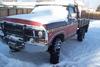
1975 F250
This carb came with the truck when i bought it.
Having some trouble with it.. Looking for some experiance here.
Ran fine for 2 weeks or so. Then it just started flooding itself. No i cant keep her running she is just dumping fuel.
Looking at what i should do. I have rebuilt a few 2brl carbs. No 4brl though... Is there a better carb out there for my truck?
Thanks guys
This carb came with the truck when i bought it.
Having some trouble with it.. Looking for some experiance here.
Ran fine for 2 weeks or so. Then it just started flooding itself. No i cant keep her running she is just dumping fuel.
Looking at what i should do. I have rebuilt a few 2brl carbs. No 4brl though... Is there a better carb out there for my truck?
Thanks guys
Cargo Master


Joined: Nov 2009
Posts: 2,364
Likes: 117
From: starship enterprise
There are a few things to look at here. One is where is the fuel spilling out at? If it is at the secondary ventury or vent it is that float bowl to work on. If it is the primarys then they need attention, if both are flooding/leaking, probably need to look at fuel pressure.
Next is you can pull the plug out of the side of the float bowl and look at where the fuel level is in the bowl that will answer some questions as well.
Next thing to look at is the needle and seat adjustment screw and lock nut. Is the o-ring and gaskets sealing properly?
I have seen the little clip fall off of the rod that secures the float in the bowl and that causes an unreasonable flooding.
If the float is setproperly or if you adjust the screw and the fuel level doesn't change and the fuel pressure is within spec then you have a float, neddle and seat issue. The only other problem I have seen is the vent gets restricted and then when the engine warms up from being cold the float bowl builds pressure and spits fuel out the ventury. Good luck.
Next is you can pull the plug out of the side of the float bowl and look at where the fuel level is in the bowl that will answer some questions as well.
Next thing to look at is the needle and seat adjustment screw and lock nut. Is the o-ring and gaskets sealing properly?
I have seen the little clip fall off of the rod that secures the float in the bowl and that causes an unreasonable flooding.
If the float is setproperly or if you adjust the screw and the fuel level doesn't change and the fuel pressure is within spec then you have a float, neddle and seat issue. The only other problem I have seen is the vent gets restricted and then when the engine warms up from being cold the float bowl builds pressure and spits fuel out the ventury. Good luck.

Posting Guru
Joined: Oct 2010
Posts: 1,199
Likes: 1
From: Missouri
For a functioning power valve yes, You can wire a power valve open and the engine will still idle fine, but if it is blown fuel will travel directly through even without booster signal.
Trending Topics
Cargo Master
Joined: Nov 2009
Posts: 2,364
Likes: 117
From: starship enterprise
Yes, it will. I had wrote this off due the OP saying "dumping fuel" I took this to mean that there was visible fuel spillage which would eliminate a powervalve leak from the bottom. If the fuel is not visible then powervalve could be the issue.
FTE Stories
Ford Trucks for Ford Truck Enthusiasts

10 Ugly Ford Trucks That We Still Kinda Love
Joe Kucinski
10 Things Every Truck Owner NEEDS (2026 Edition)
Michael S. Palmer
Rezvani's Latest Post-Apocalyptic Monster Is a Ford F-150 Raptor Underneath
Verdad Gallardo
Top 10 Most Expensive Ford Trucks Ever Sold on Bring a Trailer
Joe Kucinski
2027 Ford Super Duty Buyer's Guide (Every Model, Engine, & Package)
Brett Foote
Top 10 Ford Truck Tragedies
Joe Kucinski
AEV FXL Super Duty - the Super Duty Raptor Ford Doesn't Make
Brett Foote
Lobo Vs Lobo: Proof the F-150 Lobo Should Be Even Lower!
Michael S. Palmer
Ford's 2001 Explorer Sportsman Concept Looks For a New Home
Verdad Gallardo
Cargo Master
Joined: Nov 2009
Posts: 2,364
Likes: 117
From: starship enterprise
I am sorry if you are intimidated, these carbs are higher maintenance than any other carb I have owned. I encourage you to do some reading because I feel that you can understand this and repair it if you find the correct reading materials. Best of luck to you.
Thread Starter
|
Junior User
Joined: Jan 2012
Posts: 54
Likes: 0
I go on vacation here shortly and want to tackle this carb issue and get this bad boy back on the road....
Does anyone know of a guide to help me out?
I would love to do this myself at all costs for two reasons.. I learn. and save money.
Please im looking for some help or step by step guidance for whoever has the paitence.. Again thank you
Does anyone know of a guide to help me out?
I would love to do this myself at all costs for two reasons.. I learn. and save money.
Please im looking for some help or step by step guidance for whoever has the paitence.. Again thank you
Posting Guru
Joined: Dec 2009
Posts: 2,134
Likes: 1
From: Mississippi
Like 73fourxfour said, the Holley website has alot of great info. You can also go to a bookstore and find some great manuals on Holley carbs in the automotive section. I have the same carb as you and knew nothing about them (still really dont) but I recently rejetted the carb and reset the fuel level and wasnt hard at all.

Hotshot


Joined: Feb 2004
Posts: 10,825
Likes: 2,609
From: The Shenandoah Valley
I have a bunch of Holley books and books on Holleys. Holley's website is good too. They aren't complicated and 30-40 years of screwing with them on most every carbureted car / truck one has owned and many of their bud's vehicles will teach one a lot.
My lone carbed vehicle is my '77 F150 351M, it's had a Holley 1850 on it since 1986. Last year, I swapped on a Edelbrock 1405 600 cfm carb and Holley 12-803 fuel pressure regulator set to 5.5 psi (because of design, float arm length versus float area and all, a Holley will handle 8-9 psi fuel pressure OK while a Edelbrock carb will see the fuel level creep up and rich idling at anything over about 6 psi and stock 351M / 400 fuel pumps will pump a steady 7 psi).
My last Holley is on a shelf with a box with a bunch of Holley parts / gaskets / etc. I can go back easily, but I'm liking this Edelbrock .... and no leaking. Everything else is FI now.
I say either your carb has a brass float that has a leak and may have been dried out when you got it and worked OK, but is now full of fuel and doesn't "float" no more, or trash on the inlet needle or a bad viton tip on the inlet needle. You do have filters in place? I have heard of the solid floats absorbing fuel and also not floating so good, but I've never had it happen to one of mine. With brass floats, you can shake them and hear fuel in it sometimes. With the solid floats, only way to tell is to weigh the suspect float compared to another solid float of same shape / size. Takes a small scale.
Power valve is easily ruptured by a back fire which is why I always install a ball and spring in a drilled passage to shut off the passage in case of a backfire, but even ruptured it will not affect idling nor will it cause fuel to bubble out the top.
Also, I made it a habit to carry spare power valves in correct vac nos., a couple spare accelerator pump diaphrams, and some bowl gaskets. I used only Holley parts if at all possible .... especially in the needle and seat.
Petersens has a good book on Holley carbs for the beginner. Do not stray far from stock jetting, no matter what the local "expert" says.
My lone carbed vehicle is my '77 F150 351M, it's had a Holley 1850 on it since 1986. Last year, I swapped on a Edelbrock 1405 600 cfm carb and Holley 12-803 fuel pressure regulator set to 5.5 psi (because of design, float arm length versus float area and all, a Holley will handle 8-9 psi fuel pressure OK while a Edelbrock carb will see the fuel level creep up and rich idling at anything over about 6 psi and stock 351M / 400 fuel pumps will pump a steady 7 psi).
My last Holley is on a shelf with a box with a bunch of Holley parts / gaskets / etc. I can go back easily, but I'm liking this Edelbrock .... and no leaking. Everything else is FI now.
I say either your carb has a brass float that has a leak and may have been dried out when you got it and worked OK, but is now full of fuel and doesn't "float" no more, or trash on the inlet needle or a bad viton tip on the inlet needle. You do have filters in place? I have heard of the solid floats absorbing fuel and also not floating so good, but I've never had it happen to one of mine. With brass floats, you can shake them and hear fuel in it sometimes. With the solid floats, only way to tell is to weigh the suspect float compared to another solid float of same shape / size. Takes a small scale.
Power valve is easily ruptured by a back fire which is why I always install a ball and spring in a drilled passage to shut off the passage in case of a backfire, but even ruptured it will not affect idling nor will it cause fuel to bubble out the top.
Also, I made it a habit to carry spare power valves in correct vac nos., a couple spare accelerator pump diaphrams, and some bowl gaskets. I used only Holley parts if at all possible .... especially in the needle and seat.
Petersens has a good book on Holley carbs for the beginner. Do not stray far from stock jetting, no matter what the local "expert" says.
Cargo Master
Joined: Nov 2009
Posts: 2,364
Likes: 117
From: starship enterprise
A chilton manual has a good blow up of holley 4 barrel parts breakdown. To get to the floats, take the four screws out of the front of the carb. They are a 5/16 and pretty long. When you look at what comes off, it might open a new door, there isn't that much to worry about in there. I agree use holley parts, take the primary bowl off, look at the float, needle and seat, and cleanliness. I had mine flood out and boil fuel out twice. New needle and seat, new float bowls, and i dismantled it, found nothing wrong, and put it back together, runs like a top. I think it must have had some contamination in the needle that prevented it from closing. Don't give up, if you want to learn, spend some time to get the right materials and read, repair, test and tune. I am 25 years old and have no more than a high school education, but I have shook hands with maybe only 5 people in my life that I felt were better mechanics than myself. I have rebuild 77-79 ford 3/4 ton 4x4s from front to back. the only thing I didn't do was the machining on the engines and the exhaust. I taught myself everything I know, It takes time and patience but in the end the reward is knowlege, the most valuable asset ever posessed.

Junior User
Joined: Feb 2008
Posts: 82
Likes: 0
It hasn't really been said but I would check the fuel pressure from the pump. I had a mechanical pump work great for a year then started putting out 14psi one day. Carbs can't handle that kinda pressure and it will make it flood the engine