

Engine Bay Before and Now
Thread Starter
|
Senior User
Joined: Sep 2009
Posts: 289
Likes: 3
From: Van Nuys, CA

Engine Bay Before and Now
Folks,
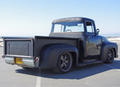
I just finished rewiring my 56. And cleaning up more stuff in the engine bay. This is a picture of when I got the truck a couple years back, with a 460 and C6. Now it has a Ford Racing sealed 347JR with C4 placed with the #1 cylinder behind the front axle line.

You can see 3 Mil Spec electrical connectors on the firewall driver's side. I stuck to Mil Spec type methods for much of the wiring, especially inside the engine bay.
Gustave
I just finished rewiring my 56. And cleaning up more stuff in the engine bay. This is a picture of when I got the truck a couple years back, with a 460 and C6. Now it has a Ford Racing sealed 347JR with C4 placed with the #1 cylinder behind the front axle line.
You can see 3 Mil Spec electrical connectors on the firewall driver's side. I stuck to Mil Spec type methods for much of the wiring, especially inside the engine bay.
Gustave
Thread Starter
|
Senior User
Joined: Sep 2009
Posts: 289
Likes: 3
From: Van Nuys, CA
Here you can see the wiring of one of the firewall connectors. In this case a rather large one carrying a bunch of 12 Gauge wires for the electric fan and lights. The wire is surplus airframe stuff. 19 strand silver or tin plated copper with Teflon jacket. I went all white because it's cheaper that way, and it is the way it's done on military stuff. Plus I was pretty confident I could track down any issues with my multimeter.

This next pic is a close up of the same grouping of connectors. I sealed up many of the holes in the firewall (and there are a lot!). I'm not an expert welder or bodyman, but I did my best, working slowly. The firewall is far from straight though. I did not bother trying any body filler or anything as I plan to pull the cab and sand blast/paint it next summer. I may just replace the firewall with a new panel at that time.

This next pic is a close up of the same grouping of connectors. I sealed up many of the holes in the firewall (and there are a lot!). I'm not an expert welder or bodyman, but I did my best, working slowly. The firewall is far from straight though. I did not bother trying any body filler or anything as I plan to pull the cab and sand blast/paint it next summer. I may just replace the firewall with a new panel at that time.
Thread Starter
|
Senior User
Joined: Sep 2009
Posts: 289
Likes: 3
From: Van Nuys, CA
The 347JR engine is pretty mild. It's built on the new Ford Racing Boss 302 block, which is pretty rugged stuff. They stroke it out to 363, so the 347 with stout parts should last. It's got a baby cam, 350HP, 400ftlbs so good for driveability and auto-x which I want to do. Next year I will go fuel injection, probably with Motec. Down the road I'd love to do a low boost dual turbo addition.
Here is a pic of the inside of the cab during the rewire. You can see the Spal fan controller and the MSD 6A ignition box on the opposite side. That is also where I mounted the fuse/relay panel I made. The truck uses a Wilwood pedal cluster with dual Tilton master cylinders. I used a Kugel brake fluid reservoir, which I Scotch brited and then had black anodized. I needed something higher than the master cylinders and there were not too many places to go! Plus it looks kind of like some type of aircraft stuff which is the look I'm going for.

The next pic shows the instrument binnacle I made, which houses the tach an speedo from Moal Coachworks. I wired it with a Deutsch DTM connector so that it can be easily removed.

Here is a pic of the inside of the cab during the rewire. You can see the Spal fan controller and the MSD 6A ignition box on the opposite side. That is also where I mounted the fuse/relay panel I made. The truck uses a Wilwood pedal cluster with dual Tilton master cylinders. I used a Kugel brake fluid reservoir, which I Scotch brited and then had black anodized. I needed something higher than the master cylinders and there were not too many places to go! Plus it looks kind of like some type of aircraft stuff which is the look I'm going for.
The next pic shows the instrument binnacle I made, which houses the tach an speedo from Moal Coachworks. I wired it with a Deutsch DTM connector so that it can be easily removed.
Thread Starter
|
Senior User
Joined: Sep 2009
Posts: 289
Likes: 3
From: Van Nuys, CA
This is a picture showing the brake hard lines coming out of the cab down to the frame. One of the pictures above showed the brake lines inside the cab. I tried to stay with solid stainless tube as much as possible to reduce brake pedal travel. I added the loops just to provide some flexibility as the cab moves a bit relative to the frame.

This next pic shows the fan connector and the little bracket I made to hold it. The 12 point fasteners are just for fun. I like how they look and get them as aircraft surplus. The Raychem DR25 heatshrink is way overkill and frighfully expensive, but I had some left over from another project. So I did what any hot rodder would do and used what I had at my disposal.

This next pic shows the fan connector and the little bracket I made to hold it. The 12 point fasteners are just for fun. I like how they look and get them as aircraft surplus. The Raychem DR25 heatshrink is way overkill and frighfully expensive, but I had some left over from another project. So I did what any hot rodder would do and used what I had at my disposal.
Trending Topics
Thread Starter
|
Senior User
Joined: Sep 2009
Posts: 289
Likes: 3
From: Van Nuys, CA
This is a good picture of the Wilwood pedal cluster and the brake hard lines. I need to make a longer pedal arm, which is something I am working on. I love the feel of manual brakes, but am willing to give up a bit more pedal travel for decreased braking effort. Right now the ergonomics of the brake pedal and throttle pedal are not ideal.

The next picture shows how the wiring loom follows along the frame rail to the front of the truck. It was not really my intention to "hide" the wiring. Wires are part of what make a vehicle do what it does, I don't see the point in hiding them. Rather I wanted to do them in a nice style and sort of "celebrate" the wiring, if that makes any sense.
You can also see the reworked sway bar drop links. I had to move the attachment point to the upper A-arm and make the drop links longer. This to get a better geometry and prevent the binding that was going on before when it was mounted to the lower control arms.

This pic shows one of the brake flex lines I built. I wanted them as short as possible with a clean routing. I checked them at full lock obviously and there are no issues with stretching the lines at all. They remain slack.
The brakes are 14" Wilwood rotors with 6-piston calipers. Shocks are Bilstein ASN with Eibach springs.
You can see the Green dye on the upper sway bar drop link bolt. This is done to indicate the bolt was "certified" (more surplus aircraft stuff)

The next picture shows how the wiring loom follows along the frame rail to the front of the truck. It was not really my intention to "hide" the wiring. Wires are part of what make a vehicle do what it does, I don't see the point in hiding them. Rather I wanted to do them in a nice style and sort of "celebrate" the wiring, if that makes any sense.
You can also see the reworked sway bar drop links. I had to move the attachment point to the upper A-arm and make the drop links longer. This to get a better geometry and prevent the binding that was going on before when it was mounted to the lower control arms.
This pic shows one of the brake flex lines I built. I wanted them as short as possible with a clean routing. I checked them at full lock obviously and there are no issues with stretching the lines at all. They remain slack.
The brakes are 14" Wilwood rotors with 6-piston calipers. Shocks are Bilstein ASN with Eibach springs.
You can see the Green dye on the upper sway bar drop link bolt. This is done to indicate the bolt was "certified" (more surplus aircraft stuff)
FTE Stories
Ford Trucks for Ford Truck Enthusiasts

Top 10 Fords at 2026 Carlisle Ford Nationals
Joe Kucinski
3 Best / 3 Worst Parts of Modern Ford Ownership
Brett Foote
10 Amazing Upgrades That Solve Common Ford Truck Owner Headaches
Pouria Savadkouei
Every 2026 Ford Engine Explained
Brett Foote
10 Ugly Ford Trucks That We Still Kinda Love
Joe Kucinski
10 Things Every Truck Owner NEEDS (2026 Edition)
Michael S. Palmer
Rezvani's Latest Post-Apocalyptic Monster Is a Ford F-150 Raptor Underneath
Verdad Gallardo
Top 10 Most Expensive Ford Trucks Ever Sold on Bring a Trailer
Joe Kucinski
2027 Ford Super Duty Buyer's Guide (Every Model, Engine, & Package)
Brett Foote






Thread Starter
|
Senior User
Joined: Sep 2009
Posts: 289
Likes: 3
From: Van Nuys, CA
The steering column is an Ididit floor shift tilt model in plain steel. I cut off the ugly GM turn signal switch connector.

And wired the column to a mil spec switch so that it can still be easily removed from the vehicle. I need to take a pic of this when it was finished. In retrospect I probably should have removed the switch from the column to extend the wires.

Then here is the right side firewall. You can see the waviness from my work filling the various holes. No filler, I did not want to bother now and was not sure how much better I could get it to look in any case. One can see the connector for the coil and distributor and choke wires. And the right side brake hard line.

I moved the start relay (which everyone calls a solenoid) inside the cab. I added two battery cable pass throughs which can be seen. One wire comes from the battery, the other is going out to the starter.
The heater I just added pass throughs, but I don't have the heater installed yet so no hoses.
All the AN fittings are new. But I used the oven cleaner technique to remove the blue anodizing which gives them a nice patina if you put them in the oven afterwards at about 250°F for 15 minutes. I don't like anything to be too shiny.
I need to take some more pictures now that things are more complete.
Gustave
And wired the column to a mil spec switch so that it can still be easily removed from the vehicle. I need to take a pic of this when it was finished. In retrospect I probably should have removed the switch from the column to extend the wires.
Then here is the right side firewall. You can see the waviness from my work filling the various holes. No filler, I did not want to bother now and was not sure how much better I could get it to look in any case. One can see the connector for the coil and distributor and choke wires. And the right side brake hard line.
I moved the start relay (which everyone calls a solenoid) inside the cab. I added two battery cable pass throughs which can be seen. One wire comes from the battery, the other is going out to the starter.
The heater I just added pass throughs, but I don't have the heater installed yet so no hoses.
All the AN fittings are new. But I used the oven cleaner technique to remove the blue anodizing which gives them a nice patina if you put them in the oven afterwards at about 250°F for 15 minutes. I don't like anything to be too shiny.
I need to take some more pictures now that things are more complete.
Gustave