When you click on links to various merchants on this site and make a purchase, this can result in this site earning a commission. Affiliate programs and affiliations include, but are not limited to, the eBay Partner Network.
Must not be a big problem as they worked as well in reverse. What was push is now pull. We had M48s and M88s in some tough spots in Korea (13th Engineers) and never threw a track.
Rear drive is more commonly used for packaging reasons that's it. Front drive is the preferred way to drive caterpillar tracks. That is the reason the vast majority of tracked vehicles through out history have been front sprocket drives. Even today the only rear drive caterpillar tracked vehicles in the U.S army are the MBT chassis's, and this was due to packaging, everything else is front sprocket drive. And this is not just for the U.S but for every body.
Don't mean to be whipping a dead horse, but can you show me a Caterpillar, John Deere, International Harvester, Allis Chalmers, Fiat, Dresser, Mitsubishi, et al crawler, that has front sprocket drive? The law of physics states; "It is much easier to pull rope than to push it". Even excavators and tracked cranes that have hydrostatic drives, where the location of the sprockets could be moot, they are still on the rear.
They will both work quite well if the front drive sprocket is higher allowing the slack to hang down . I drive a snowcat ( rear drive ) in the winter and it is an amazing machine for pushing huge amounts of snow but will back blade only a fraction without skipping on the drives as the slack is concentrated in a very small area between the drive sprocket and the ground .
Don't mean to be whipping a dead horse, but can you show me a Caterpillar, John Deere, International Harvester, Allis Chalmers, Fiat, Dresser, Mitsubishi, et al crawler, that has front sprocket drive? The law of physics states; "It is much easier to pull rope than to push it". Even excavators and tracked cranes that have hydro-static drives, where the location of the sprockets could be moot, they are still on the rear.
That is packaging. And this is why on the big dozers they moved the sprockets off the rear and mounted them high as rear position has disadvantages especially in track clearing in muddy conditions. The other advantage of front sprocket drives is it allows for much higher speeds as the unsupported portion of the track is under tension to help prevent fly out from centrifugal forces. There is also the issues of brake dive which is more pronounced in rear drive units, additionally the possibly of throwing tracks during brake turns is much higher in rear drive units as the slack collects in front of the drive..
In cranes and other low speed equipment their is is no advantage to driving the rear or the front except in track clearing for mud as they have no suspension. The majority of tracked vehicles that operate at other single digit speeds are front drive. The exception being modern MBT's which are rear drive for packaging and armour protection and weight distribution reasons, and even the then there are exceptions such as the Merkva.
Other than MBT's and low speed equipment you are hard pressed to find rear driven tracked vehicles.
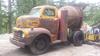
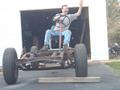
While exploring on the site I came across these pictures and wondered what they were used for then noticed the float plane in the background and figured it out then googled , Thought they were odd enough to post in this thread
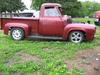
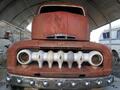
Here is an unusual Marmon-Herrington custom F1 for sale locally.
Check out what looks to be 5-lug wheels? The cab says F1, but the front fenders appear to be F2-and up.
Not sure if this is a custom coach built rig, or what.
This Hennessey Takes the Expedition Tremor's Off-Roading Capability to the Next Level
Slideshow: The VelociRaptor Expedition gains a lift, upgraded suspension, Brembo brakes, and trail-ready equipment while retaining the stock 440-horsepower EcoBoost V6.
Rezvani's Latest Post-Apocalyptic Monster Is a Ford F-150 Raptor Underneath
Slideshow: Called the Fortress, the 850-horsepower pickup combines Raptor underpinnings with military-inspired features, survival equipment, and a starting price of $285,000.