


Need a consistent paint recipe


Thread Starter
|
Senior User
Joined: Jun 2005
Posts: 321
Likes: 0
From: Atlanta
Need a consistent paint recipe
I am going to repaint a 77 F100. It is red now. What I need is a consistent "recipe" so I don't buy incompatible primer/sealer/paint/clearcoat. Assume that everything comes from Eastwood.
Since the truck had rust and a few dents, there are patches that will be bare metal, patches that are bondo, and patches where I'll be scuffing up the original paint.
Here is what I THINK will work, you guys tell me where I am wrong.
1) Eastwood Metal Glaze to fill small scratches and finish the bondo areas.
2) Eastwood Epoxy Primer, 1 Gallon, 1:1
-- do I need to etch or prep the bare metal before this epoxy primer??? If so, what do I use? Eastwood metal prep?
3) Do I need a build-up primer at this point? I think I do.
4) Do I need a primer sealer at this point?
5) Paint: Eastwood 2:1 Urethane Base (Candy Apple) 1 Gal
6) Eastwood Clear Urethane (1 Gal)
What I am looking for is a consistent formula so that I don't buy incompatible products. I'd love it if the Eastwood site had a "paint for dummys" section and it said "If you are doing this... buy this, this, and this".
Help me out please, I don't want to spend $500 and wind up with crap.
Since the truck had rust and a few dents, there are patches that will be bare metal, patches that are bondo, and patches where I'll be scuffing up the original paint.
Here is what I THINK will work, you guys tell me where I am wrong.
1) Eastwood Metal Glaze to fill small scratches and finish the bondo areas.
2) Eastwood Epoxy Primer, 1 Gallon, 1:1
-- do I need to etch or prep the bare metal before this epoxy primer??? If so, what do I use? Eastwood metal prep?
3) Do I need a build-up primer at this point? I think I do.
4) Do I need a primer sealer at this point?
5) Paint: Eastwood 2:1 Urethane Base (Candy Apple) 1 Gal
6) Eastwood Clear Urethane (1 Gal)
What I am looking for is a consistent formula so that I don't buy incompatible products. I'd love it if the Eastwood site had a "paint for dummys" section and it said "If you are doing this... buy this, this, and this".
Help me out please, I don't want to spend $500 and wind up with crap.

Cranky Old Guy
Joined: Mar 2008
Posts: 3,562
Likes: 6
From: Raphine, Virginia
I'll say it again. Support your local auto paint supplier. They will tell you exactly what you need and keep everything in one product line for you. Internet ordering paint is for the guy's that know exactly what they are buying and how it's going to react. I do buy paint on the internet, but it is always something I have already used and can beat my local price.
Cargo Master
Joined: Apr 2010
Posts: 2,936
Likes: 9
From: Acworth, GA
I'll say it again. Support your local auto paint supplier. They will tell you exactly what you need and keep everything in one product line for you. Internet ordering paint is for the guy's that know exactly what they are buying and how it's going to react. I do buy paint on the internet, but it is always something I have already used and can beat my local price.

Tuned


Joined: Aug 2007
Posts: 459
Likes: 123
From: Maryland
Responses below in blue
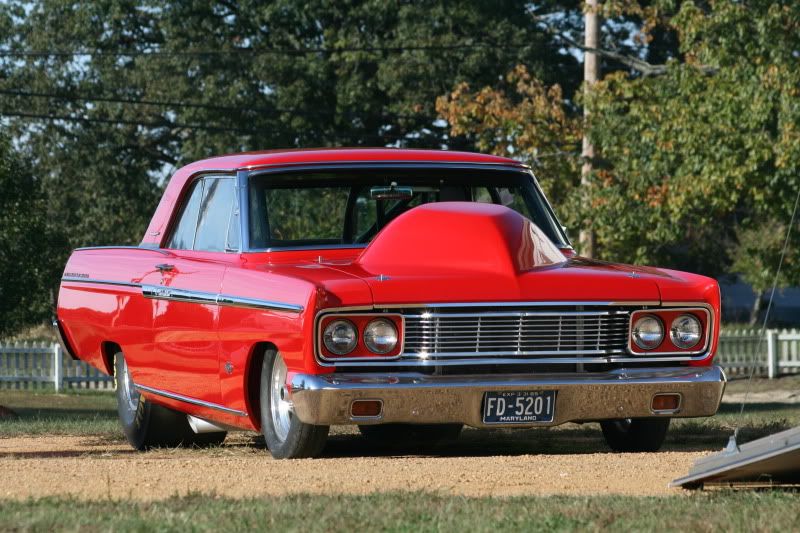
I finished a 65 Fairlane race car a couple years ago. Although I was spraying the insides of most of the panels, I went through about 2-1/2 gallons of basecoat Viper red alone, not including the basecoat activator. This wasn't using a premium brand like Dupont Chromabase, PPG, etc, and I still had around 1K just in the basecoat (red is pricey). You may want to look further into paint amounts needed for a full size pickup, but then the majority of my work is the metalwork prior to painting, so check your paint jobber for recommendation. Also, be wary of info you get on a forum. You are wise in recognizing the need for compatibility throughout the process. Unfortunately, someone would read your post and respond, just raving about how well the Ospho type product worked on getting rid of the rust so they didn't have to sandblast or sand as much. (shortcuts in prep) If their car is still in process, not yet fully painted, they may have no clue (yet) as to compatibility issues, and you now risk thousands of dollars in paint products taking advise from someone who hasn't finished a paint job, but is somehow an expert on rust conversion coatings/metal prep. Keep asking yourself how much money you will be spraying on top of each product and if it is up to the job. That includes a good starting point of structurally sound steel. I would suggest as a good start to research on the web site for Southern Polyurethanes (SPI) and read through their forums. Although much of it is geared toward their products (which I have not used yet, by the way) there is quite a bit of reading that should help you understand what you should and should not do.
In closing, don't think Eastwood is the only game in town. Do some more research and you will find most all of their products can be found elsewhere for less. So if their paint products are that much less than your Duponts, PPG's, House of Kolor, etc, then it is because they are selling cheaper paints with their label on it. Most of the paiint manufacturer's have a cheaper product line that would save you some money, Dupont is Nason, PPG is Omni (I believe), H/K is Valspar, etc. So if money is a factor, then by all means research those economy product lines as well. In respect to using your local paint jobbers, most of their customers are collision shops, so they are selling to someone who starts and finishes most jobs in three days or less. A good epoxy needs 24 hours or so to cure, so epoxy is not typically used in the collision industry. You will likely be spending more than three days on your paint job, so epoxy is your best choice for direct to metal primer. Don't let someone behind the counter talk you out of it just because their primary customers (the collision shops) don't use it. Most restoration shops do, so definitely stick with epoxy.
I am going to repaint a 77 F100. It is red now. What I need is a consistent "recipe" so I don't buy incompatible primer/sealer/paint/clearcoat. Assume that everything comes from Eastwood.
Since the truck had rust and a few dents, there are patches that will be bare metal, patches that are bondo, and patches where I'll be scuffing up the original paint.
Here is what I THINK will work, you guys tell me where I am wrong.
1) Eastwood Metal Glaze to fill small scratches and finish the bondo areas.
2) Eastwood Epoxy Primer, 1 Gallon, 1:1
-- do I need to etch or prep the bare metal before this epoxy primer??? If so, what do I use? Eastwood metal prep?
I'm not a fan of metal prep out of a can. It amounts to an acid, and reacts with some paints if not compatible, or if not neutralized properly. Quite a bit of money gets spent on paint products, and the metal prep reaction with the paint normally happens after heated up sitting in the sun at your first show...you'll see tiny circles appearing in the paint where the Epoxy is lifting from a reaction. .....and how much did you spend on those paint products just to have an adhesion problem? My version of "metal prep" is to use an abrading process that doesn't deform the metal, any pitting is tested for strength with an ice pick. If the ice pick goes through, it wouldn't have held paint for very long, weld in some new metal. Most good epoxies are a direct to metal primer, so the etch is not needed. Besides, etch sometimes reacts with different fillers, it should be sprayed on metal only in most cases.
3) Do I need a build-up primer at this point? I think I do.
High build primer will help to block out all the minor defects in the sheet metal, especially with you indicating there are areas of dents, etc. being fixed.
4) Do I need a primer sealer at this point?
High build is not neccessarily a sealer. It should be sealed to prevent the high build from absorbing all you solvents when you start with spraying your base coats. A good epoxy, slightly thinned, can serve as your sealer once you're done with all the blocking.
5) Paint: Eastwood 2:1 Urethane Base (Candy Apple) 1 Gal
6) Eastwood Clear Urethane (1 Gal)
The biggest problem with mail order anything, is figuring out halfway through the spraying process that you didn't order enough paint. A local paint jobber ten minutes away can prove to be a life saver, in a case like this. If you ordered mail order, his products may not be compatible with Eastwoods.
What I am looking for is a consistent formula so that I don't buy incompatible products. I'd love it if the Eastwood site had a "paint for dummys" section and it said "If you are doing this... buy this, this, and this".
Help me out please, I don't want to spend $500 and wind up with crap.
Since the truck had rust and a few dents, there are patches that will be bare metal, patches that are bondo, and patches where I'll be scuffing up the original paint.
Here is what I THINK will work, you guys tell me where I am wrong.
1) Eastwood Metal Glaze to fill small scratches and finish the bondo areas.
2) Eastwood Epoxy Primer, 1 Gallon, 1:1
-- do I need to etch or prep the bare metal before this epoxy primer??? If so, what do I use? Eastwood metal prep?
I'm not a fan of metal prep out of a can. It amounts to an acid, and reacts with some paints if not compatible, or if not neutralized properly. Quite a bit of money gets spent on paint products, and the metal prep reaction with the paint normally happens after heated up sitting in the sun at your first show...you'll see tiny circles appearing in the paint where the Epoxy is lifting from a reaction. .....and how much did you spend on those paint products just to have an adhesion problem? My version of "metal prep" is to use an abrading process that doesn't deform the metal, any pitting is tested for strength with an ice pick. If the ice pick goes through, it wouldn't have held paint for very long, weld in some new metal. Most good epoxies are a direct to metal primer, so the etch is not needed. Besides, etch sometimes reacts with different fillers, it should be sprayed on metal only in most cases.
3) Do I need a build-up primer at this point? I think I do.
High build primer will help to block out all the minor defects in the sheet metal, especially with you indicating there are areas of dents, etc. being fixed.
4) Do I need a primer sealer at this point?
High build is not neccessarily a sealer. It should be sealed to prevent the high build from absorbing all you solvents when you start with spraying your base coats. A good epoxy, slightly thinned, can serve as your sealer once you're done with all the blocking.
5) Paint: Eastwood 2:1 Urethane Base (Candy Apple) 1 Gal
6) Eastwood Clear Urethane (1 Gal)
The biggest problem with mail order anything, is figuring out halfway through the spraying process that you didn't order enough paint. A local paint jobber ten minutes away can prove to be a life saver, in a case like this. If you ordered mail order, his products may not be compatible with Eastwoods.
What I am looking for is a consistent formula so that I don't buy incompatible products. I'd love it if the Eastwood site had a "paint for dummys" section and it said "If you are doing this... buy this, this, and this".
Help me out please, I don't want to spend $500 and wind up with crap.
I finished a 65 Fairlane race car a couple years ago. Although I was spraying the insides of most of the panels, I went through about 2-1/2 gallons of basecoat Viper red alone, not including the basecoat activator. This wasn't using a premium brand like Dupont Chromabase, PPG, etc, and I still had around 1K just in the basecoat (red is pricey). You may want to look further into paint amounts needed for a full size pickup, but then the majority of my work is the metalwork prior to painting, so check your paint jobber for recommendation. Also, be wary of info you get on a forum. You are wise in recognizing the need for compatibility throughout the process. Unfortunately, someone would read your post and respond, just raving about how well the Ospho type product worked on getting rid of the rust so they didn't have to sandblast or sand as much. (shortcuts in prep) If their car is still in process, not yet fully painted, they may have no clue (yet) as to compatibility issues, and you now risk thousands of dollars in paint products taking advise from someone who hasn't finished a paint job, but is somehow an expert on rust conversion coatings/metal prep. Keep asking yourself how much money you will be spraying on top of each product and if it is up to the job. That includes a good starting point of structurally sound steel. I would suggest as a good start to research on the web site for Southern Polyurethanes (SPI) and read through their forums. Although much of it is geared toward their products (which I have not used yet, by the way) there is quite a bit of reading that should help you understand what you should and should not do.
In closing, don't think Eastwood is the only game in town. Do some more research and you will find most all of their products can be found elsewhere for less. So if their paint products are that much less than your Duponts, PPG's, House of Kolor, etc, then it is because they are selling cheaper paints with their label on it. Most of the paiint manufacturer's have a cheaper product line that would save you some money, Dupont is Nason, PPG is Omni (I believe), H/K is Valspar, etc. So if money is a factor, then by all means research those economy product lines as well. In respect to using your local paint jobbers, most of their customers are collision shops, so they are selling to someone who starts and finishes most jobs in three days or less. A good epoxy needs 24 hours or so to cure, so epoxy is not typically used in the collision industry. You will likely be spending more than three days on your paint job, so epoxy is your best choice for direct to metal primer. Don't let someone behind the counter talk you out of it just because their primary customers (the collision shops) don't use it. Most restoration shops do, so definitely stick with epoxy.


Thread
Thread Starter
Forum
Replies
Last Post


