



Using seafoam

Cranky Old Guy
Joined: Mar 2008
Posts: 3,562
Likes: 6
From: Raphine, Virginia
I will use Seafoam, but only thru the carb. It cleans too good. An old fuel tank it will loosen up everything and clog the fuel sock. For the crankcase, ATF as suggested, but my favorite is Marvel Mystery oil. Will free up lifters, but not break everything loose enough to clog everything else.

Posting Guru
Joined: Mar 2009
Posts: 1,395
Likes: 0
From: Alabama
I have used Marvel Mystery Oil a couple of times, usually about 2-3 days before I plan on changing the oil, I have a buddy that runs a bottle with each oil change? Not 100% sure if that is good or not, but his 302 still runs great...

Senior User
Joined: May 2010
Posts: 129
Likes: 0
A while back i had a mech. fuel pump diaphram rupture an drove like that for some time. entire valve cover area both sides was full of soft serve ice cream. chocolate? anyway i used a bottle of engine cleaner and ran it for about 20 minutes dumped oil and wow.. all the gunk was gone. very clean. Can't remember the name or brand but was some off the shelf Lordco. product. In any case i'm sure which ever you choose will give you piece of mind regardless.

Tuned
Joined: Mar 2011
Posts: 320
Likes: 0
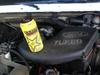
Yes. On the Grand Cherokee you will feed it through the brake booster vacuum line instead of the carb throat (Obviously, you have no carb!). Pour it in SLOWLY, don't just put the line in the can and let the vacuum suck it dry. Other than that everything is the same. I use a transmission funnel to give me a bigger target to hit. Nerve damage + copious amounts of caffeine = SHAKY hands.
Elder User
Joined: Apr 2011
Posts: 632
Likes: 1
From: Bremerton, Wa
I havn't used SeaFoam on anything with a carb yet,
but I use it every other oil change in my 2001 5.3 Tahoe
I put about half the can in the engine oil, drive it for a day or so.
then when I'm getting ready to do the oil change,
I warm up the vehicle, pour the remaining half a bottle in thru the brake booster line carefull not to kill the engine (if you kill the engine, it is possible to hydro lock the engine, but more likely you will get the seafoam pooled in the intake which isn't good either)
as soon as I finish the bottle, I will shut off the engine
then start changing the oil. (this gives the seafoam time to sit in the intake/cylinders)
after changing the oil, fire up the vehicle
once it's warmed back up, and the thick white smoke starts to clear,
you wanna take the vehicle out and run the engine thru the rpm range at full throttle
blow out all the crap.
you'll be surprized how much better the vehicle runs after doing this.
much better throttle response, and better pulling (especially after the first time doing this)
do a youtube search for seafoam
but I use it every other oil change in my 2001 5.3 Tahoe
I put about half the can in the engine oil, drive it for a day or so.
then when I'm getting ready to do the oil change,
I warm up the vehicle, pour the remaining half a bottle in thru the brake booster line carefull not to kill the engine (if you kill the engine, it is possible to hydro lock the engine, but more likely you will get the seafoam pooled in the intake which isn't good either)
as soon as I finish the bottle, I will shut off the engine
then start changing the oil. (this gives the seafoam time to sit in the intake/cylinders)
after changing the oil, fire up the vehicle
once it's warmed back up, and the thick white smoke starts to clear,
you wanna take the vehicle out and run the engine thru the rpm range at full throttle
blow out all the crap.
you'll be surprized how much better the vehicle runs after doing this.
much better throttle response, and better pulling (especially after the first time doing this)
do a youtube search for seafoam
FTE Stories
Ford Trucks for Ford Truck Enthusiasts

Top 10 Fords at 2026 Carlisle Ford Nationals
Joe Kucinski
3 Best / 3 Worst Parts of Modern Ford Ownership
Brett Foote
10 Amazing Upgrades That Solve Common Ford Truck Owner Headaches
Pouria Savadkouei
Every 2026 Ford Engine Explained
Brett Foote
10 Ugly Ford Trucks That We Still Kinda Love
Joe Kucinski
10 Things Every Truck Owner NEEDS (2026 Edition)
Michael S. Palmer
Rezvani's Latest Post-Apocalyptic Monster Is a Ford F-150 Raptor Underneath
Verdad Gallardo
Top 10 Most Expensive Ford Trucks Ever Sold on Bring a Trailer
Joe Kucinski
2027 Ford Super Duty Buyer's Guide (Every Model, Engine, & Package)
Brett Foote
New User
Joined: May 2010
Posts: 7
Likes: 0
i use sea foam in my 6.0 diesel, and the work truck diesel. Keeps the fuel from gelling up in cold conditions. { i work up the summit of mauna kea, and it get pretty freaking cold. Below freezing at night}. I also put it in my miller welder, maybe a few cap fulls, dont know if it helps much, but i do what ever i can.

Junior User
Joined: Sep 2010
Posts: 97
Likes: 0
That could be part of the problem. Most people aren't privy to the kind of information that can be had when working in a large chemical plant. After running all of the top oils synthetic and non-synthetic through a centrifuge I can tell you I wouldn't put quaker state into anything, in fact it's the last oil I'd choose. If you love your vehicle and want to avoid having to clean out the sludge in the first place, I'd put Mobile1 synthetic in there.

Elder User
Joined: Apr 2011
Posts: 632
Likes: 1
From: Bremerton, Wa
if your engine already leaks a little, there is potential for the detergants to dis-lodge some of the gunk holding the tiny leaks tight.
I've switched several vehicles over 100K miles to full syn with no adverse effects.
great example, in 2005 I picked up a 1988 Acura Integra DOHC 1.6L with 130K on it
immediately swapped to full syn
engine noise went down, milage went up
I did 5K mile oil changes until 195K miles last summer when I sold her
used about 1/2 quart per oil change (never even topped it off)
it never left a spot anywhere
also in spring 2010 I switched my 2001 Tahoe 5.3 with 80K on it to full syn
have just over 105K on it now, do oil changes at 5K
tahoe uses about 3/4 quart per 5K oil change
about the same as a 10K mile LS based smallblock
I put a syn blend in my 460 when I picked her up
havn't driven enough to tell it's using any
Elder User
Joined: Apr 2011
Posts: 632
Likes: 1
From: Bremerton, Wa
if you develop leaks, you already had them, they were just plugged with dirt

you will have the same problems if you run seafoam, atf, or any other pre-oil change deergent

Senior User
Joined: May 2011
Posts: 207
Likes: 0
From: Erin, TN
Seafoam is great for cleaning. Especially the through the carb/intake and vacuum lines. What I generally do is add 1/3 of the can to the crankcase(about 100 miles before changing the oil) a 1/3 of the can through the gas can, and a 1/3 of the can I use for the vac lines/intake by removing the vacuum line from the brake booster (after the motor is warm) and SLOWLY let the vacuum suck the seafoam in, let sit about an hour, start that beast back up and go drive around (or rev the motor in park) and enjoy the smokeshow. IMHO it is more effective running through the intake than anywhere. I see a considerable difference in idle and overall performance of the motor. Of course this is a repetitive thing kinda like changing the oil.