Brakes Pulsing

Thread Starter
|
Elder User


Joined: Apr 2010
Posts: 901
Likes: 0
From: South Jersey
Brakes Pulsing
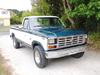
So I've noticed when I hit the brake pedal in my truck I can feel a pulse in the pedal and also get that bouncy/jerky feeling in my body as the truck slows. I'm used to it and I'm holding onto the steering wheel so it doesn't bother me too much the passengers in my truck bounce around like their spine is a whip. ( I'm exaggerating for effect but they do bounce).
But anyway, it's an annoying problem. I assume this probably is due to my front rotors being warped. I'm guessing I could take them somewhere and get them turned and suppose this should be my first choice. Please let me know if anyone disagrees.
FULL DISCLOSURE AND NOT SURE IF RELEVANT BUT HERE GOES:
About a year ago when I got the truck I had to press the pedal pretty far down to the floor to get it to engage. Turned out I needed to manually adjust the rear brake shoes. I have also replaced the master cylinder, brake hoses, brake lines, and front brake shoes. The rear drums had plenty of life left in them but they may be ready for another manual adjustment soon.
I did a search and it looks like if the rotors can't be turned that I have a decision to make. It seems you can buy the rotor or a rotor and hub assembly. And because mine is a 4x4 getting the rotor off is more difficult and if you're only replacing the rotor you can risk damaging it using an old hub. Not sure what's truth and what's fiction so I'm asking you guys for advice.
TIA.
But anyway, it's an annoying problem. I assume this probably is due to my front rotors being warped. I'm guessing I could take them somewhere and get them turned and suppose this should be my first choice. Please let me know if anyone disagrees.
FULL DISCLOSURE AND NOT SURE IF RELEVANT BUT HERE GOES:
About a year ago when I got the truck I had to press the pedal pretty far down to the floor to get it to engage. Turned out I needed to manually adjust the rear brake shoes. I have also replaced the master cylinder, brake hoses, brake lines, and front brake shoes. The rear drums had plenty of life left in them but they may be ready for another manual adjustment soon.
I did a search and it looks like if the rotors can't be turned that I have a decision to make. It seems you can buy the rotor or a rotor and hub assembly. And because mine is a 4x4 getting the rotor off is more difficult and if you're only replacing the rotor you can risk damaging it using an old hub. Not sure what's truth and what's fiction so I'm asking you guys for advice.
TIA.

Moderator


Joined: Jan 2001
Posts: 56,983
Likes: 2,736
From: Virginia

You are correct, it's the rotor or rotors being warped. While you do have to take the 4x4 hubs off, and take the wheel bearing spanner nuts loose, and then drive the the studs out, it's not too bad to change the rotors out for new ones.

Moderator


Joined: Nov 2007
Posts: 22,415
Likes: 92
From: Denver Metro Area, CO
Actually, nevermind.... I was hoping to find it in the shop manual but the Ford book refers to
the hub & rotor as an assembled unit, doesn't talk about how to separate them. I know it can
be done cuz I watched it done to my front brakes but that was 5 years ago and I don't
remember how they did it. I remember having to get some replacement studs, though....
the hub & rotor as an assembled unit, doesn't talk about how to separate them. I know it can
be done cuz I watched it done to my front brakes but that was 5 years ago and I don't
remember how they did it.
I remember having to get some replacement studs, though....
Thread Starter
|
Elder User
Joined: Apr 2010
Posts: 901
Likes: 0
From: South Jersey
it's an F150, 4x4, 6100GVWR.
i just found out my old man has one of those needle gauges that can measure how out of round the rotor is. i'll find out saturday what's up when i go down to visit.
Thread Starter
|
Elder User
Joined: Apr 2010
Posts: 901
Likes: 0
From: South Jersey
Furthermore, checking my official Ford shop manual it says the following:
(The finished braking surfaces of the rotor must be flat and parallel within .0178mm (.0007inch) for Integral Hub and Rotor, or 0.025mm (.001 inch) for Separate Hub and Rotor. Lateral run-out must not exceed .076mm (0.003 inch) for Integral Hub and Rotor at 26954mm (10.6inch) diameter; 0.127mm (0.005 inch) for all 4x4 vehicles with two-piece Hub and Rotor assemblies, 0.254mm (0.010inch) for all E-350, F-350 DRW with two-piece Hub and Rotor assemblies. The total indicator reading for two-piece Hub and Rotor units is taken on the inboard surface of the rotor at a 152.4mm (6 inches) radius. The surface finish of the braking surfaces must be 15 to 80 micro-inches.
Uhhhhhh, anyone have the English translation of above?
(The finished braking surfaces of the rotor must be flat and parallel within .0178mm (.0007inch) for Integral Hub and Rotor, or 0.025mm (.001 inch) for Separate Hub and Rotor. Lateral run-out must not exceed .076mm (0.003 inch) for Integral Hub and Rotor at 26954mm (10.6inch) diameter; 0.127mm (0.005 inch) for all 4x4 vehicles with two-piece Hub and Rotor assemblies, 0.254mm (0.010inch) for all E-350, F-350 DRW with two-piece Hub and Rotor assemblies. The total indicator reading for two-piece Hub and Rotor units is taken on the inboard surface of the rotor at a 152.4mm (6 inches) radius. The surface finish of the braking surfaces must be 15 to 80 micro-inches.
Uhhhhhh, anyone have the English translation of above?
Moderator
Joined: Nov 2007
Posts: 22,415
Likes: 92
From: Denver Metro Area, CO
The rotors need to be flat and smooth, 
Trending Topics
Moderator
Joined: Jan 2001
Posts: 56,983
Likes: 2,736
From: Virginia
Translation; Stick your Dad's needle thing(it's called a dial indicator) on the side of the rotor, and the needle should not wiggle back and forth more than .005 inches when you turn the rotor by hand.
FTE Stories
Ford Trucks for Ford Truck Enthusiasts

Top 10 Most Expensive Ford Trucks Ever Sold on Bring a Trailer
Joe Kucinski
2027 Ford Super Duty Buyer's Guide (Every Model, Engine, & Package)
Brett Foote
Top 10 Ford Truck Tragedies
Joe Kucinski
AEV FXL Super Duty - the Super Duty Raptor Ford Doesn't Make
Brett Foote
Lobo Vs Lobo: Proof the F-150 Lobo Should Be Even Lower!
Michael S. Palmer
Ford's 2001 Explorer Sportsman Concept Looks For a New Home
Verdad Gallardo
10 Best Ford Truck Engines We Miss the Most!
Joe Kucinski
2026 Shelby F-150 Off-Road: Better Than a Raptor R?
Brett Foote
2027 Super Duty Carhartt Package First Look: 12 Things You NEED to Know!
Michael S. Palmer
Thread Starter
|
Elder User
Joined: Apr 2010
Posts: 901
Likes: 0
From: South Jersey
So I hooked up the dial indicator today to the wheels. The drivers side was off .00575 so just over the .005 threshold. When you spin the wheel you can feel it "grab" in the caliper when it gets to the high point. Not a huge deal but then we checked the passenger side.
The passenger side is off a lot. It was off .020. So almost 4 times the allowable tolerance. So I'm going to need to replace both rotors.
From the limited research I've done I see I need to remove the hub to get to the rotor. And that replacements you can buy both the hub and a rotor. What advantage is there to buying both? Could the hub be causing a problem with the rotor too or I will I be safe only replacing the rotor?
Since I'm going to take the hubs off what else should I do while I'm in there and what else should I add to my grocery list. I assume I'll need that spanner locknut to get the hubs off. Are there seals in the hub that I need to replace too? As far as I know the bearings are still factory. I'm guessing at the least I should repack them but should those be replaced as well? Anything else I should do while I'm "in there?"
Here's a pic of the passenger side:

The passenger side is off a lot. It was off .020. So almost 4 times the allowable tolerance. So I'm going to need to replace both rotors.
From the limited research I've done I see I need to remove the hub to get to the rotor. And that replacements you can buy both the hub and a rotor. What advantage is there to buying both? Could the hub be causing a problem with the rotor too or I will I be safe only replacing the rotor?
Since I'm going to take the hubs off what else should I do while I'm in there and what else should I add to my grocery list. I assume I'll need that spanner locknut to get the hubs off. Are there seals in the hub that I need to replace too? As far as I know the bearings are still factory. I'm guessing at the least I should repack them but should those be replaced as well? Anything else I should do while I'm "in there?"
Here's a pic of the passenger side:
Moderator
Joined: Nov 2007
Posts: 22,415
Likes: 92
From: Denver Metro Area, CO
It's easier to install hub + rotor assemblies, thereby eliminating the need to separate the
pieces and attach new rotors but it's more expensive. I've watched 'em being separated
before but all I remember is a BFH and needing to replace some wheel studs. I suspect
the "proper" way involves a press.
I wouldn't replace the bearings unless they look scored or discolored; do a google of "how
to check wheel bearings" and see what you can learn. The shop manual has drawings of
what to look for but I don't have time right now to scan & upload.
Measure the size of the nut, those wrenches come in different sizes.
Grease seals are necessary on new rotors, I would prolly also replace the brake pads unless
there is more than half the pad remaining.
Get lots of brake cleaner.
pieces and attach new rotors but it's more expensive. I've watched 'em being separated
before but all I remember is a BFH and needing to replace some wheel studs. I suspect
the "proper" way involves a press.
I wouldn't replace the bearings unless they look scored or discolored; do a google of "how
to check wheel bearings" and see what you can learn. The shop manual has drawings of
what to look for but I don't have time right now to scan & upload.
Measure the size of the nut, those wrenches come in different sizes.
Grease seals are necessary on new rotors, I would prolly also replace the brake pads unless
there is more than half the pad remaining.
Get lots of brake cleaner.
Thread Starter
|
Elder User
Joined: Apr 2010
Posts: 901
Likes: 0
From: South Jersey
I found a shop that will turn each for $20. However i didn't call and I don't know if that means they will take off the rotor and turn it or if that's just the cost to turn them.
But it's the same shop that was recommended to me to get it aligned. I suppose getting it aligned requires taking apart a good deal of the front end anyway so perhaps the labor to get the rotor off would be included? Thoughts?
But it's the same shop that was recommended to me to get it aligned. I suppose getting it aligned requires taking apart a good deal of the front end anyway so perhaps the labor to get the rotor off would be included? Thoughts?