


how much power can the 6.7 make?


Post Fiend
Joined: Jul 2005
Posts: 6,127
Likes: 6
The Cat 15.2 model with 400hp is rated at around 1,500ft lbs of torque.
It weighs roughly 3,000 lbs installed, vs. less than 1/2 that of the 6.7
Torque is what matters, not power, going uphill.
The cat can also put out close to 400 hp (actually around 350ish) all day, all night, while the 6.7 will die a quick death if pushed to 350+ hp for any appreciable length of time.
The overheating you experienced in the Cat is a function of insufficient cooling (both rad and fan) which is not really an engine problem --- the chassis maker is responsible for that.
Note the 6.7 550 application is derated to 300hp and 660 ft lbs of torque.
In other words, it is roughly good for less than 1/2 the torque of the 15l Cat...
With a duty cycle of a medium duty --- vs heavy duty.
Super Moderator


Joined: Aug 2003
Posts: 25,478
Likes: 738
From: Isanti, MN

At the risk of derailing this thread further...
Uh...not really. 1500 ft-lbs @ 1,400 RPMs = 750 ft-lbs @ 2,800 RPMs. BOTH are exactly 400 HP!
That mythical engine belting out 1,500 ft-lbs is pulling exactly as hard as the one pulling half as hard but going twice as fast. Remember horsepower is torque at speed.
Without a doubt. Which is why semi trucks aren't running around with little 6.7L V8s a-screaming at 3,000 RPMs.
[QUOTE=Gearloose1The overheating you experienced in the Cat is a function of insufficient cooling (both rad and fan) which is not really an engine problem --- the chassis maker is responsible for that.[/QUOTE]
Exactly.
So with a much larger radiator my KW couldn't keep 435 HP cool up that hill under full load. I was using that to illustrate a point about how lots of power under full load for extended durations is a very difficult thing to engineer.
Which sounds to me like exactly the same argument you've been making!
That mythical engine belting out 1,500 ft-lbs is pulling exactly as hard as the one pulling half as hard but going twice as fast. Remember horsepower is torque at speed.
Originally Posted by Gearloose1
The cat can also put out close to 400 hp (actually around 350ish) all day, all night, while the 6.7 will die a quick death if pushed to 350+ hp for any appreciable length of time.
[QUOTE=Gearloose1The overheating you experienced in the Cat is a function of insufficient cooling (both rad and fan) which is not really an engine problem --- the chassis maker is responsible for that.[/QUOTE]
Exactly.
So with a much larger radiator my KW couldn't keep 435 HP cool up that hill under full load. I was using that to illustrate a point about how lots of power under full load for extended durations is a very difficult thing to engineer.
Which sounds to me like exactly the same argument you've been making!
Post Fiend
Joined: Jul 2005
Posts: 6,127
Likes: 6
A typical efficiency ratio for an on road diesel is about 37 to a peak of 45% conversion efficiency of fuel to mechanical energy.
That means the rest is dumped as heat either via the cooling system, tailpipe, or internal friction.
On the Kenworth... that is a lot of heat.
That means the rest is dumped as heat either via the cooling system, tailpipe, or internal friction.
On the Kenworth... that is a lot of heat.
Super Moderator
Joined: Aug 2003
Posts: 25,478
Likes: 738
From: Isanti, MN
A typical efficiency ratio for an on road diesel is about 37 to a peak of 45% conversion efficiency of fuel to mechanical energy.
That means the rest is dumped as heat either via the cooling system, tailpipe, or internal friction.
On the Kenworth... that is a lot of heat.
That means the rest is dumped as heat either via the cooling system, tailpipe, or internal friction.
On the Kenworth... that is a lot of heat.
A re-flashed 435 HP 6.7L PSD would put out nearly the exact same amount of heat as my KW did. Which means it is VERY hard to cool.
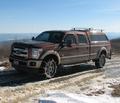

 Maybe that will be the attraction at the next truck pull.

Mountain Pass
Joined: Dec 2009
Posts: 224
Likes: 7
From: Regina, Saskatchewan
I frequently see people quote the derated power for the chassis cab trucks as an indication of decreased durability for these engines. The discussion with the engineers when these engines were introduced however suggested that the derate is mostly related to emissions certification i.e. they were less interested in increasing the durability than they were in decreasing the fueling to meet the emissions certification. They would probably reduce the HP some anyways, but I think it is more emissions than durability here. OTR heavy duty class 8's turn v low RPM's to keep the engine in its most efficient operating range and reduce pumping losses to maximize fuel mileage. That kind of performance characteristic would not be particularly desirable in a light duty pickup truck. IMHO.

Cross-Country
Joined: Sep 2010
Posts: 69
Likes: 0
I think you've been given false impressions as to why the engine is de-rated in higher-duty applications. If the de-rate was not to do with durability, then no one would be foolish enough to waste the power (=fuel=$$$) on dragging a twice-as-heavy 15L engine around in a class 8 truck which doesn't make any more power than the 6.7L). The de-rate is entirely to do with durability.

Post Fiend
Joined: Jul 2005
Posts: 6,127
Likes: 6
Derating (or simply not rating higher or lower), or limiting the engine's output has been done since the very first engines are made.
In the old days, it may be done with things like ensuring that certain components serve as choke points (e.g. smaller intake valves than can be installed), smaller carb, jets, etc.
Today, derating can be done via software, just as uprating can be done via programming.
Whenever you change the parameters, you are juggling a lot of things, from the output curve (biasing it for higher or lower RPMs etc.), fuel consumption, emissions, durability, etc.
It is very important to not just blame the emissions cert for the derating --- for it is but one part of the equation, and by no means necessarily the weakest link.
I write this to discourage people who think they can take off the emissions stuff, and then have the 6.7 put out more HP painlessly.
You can't.
An old engineering theorem is you can never eliminate bottlenecks, only move them.
It is not clear to me that the bottleneck to higher output in the 6.7 450/550 is in the emissions stuff.
I seriously suspect it is in the other components like valves and even pistons, yes, pistons.
Real HD trucks often use cast iron pistons, not aluminum.
Take a look at any heavy / medium duty diesel, and you will see it is normally available at a range of power / torque combos out of basically the identical engine except for software mostly.
When the power output plunges by over 100 hp between versions of the 6.7, and torque by a whopping amount (660ft lbs to 800), you can bet durability of the entire system was a major consideration ---- and that include not only the engine / block, but also emission components like the DPF that are rather expensive to replace / recall if it didn't last through the warranty period that is rather long.
For example, look at the Navistar engine ratings:
If there is a 80hp / 100ft lbs of torque difference, you bet there is a sizable difference in both fuel consumption / load on components.
Whereas on a light duty truck there is a fair amount of wiggle room --- how often do a 6.7 F series actually put out close to max power?
Maybe for 20 minutes in a tow up a hill once a month?
On a regular commercial medium duty vehicle, it has to put out close to its rated (e.g. 300hp for the 6.7) for as much as 50-70% of the time.
What does that mean?
Every component have to be able to take the stress, from the air intake, chassis, to the tailpipe.
That means withstanding and getting rid of heat roughly equal to its HP output regularly. (e.g. if conversion efficiency is 40%, then 60% is dissipated as heat. If 20% of this heat goes out the tailpipe, then it is roughly equal.)
That heat is dispersed via things from valves, valve seats, pistons, rings, head, cooling system, etc.
Oh.. the heat that goes down the tailpipe means....the DPF, SCR, DOC, everything have to withstand it.. as well as the heat from things like DPF cleaning.
That is an awful lot of heat --- and in a HD truck.. they have a motor 2 to 3X the mass of the 6.7 to handle this stress.
What does it mean if one component is way undersized?
Suppose the emissions is the bottleneck:
You can bet your last dollar that it is unacceptable for that vehicle to have a DPF / SCR / DOC that is by light truck standards, undersized.
Drive behind any regular gasser that is light duty rated when the driver has decided to take it to WOT for fun, and you will smell the stink of an overloaded Catalytic converter.
Ditto for the 6.7 F series.
That kind of undersizing is just not acceptable in the medium duty / heavy duty market.
To come back to it... is it emissions?
Not likely that is the weakest link because any medium / heavy duty truck are really operated under the gun --- with at least annual inspections in most jurisdictions, and EPAs crawling over them to look for fines.
Why would a manufacturer risk that both in terms of warranty costs and PO their best customers?
That is why, I do not believe emissions is the weakest link of the 6.7 450/550 version... it is in the motor elsewhere.
Sure, it is a part of the system... but no... it is the whole engine.
If you don't think so.. just visualize how a plugged DPF will do to engine temps.
It is the whole enchilada... not the emissions.
In the old days, it may be done with things like ensuring that certain components serve as choke points (e.g. smaller intake valves than can be installed), smaller carb, jets, etc.
Today, derating can be done via software, just as uprating can be done via programming.
Whenever you change the parameters, you are juggling a lot of things, from the output curve (biasing it for higher or lower RPMs etc.), fuel consumption, emissions, durability, etc.
It is very important to not just blame the emissions cert for the derating --- for it is but one part of the equation, and by no means necessarily the weakest link.
I write this to discourage people who think they can take off the emissions stuff, and then have the 6.7 put out more HP painlessly.
You can't.
An old engineering theorem is you can never eliminate bottlenecks, only move them.
It is not clear to me that the bottleneck to higher output in the 6.7 450/550 is in the emissions stuff.
I seriously suspect it is in the other components like valves and even pistons, yes, pistons.
Real HD trucks often use cast iron pistons, not aluminum.
Take a look at any heavy / medium duty diesel, and you will see it is normally available at a range of power / torque combos out of basically the identical engine except for software mostly.
When the power output plunges by over 100 hp between versions of the 6.7, and torque by a whopping amount (660ft lbs to 800), you can bet durability of the entire system was a major consideration ---- and that include not only the engine / block, but also emission components like the DPF that are rather expensive to replace / recall if it didn't last through the warranty period that is rather long.
For example, look at the Navistar engine ratings:
7 EPA 2010 , Euro III
V-8 220-300 hp (164 - 224 kW) @ 2600 rpm
560-660 lb.-ft. (762 - 898 Nm) @ 1400 rpm
V-8 220-300 hp (164 - 224 kW) @ 2600 rpm
560-660 lb.-ft. (762 - 898 Nm) @ 1400 rpm
If there is a 80hp / 100ft lbs of torque difference, you bet there is a sizable difference in both fuel consumption / load on components.
Whereas on a light duty truck there is a fair amount of wiggle room --- how often do a 6.7 F series actually put out close to max power?
Maybe for 20 minutes in a tow up a hill once a month?
On a regular commercial medium duty vehicle, it has to put out close to its rated (e.g. 300hp for the 6.7) for as much as 50-70% of the time.
What does that mean?
Every component have to be able to take the stress, from the air intake, chassis, to the tailpipe.
That means withstanding and getting rid of heat roughly equal to its HP output regularly. (e.g. if conversion efficiency is 40%, then 60% is dissipated as heat. If 20% of this heat goes out the tailpipe, then it is roughly equal.)
That heat is dispersed via things from valves, valve seats, pistons, rings, head, cooling system, etc.
Oh.. the heat that goes down the tailpipe means....the DPF, SCR, DOC, everything have to withstand it.. as well as the heat from things like DPF cleaning.
That is an awful lot of heat --- and in a HD truck.. they have a motor 2 to 3X the mass of the 6.7 to handle this stress.
What does it mean if one component is way undersized?
Suppose the emissions is the bottleneck:
You can bet your last dollar that it is unacceptable for that vehicle to have a DPF / SCR / DOC that is by light truck standards, undersized.
Drive behind any regular gasser that is light duty rated when the driver has decided to take it to WOT for fun, and you will smell the stink of an overloaded Catalytic converter.
Ditto for the 6.7 F series.
That kind of undersizing is just not acceptable in the medium duty / heavy duty market.
To come back to it... is it emissions?
Not likely that is the weakest link because any medium / heavy duty truck are really operated under the gun --- with at least annual inspections in most jurisdictions, and EPAs crawling over them to look for fines.
Why would a manufacturer risk that both in terms of warranty costs and PO their best customers?
That is why, I do not believe emissions is the weakest link of the 6.7 450/550 version... it is in the motor elsewhere.
Sure, it is a part of the system... but no... it is the whole engine.
If you don't think so.. just visualize how a plugged DPF will do to engine temps.
It is the whole enchilada... not the emissions.

Fleet Mechanic
Joined: Jun 2006
Posts: 1,684
Likes: 2
Hey Steve,
The PSD engines have always been used in trucks up to F-550s, and they have the exact same driveline as the F250-350 pickups with the exception of axles.
Different gearing in the axles, but that's about it. Back when the '08 6.4L was introduced, Mike Rowe could be seen in one particular video talking about how the cooling system of the F250 was designed to cool an F-550.
The PSD engines have always been used in trucks up to F-550s, and they have the exact same driveline as the F250-350 pickups with the exception of axles.
Different gearing in the axles, but that's about it. Back when the '08 6.4L was introduced, Mike Rowe could be seen in one particular video talking about how the cooling system of the F250 was designed to cool an F-550.
Post Fiend
Joined: Jul 2005
Posts: 6,127
Likes: 6
Software makes it much easier to tune for peak output.
What it does is monitor for two things:
a) absolute peak
above which things break
b) sustained heat / stress / etc. build
This is monitored to ensure that nothing is overloaded from being used at high output for too long.
By playing around within the limits of (a) and (b), it is possible to get a high peak output that Marketing and customers seem to want, and none is wiser to the reality that it is unsustainable.
What it does is monitor for two things:
a) absolute peak
above which things break
b) sustained heat / stress / etc. build
This is monitored to ensure that nothing is overloaded from being used at high output for too long.
By playing around within the limits of (a) and (b), it is possible to get a high peak output that Marketing and customers seem to want, and none is wiser to the reality that it is unsustainable.

Post Fiend
Joined: Jan 2009
Posts: 6,521
Likes: 11
From: Greenwood, SC
The discussion here has me thinking about the way I use my 6.7, and I'm sure many others. I can confirm with factual mileage statistics that I tow trailers in excess of 80% of my engine hours/miles. Out of the 34,500 miles my truck has on it, more than 27,000 is pulling a trailer around, all driving conditions.
So, I am wondering how much time my engine has spent with high hp/torque output. My average fuel consumption is right around 11.5 miles per gallon, so the fuel consumption is there to suggest that engine load is consistently rather high.
I had an Edge Insight on my 6.4 and the calculated engine load while driving always fluctuated with terrain and winds but it always stayed between 55% and 90%, with 100% appearing on hills only.
Just thought I would add some points to your discussion, many 400/800 motors are in fact running in the upper end of the power capability too. My engine oil temps stay between 206º and 215º, regardless of ambient temperature. Running on flat ground is right at 206º, going 70 mph with a GVW of 17K (truck and trailer).
So, I am wondering how much time my engine has spent with high hp/torque output. My average fuel consumption is right around 11.5 miles per gallon, so the fuel consumption is there to suggest that engine load is consistently rather high.
I had an Edge Insight on my 6.4 and the calculated engine load while driving always fluctuated with terrain and winds but it always stayed between 55% and 90%, with 100% appearing on hills only.
Just thought I would add some points to your discussion, many 400/800 motors are in fact running in the upper end of the power capability too. My engine oil temps stay between 206º and 215º, regardless of ambient temperature. Running on flat ground is right at 206º, going 70 mph with a GVW of 17K (truck and trailer).
Post Fiend
Joined: Jul 2005
Posts: 6,127
Likes: 6
There are several measures to keep in mind:
A) Peak output
That is a burst / instantaneous output that might be sustainable in a modern engine for no more than a fraction of an hour at a time.
In electronics, we would have these "peak" amplifier ratings that show some whopping number, like 1,000 watt, only to have an RMS rating of 25 watt or less....
B) Average output
That is a measure of the power output that can be achieved on a sustained basis over time.
There are different ways to do an average or measure central tendency.
On average, your truck is probably not needing much more than 50 hp cruising down the highway at 70mph.
C) Duty cycle
A measure of how much the "rated" output can actually be "on" per unit time before it has to "rest" or degradation / failure occur.
They can advertise 400hp/800ft lb all they want.
The reality is, that is a peak output that may be sustainable for maybe 20 min (Paul can talk here) before something quietly happens in background in the software, like defueling, lowering output, etc. to prevent it from blowing up.
I would ballpark the sustained (24/7/365) output of the 6.7 at closer to 200hp / 300ft lbs of torque if you want anything close to 10,000 hours of engine life.
But.... do people really want to know that?
A) Peak output
That is a burst / instantaneous output that might be sustainable in a modern engine for no more than a fraction of an hour at a time.
In electronics, we would have these "peak" amplifier ratings that show some whopping number, like 1,000 watt, only to have an RMS rating of 25 watt or less....
B) Average output
That is a measure of the power output that can be achieved on a sustained basis over time.
There are different ways to do an average or measure central tendency.
On average, your truck is probably not needing much more than 50 hp cruising down the highway at 70mph.
C) Duty cycle
A measure of how much the "rated" output can actually be "on" per unit time before it has to "rest" or degradation / failure occur.
They can advertise 400hp/800ft lb all they want.
The reality is, that is a peak output that may be sustainable for maybe 20 min (Paul can talk here) before something quietly happens in background in the software, like defueling, lowering output, etc. to prevent it from blowing up.
I would ballpark the sustained (24/7/365) output of the 6.7 at closer to 200hp / 300ft lbs of torque if you want anything close to 10,000 hours of engine life.
But.... do people really want to know that?
Super Moderator
Joined: Aug 2003
Posts: 25,478
Likes: 738
From: Isanti, MN
Cooling a 350 HP F-350 or 325 HP F-550; only a 7% difference.
Also remember the cooling system is a good deal bigger on the 6.7L trucks compared to the 6.4Ls.
6.4L trucks use a 1,022 sq. inch, 2.68" thick radiator.
6.7L trucks use a 1102 sq. inch, 1.65" primary radiator, as well as an 828 sq. inch, 1.65" secondary radiator. This is a LOT more capacity than the 6.4L trucks.
Which is why tests like the "rumble in the rockies" were done with the engine producing near 400 HP for 10 minutes straight in thin air...without overheating!