


Check engine light on


Thread Starter
|
New User
Joined: Jan 2011
Posts: 3
Likes: 0
Check engine light on
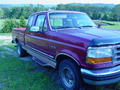
Hello and happy new year. My wife bought me a 91 F-150 for Christmas. It has 79,000 miles on it, 300 6 cylinder, 5 speed manual transmission. It is a "XLT Lariat". The check engine light is on. Also, I would like any suggestions on what to do maintenence wise to keep it running well. There is hail damage, especially on the hood, but otherwise very straight body with no rust. There is a shimmy or vibration at 65-75 mph in front. Tires look evenly worn. Thanks, this is a cool site I just found this morning. John P.S. Also, the front tank takes forever to fill up, won't allow gas to flow into it very fast. j
Last edited by jrossfritts; Jan 9, 2011 at 11:57 AM. Reason: add info

Post Fiend
Joined: Jan 2005
Posts: 8,402
Likes: 10
Ford Fuel Injection » How To Run a Self-Test Here is a link on how to get any trouble codes without a code reader. You could also buy an OBD1 code reader for around $30.00 (Equus 3145) which makes life a little easier.
The CEL is telling you that there are trouble codes so good idea to get them.
For the tank fill problem I would check to see if the tank vent tube is kinked/crushed.
The CEL is telling you that there are trouble codes so good idea to get them.
For the tank fill problem I would check to see if the tank vent tube is kinked/crushed.


Thread Starter
|
New User
Joined: Jan 2011
Posts: 3
Likes: 0
Thanks, and yes , I think she just wanted me to have a truck, she gave me the money is more accurate. I wanted something reliable. I had a 68 F-100 once and it was very reliable. A farmer passed away and we got a good deal on it. So I have friends that can fix it if it gets too complicated. How do I replace the vente tube and how do I know it is bent? All I see is a rectangular slot above the filler. John
Post Fiend
Joined: Jan 2005
Posts: 8,402
Likes: 10
You need to get a flashlight, get under the truck and look at the smaller diameter pipe that runs down to the tank from the filler cap, along with the main gas filler pipe. Look for kinks or flattened areas in both the main filler pipe and the smaller vent pipe.

Thread
Thread Starter
Forum
Replies
Last Post
john/hlptruck
1948 - 1956 F1, F100 & Larger F-Series Trucks
31
Feb 14, 2009 10:13 AM


