


CCV Idea

Hotshot
Joined: Nov 2008
Posts: 15,014
Likes: 35
From: Semper Fi tell I die!
http://www.youtube.com/watch?v=j0_jOfC__ZM
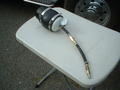
here you can see mine, it lets some oil mist out, but i figure its good for keeping it from rusting underneeth

Posting Guru
Joined: Nov 2003
Posts: 2,214
Likes: 0
From: THUNDER BAY

I got mine venting to atmosphere and I have no oil dripping from it(shrug).
But if you want to pull a vacuum, run a hose to your exhaust and drill a hole in it, put an oriface in the hole in your exhaust and weld it up, atach your vent. As your truck runs the exhaust gasses passing by the oriface working like a venturee(sp?), sorda what you find in carburators and it will draw your crankcase gases out of your engine. Just make sure you run the hose in a fashion that there is nolow spot that climbs back up otherwise you will have condinsation issues collecting in the hose in the colder months and freezing up.
This was an old racing trick that was told to me by an old timer.
But if you want to pull a vacuum, run a hose to your exhaust and drill a hole in it, put an oriface in the hole in your exhaust and weld it up, atach your vent. As your truck runs the exhaust gasses passing by the oriface working like a venturee(sp?), sorda what you find in carburators and it will draw your crankcase gases out of your engine. Just make sure you run the hose in a fashion that there is nolow spot that climbs back up otherwise you will have condinsation issues collecting in the hose in the colder months and freezing up.
This was an old racing trick that was told to me by an old timer.
The reason the hot rodders like this so much is because they are making more power in return creates more cc pressure just like some of the guys on this site with bigger Injectors more oil bigger turbos and chips this all leads to more cc pressure that needs to be pulled out .
Last edited by WALJON; Nov 19, 2010 at 05:21 AM. Reason: sp

Thread Starter
|
Hotshot


Joined: Oct 2003
Posts: 17,799
Likes: 104
From: Ashland City, TN
It's amusing that you guys are talking about the venturi idea now, but I've seen so many people on this site flame Cuda Jim for talking about it. Especially in the SD section, they will tell you all day how that doesn't work.
The problem with me doing this system, (which i'd rather do) is that I don't have a welder, or a way to measure the vacuum the exhaust is pulling. You can't just weld it in there and be good. If its not in the right spot at the right angle, the vacuum wont come and you'll create back pressure.
It's the best way to do it, I know this, but like I said, No welder, and no vacuum gauge.
As for oil being pulled into my intake, its not a lot either, but its enough to coat the inside of the boot and the turbo.
Remember that one little drop of oil will spread out a long *** ways, Just look at your truck from a slow drip, Looks like you sprung a fountain by the way its coated underneath, Right?
As for talking about catch cans.
Do you guys forget that TJ Lives 2.5 hours from me?
I've seen his catch can, which he's been running for years now, since he got his truck, cause of excessive oil blow by. He didn't like it in the turbo.
His engine must be broke and worn out too, right? Oh yeah, you wouldn't tell him that.
He's got less miles than me too.
Anyways.
I'd love to do it into the exhaust, the correct way, but I don't have the tube to do it with, cause it has to be cut perfect. Not something I'd dork around with unless I had one that was ready to go.
So, until I do it that way, catch can.
Only problem is. I have no room to put the damn thing.
Also, somebody suggested just running a hose with a loop.
The problem is, if you do that, you'll create a low spot with no way for the oil to get out, it will eventually block up and create back pressure in the motor.
Thats why you make the can your low spot. Then if you want to vent someplace, you can vent into the atmo, or back to the motor. Which is why I was asking originally about pulling a vacuum using a pump, not talking about having blow by on my motor.
Ahh, maybe you guys just all like to raz me up like chase.
Thats fine too. =)
The problem with me doing this system, (which i'd rather do) is that I don't have a welder, or a way to measure the vacuum the exhaust is pulling. You can't just weld it in there and be good. If its not in the right spot at the right angle, the vacuum wont come and you'll create back pressure.
It's the best way to do it, I know this, but like I said, No welder, and no vacuum gauge.
As for oil being pulled into my intake, its not a lot either, but its enough to coat the inside of the boot and the turbo.
Remember that one little drop of oil will spread out a long *** ways, Just look at your truck from a slow drip, Looks like you sprung a fountain by the way its coated underneath, Right?
As for talking about catch cans.
Do you guys forget that TJ Lives 2.5 hours from me?
I've seen his catch can, which he's been running for years now, since he got his truck, cause of excessive oil blow by. He didn't like it in the turbo.
His engine must be broke and worn out too, right? Oh yeah, you wouldn't tell him that.
He's got less miles than me too.
Anyways.
I'd love to do it into the exhaust, the correct way, but I don't have the tube to do it with, cause it has to be cut perfect. Not something I'd dork around with unless I had one that was ready to go.
So, until I do it that way, catch can.
Only problem is. I have no room to put the damn thing.
Also, somebody suggested just running a hose with a loop.
The problem is, if you do that, you'll create a low spot with no way for the oil to get out, it will eventually block up and create back pressure in the motor.
Thats why you make the can your low spot. Then if you want to vent someplace, you can vent into the atmo, or back to the motor. Which is why I was asking originally about pulling a vacuum using a pump, not talking about having blow by on my motor.
Ahh, maybe you guys just all like to raz me up like chase.
Thats fine too. =)

Hotshot


Joined: Jul 2003
Posts: 12,177
Likes: 40
From: Newport, WA
Nobody razzes Tim because, well, he's not a bumbling idiot. Try using that thing on top of your shoulders for more than just a hat rack on occasion.
Postmaster
Joined: Jun 2007
Posts: 2,795
Likes: 1
From: Rogue River, OR
This topic has been beat on like a red headed step-child over the past years. Members including TJ came up with the solution of attaching a hose to the dog house, running it up and over the brake booster and back down under the chassis and onto the back of the truck to get the fumes away from the cab.
By running the hose over the booster it allows the collective fluid to drain back into the engine but allows the fumes to vent to atmosphere.
One has to be cautious not to allow the hose that runs along the chassis to sag so it creates a low spot should oil from fumes pool and prevent free flow of the fumes.
I have run this system for over two years with no problems or odors in the cab. (I ran it all the way to the rear wheels) I also fashioned a filter with a drain **** and have yet to collect a sufficient amount of oil to drain.
It is virtually maintenance free.
Rog
By running the hose over the booster it allows the collective fluid to drain back into the engine but allows the fumes to vent to atmosphere.
One has to be cautious not to allow the hose that runs along the chassis to sag so it creates a low spot should oil from fumes pool and prevent free flow of the fumes.
I have run this system for over two years with no problems or odors in the cab. (I ran it all the way to the rear wheels) I also fashioned a filter with a drain **** and have yet to collect a sufficient amount of oil to drain.
It is virtually maintenance free.
Rog

Senior User
Joined: Apr 2009
Posts: 301
Likes: 0
From: Scenery hill,Pa.
Are the fumes really that bad? I justfind it hard to believe that its that bad that as to smell it. Unless its some high HP racer then id think it wouldnt be an issue.
FTE Stories
Ford Trucks for Ford Truck Enthusiasts

Top 10 Fords at 2026 Carlisle Ford Nationals
Joe Kucinski
3 Best / 3 Worst Parts of Modern Ford Ownership
Brett Foote
10 Amazing Upgrades That Solve Common Ford Truck Owner Headaches
Pouria Savadkouei
Every 2026 Ford Engine Explained
Brett Foote
10 Ugly Ford Trucks That We Still Kinda Love
Joe Kucinski
10 Things Every Truck Owner NEEDS (2026 Edition)
Michael S. Palmer
Rezvani's Latest Post-Apocalyptic Monster Is a Ford F-150 Raptor Underneath
Verdad Gallardo
Top 10 Most Expensive Ford Trucks Ever Sold on Bring a Trailer
Joe Kucinski
2027 Ford Super Duty Buyer's Guide (Every Model, Engine, & Package)
Brett Foote
Hotshot
Joined: Jul 2003
Posts: 12,177
Likes: 40
From: Newport, WA
It depends on what oil you run. In my SD my CCV hose ended in front of the rear tires. When I used Motorcraft oil you could easily smell the CCV stink when outside the truck with the motor running, when I switched to Rotella 15w40 the stink went away and so did most of the smoke. The stink wasn't horrible, but definitely noticeable.

Hotshot


Joined: Feb 2009
Posts: 10,410
Likes: 77
From: Plankinton, SD
I just drop it straight down from the brake booster. I don't have it over the top of it either, just straight over and down. No drips, only smell is after a long pull or something when you get out you notice it. I run rotella 15/40. I didn't know I was supposed to put it over the booster when I did it quite a while ago, was going to change it with a longer hose, but see no reason right now with no drip.
Postmaster
Joined: Jun 2007
Posts: 2,795
Likes: 1
From: Rogue River, OR

Some had drips more than others and than some, like you had no drips at all. I think that is what prompted the routing over the top of the booster. I also wonder if the dripping has anything to do with the actual condition of the engine internally, not just the miles. 
Rog
Rog

Fleet Mechanic
Joined: Dec 2007
Posts: 1,766
Likes: 8
From: Hutchinson, KS
I feel dumber for actually trying to read this thread and understand what ***** is saying. Truth be told, he confuses himself and everyone else trying to spin circles.
In reality, *****, you get flamed because you're an idiot that tries to re-invent the wheel on things that have been beat like a dead horse. Nobody razzes CudaJim because he doesn't act like an f'ing idiot and try to be some intelligent keyboard mechanic.
The only reason I ran my hose all the way to the back of the truck was so I didn't have to smell it in the cab or when the door is open. And I did just like EVERYONE except ***** knows how to do... I ran my hose as straight as possible angling slightly towards the rear so that there are no spots that oil vapors can collect and clog the hose. It's a pretty neat concept. You should try it sometime!
In reality, *****, you get flamed because you're an idiot that tries to re-invent the wheel on things that have been beat like a dead horse. Nobody razzes CudaJim because he doesn't act like an f'ing idiot and try to be some intelligent keyboard mechanic.
The only reason I ran my hose all the way to the back of the truck was so I didn't have to smell it in the cab or when the door is open. And I did just like EVERYONE except ***** knows how to do... I ran my hose as straight as possible angling slightly towards the rear so that there are no spots that oil vapors can collect and clog the hose. It's a pretty neat concept. You should try it sometime!

Senior User
Joined: Mar 2009
Posts: 172
Likes: 0
From: SENECA
You guys are funny. I did my CCV Reroute just like kawa (Rog) and have not had any problems or complainants. However, the truth of the matter is that if ***** wants to waste time and energy installing a vaccuum pump then so be it. I personally don't think there is a need for it, but ***** it's your party so have it your way.
Fleet Mechanic
Joined: Dec 2007
Posts: 1,766
Likes: 8
From: Hutchinson, KS
You guys are funny. I did my CCV Reroute just like kawa (Rog) and have not had any problems or complainants. However, the truth of the matter is that if ***** wants to waste time and energy installing a vaccuum pump then so be it. I personally don't think there is a need for it, but ***** it's your party so have it your way.
