
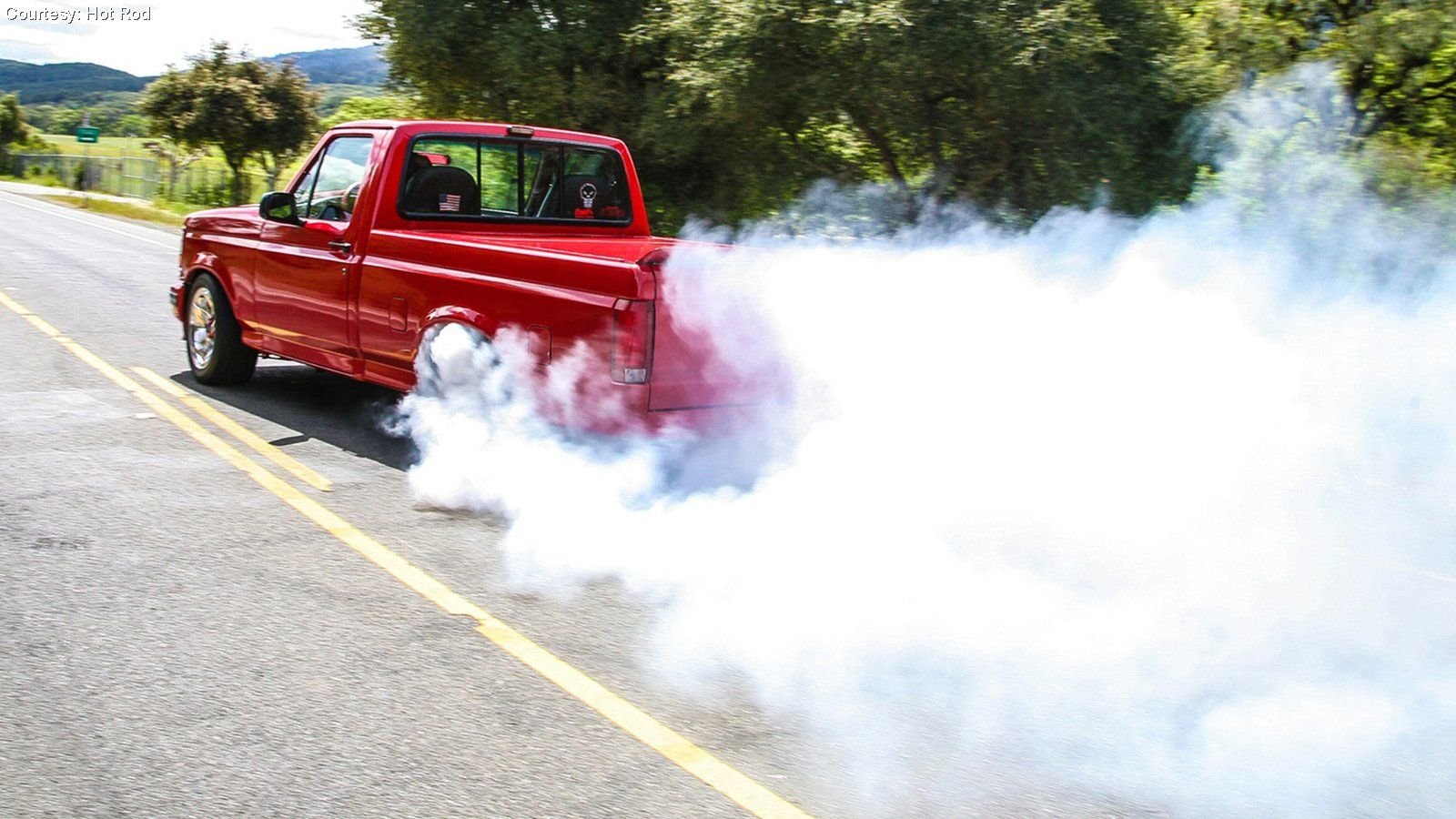
Throwback: Windsor-Powered 1993 Lightning Shreds Tires
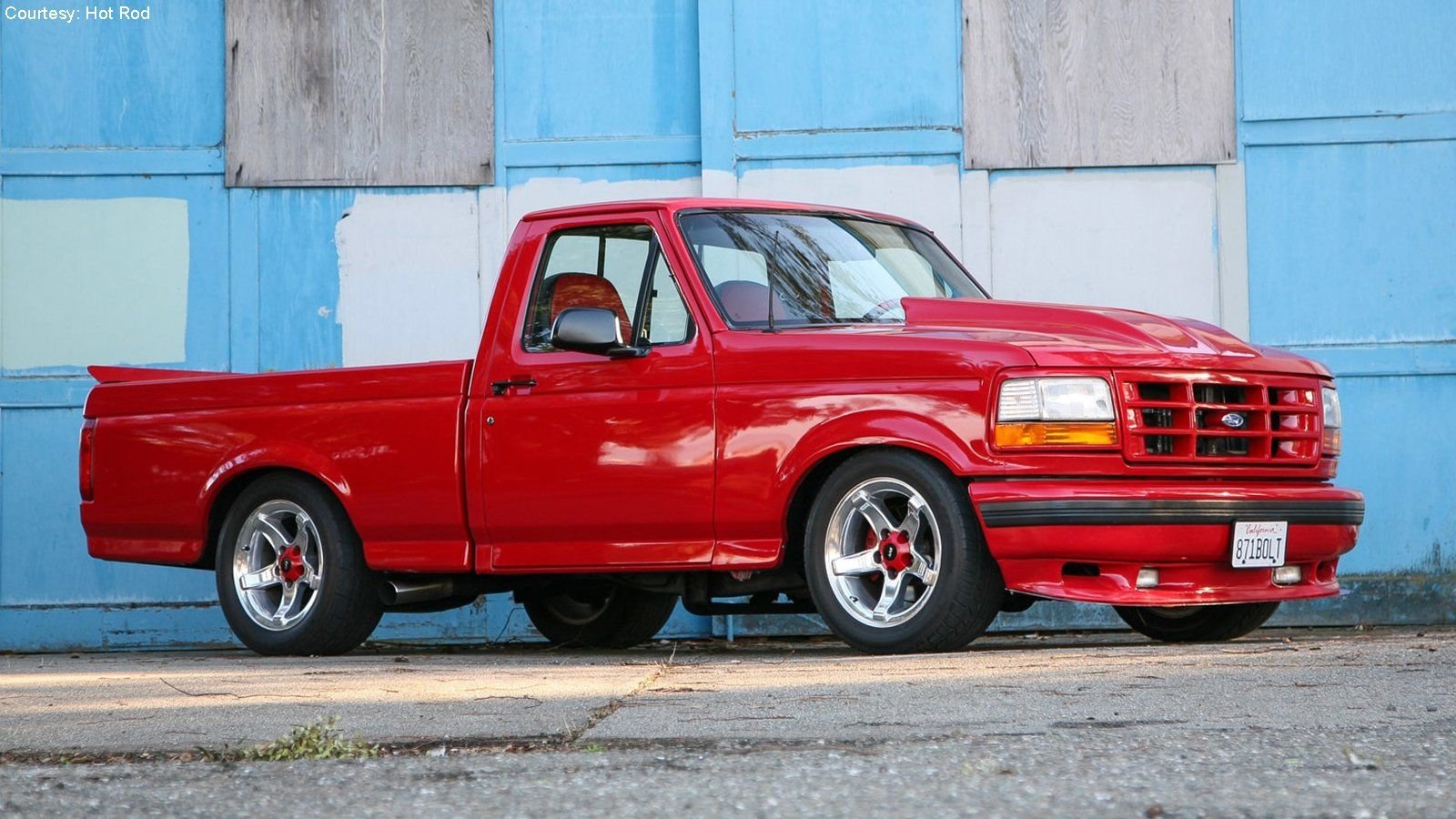
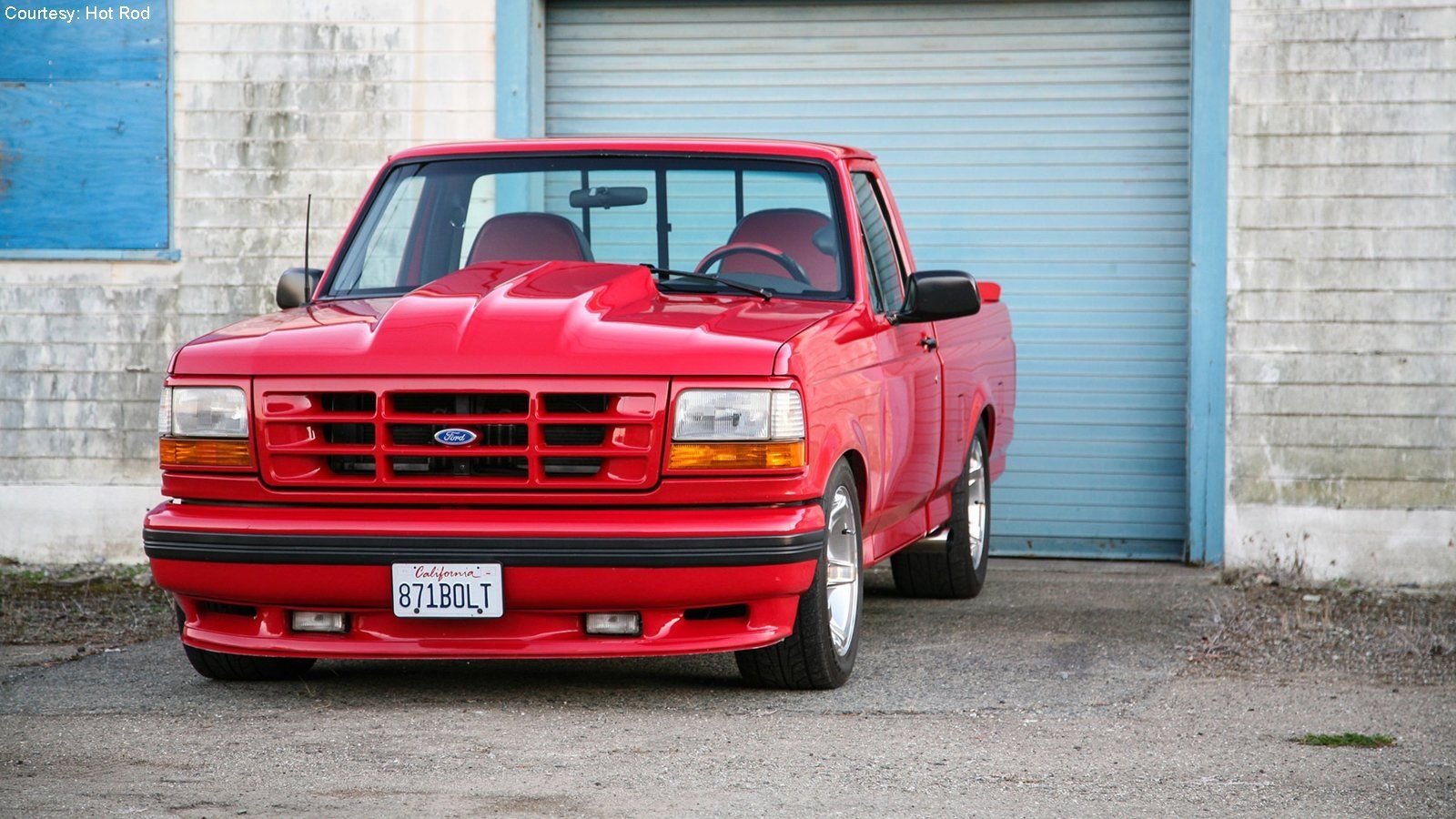
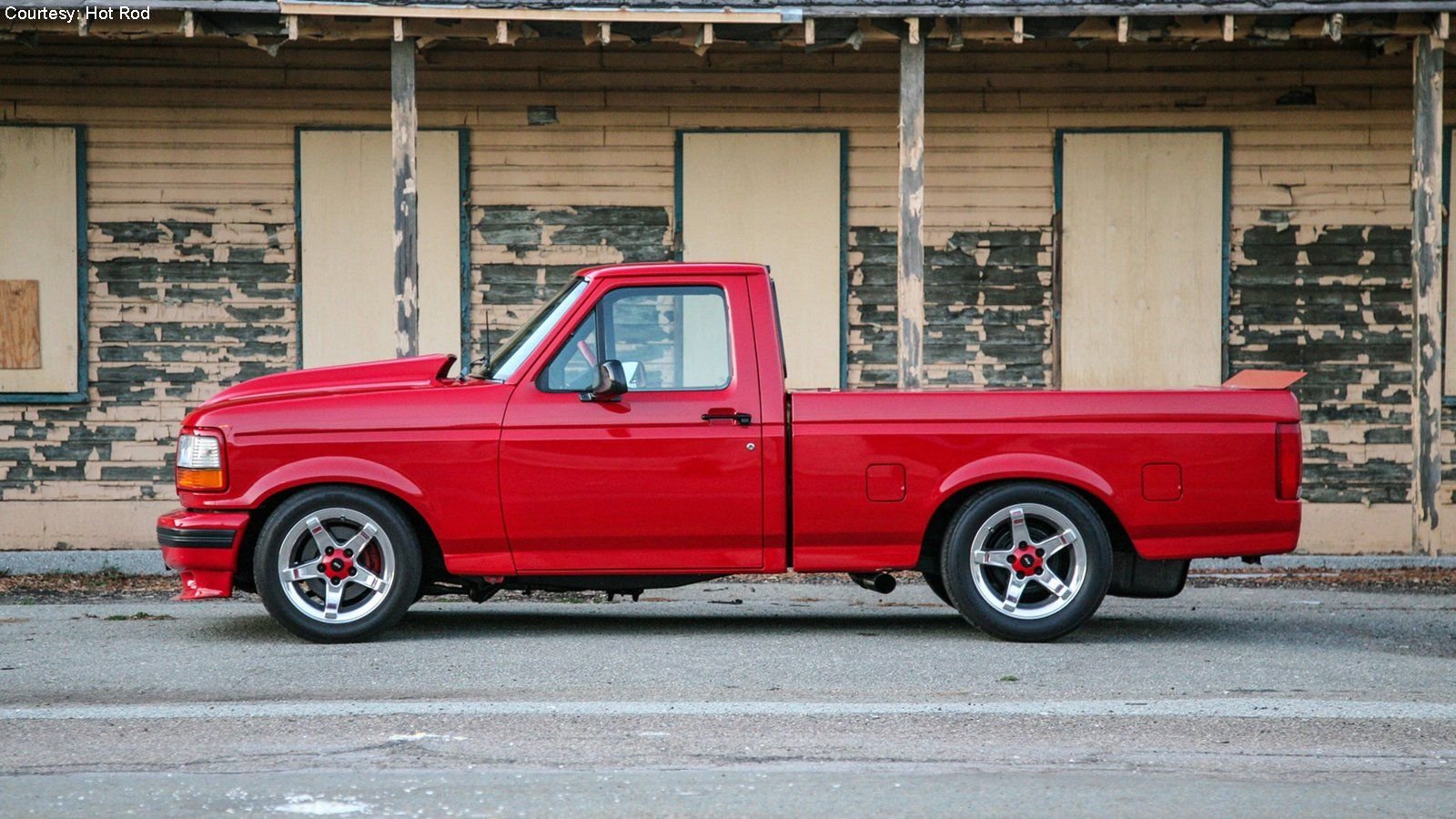
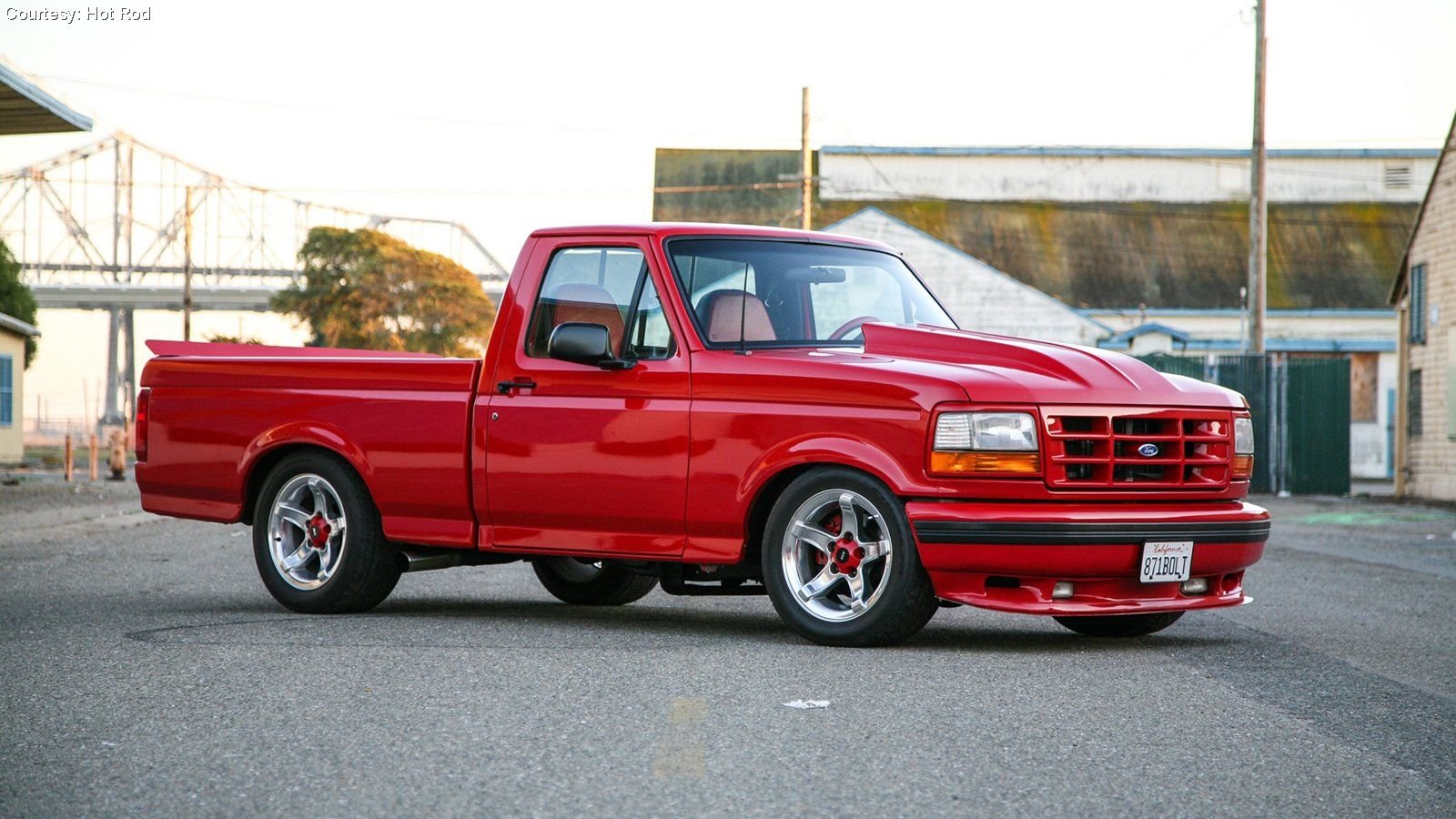
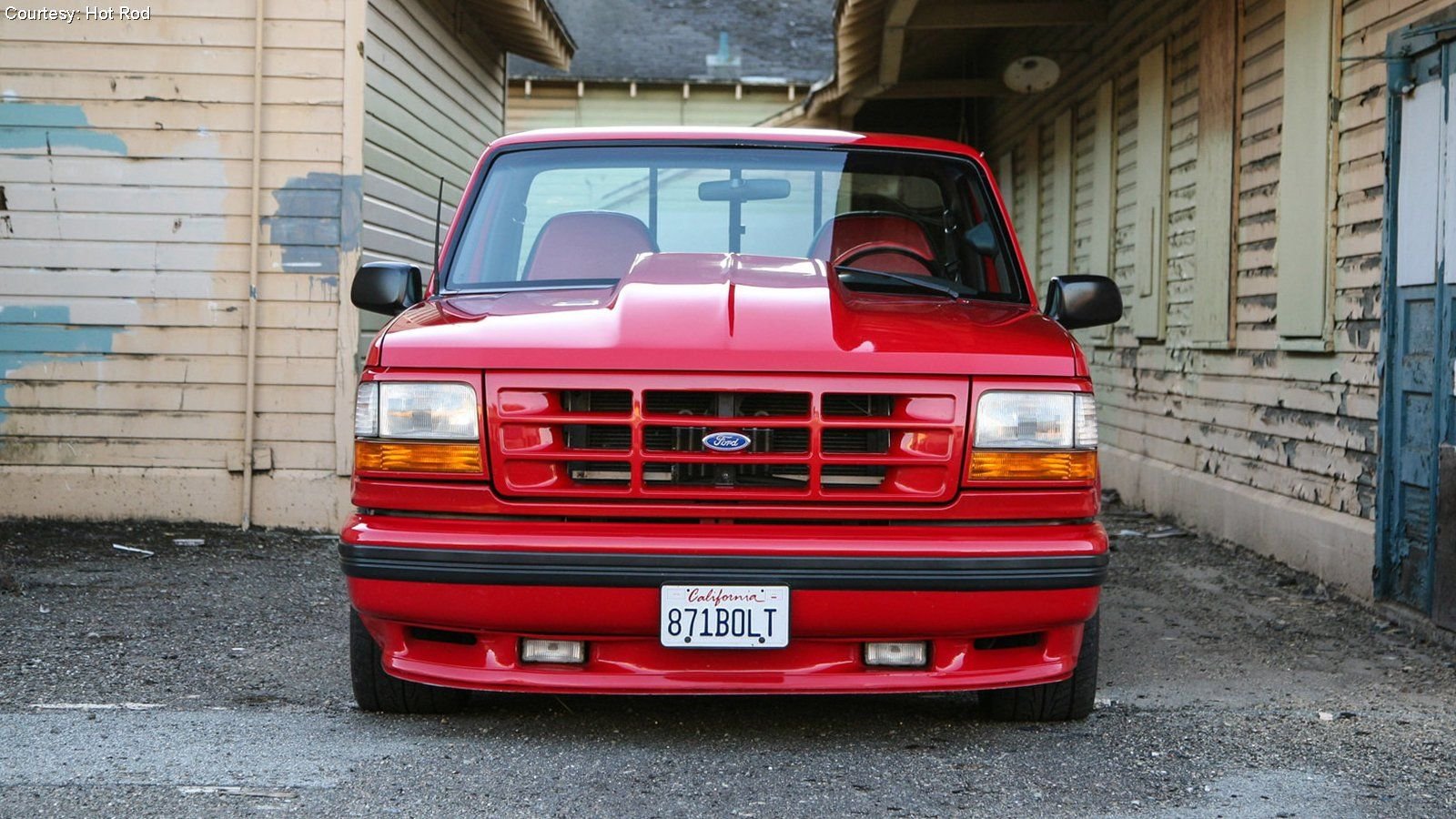
This 1993 Ford Lightning pickup with an 8-71-blown 427 Windsor is a home-built project.


Hooked
“I’ve owned a 1969 Mach 1, a 1967 Fastback, and a 1985 GT, but the minute a friend took me for a ride in his first-generation Lightning, I had to have one,” Alex Bernal remarked when speaking to Hot Rod. Being familiar with the Ford family, Bernal already knew exactly what he was getting into with a performance-oriented vehicle.. Especially since that vehicle was not a Mustang. There really isn’t much aftermarket presence with trucks like Bernal’s first-generation Lightning. “I’ve loved owning a first-generation Lightning because they’re pretty rare, but being rare also means that I’ve had to spend countless hours fabricating parts because the aftermarket support for the early trucks just isn’t as strong as it is for the Mustang,” Bernal explains.
Fast Utility Vehicle
Parts availability wasn’t an issue when Bernal first took possession of his Lightning, though. The “fast” part of “fast truck” is what attracted him to it, but the “truck” part was just as important. “I was working construction part time when I bought the Lightning back in 1999,” he tells us, “and since the day I got it, I’ve used it to haul all kinds of stuff. In fact, just last week I ran a load to the dump. You should have seen the look on the workers’ faces when I pulled up.”
Think Differently
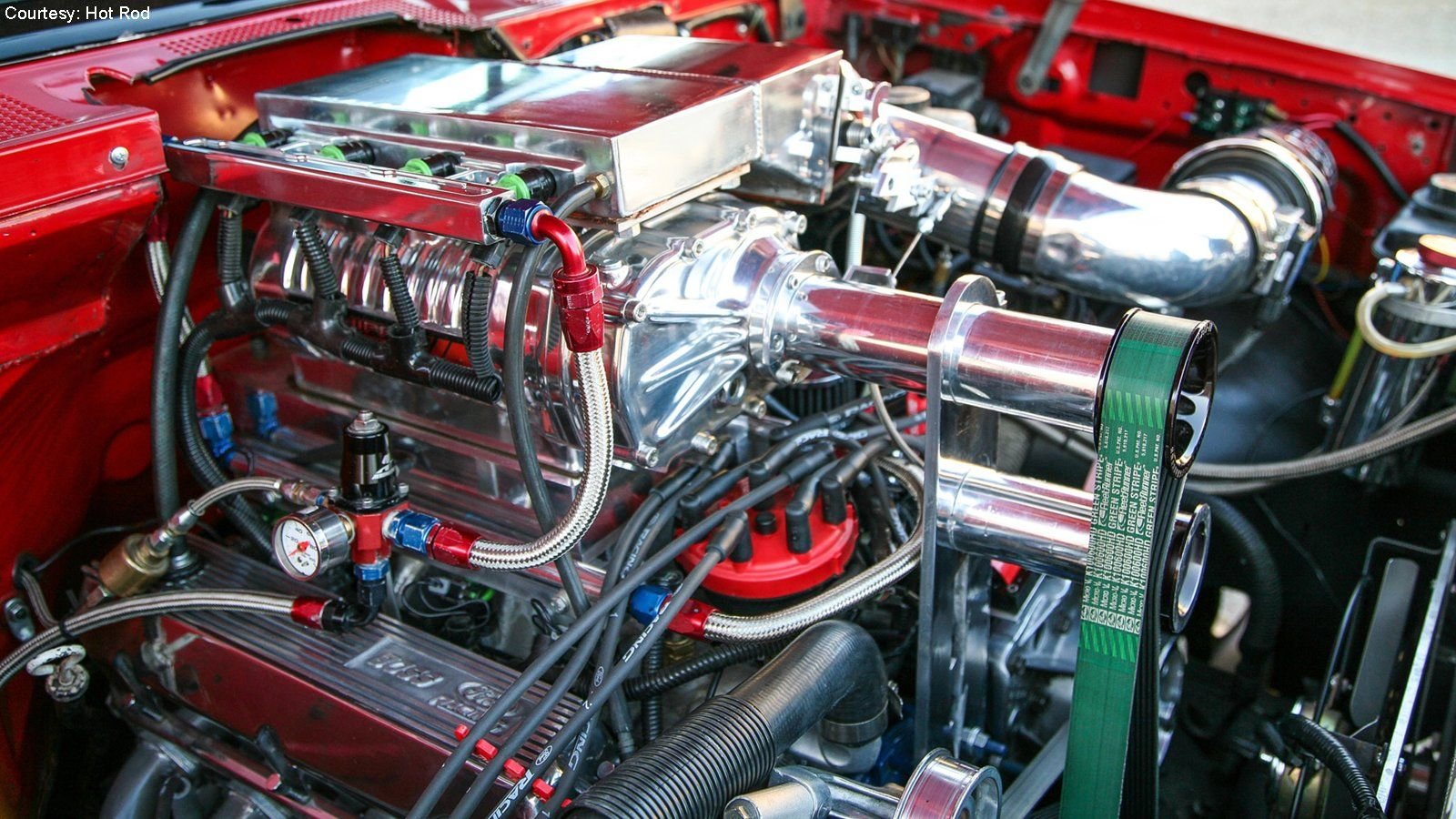
It’s in the nature of hot-rodders to want to go faster, though. So Bernal started the long road of upgrades with the addition of a 418W stroker motor. That engine had a mild roller cam and AFR 185 heads for the sake of emissions, and a supercharger for the sake of fun. Wanting even more fun led Bernal to improvise: “When I wanted to supercharge the Lightning, there were only a few options on the market, so when I wanted something a little different, I had no choice but to have a custom set-up fabricated.” The custom set-up consisted of an old-school 8-71 blower yielding 470 hp and 570 lb-ft of torque.
Blower Guts
The 8-71 wasn’t just a bolt-on proposition, though. Bernal adapted his GT40 lower intake manifold to work with an air-to-water Velocity Turbo Systems intercooler system utilizing a Terminator Cobra-spec heat exchanger mounted upfront. For an even cooler intake charge, the intake plenum was fitted with four 42-pound injectors to lower temps via fuel spray through the blower. The Intake system also features an Accufab GT500 throttle body and Ford Racing AKCO sensors and computer.
Care and Feeding
To feed his custom supercharger system, Bernal swapped out the factory dual fuel tanks and opted for a Bronco tank equipped with an Aeromotive 340 pump and plumbed it all with braided steel lines. Ignition is pure MSD, including that company’s 6AL box, distributor, and coil. Unfortunately, though, disaster struck the 418 on the dyno, and that's when Bernal decided to sell the engine and start all over with a 351W and an even bigger blower.
Enter 427
Though the 351 made great power, Bernal wanted more cubes so he started work on a 427W stroker. The stroker used the same AFR 185 heads plus a forged K1 Technologies crank, forged Scat rods, and reverse-dome Probe 9.5:1 pistons. The combo was good for 500 hp and 584 lb-ft of torque. We say “was” because disaster struck the lightning a second time, this time launching the valvetrain.
Making Lemonade
Parts failures can only mean one thing, and that’s new parts. So, on went AFR 205 Renegade heads, a hotter can from Lunati, Scorpion roller rockers, and an Edelbrock AirGap intake Bernal modified to accept his intercooler set-up. To keep up with the new top-end and bottom-end parts, he fit MAC 1 ¾-inch Mustang long-tube headers, dumping into a dual 3-inch exhaust system with Flowmaster mufflers. Bernal sent the E40D transmission out for a performance build and bolted on a set of second-gen Lightning wheels wearing Nitto NT555 front and NT555R rear drag rubber to round out the build.
Daily Brawler
Bernal said the pickup’s 561 hp and 666 lb-ft of torque rear-wheel dyno numbers were hampered by fuel starvation above 4,500 rpm but showed promise. As for the Lightning’s cosmetics, they’re not perfect given the truck’s status as a driver, but like the mechanicals, they’re home-built and get the job done. Bernal made the splitter and aluminum tonneau-with-spoiler himself, and the blower-clearing cowl induction hood couldn’t fit the truck any better. “It has lots of dings, dents, and imperfections, but it’s unique, and I drive it. In fact, it’s got over 218,000 miles on it,” Bernal shared. We’d call any regularly-driven Ford truck with an 8-71 pretty close to perfect.
For help with your maintenance and repair projects, please visit our how-to section in the forum.